


Introduction: Why Heel Alignment Matters
Foot posture and rearfoot alignment play a decisive role in lower-limb biomechanics. Among the most critical yet often misunderstood parameters are heel eversion and heel inversion. These two conditions describe the orientation of the calcaneus (heel bone) relative to the lower leg during standing and movement.
Excessive heel eversion or heel inversion is strongly associated with overuse injuries, gait inefficiency, joint stress, and long-term musculoskeletal imbalance. As footwear innovation and digital health assessment continue to advance, accurate heel alignment evaluation has become essential not only in clinical settings, but also in commercial footwear and podiatric service models.
This article provides a comprehensive overview of heel eversion and heel inversion assessment methods, their clinical applications, and how they can be effectively integrated into commercial footwear and podiatry business models.

Understanding Heel Eversion and Heel Inversion
What Is Heel Eversion?
Heel eversion refers to the outward tilting of the calcaneus, where the bottom of the heel moves away from the body's midline. It is commonly associated with excessive pronation and flatfoot mechanics.
What Is Heel Inversion?
Heel inversion occurs when the calcaneus tilts inward toward the midline of the body. This is often linked to supination, high arches, and reduced shock absorption during gait.
Both heel eversion and heel inversion are normal in small ranges during walking. Problems arise when alignment exceeds physiological norms or remains static during dynamic motion.
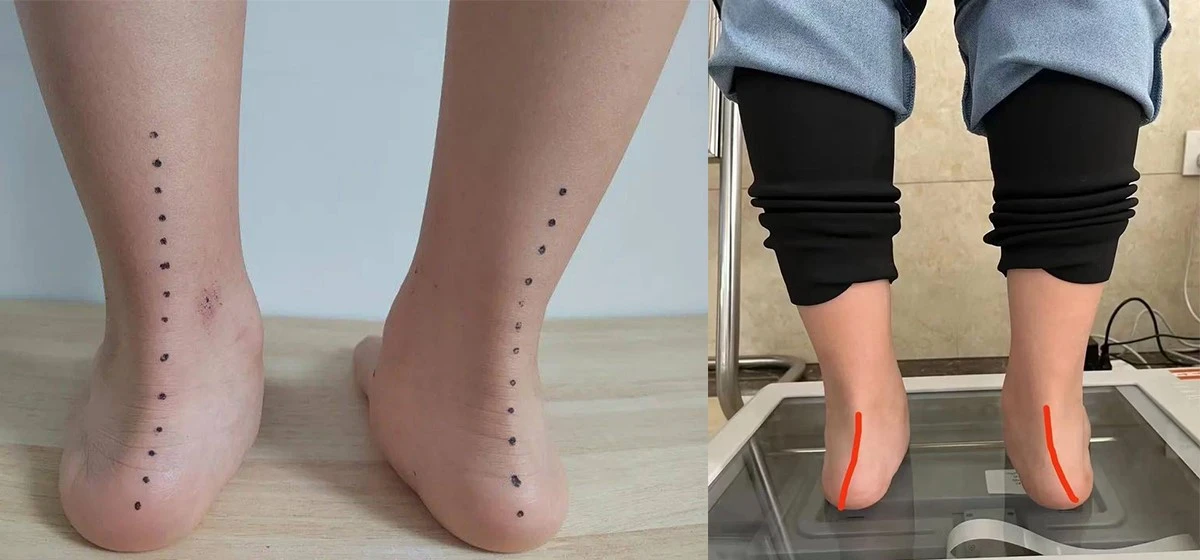
Heel Eversion and Heel Inversion Assessment Methods
Accurate assessment of heel eversion and heel inversion requires both static and dynamic evaluation. Below are commonly accepted methods used in Western clinical and commercial environments.
1. Visual Rearfoot Posture Assessment (Static)
This traditional method involves observing the heel from a posterior view while the subject stands barefoot in a relaxed posture.
Procedure:
- The Achilles tendon line is visually traced
- Calcaneal angle relative to vertical is estimated
- Deviation indicates heel eversion or heel inversion
Advantages:
- Low cost
- Fast screening
- Suitable for mass assessments
Limitations:
- Subjective
- Limited precision
2. Calcaneal Angle Measurement (Goniometric Method)
This quantitative approach measures the angle between the calcaneus and the lower leg using a goniometer.
| Heel Alignment | Typical Angle Range | Interpretation |
|---|---|---|
| Neutral heel | 0°–2° | Normal alignment |
| Heel eversion | > 3° outward | Excessive pronation |
| Heel inversion | > 3° inward | Excessive supination |
This method is widely used in podiatric clinics to document heel eversion and heel inversion severity.
3. Dynamic Gait and Pressure-Based Assessment
Modern assessment increasingly relies on dynamic analysis, capturing heel motion during walking.
Key technologies include:
- Pressure plates
- Treadmill gait analysis
- 3D foot scanning systems
These tools measure how heel eversion and heel inversion change during heel strike, midstance, and toe-off, offering insight into functional biomechanics rather than static posture.
Comparison of Heel Assessment Approaches
| Assessment Method | Static / Dynamic | Accuracy | Commercial Scalability |
|---|---|---|---|
| Visual inspection | Static | Low | High |
| Goniometer | Static | Medium | Medium |
| Pressure plate | Dynamic | High | Medium |
| 3D foot scanning | Static + Dynamic | Very high | High |
Using at least two heel eversion and heel inversion assessment methods together significantly improves reliability and clinical confidence.
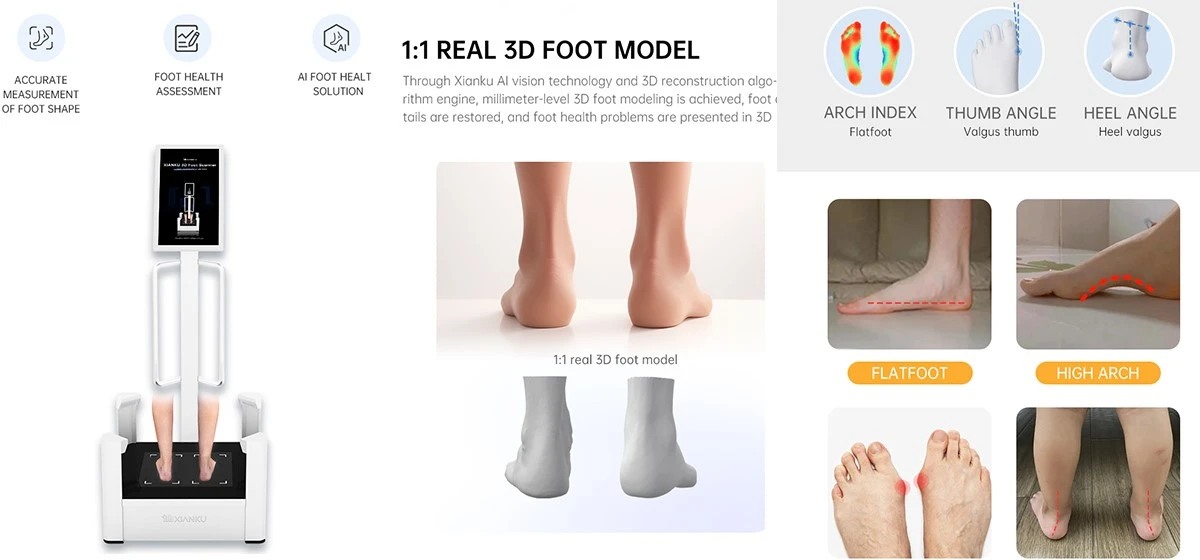
Clinical Applications of Heel Eversion and Heel Inversion Assessment
In clinical practice, identifying abnormal heel eversion or heel inversion helps guide diagnosis and intervention.
Common Conditions Linked to Heel Eversion
- Plantar fasciitis
- Posterior tibial tendon dysfunction
- Medial knee pain
- Overpronation-related fatigue
Common Conditions Linked to Heel Inversion
Lateral ankle instability
Stress fractures
Achilles tendon overload
Reduced shock absorption
Heel alignment assessment is frequently integrated into:
- Orthotic prescription
- Rehabilitation planning
- Post-injury monitoring
- Preventive screening programs
Commercial Applications in the Footwear Industry
Footwear Fit and Performance Optimization
In commercial footwear environments, heel eversion and heel inversion data allow brands and retailers to move beyond basic shoe sizing.
Applications include:
- Rearfoot stability shoe recommendations
- Heel counter stiffness customization
- Midsole density zoning
- Sport-specific shoe selection
| Heel Alignment Type | Recommended Shoe Feature |
|---|---|
| Heel eversion | Medial support, firmer heel cup |
| Heel inversion | Cushioned heel, lateral stability |
By integrating heel alignment assessment into in-store or online experiences, footwear companies improve return rates, customer satisfaction, and brand trust.
Commercial Integration in Podiatry Clinics
Podiatry clinics increasingly use heel eversion and heel inversion assessment as part of a value-added service model.
Business Benefits:
- Objective reporting enhances patient trust
- Data-driven orthotic sales
- Improved treatment compliance
- Differentiation from traditional clinics
Digital heel assessment reports also support long-term patient tracking and outcome-based care, aligning with modern healthcare expectations.
Data-Driven Commercial Ecosystem: Shoes + Clinics
The most successful commercial models integrate footwear retail and clinical assessment into a single ecosystem.
Example workflow:
- Heel eversion and heel inversion assessment
- Digital report generation
- Personalized footwear or orthotic recommendation
- Follow-up reassessment
This approach benefits:
- Footwear brands (reduced returns)
- Clinics (higher service value)
- Consumers (better comfort and injury prevention)
EEAT Principles Applied to Heel Assessment Content
To meet Experience, Expertise, Authoritativeness, and Trustworthiness (EEAT) standards:
- Assessment methods align with established podiatric practice
- Clinical terminology is accurately used
- Applications are supported by biomechanical principles
- Commercial insights reflect real-world industry adoption
From Assessment to Action
Heel eversion and heel inversion are more than technical terms-they are practical indicators of foot health, movement efficiency, and injury risk. Accurate assessment using multiple methods enables clinicians, footwear brands, and service providers to deliver personalized, effective solutions.
As digital foot assessment becomes more accessible, integrating heel alignment analysis into both clinical and commercial workflows is no longer optional-it is a competitive advantage.
By combining biomechanical expertise with scalable technology, heel eversion and heel inversion assessment bridges the gap between healthcare precision and commercial performance.
