How Qantas' Ultra-Long-Haul Cabin Innovation Meets 3D Body Scanning and Modular Pillow Personalization
Qantas' upcoming Sydney–London ultra-long-haul flights are redefining what long-distance air travel means.
Instead of treating 20+ hours in the air as a passive endurance experience, the airline is redesigning the cabin as a biologically optimized environment.
The new generation of aircraft cabins will include:
- Dedicated onboard wellness zones
- Circadian rhythm–adjusted dynamic lighting
- Timed meal systems aligned with sleep cycles
- Expanded legroom and improved ergonomic seat design
This marks a fundamental shift in aviation design philosophy.
Long-haul travel is no longer about simply surviving the journey.
It is about optimizing human recovery in the air.
But this raises a deeper question:
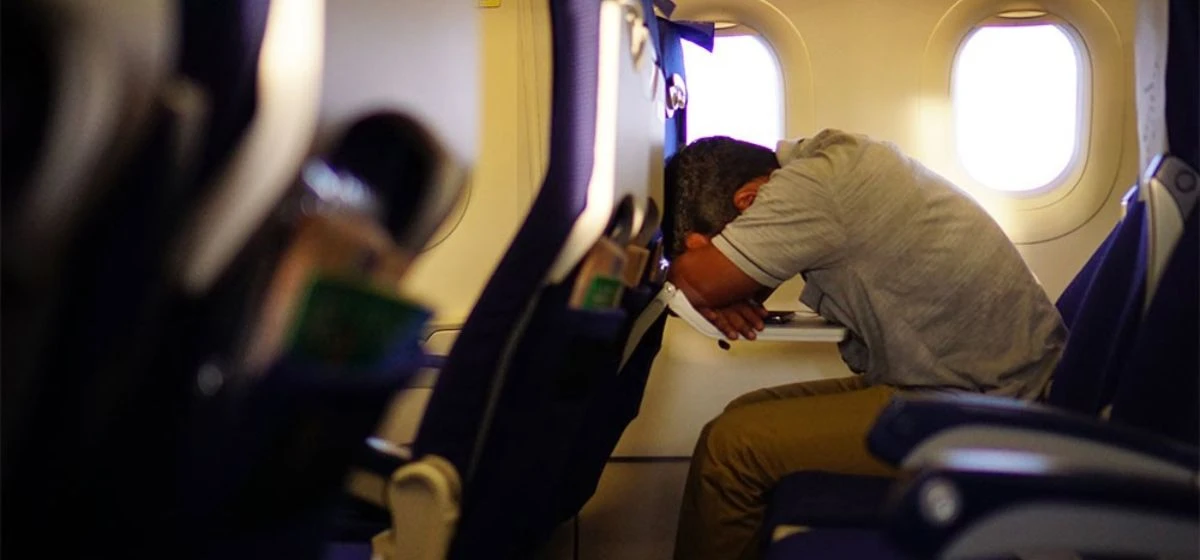
If airlines are beginning to engineer sleep, why is sleep still standardized?
The Real Problem in Long-Haul Flights: Sleep Is Still One-Size-Fits-All
Despite major advancements in aviation comfort, sleep support systems inside aircraft remain surprisingly generic.
Passengers are typically provided with:
- Standard airline pillows
- Fixed seat geometry
- Uniform neck support systems
- Pre-designed cabin ergonomics
These systems are designed for efficiency, not individuality.
But the human body is not standardized.
In particular, the cervical spine varies significantly across individuals in:
- Neck curvature
- Shoulder width
- Head size and weight distribution
- Upper spine alignment
- Postural habits developed over years
This creates a structural mismatch between passengers and cabin sleep systems.
Over long-haul flights, even small misalignments become amplified over time.
The result is familiar:
- Neck stiffness upon waking
- Shoulder fatigue
- Interrupted sleep cycles
- Reduced deep sleep duration
- Jet lag intensity after landing
The issue is not comfort design quality.
The issue is lack of personalization.
Why Sleep Matters More in Ultra-Long-Haul Aviation
In flights exceeding 15–20 hours, sleep is no longer a luxury experience feature.
It becomes a biological performance factor.
Poor sleep quality directly impacts:
- Cognitive recovery
- Immune system regulation
- Jet lag severity
- Passenger stress levels
- Business performance after arrival
This is why airlines like Qantas are investing heavily in sleep optimization systems.
But there is still one missing layer:
Understanding the passenger's body at a structural level.
The Shift from Cabin Design to Body-Driven Design
Traditional aviation comfort design is based on statistical averages.
Seats, pillows, and support systems are designed for:
- Average male body
- Average female body
- Average posture assumptions
But "average" does not exist in real human biomechanics.
This creates a fundamental limitation:
A system designed for everyone is ultimately optimized for no one.
To solve this, aviation design is shifting toward body-specific engineering.
And this begins with data.
3D Body Scanning: Turning the Human Body Into Digital Aviation Data
This is where 3D body scanning technology becomes critical.
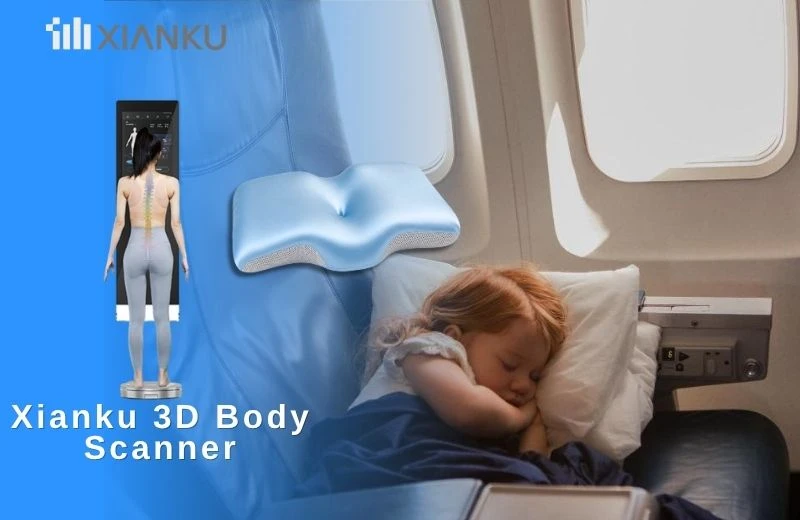
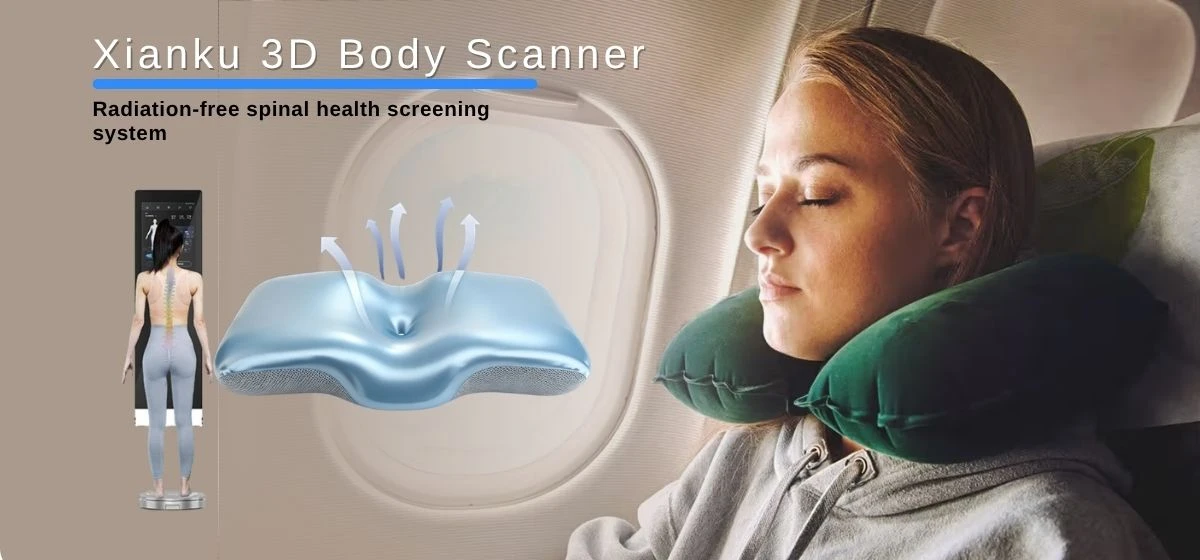
A system like the XIANKU 3D Body Scanner captures a high-precision digital model of the human body within seconds.
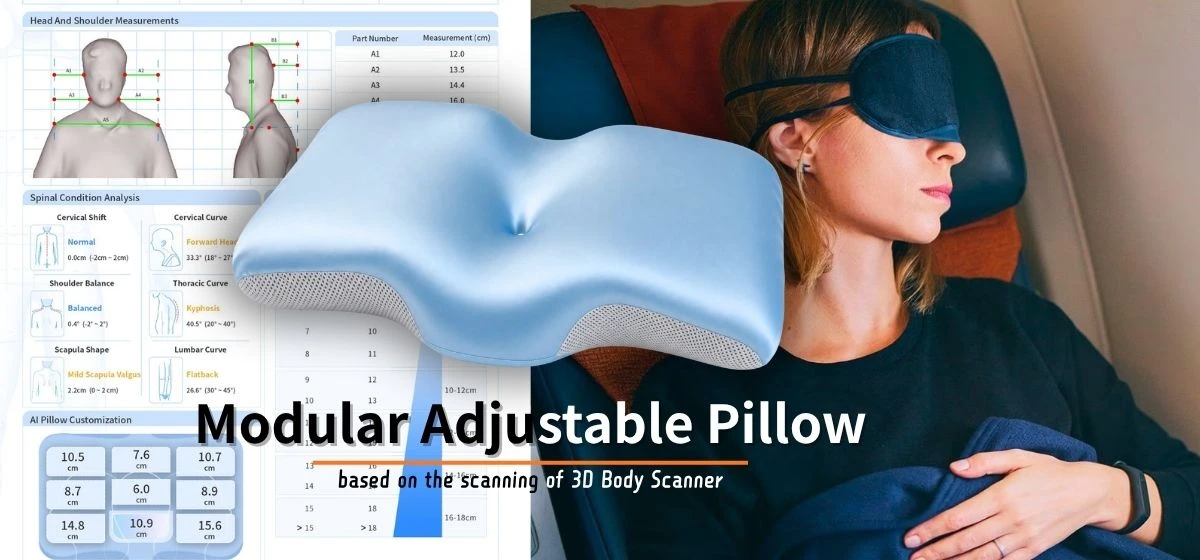
Instead of relying on visual observation or subjective assessment, the scanner generates measurable biomechanical data, including:
- Cervical spine curvature
- Shoulder alignment and asymmetry
- Head-to-neck ratio
- Upper back posture deviation
- Body balance and structural alignment
Within approximately 20 seconds, the system generates a full 3D body model and analyzes over 100 body data points, producing a comprehensive posture and body alignment report in about one minute.
This transforms the passenger from a "seat user" into a data profile.
And once the body becomes data, it can be optimized.
From Body Data to Sleep Optimization Logic
Once scanned, AI systems can interpret body structure and convert it into sleep-related engineering parameters.
For long-haul flights, the most critical factor is cervical support geometry.
AI can determine:
- Ideal pillow height
- Optimal neck support angle
- Required shoulder stabilization level
- Pressure distribution zones
- Sleep posture stability requirements
Instead of offering a generic pillow, airlines can begin offering personalized sleep configurations based on real biomechanics.
This represents a shift from:
"Passenger comfort design"
to
"Passenger-specific sleep engineering"
The Physical Execution Layer: Modular Adjustable Pillows
Data alone does not improve sleep.
It must be translated into physical support.
This is where modular adjustable pillows become essential.
Unlike traditional airline pillows, modular systems are designed as configurable structures.
They allow:
- Adjustable height through insert layers
- Variable firmness zones
- Neck contour customization
- Shoulder support tuning
- Multi-profile configuration options
By adding or removing internal components, the pillow adapts to different cervical structures.
For example:
- A passenger with forward head posture requires elevated posterior neck support
- A passenger with broader shoulders requires lateral stabilization
- A passenger with reduced cervical curvature requires deeper contour shaping
This makes the pillow a configurable biomechanical device, not a fixed comfort accessory.
The Future Long-Haul Workflow: From Scan to Sleep
In a fully integrated aviation system, the passenger journey could look like this:
Step 1: Body Scan
Before boarding, passengers complete a quick 3D body scan at the airport lounge or check-in area.
Step 2: AI Analysis
The system analyzes cervical spine structure, shoulder alignment, and posture patterns.
Step 3: Personalized Sleep Profile Generation
AI generates a sleep support configuration tailored to the individual body.
Step 4: Modular Pillow Assembly
Cabin staff or automated systems assemble a customized pillow configuration based on the profile.
Step 5: In-Flight Sleep Optimization
Passengers receive individualized sleep support designed specifically for their anatomy.
Instead of uniform cabin comfort, each passenger experiences personalized sleep engineering at altitude.
Why This Matters for the Future of Aviation
Airlines are entering a new competitive landscape.
Seat width and legroom are no longer the only differentiators.
The next frontier is:
Sleep quality per passenger per flight hour
This directly impacts:
- Airline brand perception
- Premium cabin value proposition
- Passenger loyalty
- Business traveler efficiency
- Global route competitiveness
In ultra-long-haul aviation, even small improvements in sleep quality can significantly enhance the overall travel experience.
From Standard Comfort to Intelligent Cabin Ecosystems
The integration of:
- 3D body scanning technology
- AI-driven biomechanical analysis
- Modular adjustable sleep systems
- Circadian rhythm–aware cabin design
signals a broader transformation in aviation.
Cabins are evolving from static environments into adaptive biological systems.
Instead of designing for average comfort, airlines are beginning to design for individual physiological optimization.
This represents one of the most important shifts in modern transportation design.
The Role of 3D Body Scanning in Future Aviation Infrastructure
In this ecosystem, 3D body scanners are not simply diagnostic tools.
They become infrastructure for personalization.
Aviation systems built around body data can enable:
- Personalized seat configuration
- Adaptive sleep system deployment
- Real-time posture correction recommendations
- Long-term passenger health insights
- Enhanced premium travel experiences
The scanner becomes the entry point into a fully personalized cabin experience.
Conclusion: The End of Standardized Sleep in the Sky
Qantas' ultra-long-haul vision represents more than an aviation upgrade.
It signals a structural shift in how human rest is designed in motion.
The future of long-haul travel is not about adding more comfort features.
It is about understanding the passenger at a biomechanical level.
With 3D body scanning providing precise anatomical data, and modular adjustable pillows translating that data into physical support, sleep in the air is becoming a designed experience rather than a standardized service.
In this emerging model:
- The body is measured
- The data is analyzed
- The support is customized
- The sleep experience is engineered
And ultimately, long-haul flights are no longer defined by endurance.
They are defined by personalized recovery at altitude.
Because in the future of aviation, the question is no longer:
How comfortable is the seat?
But instead:
How well does the cabin understand your body?
And the answer begins with a scan.