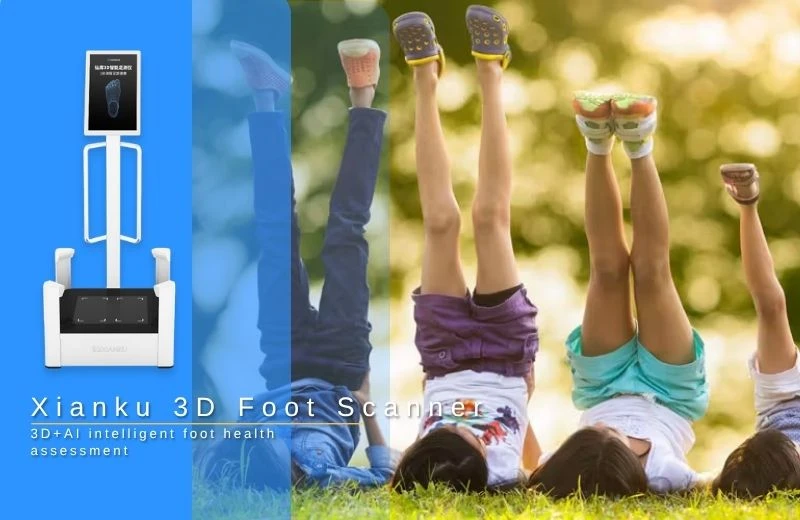
How AI, 3D Foot Scanning, and Personalized Manufacturing Could Redefine Children's Footwear
For more than a century, the footwear industry has been built around one fundamental idea:
Standardization creates scale.
Manufacturers study thousands of feet, divide them into size categories, develop standardized shoe lasts, and produce millions of identical pairs.
This model created a global footwear industry worth hundreds of billions of dollars.
- It made shoes more affordable.
- It made distribution more efficient.
- It allowed brands to serve customers across different countries and markets.
But there is one group of consumers where this traditional model faces a unique challenge:
Children.
Because children are not smaller versions of adults.
They are constantly changing biological systems.
- Their feet grow.
- Their body proportions change.
- Their walking patterns develop.
- Their physical structure continues evolving.
Yet children's footwear remains largely based on the same principle:
Measure the length.
Choose the size.
Wear the shoe.
This creates a fundamental contradiction:
Children grow every day. Why are their shoes still designed for yesterday?
The Children's Footwear Industry Has a Hidden Problem
When parents buy shoes for themselves, they usually focus on:
- Comfort.
- Design.
- Brand.
- Performance.
But when buying shoes for children, the decision becomes much more complicated.
Parents often ask:
"Is this shoe good for my child's development?"
"Will this size still fit after several months?"
"Does my child need more support?"
"Is the shoe affecting the way they walk?"
However, the traditional footwear industry does not provide enough answers.
Most children's shoes are still selected through limited information:
- Age.
- Gender.
- Shoe size.
- Appearance.
But these factors do not fully represent the child's foot.
Two children who both wear size 30 shoes may have completely different needs.
One may have:
- A wider forefoot
- Higher arch structure
- Different pressure distribution
Another may have:
- Narrow feet
- Lower arches
- Different walking patterns
The same shoe size does not mean the same foot.
Shoe Size Was Never Designed to Understand the Human Foot
The modern shoe size system solved one manufacturing problem:
How can factories produce millions of shoes efficiently?
It was not designed to answer another question:
How can every individual foot receive the right support?
A shoe size mainly describes length.
But a healthy fit depends on much more:
Foot width
Children's feet do not only grow longer.
They also become wider.
A shoe with the correct length but insufficient width can create pressure points.
Arch development
Children's arches continue developing during growth.
Different children may have different arch structures.
A flat foot pattern and a high arch pattern require completely different support.
Movement patterns
Feet are not isolated structures.
They influence:
- Ankles
- Knees
- Hips
- Spine
The way children walk today may influence their movement habits tomorrow.
But traditional footwear selection rarely considers these factors.
The Biggest Challenge: Parents Are Making Decisions Without Data
One of the reasons children's footwear remains standardized is simple:
The industry lacks individual data.
A shoe brand may know:
- Which sizes sell best.
- Which colors are popular.
- Which designs perform well.
But it often does not know:
What does each individual child's foot actually look like?
Without this information, parents are forced to make decisions based on assumptions.
They rely on:
- Trying the shoe in-store.
- Asking sales assistants.
- Following recommendations from friends.
- Choosing a larger size for longer use.
The entire purchase process contains uncertainty.
And uncertainty creates an opportunity for technology.
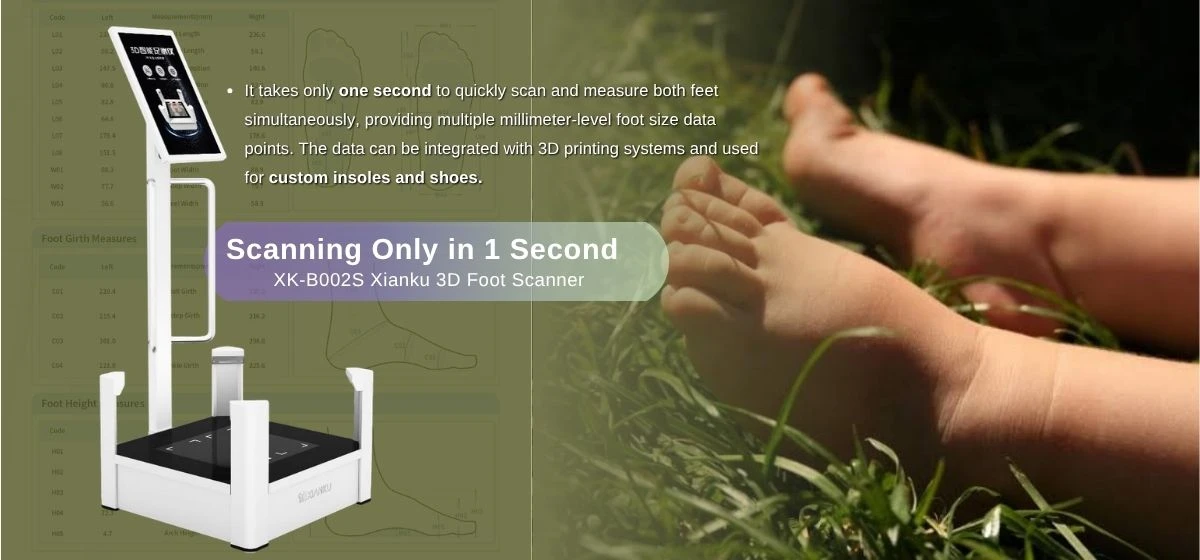
The Rise of 3D Foot Scanning: Creating a Digital Map of Every Child's Foot
3D Foot Scanning changes the traditional approach.
Instead of asking:
"What shoe size does this child wear?"
Technology allows brands and retailers to ask:
"What kind of foot does this child have?"
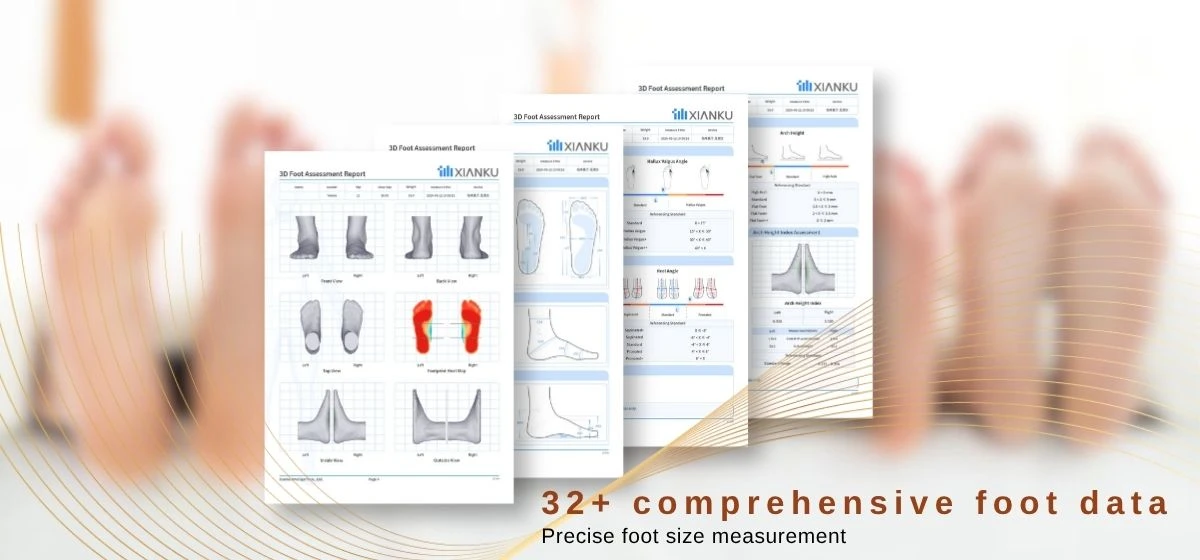
A 3D Foot Scanner can capture detailed foot information, including:
- Foot length
- Foot width
- Arch height
- Foot shape
- Left-right differences
- Pressure distribution
This creates something the footwear industry has never had at scale:
Individual foot data.
The value is not only measurement.
It is understanding.
A parent can move from:
"I hope this shoe fits."
to:
"I know why this shoe is suitable."
From Shoe Retailers to Foot Health Advisors
This technology also creates a new opportunity for children's shoe stores.
For decades, shoe retail has followed a simple model:
Customer enters.
Customer chooses a product.
Customer leaves.
The relationship ends after the transaction.
But 3D scanning creates a different experience.
The process becomes:
Foot scanning.
↓
Digital foot analysis.
↓
AI recommendation.
↓
Personalized footwear solution.
The store is no longer only selling shoes.
It becomes a place where parents can understand their children's foot development.
This creates a stronger relationship between brands and customers.
The value shifts from:
Selling more products.
To:
Providing better answers.
AI Changes the Role of Foot Data
Collecting data is only the first step.
The bigger opportunity comes from artificial intelligence.
AI can analyze individual foot information and help identify patterns:
- Which support type may be suitable
- Which footwear structure matches the foot shape
- How the foot changes over time
In the future, AI could create a continuous foot development profile for children.
Instead of one-time measurement:
A child's foot becomes a long-term health dataset.
Parents could understand:
How their child's feet are developing.
When footwear should be adjusted.
What type of support may be needed.
Why 3D Printed Insoles May Become the First Step
Although personalized shoes represent the ultimate vision, customized insoles may become one of the earliest practical applications.
Why?
Because insoles directly influence:
- Support.
- Pressure distribution.
- Comfort.
- Movement.
A 3D Foot Scanner can identify different foot structures:
- Normal arch.
- Flat feet.
- Severe flat feet.
- High arch.
Then AI can recommend different support solutions.
Finally, 3D printing can manufacture a product based on individual needs.
The process becomes:
- Scan.
- Analyze.
- Design.
- Print.
- Deliver.
Personalization becomes faster and more accessible.
The Future of Children's Shoes May Not Be More Sizes
For decades, footwear companies solved fitting problems by creating more sizes.
- More categories.
- More models.
- More inventory.
But more sizes do not equal personalization.
A size chart can tell you:
How long the foot is.
It cannot fully explain:
How the foot moves.
How it is structured.
What support it requires.
The next evolution of footwear is not creating thousands of sizes.
It is creating thousands of individual solutions.
3D Printed Shoes: From Mass Production to Mass Personalization
The ultimate transformation is not simply better shoe selection.
It is a completely different manufacturing philosophy.
Traditional footwear:
- Design first.
- Produce millions.
- Find customers.
Future footwear:
- Understand the customer.
- Generate the design.
- Manufacture specifically for them.
- 3D printing makes this possible.
Combined with 3D scanning and AI, shoes can eventually become products generated from personal biological data.
The future question may no longer be:
"What size shoe do you wear?"
It may become:
"What shoe does your foot need?"
The Next Generation of Children's Footwear Will Be Data-Driven
The footwear industry has spent decades optimizing production.
The next decade may focus on something different:
Understanding people.
Children's feet are constantly changing.
Their shoes should no longer be based only on yesterday's measurements.
With:
3D Foot Scanner,
AI analysis,
and 3D printed manufacturing,
the footwear industry can move from standardized products toward personalized health solutions.
Because children grow every day.
Their shoes should finally grow smarter too.