

Introduction
Diabetes mellitus is one of the most widespread chronic diseases worldwide, affecting hundreds of millions of people. Among its many complications, diabetic foot remains one of the most serious, costly, and life-altering conditions. According to global clinical data, foot complications are a leading cause of diabetes-related hospitalizations and non-traumatic lower-limb amputations.
From a medical and commercial perspective, Diabetic foot assessment is not only a clinical necessity but also a strategic entry point for long-term patient management, preventive care, and value-based services. For foot clinics, orthotic providers, and footwear retailers, structured Diabetic foot assessment enables early risk identification, personalized interventions, and sustainable business models built around recurring care.
This article provides an in-depth, evidence-based overview of what diabetic foot is, why it is dangerous, how Diabetic foot assessment is performed, and how assessment-driven solutions can be translated into real-world commercial value.

What Is Diabetic Foot?
Diabetic foot refers to a group of foot conditions caused by prolonged hyperglycemia, leading to nerve damage (diabetic neuropathy), vascular impairment (peripheral arterial disease), and reduced immune response. These pathological changes significantly increase the risk of foot ulcers, infection, delayed wound healing, and ultimately amputation.
The condition does not occur suddenly. Instead, it develops progressively as sensory loss, pressure redistribution, skin breakdown, and microvascular dysfunction interact over time. Without systematic Diabetic foot assessment, early warning signs often go unnoticed until irreversible damage occurs.

Health Risks and Consequences of Diabetic Foot
The hazards of diabetic foot extend far beyond localized foot pain or discomfort. Clinically, it represents a multi-system failure with profound consequences.
Key Risks Include:
- Loss of protective sensation, increasing the risk of unnoticed trauma
- Abnormal plantar pressure leading to callus formation and ulcers
- Poor circulation, delaying tissue repair and wound healing
- High susceptibility to infection
- Increased risk of partial or total lower-limb amputation
From a quality-of-life standpoint, diabetic foot complications reduce mobility, independence, and psychological well-being. Economically, they impose significant long-term costs on healthcare systems and individuals alike. These realities reinforce the importance of standardized Diabetic foot assessment as a preventive cornerstone.
Why Diabetic Foot Assessment Matters
Diabetic foot is preventable in many cases. The critical factor is early detection. Diabetic foot assessment provides objective, repeatable data that allows clinicians and commercial service providers to:
- Stratify patient risk levels
- Monitor disease progression
- Guide footwear and orthotic decisions
- Reduce ulcer recurrence rates
- Improve long-term clinical outcomes
Without structured assessment, interventions are reactive rather than preventive, significantly reducing their effectiveness.

Core Methods of Diabetic Foot Assessment
Modern Diabetic foot assessment combines clinical examination with biomechanical and digital technologies. At least three complementary assessment methods are widely accepted in Western healthcare practice.
1. Neurological Sensory Assessment
This method evaluates the loss of protective sensation caused by peripheral neuropathy. Common tools include monofilament testing, vibration perception thresholds, and temperature discrimination.
Loss of sensation is a primary predictor of ulcer risk and is a foundational component of Diabetic foot assessment in both medical and commercial screening environments.
2. Vascular and Circulatory Assessment
Peripheral arterial disease is assessed through pulse palpation, ankle-brachial index (ABI), and skin perfusion indicators. Reduced blood flow significantly compromises healing potential and increases infection risk.
A comprehensive Diabetic foot assessment always includes circulatory evaluation, as mechanical correction alone is insufficient without adequate perfusion.
3. Plantar Pressure and Biomechanical Assessment
Abnormal pressure distribution is a major driver of ulcer formation. Digital plantar pressure analysis and foot structure evaluation identify high-risk zones under the forefoot, heel, and midfoot.
In commercial environments, this component of Diabetic foot assessment is especially valuable because it directly informs footwear and insole design.
4. Skin and Structural Foot Assessment
Visual inspection of skin integrity, callus thickness, deformities (such as claw toes or Charcot foot), and joint mobility completes the assessment process. These indicators provide insight into cumulative mechanical stress and disease progression.
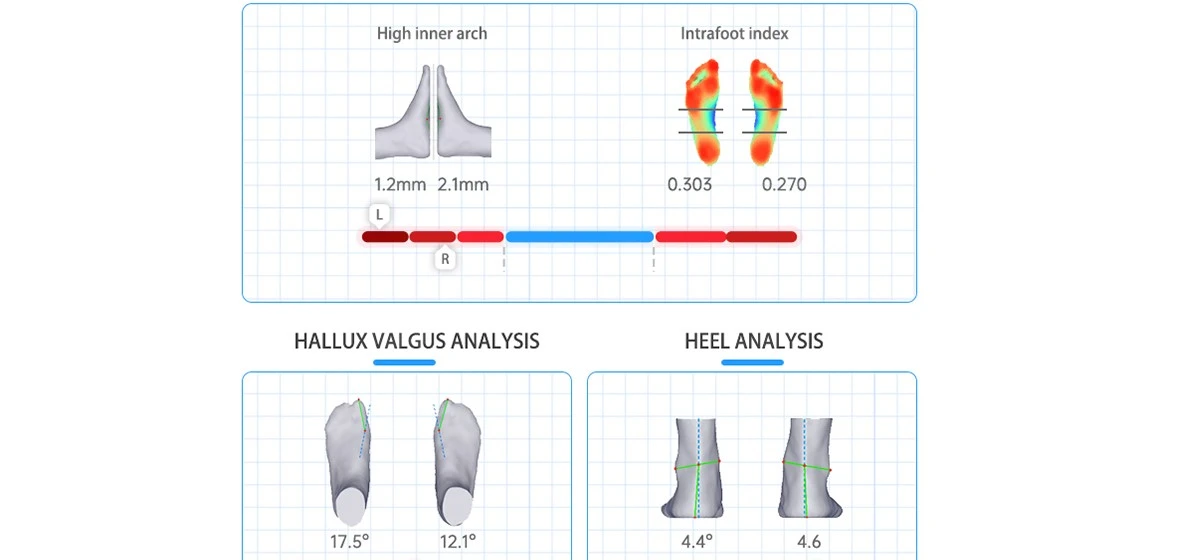
Summary of Diabetic Foot Assessment Methods
| Assessment Type | Primary Purpose | Clinical Value | Commercial Application |
|---|---|---|---|
| Neurological Sensory Testing | Detect loss of sensation | Predict ulcer risk | Risk screening services |
| Vascular Assessment | Evaluate blood flow | Healing potential | Referral and care planning |
| Plantar Pressure Analysis | Identify pressure hotspots | Ulcer prevention | Orthotic & footwear design |
| Skin & Structural Evaluation | Detect deformities and lesions | Disease staging | Product customization |
Corrective and Management Strategies
Effective management of diabetic foot relies on continuous assessment and personalized intervention rather than one-time treatment.
Offloading and Pressure Redistribution
Custom insoles and therapeutic footwear are essential tools for redistributing plantar pressure away from high-risk areas identified through Diabetic foot assessment. Proper offloading has been shown to significantly reduce ulcer recurrence.
Footwear Optimization
Shoes with adequate depth, rocker soles, seamless interiors, and stable heel counters are critical for diabetic patients. Assessment-driven footwear selection ensures functional protection rather than generic comfort.
Skin Care and Preventive Monitoring
Routine skin hydration, callus management, and periodic reassessment are integral to long-term success. Diabetic foot assessment enables measurable tracking of improvement or deterioration over time.
Multidisciplinary Care Integration
Optimal outcomes often require collaboration between podiatrists, diabetes educators, orthotic specialists, and footwear providers, all working from a shared assessment framework.
Commercial Monetization Opportunities
Diabetic foot presents a unique intersection between healthcare necessity and sustainable commercial services. When structured around Diabetic foot assessment, monetization can be ethical, evidence-based, and patient-centered.
1. Podiatry and Foot Clinics
Foot clinics can position Diabetic foot assessment as a recurring service rather than a one-time examination. Subscription-based monitoring programs, annual risk stratification packages, and bundled preventive care plans create predictable revenue while improving patient outcomes.
2. Custom Orthotic and Insole Solutions
Assessment-driven insoles offer significantly higher value than generic products. Plantar pressure data enables precision customization, improving efficacy and justifying premium pricing. Follow-up Diabetic foot assessment supports replacement cycles and long-term client retention.
3. Footwear Retail and Health-Oriented Stores
Retailers can integrate Diabetic foot assessment into in-store experiences, transforming shoe sales into consultative health services. Risk screening increases conversion rates, enhances trust, and differentiates brands in competitive markets.
Commercial Application Model Overview
| Business Sector | Assessment Role | Value Creation | Revenue Potential |
| Foot Clinics | Risk stratification | Preventive care | Long-term programs |
| Orthotic Providers | Pressure analysis | Custom solutions | High-margin products |
| Footwear Retail | Fit & risk screening | Trust-based sales | Service + product |
Building Trust Through EEAT Principles
To succeed in Western healthcare and retail markets, Diabetic foot assessment services must align with EEAT principles:
- Experience: Real-world patient data and measurable outcomes
- Expertise: Clinically grounded assessment protocols
- Authoritativeness: Transparent methodology and validated tools
- Trustworthiness: Ethical recommendations and data privacy
When assessment results clearly guide both clinical decisions and product recommendations, customer confidence increases substantially.
Conclusion
Diabetic foot is a preventable yet potentially devastating complication of diabetes. Diabetic foot assessment serves as the foundation for early detection, effective intervention, and sustainable commercial innovation. By combining neurological, vascular, biomechanical, and structural evaluation, assessment-driven models improve patient outcomes while unlocking long-term business value.
For podiatry clinics, orthotic specialists, and footwear retailers, investing in standardized Diabetic foot assessment is no longer optional-it is a strategic imperative that aligns healthcare responsibility with commercial success in modern Western markets.
