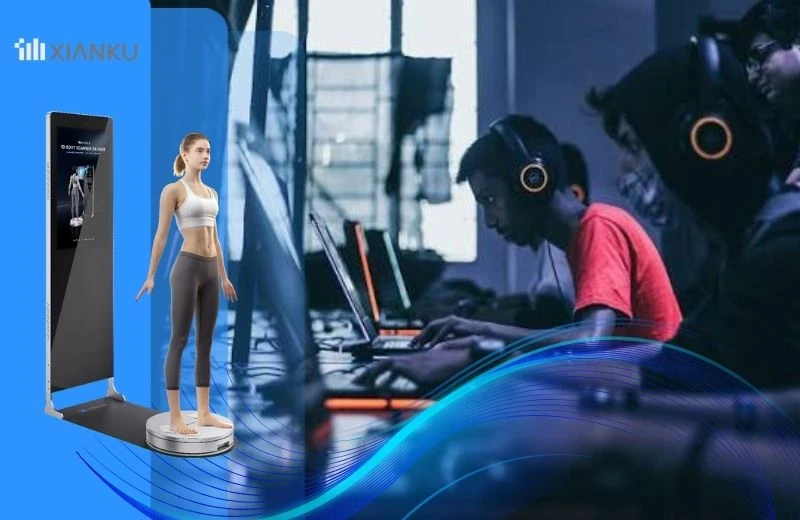
As League of Legends Worlds 2026 Approaches, a Bigger Story Is Emerging Beyond the Rift
The 2026 League of Legends World Championship is shaping up to be one of the biggest esports events in history.
This year's tournament will take place across Los Angeles, Texas, and New York, bringing together the world's best teams and millions of viewers worldwide. Riot Games has expanded the event format, increased global participation, and positioned Worlds 2026 as the centerpiece of competitive gaming.
Yet while fans focus on champion pools, meta shifts, and championship predictions, another story has quietly captured attention across the esports community:
Faker's ongoing concerns about his physical condition.

Widely regarded as the greatest League of Legends player of all time, Faker has repeatedly spoken about the importance of health management throughout his career. Following Worlds 2025, he revealed that recent health examination results were not as good as previous years and emphasized that health is directly connected to performance.
More recently, while discussing his preparation for upcoming international competitions, Faker again highlighted that managing his physical condition would be a critical priority.
For esports fans, these comments may seem routine.
For sports scientists, healthcare professionals, and performance specialists, they represent something much larger:
The growing health crisis facing professional gamers.
The Hidden Physical Demands of Professional Esports
Many people still view esports as a purely mental competition.
The reality is very different.
Elite League of Legends professionals often spend:
- 8 to 12 hours training daily
- Thousands of repetitive mouse and keyboard movements
- Long periods in fixed seated positions
- Continuous visual concentration
- High-pressure tournament schedules
Unlike traditional athletes who frequently alternate movement patterns, esports competitors often maintain similar postures for extended periods.
Over time, this creates significant stress on the musculoskeletal system.
Common issues reported among professional gamers include:
- Forward head posture
- Rounded shoulders
- Upper back dysfunction
- Neck pain
- Wrist strain
- Lumbar instability
- Pelvic imbalance
These conditions can negatively affect both long-term health and in-game performance.
Faker's Story Reflects a Larger Industry Problem
Faker is not the first elite player to discuss health concerns.
Throughout esports history, professional players have struggled with:
- Chronic wrist injuries
- Shoulder pain
- Nerve compression
- Postural dysfunction
- Burnout-related physical decline
Several years ago, Faker also publicly acknowledged arm-related health issues that affected his competitive performance and required treatment.
What makes his situation particularly significant is that it demonstrates a fundamental truth:
Even the most accomplished player in esports history cannot ignore physical health.
Mechanical skill alone is no longer enough.
Modern esports performance increasingly depends on physical sustainability.
The question is no longer whether health affects gaming performance.
The question is how organizations can measure and improve it.
Why Traditional Health Assessments Are No Longer Enough
Most esports organizations still rely on:
- Self-reported discomfort
- Manual posture observation
- Periodic physiotherapy sessions
- General fitness assessments
While helpful, these approaches often identify problems only after symptoms become noticeable.
By the time pain appears, compensatory movement patterns may already be affecting performance.
The esports industry is now beginning to adopt a philosophy long used in traditional sports:
Measure first. Prevent second. Treat third.
This shift is creating demand for advanced health assessment technologies.
One of the most promising solutions is AI-powered 3D body scanning.

The Rise of AI-Powered 3D Body Scanners in Performance Health
A modern 3D Body Scanner does far more than capture body measurements.
Using advanced imaging technology and biomechanical analysis, these systems can create a detailed digital representation of the human body within seconds.
Key measurements may include:
- Head position
- Shoulder symmetry
- Pelvic alignment
- Spinal curvature
- Weight distribution
- Postural balance
- Lower-limb alignment
Unlike subjective observation, digital scanning provides objective and repeatable data.
This allows organizations to detect subtle postural changes before they become serious health concerns.
For esports athletes who spend thousands of hours in seated positions each year, this information can be invaluable.
What Happens When Posture Breaks Down?
Many gamers underestimate the impact of posture on performance.
However, posture directly influences:
Breathing Efficiency
Forward head posture and rounded shoulders can reduce thoracic mobility and breathing capacity.
Reaction Consistency
Physical discomfort creates cognitive distractions that may reduce focus during competition.
Endurance
Poor biomechanics increase muscular fatigue during long practice sessions.
Recovery
Misalignment can slow recovery between matches and training blocks.
Injury Risk
Chronic stress accumulates over months and years, increasing the likelihood of overuse injuries.
In a game where milliseconds can determine victory or defeat, these factors matter.
Why Worlds 2026 Could Become a Turning Point for Esports Health
The esports industry is entering a phase similar to what traditional sports experienced decades ago.
Professional football clubs once viewed biomechanics as optional.
Today, it is standard practice.
Professional basketball teams once ignored movement screening.
Now it is embedded into athlete development programs.
Esports appears to be heading in the same direction.
As League of Legends Worlds 2026 brings global attention to competitive gaming, organizations are investing more heavily in:
- Sports science
- Performance psychology
- Physical conditioning
- Injury prevention
- Biomechanical assessment
The next competitive advantage may not come from strategy alone.
It may come from understanding the human body more effectively.
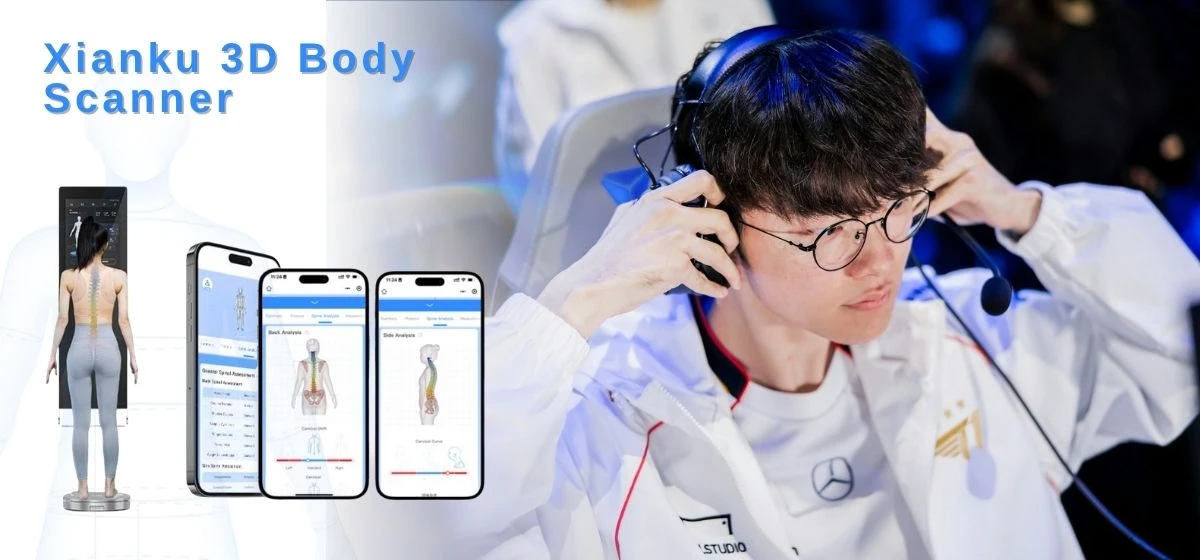
How XIANKU 3D Body Scanner Supports the Future of Esports
As esports organizations seek objective health data, technologies such as the XIANKU 3D Body Scanner are becoming increasingly relevant.
Designed for rapid and accurate posture assessment, the system provides comprehensive body alignment analysis within seconds.
Key capabilities include:
- AI posture screening
- Shoulder balance assessment
- Pelvic tilt evaluation
- Spinal alignment analysis
- Lower limb symmetry measurement
- Digital health reporting
The visual nature of 3D scanning also improves athlete engagement.
Instead of simply being told they have a posture issue, players can see it.
This transforms health management from an abstract concept into actionable data.
For teams, academies, training centers, and healthcare providers working with gamers, such insights can support more personalized interventions and long-term performance planning.
The Future of Esports May Depend on Health Technology
As the League of Legends World Championship 2026 approaches, fans will continue debating draft strategies, player rankings, and championship favorites.
Yet Faker's comments serve as a reminder that behind every highlight play is a human body under constant stress.
The greatest esports player in history has repeatedly emphasized the importance of health management.
That message carries significance far beyond League of Legends.
The future of esports will not be defined solely by mechanical skill, reaction speed, or game knowledge.
It will also be defined by how effectively organizations protect the physical health of their athletes.
In that future, AI-powered health screening, posture analysis, and 3D body scanning may become as essential as coaching, analytics, and practice itself.
Because even in a digital competition, performance begins with the human body.
And increasingly, the first step toward understanding that body is a scan.