

Genu recurvatum, commonly referred to as knee hyperextension, is often underestimated in both clinical and commercial settings. For industry operators-such as physical therapy centers, chiropractic clinics, spine clinics, posture studios, and performance-based wellness businesses-genu recurvatum represents not only a biomechanical risk factor, but also a critical entry point for long-term client management. A structured Genu Recurvatum Assessment and Correction strategy allows professionals to move beyond symptom-based care and deliver measurable, data-driven outcomes.
This article explores genu recurvatum from an evidence-informed perspective, detailing its causes, risks, and correction pathways, while demonstrating how Genu Recurvatum Assessment and Correction can be integrated into scalable service models. The focus is on practical application, client tracking, and value creation for operators serving Western markets.

What Is Genu Recurvatum?
Genu recurvatum is defined as excessive knee extension beyond the normal anatomical range when standing or during gait. Clinically, it is often identified when the knee extends more than 5–10 degrees past neutral alignment. While some cases are structural, many are functional and influenced by neuromuscular control, posture habits, and kinetic chain imbalance.
From a business standpoint, genu recurvatum is rarely an isolated issue. It is commonly associated with ankle instability, pelvic tilt abnormalities, spinal compensation, and altered load distribution. This makes Genu Recurvatum Assessment and Correction a foundational component of whole-body posture evaluation.
Common Causes of Genu Recurvatum
Understanding root causes is essential for effective Genu Recurvatum Assessment and Correction. The condition typically arises from a combination of the following factors:
- Quadriceps dominance with insufficient hamstring activation
- Calf muscle tightness limiting ankle dorsiflexion
- Ligament laxity or prior knee injury
- Poor proprioception and postural awareness
- Long-term standing habits with locked knees
- Neurological or post-surgical compensation patterns
In commercial practice, failure to identify these contributors often leads to incomplete care plans and inconsistent outcomes.
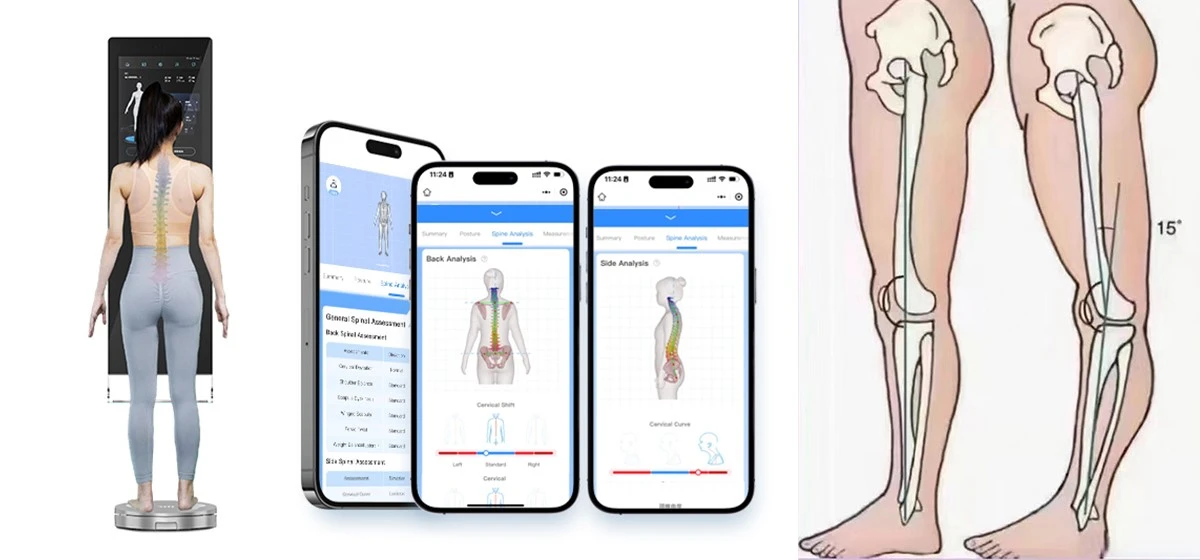
Problems and Risks Associated With Knee Hyperextension
Unchecked genu recurvatum increases stress across multiple structures, leading to progressive dysfunction. A comprehensive Genu Recurvatum Assessment and Correction framework should address the following risks:
| Affected Area | Functional Impact | Long-Term Risk |
|---|---|---|
| Knee joint | Posterior capsule strain | Early joint degeneration |
| ACL/PCL | Increased ligament stress | Instability or rupture |
| Lower back | Compensatory lordosis | Chronic lumbar pain |
| Hip joint | Altered extension mechanics | Reduced gait efficiency |
| Ankle/foot | Altered load transfer | Plantar fasciitis, Achilles stress |
For clinics and wellness centers, these risks represent both a clinical responsibility and an opportunity to provide preventive, value-added services.
Why Visual and Quantitative Assessment Matters
Traditional observation-based screening often fails to capture subtle but clinically significant knee hyperextension. Modern Genu Recurvatum Assessment and Correction relies on quantitative posture analysis to establish baselines and monitor progress.
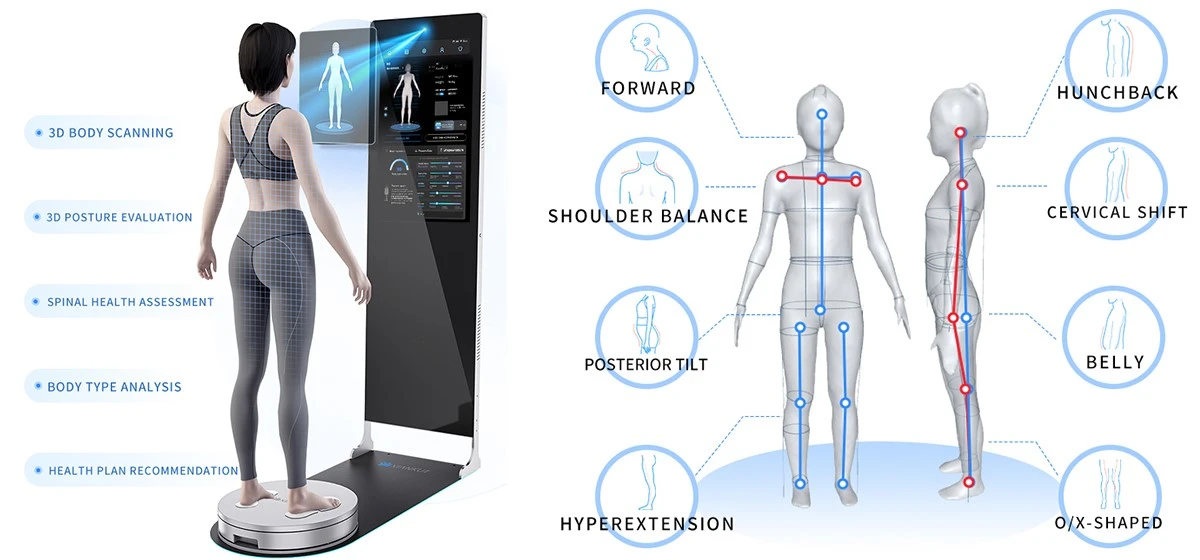
Advanced 3D body posture assessment systems enable:
- Precise knee angle measurement in standing posture
- Detection of left–right asymmetry
- Correlation between knee position and pelvic or spinal alignment
- Objective documentation for client education and compliance
For operators, objective data transforms subjective advice into measurable value.
Clinical Assessment Framework
An effective Genu Recurvatum Assessment and Correction protocol typically includes the following steps:
| Assessment Stage | Purpose | Business Value |
| Static posture scan | Identify knee extension angle | Clear visual explanation |
| Dynamic movement analysis | Observe gait and load transfer | Functional insight |
| Kinetic chain mapping | Link knee to pelvis and spine | Cross-service integration |
| Baseline data storage | Track progression | Retention and re-engagement |
This structured approach supports both clinical accuracy and scalable service delivery.
Correction Strategies: From Theory to Practice
Correction must be individualized and progressive. A standardized Genu Recurvatum Assessment and Correction plan typically combines three pillars:
1. Neuromuscular Re-education
- Teaching clients to avoid knee locking during standing
- Enhancing proprioceptive awareness
- Training controlled knee flexion in static and dynamic tasks
2. Strength and Mobility Rebalancing
- Hamstring and glute strengthening
- Quadriceps length regulation
- Ankle dorsiflexion mobility restoration
3. Postural Integration
- Pelvic alignment correction
- Spinal load redistribution
- Habit-based posture coaching
This multi-layered model allows operators to offer tiered programs rather than single-session interventions.
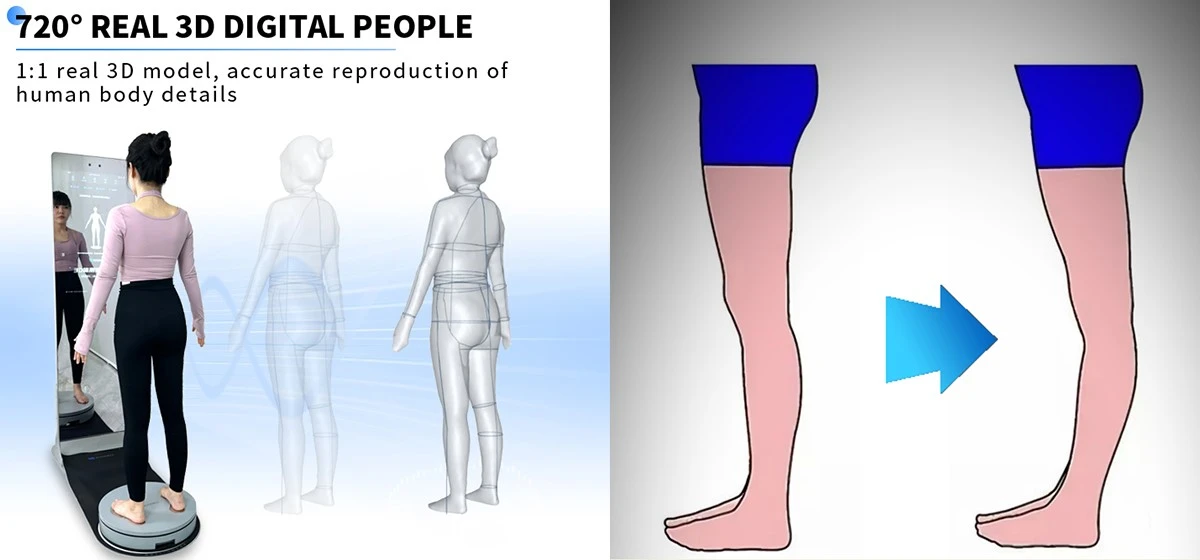
Applications Across Industries
Physical Therapy Centers
For physical therapy practices, Genu Recurvatum Assessment and Correction supports evidence-based treatment planning. Objective posture data enhances documentation, improves interdisciplinary communication, and strengthens reimbursement narratives where applicable.
Chiropractic and Spine Clinics
In chiropractic and spine-focused settings, knee hyperextension often explains persistent lumbar or sacral stress. Integrating Genu Recurvatum Assessment and Correction enables practitioners to justify full-chain correction strategies instead of isolated spinal adjustments.
Sports Performance and Wellness Studios
Studios focused on yoga, Pilates, or functional training benefit from identifying knee hyperextension early. A clear Genu Recurvatum Assessment and Correction pathway reduces injury risk and elevates professional credibility.
Corporate and Preventive Health Programs
Posture-related knee issues are common among standing or service-based professionals. Offering periodic Genu Recurvatum Assessment and Correction screenings creates recurring engagement and long-term contracts.
Tracking Progress and Demonstrating Value
One of the most overlooked elements of Genu Recurvatum Assessment and Correction is progress tracking. Without visible improvement metrics, clients may disengage even when functional gains exist.
| Tracking Metric | Measurement Method | Client Benefit |
| Knee extension angle | 3D posture scan | Visual improvement proof |
| Symmetry index | Left/right comparison | Objective balance feedback |
| Postural chain change | Knee–pelvis–spine linkage | Whole-body understanding |
| Time-based comparison | Pre/post program scans | Motivation and trust |
For operators, this data supports upselling follow-up programs and long-term care plans.
Business Differentiation Through Data-Driven Care
In competitive Western markets, differentiation is no longer based solely on technique. Genu Recurvatum Assessment and Correction becomes a strategic offering when paired with:
- Standardized assessment reports
- Visual posture education tools
- Clear correction roadmaps
- Longitudinal data tracking
This approach positions businesses as outcome-driven solution providers rather than service vendors.
Conclusion
Genu recurvatum is more than a knee issue-it is a systemic posture problem with far-reaching consequences. For industry operators, adopting a structured Genu Recurvatum Assessment and Correction model enables more accurate evaluations, stronger client engagement, and sustainable business growth.
By combining objective assessment, individualized correction strategies, and long-term tracking, clinics and wellness businesses can deliver measurable results that align with modern expectations for transparency, effectiveness, and professionalism. In today's data-driven health and wellness landscape, Genu Recurvatum Assessment and Correction is not optional-it is foundational.
