High arch feet, clinically referred to as pes cavus, are often overlooked compared to flat feet, yet they pose equally significant biomechanical and health risks. Individuals with high arches typically exhibit reduced shock absorption, increased plantar pressure on the heel and forefoot, and higher susceptibility to stress fractures, ankle instability, and chronic pain.
In recent years, High arch assessment has become a critical focus for clinicians, footwear brands, and foot health professionals seeking to move beyond subjective observation toward data-driven evaluation. Accurate High arch assessment not only supports clinical diagnosis but also enables scalable commercial applications in footwear customization, orthotic design, and preventative foot care services.
This article explores High arch assessment from three core perspectives:
- Arch coefficient and quantitative evaluation
- Clinical assessment and screening applications
- Commercial and business integration in footwear retail and podiatric clinics
Understanding High Arches and Their Biomechanical Impact
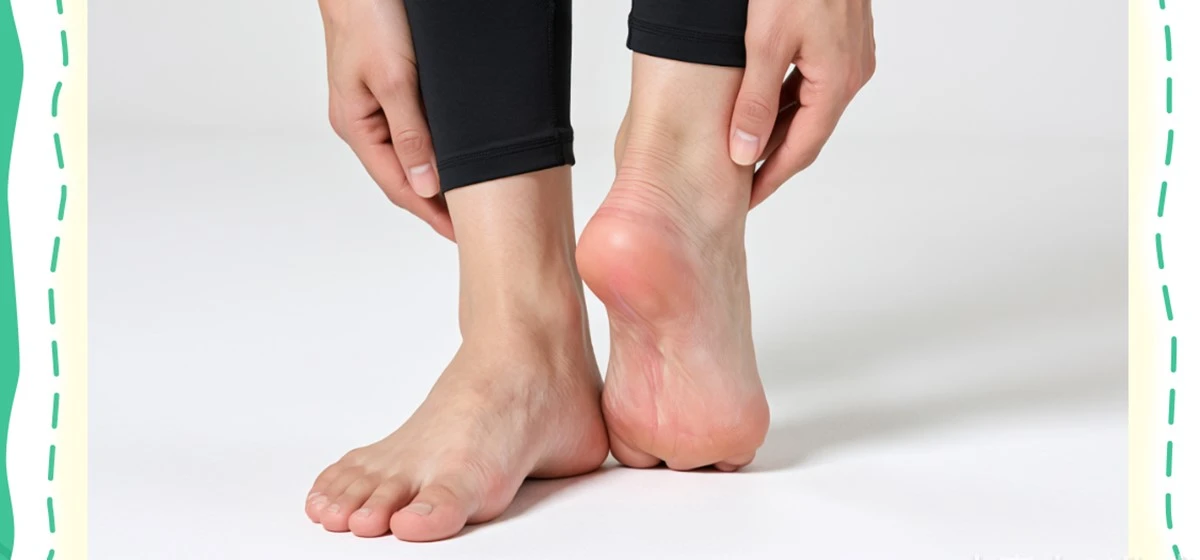
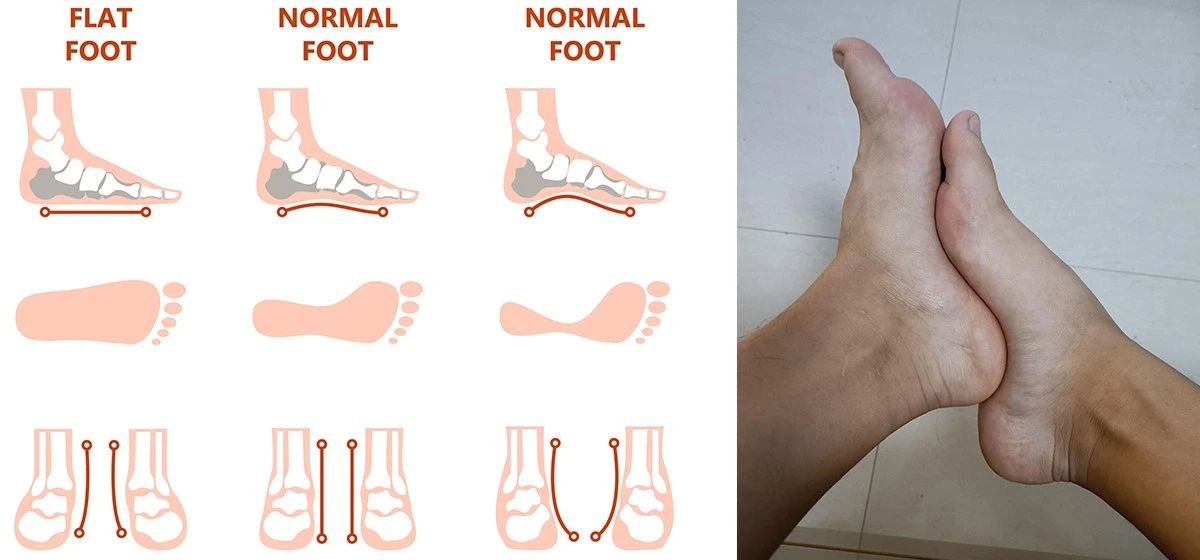
A high arch foot is characterized by an elevated medial longitudinal arch that remains high during both weight-bearing and non-weight-bearing activities. Unlike flexible flat feet, high arches often lack adaptability, leading to uneven pressure distribution across the plantar surface.
From a biomechanical standpoint, individuals with high arches often experience:
- Concentrated plantar pressure on the heel and metatarsal heads
- Reduced midfoot contact area
- Limited pronation during gait
- Increased risk of lateral ankle sprains
These characteristics underline the importance of systematic High arch assessment rather than relying on visual inspection alone.
Arch Coefficient Evaluation in High Arch Assessment
What Is the Arch Index?
One of the most widely used quantitative tools in High arch assessment is the Arch Index (AI), derived from footprint or plantar pressure data. The arch index evaluates the proportion of midfoot contact relative to the total foot contact area (excluding toes).
Arch Index Formula:
Arch Index = Midfoot Area / Total Foot Area (Heel + Midfoot + Forefoot)
Lower arch index values are typically associated with high arches.
Arch Index Classification
| Arch Type | Arch Index Range | Interpretation |
|---|---|---|
| High Arch | < 0.21 | Reduced midfoot contact, rigid structure |
| Normal Arch | 0.21 – 0.26 | Balanced load distribution |
| Low Arch | > 0.26 | Excessive midfoot contact |
In High arch assessment, the arch index offers a standardized and repeatable metric that can be applied across clinical and commercial settings.
Clinical High Arch Assessment Methods
1. Visual and Structural Examination
Clinicians often begin High arch assessment with visual observation, noting:
- Elevated medial arch in stance
- Callus formation under heel and forefoot
- Hindfoot varus alignment
However, visual assessment alone lacks objectivity and is insufficient for long-term monitoring.
2. Plantar Pressure Analysis
Plantar pressure measurement is a cornerstone of modern High arch assessment. Using pressure mats or 3D foot scanning systems, clinicians can evaluate:
- Peak pressure zones
- Pressure-time integrals
- Load asymmetry between feet
| Parameter | High Arch Pattern | Clinical Implication |
|---|---|---|
| Heel Pressure | Elevated | Increased impact loading |
| Midfoot Contact | Minimal | Poor shock absorption |
| Forefoot Pressure | Concentrated | Metatarsalgia risk |
Plantar pressure-based High arch assessment enables precise intervention planning, particularly for orthotic prescriptions.
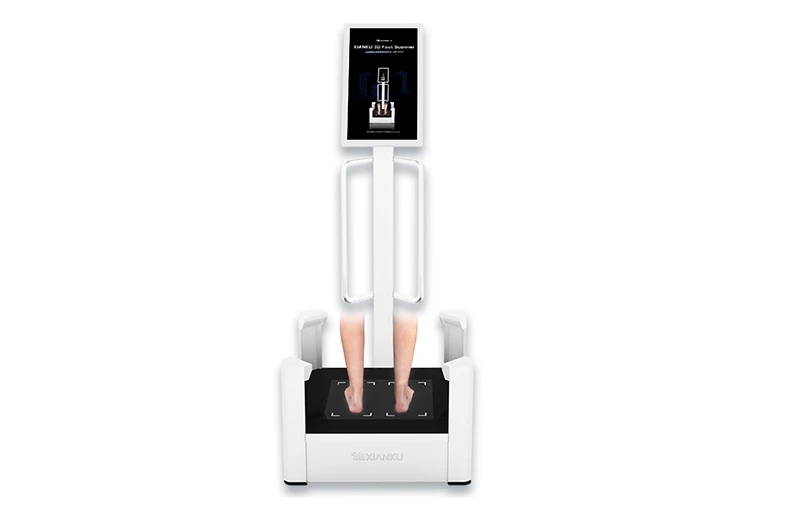
3. 3D Foot Scanning and Digital Modeling
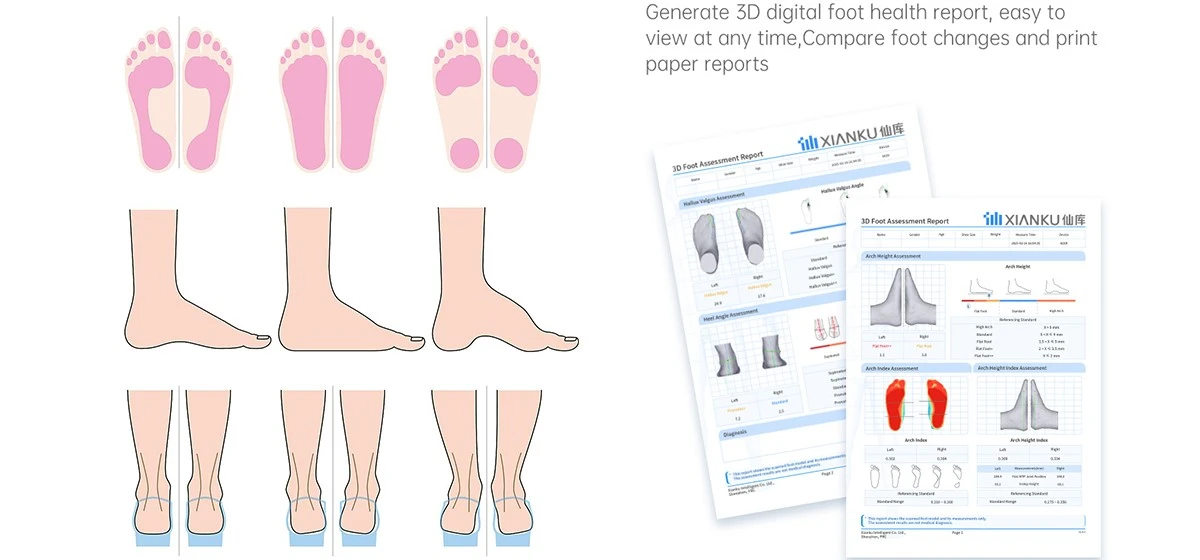
Advanced High arch assessment increasingly relies on 3D foot scanning technology. These systems capture:
- Arch height and curvature
- Foot volume and instep height
- Weight-bearing vs non-weight-bearing differences
Unlike traditional footprint methods, 3D scanning provides multi-dimensional data that supports both clinical diagnosis and commercial customization.
Comparative Overview of High Arch Assessment Methods
| Assessment Method | Accuracy | Scalability | Best Use Case |
|---|---|---|---|
| Visual Examination | Low | High | Initial screening |
| Arch Index (2D) | Medium | Medium | Standardized comparison |
| Plantar Pressure | High | Medium | Clinical diagnosis |
| 3D Foot Scanning | Very High | High | Clinical + commercial integration |
This layered approach allows High arch assessment to adapt to different environments, from medical clinics to retail floors.
Commercial Applications of High Arch Assessment
Footwear Retail and Customization
In the footwear industry, High arch assessment has shifted from optional service to competitive advantage. Brands that integrate foot assessment tools can:
- Match customers with arch-supportive footwear
- Reduce product returns caused by discomfort
- Increase consumer trust through personalized recommendations
High arches often require:
- Enhanced cushioning
- Lateral stability features
- Targeted arch support without overcorrection
Accurate High arch assessment ensures that footwear solutions align with biomechanical needs rather than generic sizing charts.
Orthotics and Insoles
Custom and semi-custom insoles are one of the most direct commercial outcomes of High arch assessment. Based on arch height, pressure distribution, and gait data, insoles can be designed to:
- Redistribute plantar pressure
- Improve shock absorption
- Enhance gait efficiency
Insoles derived from precise High arch assessment demonstrate higher compliance and better long-term outcomes compared to off-the-shelf alternatives.
High Arch Assessment in Podiatric Clinics
Foot health clinics increasingly rely on digital High arch assessment systems to improve diagnostic accuracy and patient communication.
Clinical Workflow Integration
| Stage | Role of High Arch Assessment |
|---|---|
| Initial Consultation | Objective baseline data |
| Diagnosis | Identification of cavus-related risks |
| Treatment Planning | Orthotics, footwear, rehab |
| Follow-Up | Outcome tracking and comparison |
By visualizing assessment data, clinicians can clearly explain conditions and treatment rationales, strengthening patient trust.
Business Value of High Arch Assessment
From a business perspective, High arch assessment delivers measurable value:
- Higher conversion rates in footwear retail
- Increased treatment adherence in clinical settings
- Differentiation in competitive markets
- Data-driven personalization at scale
When integrated correctly, High arch assessment transforms foot health from a reactive service into a proactive, preventative model.
EEAT Principles in High Arch Assessment Content
To align with EEAT standards (Experience, Expertise, Authoritativeness, Trustworthiness), effective High arch assessment content should:
- Reference clinically accepted metrics such as arch index and plantar pressure
- Demonstrate real-world application across medical and commercial contexts
- Avoid exaggerated claims or unsupported health promises
- Provide transparent explanations of limitations and variability
This approach builds credibility with both consumers and professional audiences.
The Future of High Arch Assessment
As foot health awareness continues to grow, High arch assessment is becoming an essential component of modern podiatry, footwear design, and preventative care strategies. By combining arch coefficient analysis, plantar pressure measurement, and 3D foot scanning, stakeholders can achieve a comprehensive understanding of high arch biomechanics.
Whether applied in a podiatric clinic or a retail environment, High arch assessment enables personalized solutions that improve comfort, reduce injury risk, and deliver long-term value. For businesses and clinicians alike, investing in accurate and scalable High arch assessment is no longer optional-it is foundational to the future of foot health.