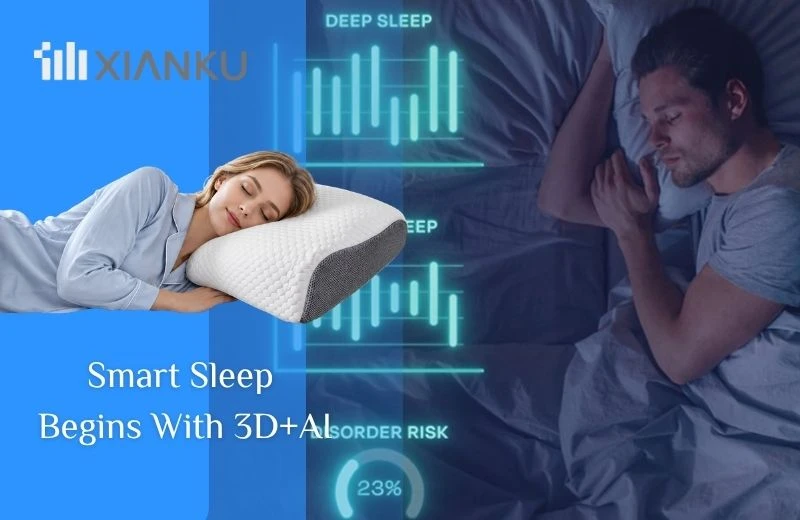
From One-Size-Fits-All Products to Personalized Sleep Solutions
Artificial intelligence has transformed the way we shop, work, and communicate. It recommends the movies we watch, the music we listen to, and even the routes we take to work. In healthcare, AI is helping physicians analyze medical images faster, supporting earlier diagnoses and more personalized treatment plans. Now, another industry is entering its own AI revolution-sleep.
For decades, the sleep products industry has focused on making products "better." Manufacturers invested in memory foam, latex, cooling fabrics, ergonomic contours, and premium materials, all in pursuit of improving sleep quality. Consumers, meanwhile, were presented with an overwhelming number of choices: soft or firm, high or low, cooling or warming, orthopedic or luxury.
But despite countless innovations, one fundamental question has remained surprisingly difficult to answer:
How do you know which pillow is actually right for you?
Artificial intelligence is changing the way the industry answers that question. More importantly, it is changing the way sleep products are designed, recommended, and personalized.
The future of better sleep may no longer begin with better materials.
It begins with better understanding.
The Sleep Industry Is Facing a Personalization Challenge
Sleep is deeply personal.
No two people sleep exactly the same way.
Some sleep on their side, while others prefer sleeping on their back or stomach. Some naturally move throughout the night, while others maintain the same position for hours. Body size, shoulder width, neck curvature, weight distribution, muscle tension, spinal alignment, and even age all influence what "comfortable sleep" actually means.
Yet surprisingly, many sleep products are still designed around standardized sizes and generalized customer preferences.
Consumers are often asked questions like:
"Do you prefer a soft pillow or a firm one?"
"Would you like a higher pillow or a lower pillow?"
"Do you usually sleep on your side?"
While these questions may provide some guidance, they only tell part of the story.
Preference is subjective.
Body structure is objective.
And the two are not always the same.
For example, someone may believe they prefer a high pillow simply because they've spent years adapting to one. Another person may choose a softer pillow because it feels comfortable in the showroom, only to experience neck stiffness after several nights of use.
Without understanding the body's physical characteristics, even the most experienced salesperson is still making an educated guess.
Artificial intelligence offers an opportunity to replace those guesses with measurable insights.
AI Doesn't Just Make Products Smarter-It Makes Recommendations Smarter
When people hear the phrase "AI sleep products," they often imagine pillows with embedded sensors or smart mattresses that track movement throughout the night.
Those technologies certainly have value.
However, one of AI's greatest opportunities lies somewhere much earlier in the customer journey.
Before a product is even purchased.
The real breakthrough is not simply creating a smarter pillow.
It's helping people choose the right pillow in the first place.
Think about how AI has changed other industries.
Streaming platforms no longer expect users to browse thousands of movies.
Instead, AI recommends content based on individual preferences.
Online retailers analyze shopping behavior to suggest products that fit each customer's needs.
Music platforms create personalized playlists instead of asking listeners to search through millions of songs.
The sleep industry is moving toward the same model.
Rather than asking consumers to navigate hundreds of nearly identical products, AI has the potential to recommend solutions based on objective information about the individual.
That represents a significant shift-from selling products to delivering personalized sleep solutions.
The Missing Piece Is Accurate Body Data
Of course, artificial intelligence cannot make intelligent recommendations without reliable information.
Just as GPS navigation requires accurate maps, AI requires accurate data.
This is where the sleep products industry faces its biggest challenge.
Many purchasing decisions today are still based on questionnaires or personal preferences.
Although these methods are convenient, they cannot fully describe the complexity of the human body.
- Shoulder width.
- Neck length.
- Head position.
- Body proportions.
- Spinal alignment.
- Body symmetry.
- Sleeping posture.
These physical characteristics are difficult-if not impossible-to measure through simple conversations.
Yet they play a critical role in determining whether a pillow provides proper support throughout the night.
As the industry moves toward personalization, body data is becoming just as important as material science.
Understanding the person is becoming more valuable than understanding the product.
Why 3D Body Scanning Changes Everything
Imagine entering a sleep showroom instead of browsing products online.
Rather than immediately testing different pillows, your journey begins with a quick, contactless 3D body scan.
Within seconds, advanced imaging technology captures hundreds of precise body measurements, creating a digital model that reflects your unique physical characteristics.
Instead of relying on subjective descriptions such as "I usually like medium-height pillows," objective data begins to tell a far more complete story.
How wide are your shoulders?
What is your natural cervical curve?
Is your posture balanced?
Does your head naturally tilt forward?
How does your body alignment change when standing?
These measurements provide valuable insights that simply cannot be obtained through traditional retail conversations.
When combined with artificial intelligence, this information becomes even more powerful.
AI can organize complex body measurements, identify important relationships between different parts of the body, and generate recommendations based on ergonomic principles rather than assumptions.
The result is not simply a better shopping experience.
It is a more scientific approach to selecting products that support long-term sleep health.
The Future of Sleep Starts Before You Go to Bed
For years, sleep technology has focused primarily on what happens after people fall asleep.
Wearable devices monitor heart rate.
Smart rings analyze sleep stages.
Mattresses detect movement during the night.
These technologies have helped millions of people better understand their sleep patterns.
But they rarely answer another equally important question:
Was your sleep environment designed for your body in the first place?
Artificial intelligence is shifting the industry's attention further upstream.
Instead of simply measuring sleep quality, companies are beginning to optimize the physical conditions that influence sleep before the first minute of rest even begins.
That means understanding body shape before recommending a pillow.
Understanding spinal alignment before designing support.
Understanding physical differences before manufacturing sleep products.
This is where the next chapter of the sleep industry begins-not with smarter electronics, but with smarter personalization.
And as AI continues to evolve, personalization will become the defining competitive advantage for sleep brands around the world.
From Products to Personalized Sleep Solutions
Artificial intelligence is changing more than the products themselves.
It is changing the entire relationship between brands and consumers.
Traditionally, sleep product companies manufacture a collection of pillows in different heights, firmness levels, and materials, hoping that one of them will fit each customer. Consumers compare specifications, test products in stores, read reviews online, and often rely on trial and error before finding something comfortable.
The process is familiar-but far from efficient.
Many people purchase multiple pillows before finding one they like. Others continue sleeping on products that don't properly support their bodies simply because they have become accustomed to discomfort.
AI offers an opportunity to replace this "guess-and-test" approach with something far more precise.
Instead of asking customers to adapt to products, future sleep products will adapt to individual customers.
That shift represents one of the biggest transformations the sleep industry has experienced in decades.
Modular Adjustable Pillows: Personalization That Evolves With You
Personalization does not always require creating an entirely new product.
Sometimes, it means giving users the flexibility to adapt their products as their bodies change.
This is where modular adjustable pillows are becoming increasingly valuable.
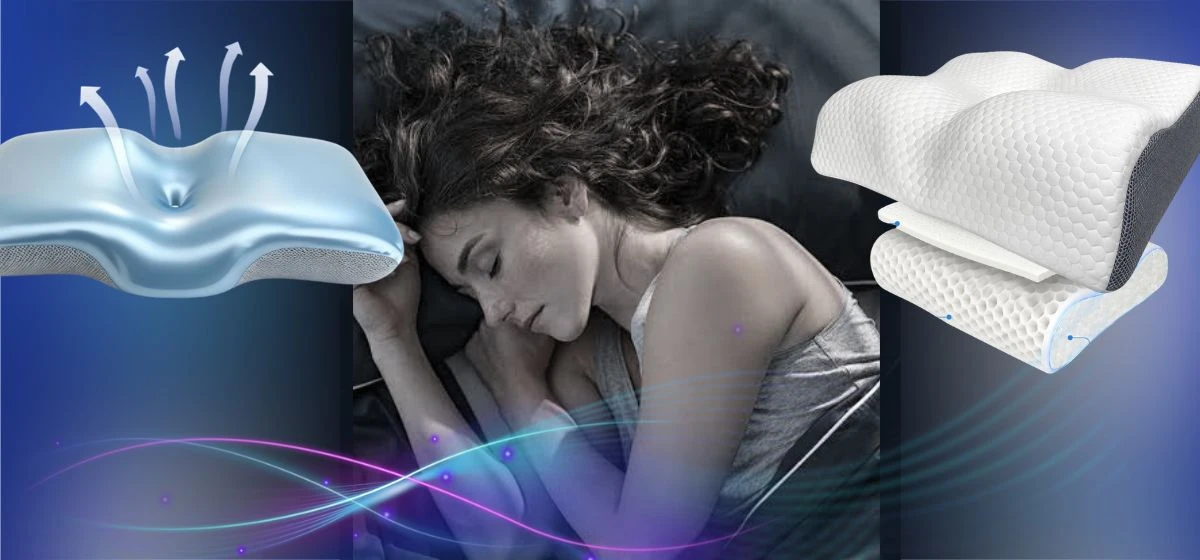
Unlike conventional pillows with a fixed height and structure, modular designs allow users to adjust internal layers to create different support heights and firmness combinations.
More importantly, these adjustments can be guided by objective body measurements rather than personal guesswork.
Imagine a customer completing a 3D body scan before selecting a pillow.
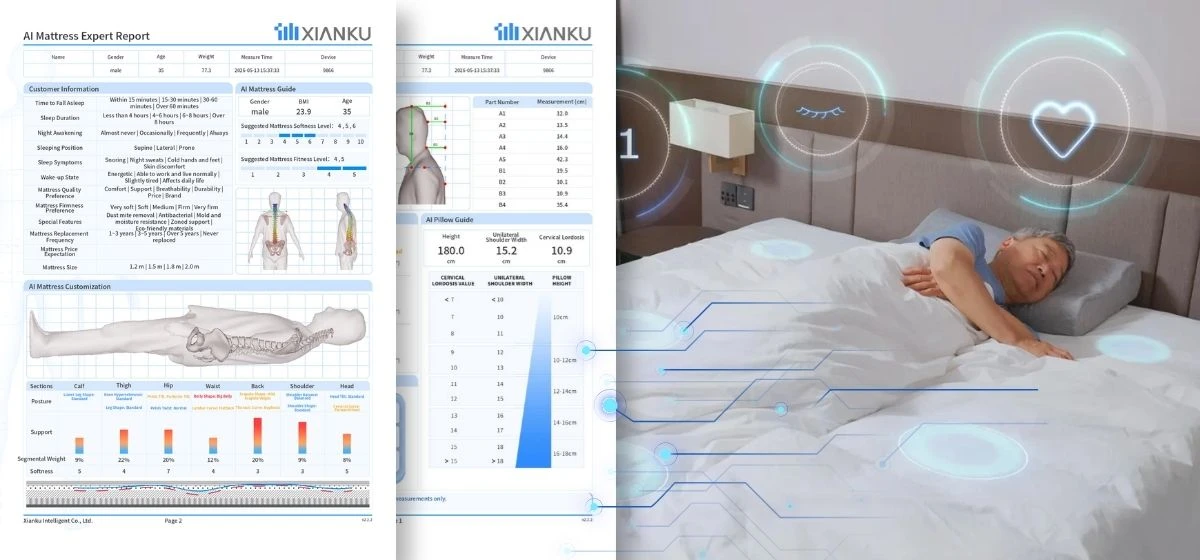
Instead of receiving a generic recommendation such as "medium height," AI analyzes factors such as shoulder width, neck curvature, body proportions, and sleeping posture to recommend an initial pillow configuration.
As the user's body changes over time-whether due to aging, rehabilitation, pregnancy, weight fluctuations, or changes in sleeping habits-the pillow can evolve as well.
Rather than replacing the product, users simply adjust its structure to match their current needs.
This transforms a pillow from a static product into an adaptable sleep system.
Beyond Standard Sizes: The Rise of 3D Printed Pillows
While modular products provide flexibility, additive manufacturing opens the door to an entirely different level of personalization.
For decades, pillow manufacturers have worked within the limitations of standardized production.
A product might be available in three heights.
Perhaps four firmness levels.
Maybe several sizes.
But every customer still chooses from predefined options.
Three-dimensional printing fundamentally changes that model.
Instead of selecting from a catalog, every pillow can potentially be designed around one individual.
A person's shoulder width.
- Neck angle.
- Head position.
- Sleeping posture.
- Body dimensions.
- Pressure distribution.
All of these measurements can become design parameters rather than afterthoughts.
AI processes the body data.
Advanced design software converts those measurements into optimized support structures.
Three-dimensional printing transforms those digital designs into physical products.
Instead of manufacturing thousands of identical pillows, companies can manufacture thousands of unique pillows-with each one designed for a single individual.
This represents far more than manufacturing innovation.
It represents a completely different philosophy of product design.
Mass production is gradually giving way to mass personalization.
Looking Beyond the Pillow
If AI can personalize a pillow, why stop there?
The same body data that helps optimize neck support can also improve the design of larger sleep systems.
- Pressure distribution.
- Body weight.
- Sleeping posture.
- Body dimensions.
- Spinal alignment.
These factors influence not only pillow selection but also mattress performance.
As the sleep industry continues to embrace artificial intelligence and digital manufacturing, personalized mattresses are becoming an increasingly realistic possibility.
Instead of selecting from a handful of firmness levels, future mattresses may be designed around an individual's unique body profile.
Different support zones could be optimized according to shoulder pressure, hip alignment, spinal curvature, and sleeping position.
Rather than adapting to the mattress, the mattress adapts to the sleeper.
At Xianku, this vision is already shaping future product development.
Building upon expertise in 3D body scanning, digital human modeling, and personalized sleep products, Xianku is actively exploring the next generation of AI-powered personalized mattress solutions designed to provide truly individualized support.
Although this technology is still under development, it reflects the direction in which the entire sleep industry is moving.
The future is no longer about manufacturing one mattress for millions of people.
It is about creating millions of mattresses that understand millions of different bodies.
AI Is Not Replacing Human Expertise
Whenever artificial intelligence enters a new industry, the same concern often appears:
Will AI replace professionals?
In the sleep products industry, the answer is no.
AI cannot replace experienced sleep consultants, physiotherapists, chiropractors, or healthcare professionals who understand the complex relationship between posture, movement, pain, and sleep quality.
What AI can do is provide those professionals with better information.
Instead of relying solely on conversations with customers, they gain access to objective body measurements and visual reports.
Instead of making recommendations based entirely on experience, they can combine professional judgment with accurate body data.
Technology does not replace expertise.
It strengthens it.
- For retailers, this means more confidence when recommending products.
- For clinics, it means better communication with patients.
- For consumers, it means greater trust in every recommendation they receive.
The Future of Sleep Retail Is Data-Driven
The evolution of AI is also changing how sleep products are sold.
Tomorrow's sleep stores may look very different from today's showrooms.
Rather than displaying hundreds of pillows and asking customers to choose one, future retail experiences could begin with understanding the customer first.
- A quick body scan.
- AI-powered analysis.
- A personalized sleep assessment.
- Tailored product recommendations.
- Follow-up evaluations over time.
The conversation shifts from:
"Which pillow do you like?"
to
"Which pillow does your body actually need?"
That distinction may seem subtle, but it fundamentally changes the customer experience.
Retailers become consultants.
Products become personalized solutions.
Sleep becomes measurable rather than subjective.
Conclusion
Artificial intelligence is not disrupting the sleep products industry because it can manufacture smarter pillows.
It is disrupting the industry because it is changing how products are recommended, designed, manufactured, and continuously improved.
For decades, the industry has focused on developing better materials.
The next decade will focus on developing better understanding.
Body data will become the foundation of personalized sleep.
Artificial intelligence will transform that data into meaningful insights.
Advanced manufacturing technologies such as 3D printing will convert those insights into products built for individuals rather than averages.
From modular adjustable pillows that evolve with changing needs, to fully customized 3D printed pillows, and eventually personalized mattresses designed around every unique body, the future of sleep is becoming increasingly intelligent-and increasingly personal.
The companies that succeed will not simply sell pillows or mattresses.
They will help people understand their bodies, improve their sleep, and build healthier lives through personalized solutions.
Because the future of better sleep doesn't begin with better foam.
It begins with better body data.