As a parent, you can remind your child to sit up straight at home. You can adjust their desk, limit screen time, encourage exercise, and remind them not to slouch.
But what happens when your child leaves for school?
You are not there when they sit in class, walk between classrooms, or carry their school bag home.
You cannot remind them to correct their posture every few minutes.
So instead of trying to control every movement, parents can focus on something their children carry every day:
The school backpack.
Why Does a School Backpack Matter for Your Child's Back?
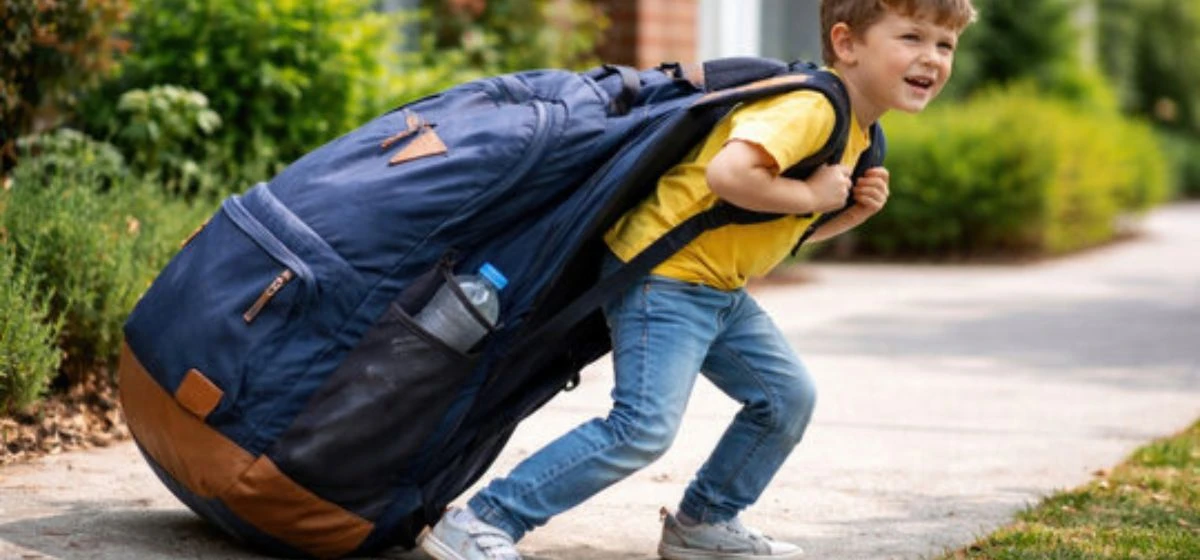
A backpack may seem like a simple school accessory, but children can carry it for hours every day.
If the backpack is too heavy, poorly adjusted, or carried incorrectly, it can place additional stress on the shoulders and back.
The American Academy of Pediatrics recommends choosing a backpack with wide, padded shoulder straps and a padded back. It also recommends using both shoulder straps, keeping the backpack appropriately adjusted, and keeping its weight within a reasonable proportion of the child's body weight.
This does not mean that every child who carries a backpack will develop a spinal problem.
The bigger question is:
Can we make the daily load more comfortable and better supported?
Parents Can't Monitor Posture All Day
Children spend a large part of their day away from home.
At school, they may:
- Sit at a desk for hours
- Walk between classrooms
- Carry books and electronic devices
- Travel to and from school
- Participate in sports and other activities
Parents can provide guidance, but they cannot observe every posture and every movement.
That is why prevention should not depend entirely on constant reminders.
A healthier approach is to create better daily conditions around the child.
A Backpack Should Do More Than Carry Books
Traditional backpacks are mainly designed around storage.
But children's backpacks can also be designed around ergonomics and comfort.
An ergonomic backpack can incorporate features such as:
- Padded shoulder straps
- Adjustable straps
- A supportive back panel
- Better weight distribution
- Breathable materials
- Multiple compartments for organizing loads
These features can help make carrying a school bag more comfortable and encourage better load distribution.
The goal is not to "correct" a child's spine with a backpack.
Instead, it is to reduce unnecessary strain and provide a more supportive carrying experience.
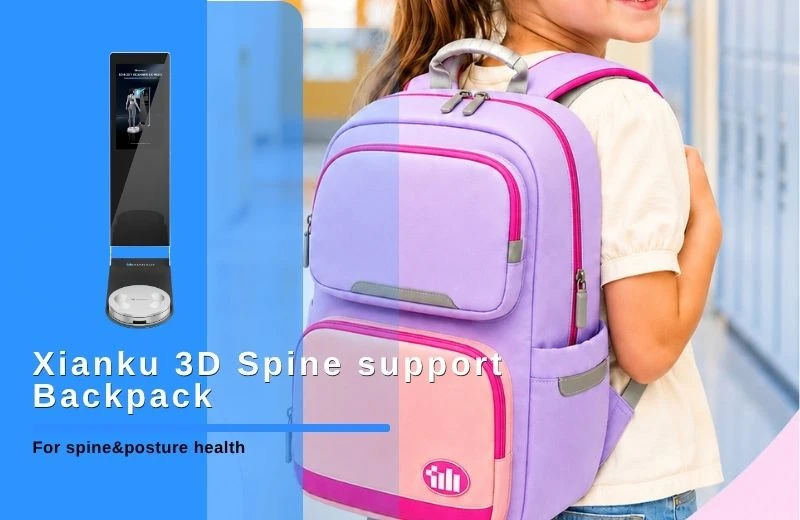
What Is a 3D Spine Support Backpack?
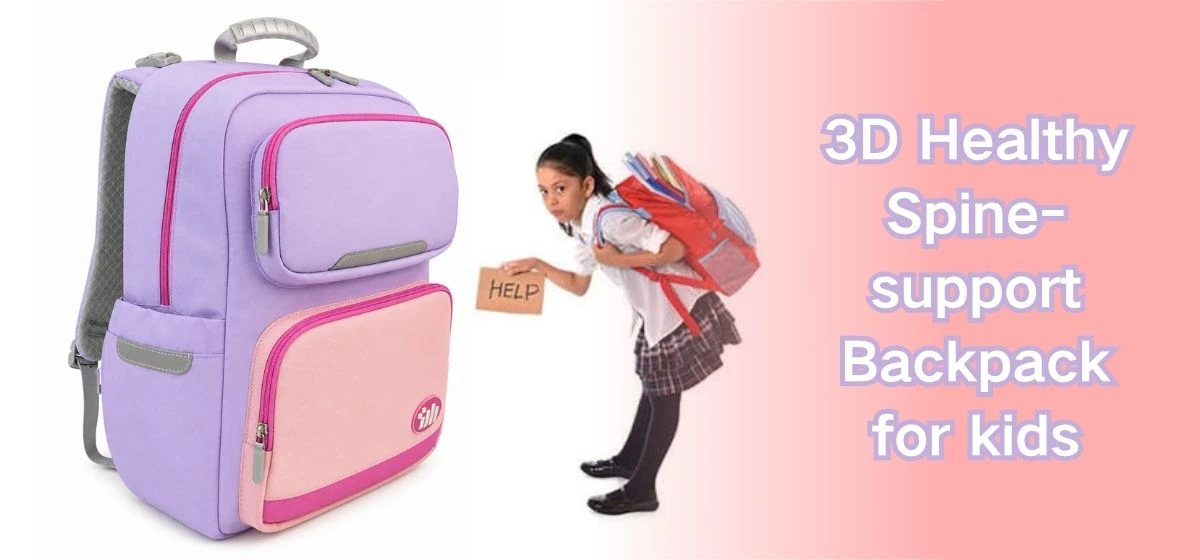
A 3D Spine Support Backpack takes ergonomic backpack design a step further by incorporating a three-dimensional support structure along the back.
The design can follow the natural shape of the user's back more closely than a flat backpack panel.
XIANKU's ergonomic backpack range includes 3D back support, adjustable padded shoulder straps, breathable materials, and weight-distribution features designed for more comfortable carrying.
Some models are specifically designed for children and school use, combining ergonomic back support with adjustable straps and reflective safety details.
Why Is Personalized Support Important?
Every child has a different body shape.
Children differ in:
- Height
- Shoulder width
- Back length
- Body proportions
- Posture
- Daily activity levels
A backpack that feels comfortable for one child may not feel the same for another.
This is why adjustable straps and ergonomic back support matter.
The backpack should sit appropriately on the child's body rather than simply hanging loosely from the shoulders.
The Backpack Is Only One Piece of the Puzzle
A supportive backpack cannot replace healthy posture habits or professional medical care.
Parents should also pay attention to:
1. Backpack Weight
A lighter backpack is generally preferable.
Regularly remove books, toys, and other items that your child does not need that day.
2. How the Backpack Is Worn
Encourage children to use both shoulder straps rather than carrying the backpack on one shoulder. The American Academy of Pediatrics specifically recommends using both straps because carrying a backpack on one shoulder can strain muscles.
3. Backpack Position
The backpack should be adjusted so that it sits appropriately on the child's back rather than hanging too low.
4. Daily Movement
Children should not spend the entire day in one position.
Regular physical activity and movement breaks are important parts of healthy development.
5. Posture Awareness
Parents can teach children to recognize uncomfortable positions without turning posture into a constant source of pressure.
If a child develops persistent or worsening back pain, changes in gait or posture, numbness, weakness, or other concerning symptoms, parents should seek appropriate medical evaluation.
What If You Could Understand Your Child's Posture More Objectively?
Parents often notice obvious problems such as rounded shoulders or slouching.
But subtle asymmetries can be harder to identify by simply looking at a child.
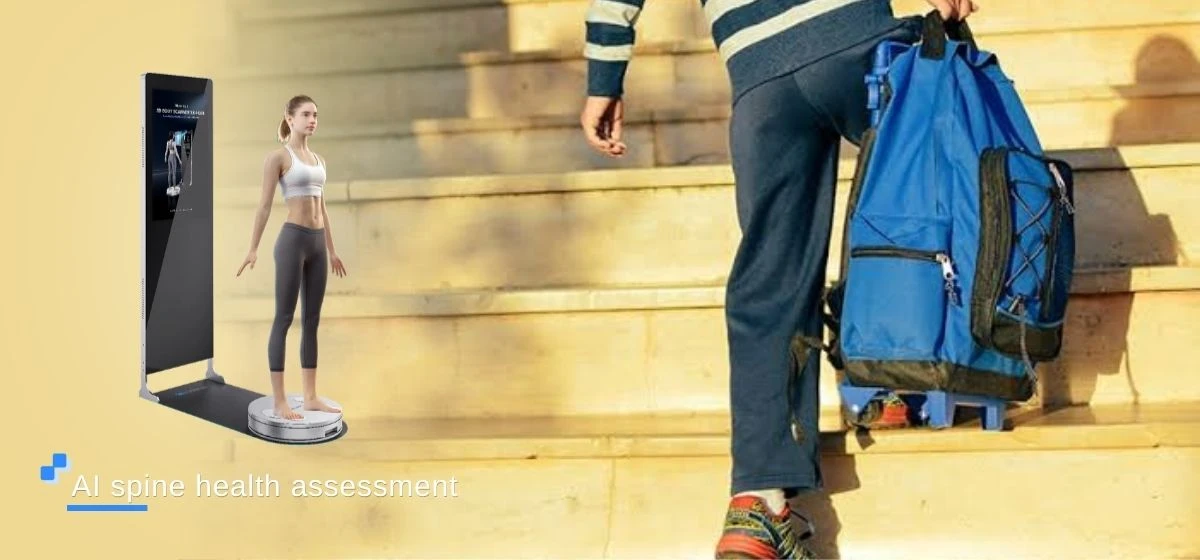
This is where 3D body scanning technology can provide additional information.
A 3D Body Scanner can create a digital representation of the body and help visualize characteristics such as shoulder symmetry, spinal alignment, pelvic position, and other posture-related measurements.
For healthcare providers and posture assessment centers, these measurements can provide a more objective way to monitor changes over time.
XIANKU describes its 3D body scanning solution as a non-contact, radiation-free approach for children's spinal and posture screening.
A scan should be viewed as an assessment tool, not as a replacement for medical diagnosis.
Protecting Your Child When You Can't Be There
You cannot follow your child into every classroom.
You cannot remind them about their posture every five minutes.
And you certainly cannot control everything they do during the school day.
But you can make thoughtful choices about the environment and products they use every day.
A properly fitted, ergonomically designed backpack is one small but practical part of that strategy.
A 3D Spine Support Backpack can provide a more supportive and comfortable carrying experience, while regular posture awareness, appropriate backpack weight, physical activity, and professional assessment when needed can provide additional layers of support.
Because protecting your child's spine is not about watching them every second.
It's about giving them better support even when you're not there.