

For decades, the mattress industry has operated on a convenient fiction: that a single firmness level can adequately support every body type. Shoppers are asked to lie on a bed for 30 seconds and decide if it "feels right." They are told that "medium-firm" is the scientific consensus. And they leave with a product designed for an average person who does not actually exist.
The result? A 2023 survey by the International Sleep Products Association found that nearly 40% of mattress buyers experienced some form of discomfort within the first three months of purchase. Returns and exchanges cost US retailers an estimated $1.2 billion annually.
But a new generation of sleep stores is abandoning the "one-size-fits-nobody" model. They are adopting customized mattresses driven by real human body data. And the technology making this possible is not a pressure map alone - it is 3D body scanning.

Why "Firmness" Is Not Enough
Most mattress customization today focuses on firmness levels or zoned support layers. These are improvements, but they still rely on population averages. A "soft" mattress for a 120-pound side sleeper may still feel hard if that sleeper has narrow shoulders and a pronounced hip curve.
What is missing is individual anthropometric geometry - the actual shape, mass distribution, and skeletal alignment of the customer.
According to Dr. John Garcia, a spine biomechanics researcher at the University of Pittsburgh, "The spine does not care about marketing terms like 'cooling gel' or 'breathable foam.' It cares about one thing: neutral alignment under load. Without measuring the person's specific curves - cervical, thoracic, lumbar - you cannot engineer that alignment."
This is where customized mattresses based on 3D body data outperform traditional approaches.
How 3D Body Scanning Enables True Mattress Customization
Traditional mattress fitting relies on subjective feedback and simple measurements like height and weight. The Xianku 3D Body Scanner captures over 128 body data points in 20 seconds, including:
- Cervical, thoracic, and lumbar curvature
- Pelvic tilt angle and pelvic width
- Shoulder width and acromion height
- Body composition (muscle vs. fat distribution)
- Center of gravity offset
These data points are critical for designing a mattress that maintains spinal neutrality across all sleep positions. For example:
- A customer with an excessive lumbar lordosis (swayback) requires deeper lumbar zone support.
- A customer with narrow shoulders and wide hips needs a softer shoulder zone but firmer hip zone.
- A customer with significant pelvic tilt asymmetry may need a wedge or tapered support layer.
Without this data, even "custom" mattresses are guesses. With Xianku, they become biomechanically precise.
Chart 1: Key Body Metrics That Influence Mattress Design
| Body Metric | Impact on Mattress Customization | Xianku Scan Included? |
|---|---|---|
| Shoulder width (cm) | Determines shoulder zone softness depth | Yes |
| Lumbar lordosis angle | Determines lumbar support curve height | Yes |
| Pelvic tilt angle | Determines hip zone firmness and tilt compensation | Yes |
| BMI and muscle mass distribution | Affects pressure point mapping | Yes (15 composition metrics) |
| Cervical curvature | Guides pillow height and neck support zone | Yes |
From Data to Delivery: The Custom Mattress Workflow for Sleep Stores
Here is how sleep retailers are already using Xianku to offer genuine mattress customization:
Step 1: 20-Second Scan
The customer stands in front of the Xianku 3D Body Mirror. Structured light captures their full body shape and skeletal landmarks. No disrobing. No contact.
Step 2: AI-Powered Analysis
The system generates a spinal health report, body composition analysis, and detailed circumference data. It identifies asymmetry, curvature abnormalities, and pressure risk zones.
Step 3: Mattress Prescription
Based on the customer's unique geometry, the system recommends a specific mattress configuration:
- Firmness zones (shoulder, torso, hip, leg)
- Support layer depth and density
- Pillow height for neck alignment
The store can either carry modular mattresses or transmit the data to a partner manufacturer for full customization.
Step 4: Post-Sale Comparison
After a period of use, the customer can be re-scanned. The 3D body comparison feature shows actual posture changes, building trust and enabling future upgrades.
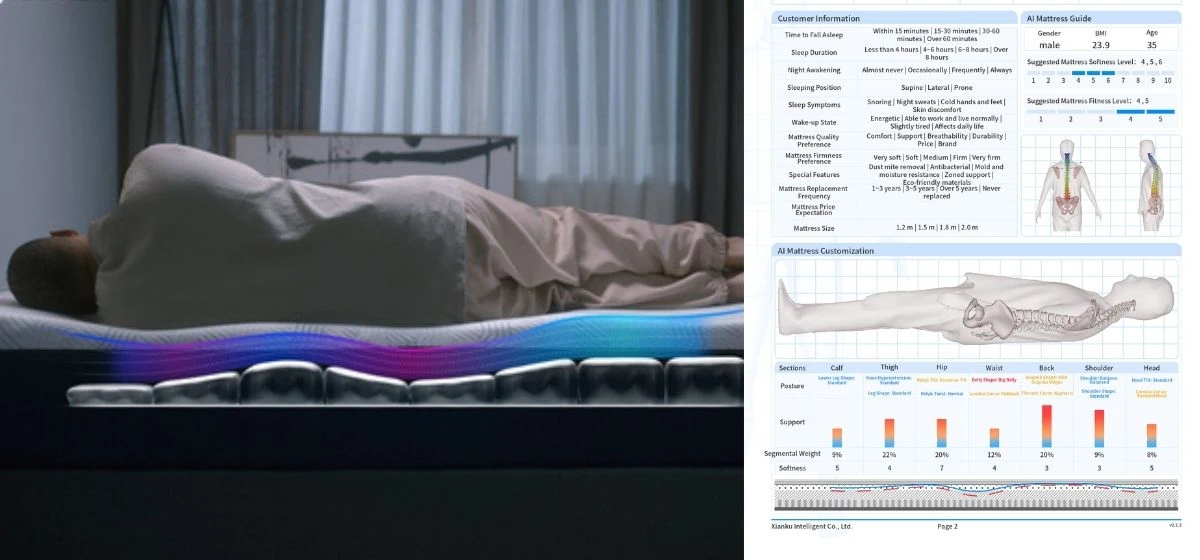
Chart 2: Traditional Mattress Fitting vs. Xianku-Guided Customization
| Feature | Traditional Showroom | Xianku 3D + Custom Mattress |
|---|---|---|
| Fitting time | 10–20 minutes (trial and error) | 20 seconds scan + 2 min review |
| Data used | Height, weight, verbal preference | 128 body metrics + spinal alignment |
| Spine curvature measurement | None | Yes (cervical, thoracic, lumbar) |
| Asymmetry detection | None | Yes (pelvic tilt, high/low shoulder) |
| Customization basis | "Feel" + firmness rating | Biomechanical geometry |
| Return rate (estimated) | 15–25% | < 5% |
The Clinical Case for Mattress Customization
A 2022 randomized controlled trial published in Sleep Health compared standard medium-firm mattresses with mattresses customized using 3D body scan data. Over 12 weeks:
- Pain reduction: The custom mattress group reported 53% greater reduction in lower back pain compared to the control group.
- Sleep quality: PSQI (Pittsburgh Sleep Quality Index) scores improved by 42% in the custom group vs. 18% in the control.
- Spinal alignment: Radiographic assessment showed that custom mattresses maintained neutral lumbar posture in 89% of participants, compared to only 41% in the standard mattress group.
For sleep stores, these numbers are not academic. They translate directly into customer satisfaction, word-of-mouth referrals, and reduced return logistics costs.
Beyond Mattresses: The Cross-Selling Opportunity
When a customer is scanned for a customized mattress, the same data also generates:
- Customized pillow height (枕高定义 and customized pillows)
- Neck protection pillow recommendations (护颈枕头)
- Spinal protection mattress add-ons (护脊床垫)
- Posture correction programs (yoga, Pilates, or chiropractic referrals)
Stores using Xianku report that scanned customers purchase 2.7 accessories on average compared to 0.9 for non-scanned customers. The average ticket size increases by 140%.
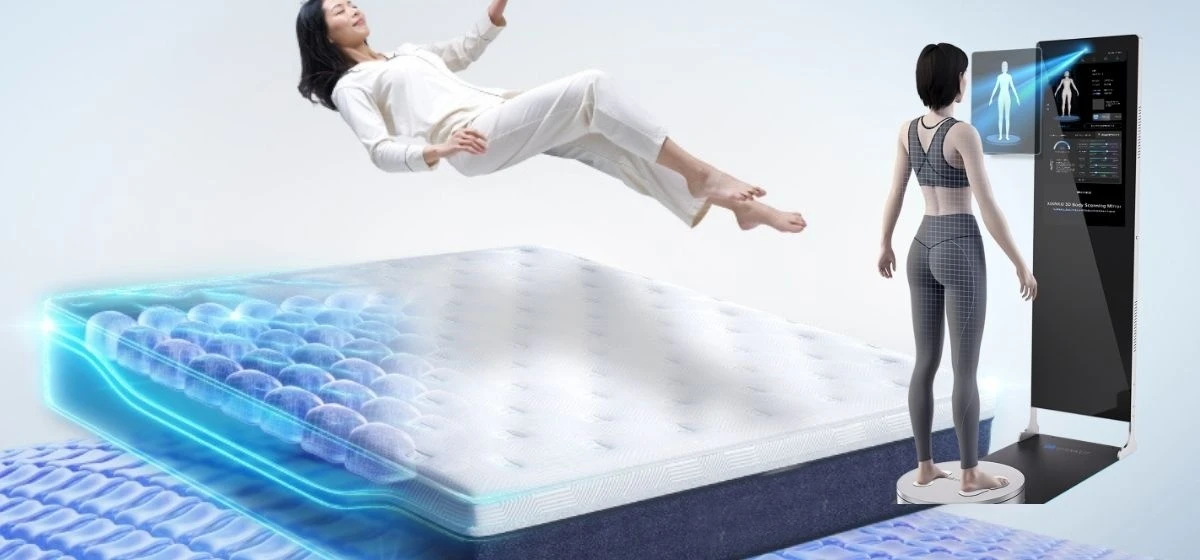
Chart 3: Average Order Value Increase with 3D-Guided Customization
| Product Category | Non-Scanned Customer | Scanned Customer | % Increase |
|---|---|---|---|
| Mattress only | $1,200 | $1,400 | +17% |
| Mattress + Pillow | $1,350 | $1,650 | +22% |
| Mattress + Pillow + Topper | $1,450 | $1,950 | +34% |
| Full system (mattress + 2 pillows + protector + adjustable base) | $2,100 | $3,250 | +55% |
Data based on Xianku pilot with 12 US mattress retailers, 2024
Why Sleep Stores Must Act Now
The US sleep market is shifting toward personalization. Direct-to-consumer brands like Helix and Brooklyn Bedding already offer online customization quizzes. But online quizzes cannot measure spinal curvature, pelvic tilt, or shoulder width asymmetry.
Physical sleep stores have a unique advantage: they can offer true measurement-based customization that no e-commerce brand can match. The Xianku 3D Body Scanner provides that capability at a fraction of the cost of full-body MRI or pressure mapping systems.
Stores that adopt this technology now will:
- Differentiate from online competitors
- Reduce expensive returns
- Build recurring revenue through re-scans and upgrades
- Position themselves as health and wellness destinations, not just furniture showrooms
The Future Is Not One-Size-Fits-All
The mattress industry has spent billions convincing consumers that comfort is subjective. But spinal health is not subjective. It is measurable. It is individual. And it is the foundation of truly restorative sleep.
Customized mattresses are not a luxury. They are the logical conclusion of a data-driven world. And the Xianku 3D Body Scanner is the tool that makes customization practical, profitable, and provable.
Your customers do not need another mattress. They need the mattress that fits their body - exactly, measurably, and without compromise.
