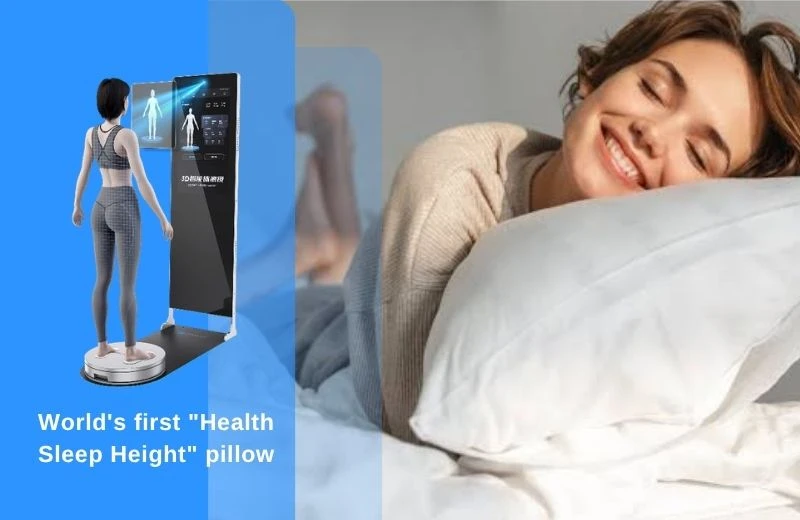
For centuries, bedding companies competed on materials, craftsmanship, comfort, and design.
Today, that is no longer enough.
Consumers increasingly expect products that fit their bodies, their sleeping positions, their preferences, and their individual sleep needs.
Japanese bedding company Nishikawa offers an interesting example of how an established bedding brand has moved toward this more personalized model.
Rather than treating a pillow or mattress as a standardized product that works equally well for everyone, Nishikawa has developed services around measurement, consultation, fitting, customization, and after-sales adjustment.
Its approach raises a larger question for the bedding industry:
What happens when bedding becomes less about choosing a product and more about designing a sleep solution for each individual?
From Selling Bedding to Solving Sleep Problems
One of the most interesting aspects of Nishikawa's approach is that it does not position bedding purely as a commodity.
Its sleep consultation services are designed around understanding individual sleep concerns, lifestyle habits, existing bedding, and sleeping environments before recommending products.
Nishikawa's official "Sleep Consultation" service, for example, connects customers with trained Sleep Masters who can discuss sleep concerns and recommend appropriate bedding and measurement or visualization services.
This changes the conversation.
Instead of:
"Which pillow would you like?"
The conversation becomes:
"What is preventing you from getting the sleep experience you want?"
That distinction is important.
A customer may not actually need a "better pillow." They may need a pillow with a different height, a different material, or a configuration that better matches their body and sleeping position.
This is the foundation of personalized bedding.
Nishikawa's Personalization Model
Nishikawa's custom pillow service provides a useful example of this process.
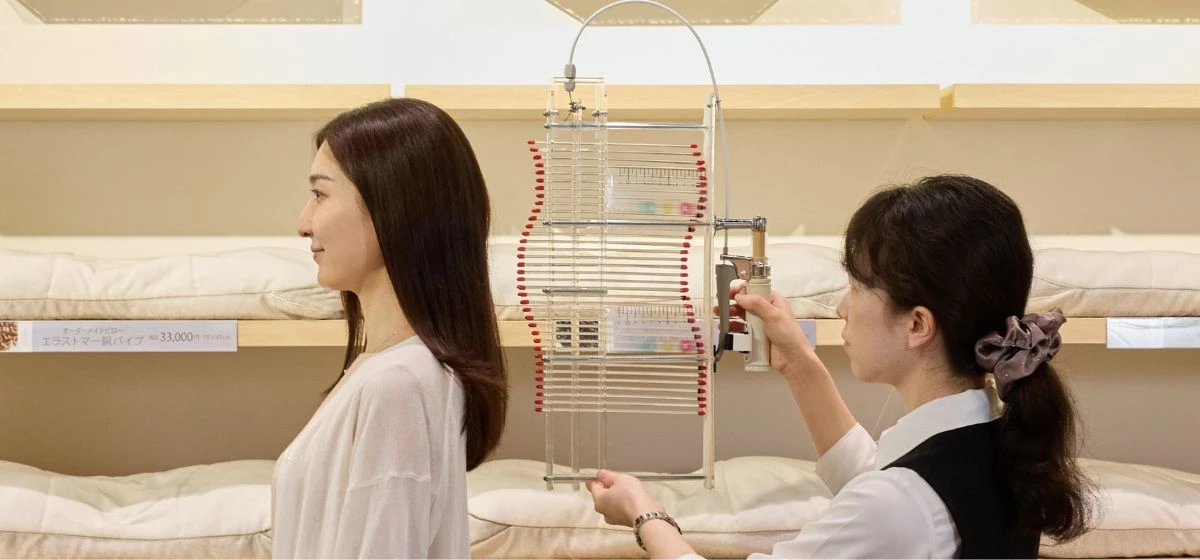
According to its official product information, the company combines professional consultation with physical measurement. Its fitting process can measure areas around the back of the head and neck, allow customers to select different materials, test the pillow in different sleeping positions, and adjust the pillow height at multiple points.
The result is not simply a pillow selected from a shelf.
It is a product configured around the individual.
The basic process can be summarized as:
Consult → Measure → Select → Fit → Adjust → Maintain
This is fundamentally different from conventional retail.
Traditional bedding retail often looks like:
Product → Customer → Purchase
A personalized bedding business looks more like:
Customer → Data → Recommendation → Customization → Product → Follow-up
That shift has major implications for the future of the industry.
Why Body Measurement Matters
A pillow can feel comfortable in a store and still be unsuitable at home.
Why?
Because comfort is affected by variables such as body shape, neck height, shoulder width, sleeping position, mattress characteristics, and personal preferences.
Nishikawa's official materials specifically emphasize measuring the height and shape around the head and neck when creating its custom pillows. Its fitting process can make fine adjustments, including adjustments in 5 mm increments.
This illustrates a broader principle:
Personalization becomes more precise when it is based on measurable information.
Instead of relying entirely on subjective descriptions such as "I like a high pillow," a bedding specialist can combine customer preferences with physical measurements and real-world fitting.
That creates a much more structured personalization process.
The Next Step: From Local Measurements to a Digital Body Profile
This is where the bedding industry has an opportunity to evolve further.
Traditional measurement devices are useful, but they often focus on specific parts of the body.
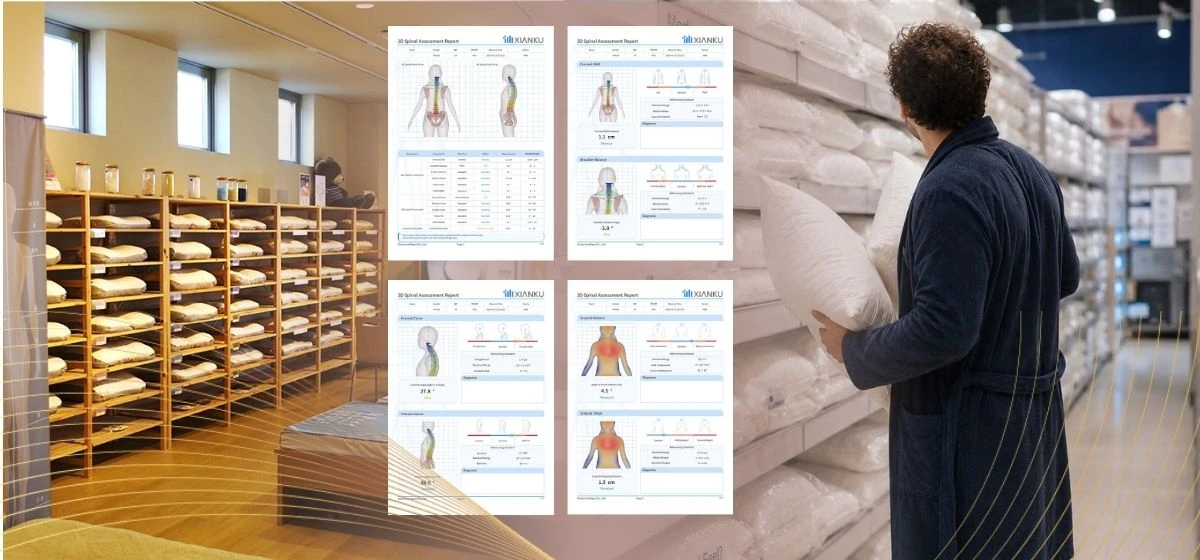
Modern 3D body scanning can take a different approach by creating a broader digital representation of the user's body.
A 3D body scan can potentially capture information such as:
- Body dimensions
- Shoulder and hip alignment
- Overall body shape
- Posture-related characteristics
- Symmetry
- Anthropometric measurements
Instead of recording a handful of measurements manually, a bedding business can establish a digital body profile as a starting point for personalization.
The concept is simple:
Measure the person first. Design the product second.
This could be particularly valuable for businesses offering customized pillows, mattresses, sleep accessories, and other body-support products.
Why the Digital Approach Could Be More Scalable
Personalized bedding traditionally depends heavily on skilled staff.
A trained specialist needs to conduct measurements, interpret the results, communicate recommendations, and adjust the product.
That human expertise remains extremely valuable.
However, digital measurement can help standardize the data collection process.
A 3D Body Scanner can potentially turn physical characteristics into structured digital data that can be stored, compared, and integrated into a broader personalization workflow.
For example:
3D Scan
↓
Body & Posture Data
↓
Sleep Consultation
↓
Personalized Recommendation
↓
Custom Pillow or Mattress
↓
Fitting & Adjustment
This does not eliminate the role of the sleep specialist.
Instead, technology can give the specialist better information to work with.
Nishikawa's Approach Also Shows the Importance of Human Expertise
Technology alone does not create a personalized sleep experience.
One of the strongest lessons from Nishikawa is the role of professional consultation.
Its Sleep Masters are positioned as specialists who understand both bedding and sleep-related knowledge. Customers can discuss their sleep habits, concerns, current bedding, and sleep environment before receiving recommendations.
This creates an important balance:
Data tells you what is measurable.
Professionals help determine what it means in context.
For bedding brands considering digital transformation, this distinction matters.
A scanner should not simply produce numbers and leave customers wondering what to do next.
The strongest business model combines:
Technology + Expertise + Product + Service
Personalization Does Not End at the Point of Sale
Another important lesson from Nishikawa is after-sales support.
Its custom pillow service includes adjustment and maintenance options because the relationship between a customer and a pillow does not necessarily end when the product is purchased. Nishikawa notes that changes in the pillow, mattress, or perceived fit can lead to the need for height adjustments.
This creates a much stronger customer relationship.
Instead of:
Buy → Leave
The model becomes:
Measure → Customize → Use → Evaluate → Adjust
That opens the door to long-term customer engagement.
For modern bedding retailers, this could become an important competitive advantage.
What Can Other Bedding Brands Learn From Nishikawa?
Nishikawa's approach provides several useful lessons for bedding companies.
1. Start With the Customer, Not the Product
Instead of asking customers which product they want, start by understanding their sleep concerns.
This makes the sales process more consultative and less transactional.
2. Use Measurement to Improve Personalization
Personalization becomes more credible when recommendations are supported by measurable information.
Physical measurement can help transform "I think this pillow is too high" into a more structured fitting process.
3. Combine Technology With Human Expertise
A measurement system is only as valuable as the process built around it.
Professionals should interpret data, communicate recommendations, and help customers test the final product.
4. Make Customization Part of the Brand Experience
Customization should not feel like an optional technical service.
It can become part of the brand's identity.
The message changes from:
"We sell premium pillows."
to:
"We help you find the pillow that fits you."
5. Continue the Relationship After Purchase
Adjustment and maintenance services can turn a one-time transaction into a long-term customer relationship.
This is particularly important for customized products.
What Could the Future of Personalized Bedding Look Like?
The next generation of personalized bedding could combine several technologies into one workflow.
Imagine a customer entering a bedding store.
First, a 3D Body Scanner creates a digital body profile.
The customer then answers questions about sleeping habits, preferred firmness, common sleep positions, and existing sleep concerns.
An AI-assisted system analyzes the information and generates a personalized recommendation.
The customer tests the recommended pillow or mattress.
A specialist makes final adjustments.
The customer's profile is saved for future maintenance and product updates.
The entire process becomes:
Scan → Analyze → Recommend → Customize → Fit → Track
This could transform the physical bedding store from a place where customers simply browse products into a personalized sleep consultation center.
Why This Matters for Bedding Retailers
Online shopping has made standardized bedding products easier to compare and purchase.
That creates a challenge for physical stores.
If a customer can buy another pillow online in 30 seconds, why should they visit a physical store?
Personalization provides one compelling answer.
A physical store can offer something that a standard product page cannot easily reproduce:
- Measurement.
- Professional consultation.
- Physical fitting.
- Customization.
- Follow-up service.
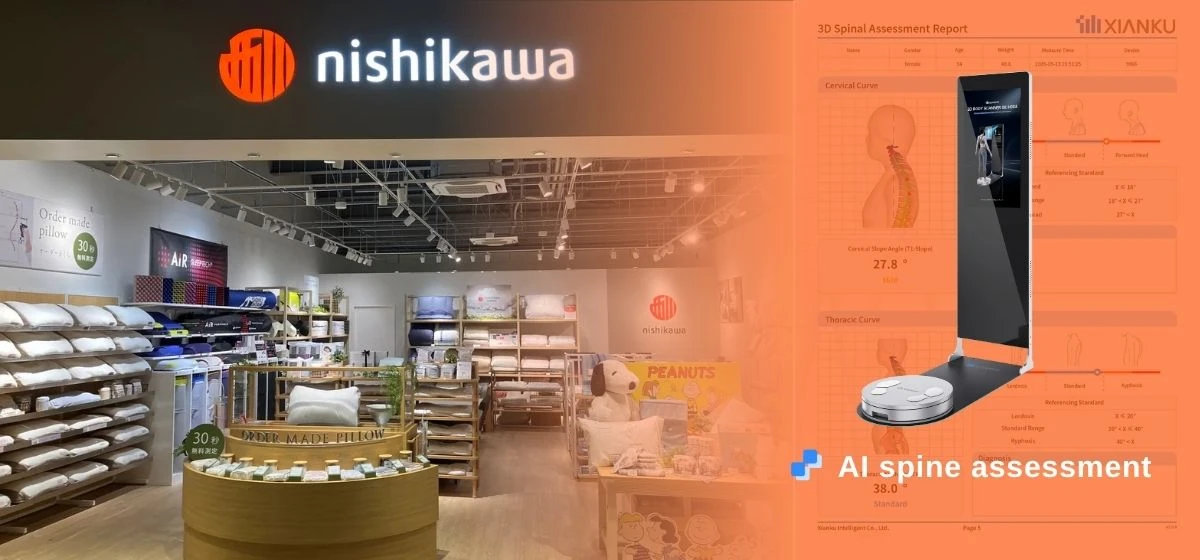
Nishikawa's model demonstrates how these elements can work together. Its official store information describes consulting shops that combine specialized staff, body measurement tools, sleep consultation, and personalized bedding recommendations.
That is not simply retail.
It is a service experience built around the individual customer.
The Bigger Trend: From Standard Products to Personalized Sleep Solutions
Nishikawa is an example of a broader transformation taking place across the bedding industry.
The future of sleep products may not be defined simply by:
- Memory foam
- Natural materials
- Firmness
- Cooling technology
- Premium fabrics
- Product design
These features will remain important.
But another question is becoming increasingly relevant:
Does the product fit the individual person?
As measurement technology becomes more accessible, bedding companies have the opportunity to move from generalized recommendations toward more data-informed personalization.
3D body scanning can be one part of that transformation.
It can provide the physical data needed to understand the customer more precisely, while professionals, AI systems, and customized manufacturing can turn that data into a practical sleep solution.
Final Takeaway
Nishikawa's success in personalized bedding illustrates an important shift in the sleep industry:
The future of bedding is not necessarily about creating one perfect pillow for everyone. It is about creating a better-fitting sleep solution for each individual.
Its combination of consultation, measurement, fitting, customization, and after-sales support provides a useful model for other bedding brands looking to differentiate themselves in an increasingly competitive market.
The next evolution may be even more data-driven.
With technologies such as 3D Body Scanning, AI-assisted analysis, and digital body profiles, bedding companies can explore new ways to connect the customer's physical characteristics with personalized product recommendations.
For brands willing to make that transition, the opportunity is bigger than selling another pillow or mattress.
It is the opportunity to become a personalized sleep solution provider.
Frequently Asked Questions
How does Nishikawa personalize bedding?
Nishikawa combines professional sleep consultation, physical measurement, product selection, fitting, customization, and after-sales adjustment for products such as custom pillows and mattresses.
Why is body measurement important when choosing a pillow?
Body dimensions and the shape around the head, neck, and shoulders can influence how a pillow fits. Measuring these characteristics can provide a more structured basis for adjusting pillow height and configuration.
Can 3D body scanning be used for personalized bedding?
Yes. A 3D body scanner can create digital measurements and a broader body profile that may support personalized bedding recommendations. It should be used as part of a broader fitting and consultation process rather than as a standalone diagnostic tool.
What is a digital body profile?
A digital body profile is a structured collection of measurements and body-shape information generated from a digital scanning process. In personalized bedding, it can serve as a baseline for product recommendations and future comparisons.
Can personalized bedding improve the retail experience?
Personalized bedding can give physical retailers a service advantage by combining measurement, professional consultation, product testing, customization, and follow-up support instead of competing solely on product price.
What can other bedding brands learn from Nishikawa?
The key lesson is to shift from product-centered retail toward customer-centered sleep solutions: understand the customer, measure relevant characteristics, personalize the recommendation, provide fitting support, and continue the relationship after purchase.