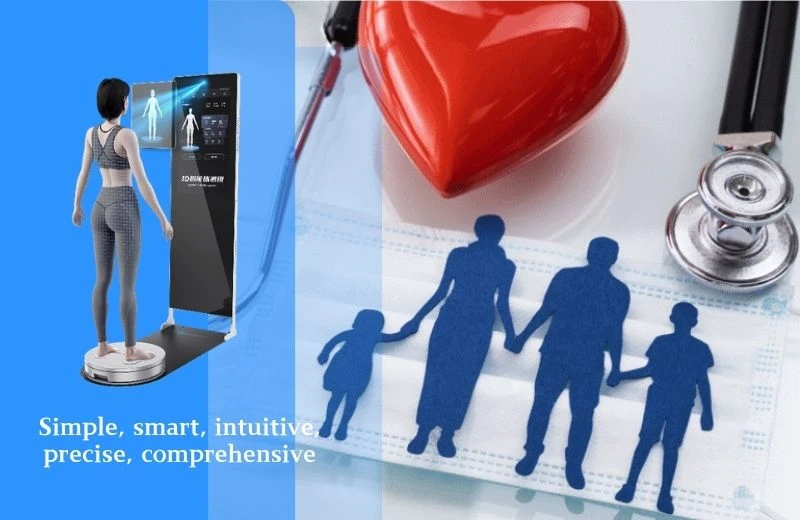
Senior care is becoming more personalized. Instead of providing the same routine for every resident, care facilities increasingly need better ways to understand how each person's body changes over time.
One practical approach is to create a 3D body profile for each resident.
A 3D body profile provides a digital snapshot of a person's physical shape and posture at a specific point in time. When combined with regular assessments, these profiles can help senior care facilities observe changes that may be difficult to recognize through everyday observation alone.
What Is a 3D Body Profile?
A 3D body profile is a digital representation of a person's body created through a non-contact 3D scanning process.
Depending on the scanning system, it can capture information such as:
- Body dimensions and measurements
- Postural alignment
- Body symmetry
- Shoulder and hip alignment
- Changes in body shape
- Other measurable physical characteristics
Unlike a traditional measurement taken with a tape measure, a 3D scan can provide a more comprehensive view of the body and create a digital record that can be compared with future scans.
For senior care providers, this creates an opportunity to move from occasional measurements toward continuous physical change tracking.
Why Does This Matter in Senior Care?
Aging can bring gradual physical changes. Posture may change, mobility can become more limited, and body composition and overall body shape may change over time.
Some changes happen so gradually that they may not immediately attract attention during daily care.
A baseline 3D body profile gives caregivers and professionals a reference point.
For example, a facility can create an initial scan when a resident enters a care program and conduct additional scans at scheduled intervals. Comparing these scans may help professionals identify measurable changes and decide whether a resident's exercise, rehabilitation, or care plan should be reviewed.
The goal is not to replace professional assessment.
Instead, 3D body data can provide another objective source of information to support it.
From a Snapshot to a Long-Term Record
The real value of a 3D body profile is not necessarily the first scan.
It is the ability to compare data over time.
Imagine a resident being scanned at three different stages:
Initial Assessment → Follow-Up → Long-Term Tracking
Instead of relying only on memory or subjective observations, professionals can compare digital measurements and visual representations from different time periods.
This can make physical changes easier to communicate among caregivers, rehabilitation professionals, fitness specialists, and family members.
It also creates a more structured approach to monitoring progress.
Supporting More Personalized Care
Not every senior has the same physical needs.
One resident may need more attention to posture and mobility. Another may be working on maintaining strength and independence. Someone recovering from a physical limitation may require regular progress monitoring.
A digital body profile can help establish a more individualized starting point.
For example, senior wellness centers may use body scanning as part of a broader assessment process before designing personalized exercise, rehabilitation, or wellness programs.
The workflow can be simple:
Scan → Analyze → Personalize → Track
The scan provides data. Professionals interpret the data and combine it with other assessments to determine an appropriate care strategy. Future scans can then help monitor changes.
Why 3D Scanning Can Be Useful for Senior Care Facilities
Traditional physical measurements can be time-consuming and may only capture a limited number of data points.
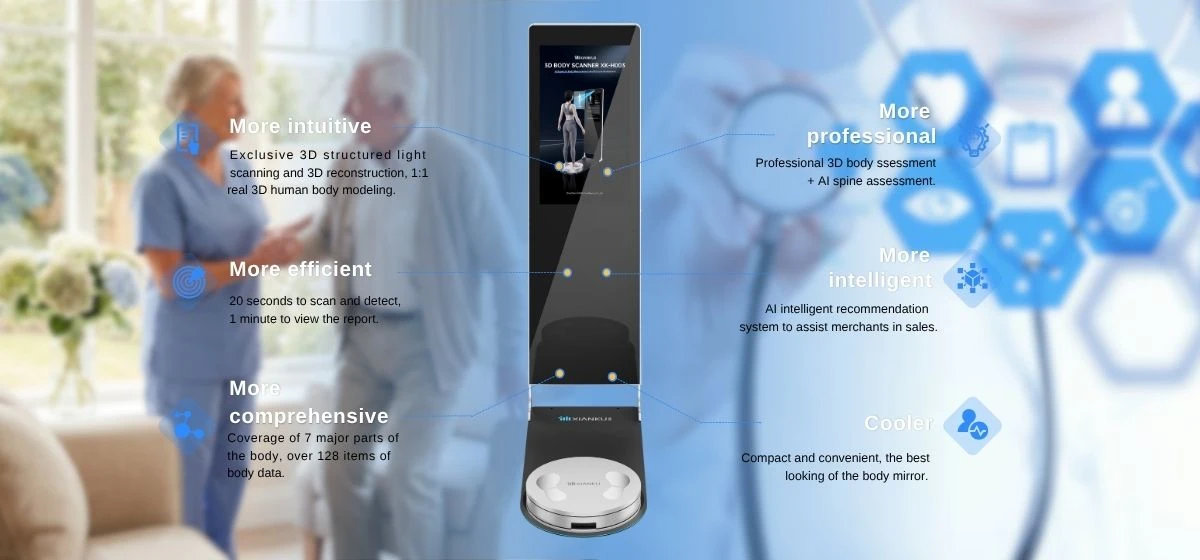
A 3D body scanner can create a more comprehensive digital representation without requiring physical contact with the body.
For senior care environments, non-contact scanning can also make the assessment process more convenient and comfortable for residents.
A fast scanning process can make regular reassessment more practical, especially when a facility needs to monitor many residents.
The data can also be presented visually, making changes easier to understand than a spreadsheet of measurements alone.
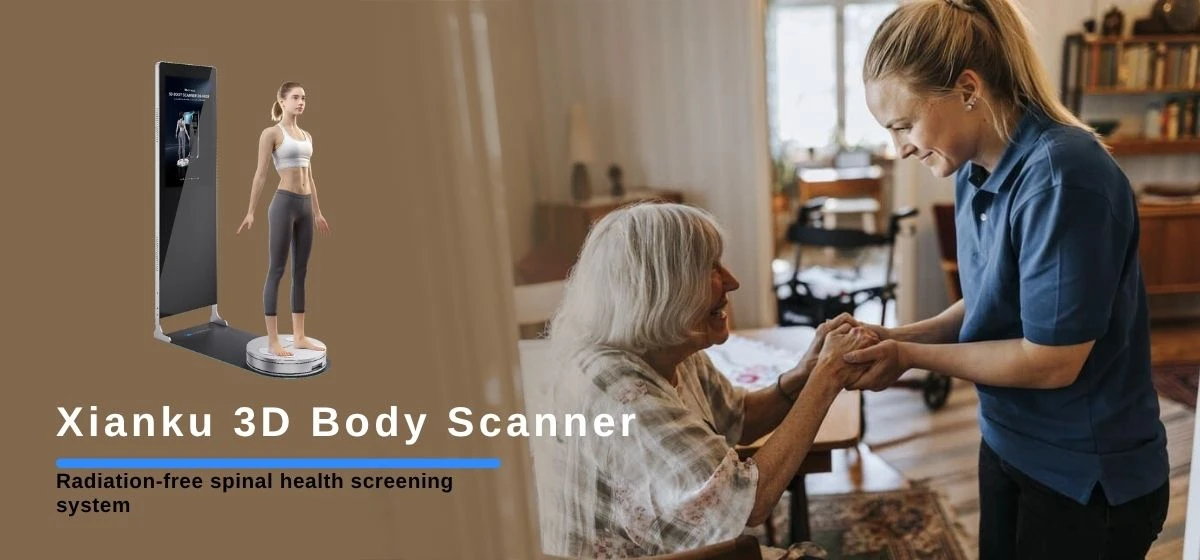
Creating a Digital Health and Wellness History
Senior care is not only about responding to immediate needs. It is also about understanding how a person's physical condition evolves.
A series of 3D body profiles can become part of a resident's long-term wellness record.
Over time, this may help facilities organize information around:
- Initial physical condition
- Changes in posture and body dimensions
- Progress during rehabilitation
- Changes following exercise programs
- Long-term physical trends
When combined with clinical assessments and other professional evaluations, this type of longitudinal information can contribute to a more data-driven approach to senior wellness management.
What Should Senior Care Facilities Look for in a 3D Body Scanner?
Facilities considering 3D body scanning should look beyond scanning speed alone.
Important factors may include:
1. Non-Contact Scanning
A contactless process can make scanning more comfortable and convenient for residents.
2. Measurement Accuracy
Reliable measurements are important when the goal is to compare physical changes over time.
3. Fast Scanning
A short scanning process makes regular assessments easier to integrate into daily operations.
4. Comprehensive Data
The system should provide useful body measurements and posture-related information rather than simply producing a 3D image.
5. Data Comparison
The ability to compare scans from different dates can be particularly valuable for long-term monitoring.
6. Easy-to-Understand Reports
Visual reports can help care teams communicate physical changes more effectively.
Who Can Benefit From 3D Body Profiles?
3D body profiling may be useful across several senior care environments, including:
- Senior living communities
- Nursing and residential care facilities
- Rehabilitation centers
- Senior wellness centers
- Assisted living facilities
- Geriatric fitness programs
- Long-term care organizations
The exact application should depend on the facility's professional assessment protocols and the capabilities of the scanning system.
3D Body Profiles Are About Tracking Change
The biggest advantage of a digital body profile is not simply knowing what a resident's body looks like today.
It is knowing how that body changes tomorrow, next month, and over the course of a care program.
For senior care providers, this shift-from one-time measurement to ongoing physical tracking-can support a more personalized approach to wellness and rehabilitation.
A 3D Body Scanner can serve as the starting point: creating a digital baseline, making physical data easier to visualize, and providing measurable information that can be compared over time.
Because better senior care does not begin with treating everyone the same.
It begins with understanding the individual.
Frequently Asked Questions
-
What is a 3D body profile for senior care?
A 3D body profile is a digital representation of a person's body created through 3D scanning. It can include body measurements, posture-related information, and other measurable physical characteristics.
-
Can 3D body scanning replace a professional health assessment?
No. A 3D body scan should be considered a supporting measurement and visualization tool, not a replacement for medical, clinical, or professional assessments.
-
How often should seniors receive a 3D body scan?
There is no universal schedule. The appropriate frequency depends on the facility's goals, resident needs, professional protocols, and the type of information being monitored.
-
Can 3D scanning help track rehabilitation progress?
It can provide measurable and visual information that may help professionals compare physical changes before and after a rehabilitation or wellness program. However, rehabilitation decisions should remain under appropriate professional supervision.
-
Why is a baseline 3D body profile useful?
A baseline establishes a reference point. Future scans can then be compared with the original profile, making certain physical changes easier to identify and document.
-
Is 3D body scanning suitable for senior care facilities?
It can be suitable for senior living, rehabilitation, wellness, and long-term care environments when the scanning system is appropriate for the facility's workflow and used alongside professional assessment methods.