

Posture Is Health - and Also the Foundation of True Bespoke Fit
Posture is health. It is also one of the most overlooked foundations of luxury tailoring.
In high-end bespoke tailoring, a perfect garment is never created from circumference data alone. A suit, dress, shirt, coat, or ergonomic uniform must respond to the real body: the shoulder line, spinal curve, pelvic position, body center of gravity, asymmetry, posture habits, and subtle body shape differences.
Many physical issues-such as neck tension, lower back pain, knee stress, rounded shoulders, pelvic forward tilt, or scoliosis-related imbalance-are often connected to skeletal misalignment and body center of gravity shifts. These same postural factors also influence how garments drape, where fabric pulls, whether shoulders sit evenly, and how comfortable the final fit feels during movement.
Traditional body fat scales only measure composition. They cannot evaluate posture, skeletal alignment, shoulder balance, pelvic tilt, or real body asymmetry. Manual tape measurement depends heavily on the skill and consistency of the tailor. Ordinary 2D photos may capture appearance, but they cannot reconstruct the body in true three-dimensional space.
This is why automated 3D body measurement for bespoke tailoring is becoming a powerful technology for luxury fashion houses, high-end made-to-measure studios, smart retail stores, and digital custom clothing platforms.

The XIANKU 3D Body Scanner provides a more advanced measurement experience by integrating:
- Body composition analysis
- Digital precision body circumference measurement
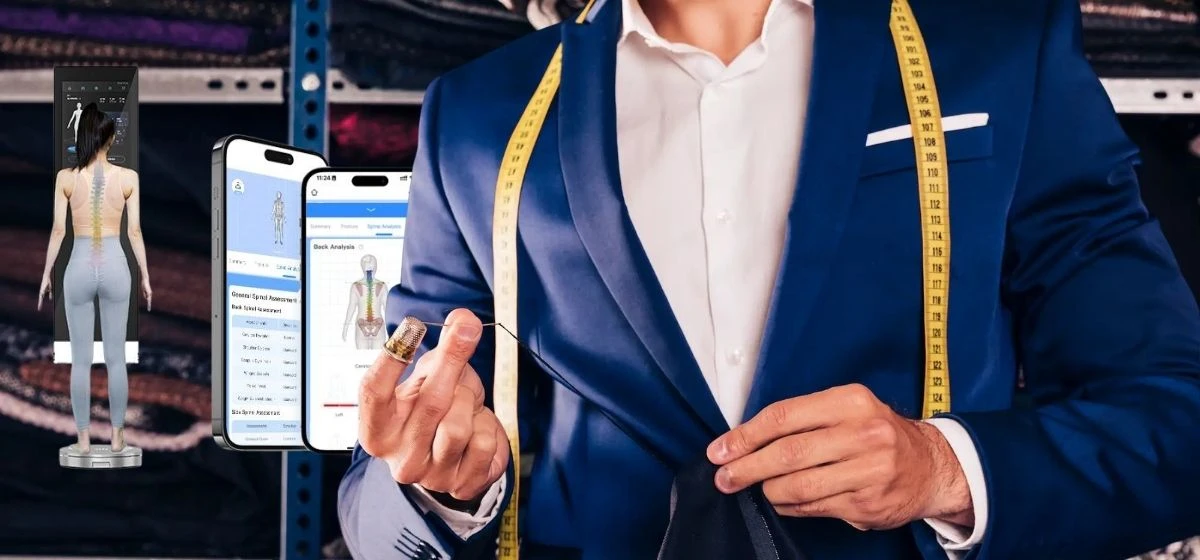
- AI spinal posture assessment
- 1:1 Realistic 3D model reconstruction
- Body center of gravity assessment
- Body trend comparison
- CRM-based customer data management
It moves bespoke tailoring from "manual size collection" to a digital, visual, and repeatable body data system.
Why Bespoke Tailoring Needs More Than Tape Measurement
Traditional tailoring has always valued craftsmanship. But even the most experienced tailor faces limitations when body data is collected manually.
Common challenges include:
- Measurement inconsistency between different staff members
- Human error during tape measurement
- Difficulty capturing body asymmetry
- Limited ability to measure posture-related fit issues
- No standardized 3D customer body archive
- Difficult before-and-after comparison when body shape changes
- Time-consuming fitting and refitting process
- Higher alteration costs due to inaccurate initial data
In premium custom fashion, clients expect more than a garment that "roughly fits." They expect:
- Smooth shoulder structure
- Balanced sleeve fall
- Clean waist shaping
- Accurate trouser length and hip fit
- Comfortable movement
- Personalized styling based on real body proportions
- A luxury digital experience from the first consultation
This requires more than circumference numbers. It requires a full-body understanding.
What Is Automated 3D Body Measurement for Bespoke Tailoring?
Automated 3D body measurement for bespoke tailoring is a digital measurement process that uses 3D scanning, body reconstruction, and intelligent measurement algorithms to capture accurate body data for custom clothing production.
Instead of using only tape measurement or 2D photos, the system scans the client's body and creates a 1:1 Realistic 3D model. This model can then be used to extract precise body measurements, analyze posture, identify asymmetry, and support personalized garment design.
For high-end tailoring and new retail, this technology helps brands:
- Standardize body measurement
- Reduce fitting errors
- Improve customer experience
- Store reusable digital body profiles
- Support remote or repeat customization
- Reduce alteration costs
- Create premium technology-driven retail differentiation
Most importantly, it helps fashion brands understand not only the size of the body, but also the structure, posture, and balance behind the size.
XIANKU 3D Body Scanner: From Body Shape to Intelligent Measurement Data
The XIANKU 3D Body Scanner uses industry-leading 3D infrared structured light scanning and 3D human body reconstruction technology. It completes a contactless scan in approximately 20 seconds and allows users to view a complete digital report within 1 minute.
This makes it highly suitable for luxury retail environments where speed, elegance, privacy, and professionalism are essential.
Core technology features include:
- Non-radiation 3D structured light
- 20-second contactless body scanning
- 1-minute report generation
- 1:1 Realistic 3D human body models
- 720° real 3D body visualization
- 45+ body circumference data
- 15 body composition reports
- 20 physical health reports
- AI visualized skeleton display
- Body center of gravity assessment
- Chest health diagnosis
- Body trend comparison
- CRM customer management system
Unlike ordinary photo-based sizing tools or formula-estimated body data, XIANKU reconstructs a real 3D human body model. This allows high-end tailoring brands to build a more accurate, visual, and reusable measurement foundation for each client.
The Three-in-One Measurement Logic: Composition + Posture + Circumference
Luxury tailoring is not only about size. It is about how fabric interacts with the living body.
XIANKU's three-in-one assessment system provides a more complete data foundation for bespoke garment design.
1. Digital Precision Measurement: 45+ Body Circumference Data
For bespoke tailoring, accurate measurement is the first step toward an excellent fit. XIANKU provides 45+ body circumference data, supporting a more comprehensive understanding of body shape and proportion.
Key measurement categories may include:
- Shoulder width
- Neck circumference
- Arm length
- Waist height
- Waist circumference
- Upper and lower abdominal circumference
- Hip-related measurements
- Back length
- Knee circumference
- Leg circumference
- Shoulder tilt
- Body proportion indicators
- For high-end custom clothing, these data points can support:
- Suit pattern development
- Shirt and jacket sizing
- Dress and gown shaping
- Coat and outerwear customization
- Trouser and hip fit optimization
- Smart size recommendation
- Digital pattern reference
- Client body profile archiving
Compared with manual tape measurement, automated 3D scanning provides a more standardized and repeatable data collection process.
2. AI Posture Assessment: Understanding the Fit Behind the Measurements
Two clients may have similar chest, waist, and hip measurements, but their garments may require very different pattern adjustments because of posture.
XIANKU includes 20 physical health reports that help analyze posture and body alignment indicators.
Relevant posture indicators for tailoring include:
- High and low shoulders
- Rounded shoulders
- Neck extension
- Hunchback posture
- Scoliosis-related asymmetry
- Pelvic forward tilt
- Pelvic backward tilt
- Knee hyperextension
- O-shaped or X-shaped legs
- Body center of gravity deviation
These posture insights help explain why garments may show common fitting problems such as:
- One shoulder appearing higher than the other
- Jacket hem tilting forward or backward
- Collar gap at the back neck
- Sleeve twisting
- Waistline imbalance
- Trouser drag lines
- Uneven coat drape
- Poor comfort during movement
For bespoke tailoring, posture is not an optional detail. It is part of the pattern logic.
3. Body Composition Analysis: A Broader View of the Client Profile
XIANKU also includes 15 body composition reports, helping high-end wellness fashion, ergonomic apparel, and smart clothing retailers understand the client's broader physical profile.
While body composition is not the main factor in garment patterning, it can support:
- Fitness-related garment recommendations
- Wellness retail experiences
- Body shape management programs
- Smart apparel personalization
- Long-term customer relationship building
For premium new retail, this expands the store experience from "buying clothes" to "understanding the body."

Why 1:1 Realistic 3D Models Are Transforming Custom Fashion
A 1:1 Realistic 3D model gives bespoke tailoring brands a digital twin of the client's body.
This matters because the human body is not flat, symmetrical, or static. A real 3D model helps visualize:
- Shoulder slope
- Body thickness
- Torso rotation
- Waist shape
- Back curvature
- Hip balance
- Leg posture
- Front-back body depth
- Left-right asymmetry
For a luxury fitting room, this creates an intuitive and impressive client experience.
Clients can see their own body shape in 3D, while consultants can explain fitting decisions more clearly. Instead of saying, "Your right shoulder is slightly lower," the consultant can show the difference directly through the 3D model and posture report.
This improves:
- Trust
- Transparency
- Professional credibility
- Client engagement
- Perceived service value
In high-end bespoke retail, technology should not replace craftsmanship. It should make craftsmanship more precise.
AI Visualized Skeleton Display: From External Shape to Structural Fit
One of the strongest advantages of XIANKU's system is its AI visualized skeleton display.
For tailoring, external measurements tell only part of the story. Skeletal posture influences how clothing sits on the body. A client with pelvic forward tilt, rounded shoulders, or scoliosis-related asymmetry may need subtle pattern adjustments even if standard measurements seem normal.
The AI visualized skeleton display supports a more structural understanding of the client's body by helping professionals observe:
- Shoulder balance
- Spine morphology
- Pelvic alignment
- Cervical balance
- Lumbar posture
- Center of gravity offset
This can support bespoke tailoring decisions such as:
- Shoulder pad adjustment
- Collar and neckline correction
- Jacket balance correction
- Waist shaping strategy
- Trouser rise and seat adjustment
- Sleeve angle optimization
- Custom pattern asymmetry correction
For luxury tailoring, this level of insight creates a clear competitive advantage.
Body Center of Gravity Assessment: A New Dimension of Garment Comfort
Garment comfort is not only about fabric stretch or size allowance. It is also influenced by how the body stands, moves, and balances.
The body center of gravity assessment helps identify whether a client's posture is balanced or shifted. This can be relevant for:
- Executive suits
- Performance uniforms
- Ergonomic apparel
- Luxury travel clothing
- Premium footwear and apparel customization
- Posture-aware fashion design
A center of gravity shift may influence:
- Jacket front balance
- Trouser break
- Garment drape
- Walking comfort
- Shoulder pressure
- Waistline appearance
- Overall silhouette
By integrating body center of gravity assessment into measurement, brands can move from static sizing to a more dynamic understanding of fit.
Body Trend Comparison: Building a Long-Term Digital Wardrobe Profile
One of the most important B2B values of XIANKU's system is body trend comparison.
In high-end tailoring, clients often return for repeat orders. Their body shape, posture, weight, and proportions may change over time due to lifestyle, training, aging, recovery, or wellness programs.
XIANKU's body trend comparison system can visually overlap and compare two 3D models from different time points.
This helps brands:
- Track client body shape changes
- Update measurements before repeat orders
- Reduce remakes and alteration risk
- Support long-term wardrobe planning
- Create personalized customer service
- Build digital body archives through CRM
- Improve loyalty and repeat purchase rates
For high-end new retail, this is more than a measurement tool. It is a digital customer asset system.
Application Value for High-End Bespoke New Retail
For Luxury Tailoring Studios
Automated 3D body measurement helps studios:
- Improve measurement precision
- Reduce manual workload
- Enhance fitting room professionalism
- Support posture-based pattern adjustment
- Build digital customer measurement files
- Improve repeat-order efficiency
For High-End Fashion Retailers
The scanner helps premium stores create a technology-driven service experience.
It supports:
- Smart sizing consultation
- Personalized garment recommendation
- New retail differentiation
- Digital body profile creation
- VIP customer management
- Better conversion through visual trust
For Bespoke Apparel Brands
For brands offering made-to-measure or custom production, XIANKU helps connect offline measurement with digital manufacturing.
It can support:
- Standardized measurement workflows
- Data-driven pattern making
- Remote repeat customization
- Reduced alteration rates
- Personalized product recommendations
- CRM-based client lifecycle management
For Customers
Clients benefit from:
- Faster and more comfortable measurement
- A visual understanding of their body shape
- More precise garment fit
- Less repeated manual measuring
- Better long-term size tracking
- A premium digital tailoring experience
FAQ: Automated 3D Body Measurement for Bespoke Tailoring
What is automated 3D body measurement for bespoke tailoring?
Automated 3D body measurement uses 3D structured light scanning and digital body reconstruction to capture accurate body measurements for custom clothing. It creates a 1:1 Realistic 3D model and extracts body circumference, shape, posture, and alignment data to support bespoke tailoring and made-to-measure services.
How is a 3D body scanner different from manual tape measurement?
Manual tape measurement depends on the experience and consistency of the tailor. A 3D body scanner provides standardized, repeatable, and visual measurement data. XIANKU can generate 45+ body circumference data, posture insights, and a 1:1 3D body model within a highly efficient workflow.
Why is posture important in bespoke tailoring?
Posture affects garment balance, drape, shoulder fit, collar position, sleeve angle, waist shaping, and trouser alignment. Clients with uneven shoulders, pelvic tilt, rounded shoulders, or body center of gravity shifts may require different pattern adjustments even if their basic body measurements are similar.
Can a 3D body scanner replace a tailor?
No. A 3D body scanner does not replace expert tailoring craftsmanship. It enhances the tailor's work by providing more accurate, visual, and repeatable body data. The best result comes from combining advanced 3D measurement technology with professional pattern-making expertise.
What is the difference between a 3D body scanner and a traditional BIA body fat scale?
A traditional BIA body fat scale mainly measures body composition. It cannot create a 1:1 Realistic 3D model, capture 45+ body circumference data, assess posture, evaluate body center of gravity, or support bespoke garment fitting. XIANKU integrates body composition, posture, and circumference measurement in one system.
How does body trend comparison help high-end tailoring brands?
Body trend comparison allows brands to compare a client's 3D body models across different visits. This helps update measurements, monitor body shape changes, reduce fitting errors, and support long-term personalized wardrobe services.
Conclusion: The Future of Bespoke Tailoring Is Digital, Personal, and Three-Dimensional
The future of high-end tailoring is not about replacing craftsmanship with machines. It is about empowering craftsmanship with better body data.
Automated 3D body measurement for bespoke tailoring allows luxury fashion houses and high-end new retail brands to move beyond tape measurement, 2D photos, and size estimation. With non-radiation 3D structured light, 1:1 Realistic 3D model reconstruction, 45+ body circumference data, AI visualized skeleton display, 20 physical health reports, body center of gravity assessment, and body trend comparison, XIANKU 3D Body Scanner creates a new standard for intelligent bespoke measurement.
It gives brands a digital foundation for precision fit, posture-aware customization, long-term customer management, and premium retail differentiation.
Experience Digital 3D Body Measurement for Bespoke Tailoring
Create a personalized digital body profile for every VIP client.
With XIANKU 3D Body Scanner, high-end bespoke retailers can deliver a more accurate, visual, and intelligent fitting experience-turning body measurement into a luxury digital service and building a long-term digital health and style archive for every customer.
