

Scoliosis-a lateral curvature of the spine-affects an estimated 2-3% of the population, or approximately 6-9 million Americans . While many cases are mild and require only monitoring, progressive curves can lead to pain, functional limitations, and in severe cases, respiratory compromise. Early detection is critical, yet traditional screening methods have significant limitations.
This article explores how the Xianku 3D Body Scanner is transforming scoliosis screening and management in chiropractic and spinal care settings across North America.
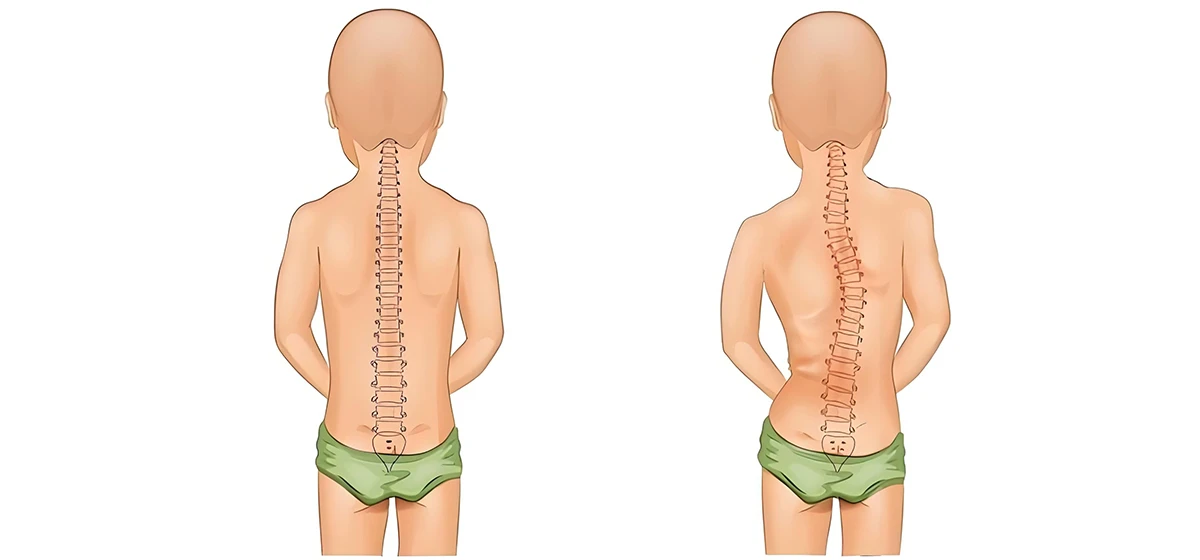
The Challenge of Scoliosis Detection
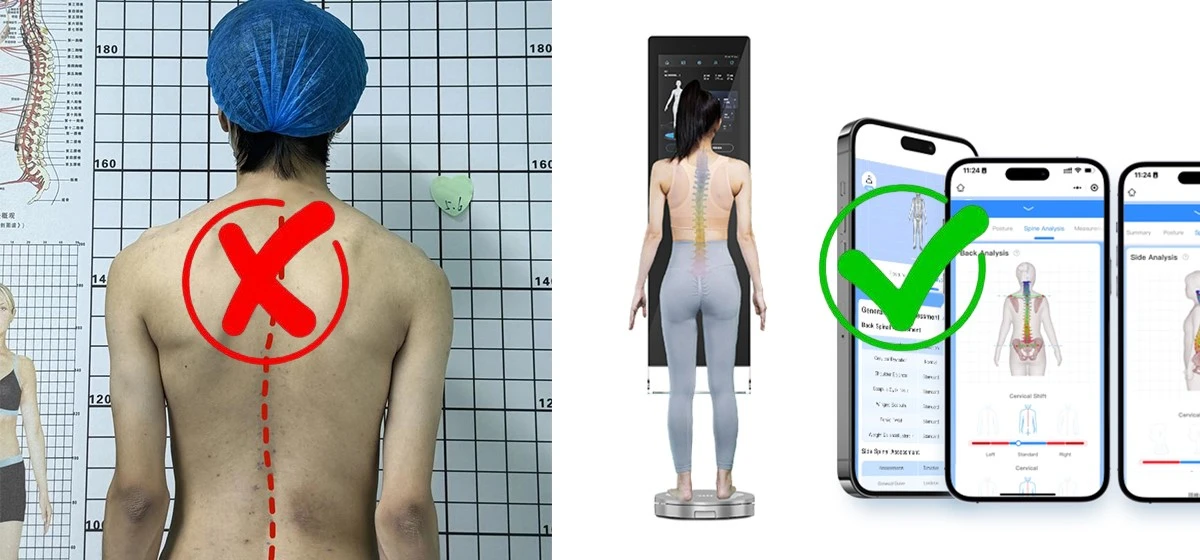
Traditional scoliosis screening relies on the Adam's Forward Bend Test-a visual inspection for asymmetries when the patient bends forward. While this test can identify obvious curves, it has well-documented limitations:
| Limitation | Clinical Impact |
|---|---|
| Subjectivity | Results vary between examiners |
| Late detection | Curves must reach 15-20° before visible |
| No quantification | Cannot measure curve angle |
| False positives/negatives | Missed curves or unnecessary referrals |
| No baseline for tracking | Cannot quantify progression |
The gold standard for diagnosis is the standing X-ray, which provides precise Cobb angle measurements. However, X-rays involve radiation exposure, making them unsuitable for frequent screening or monitoring in growing children.
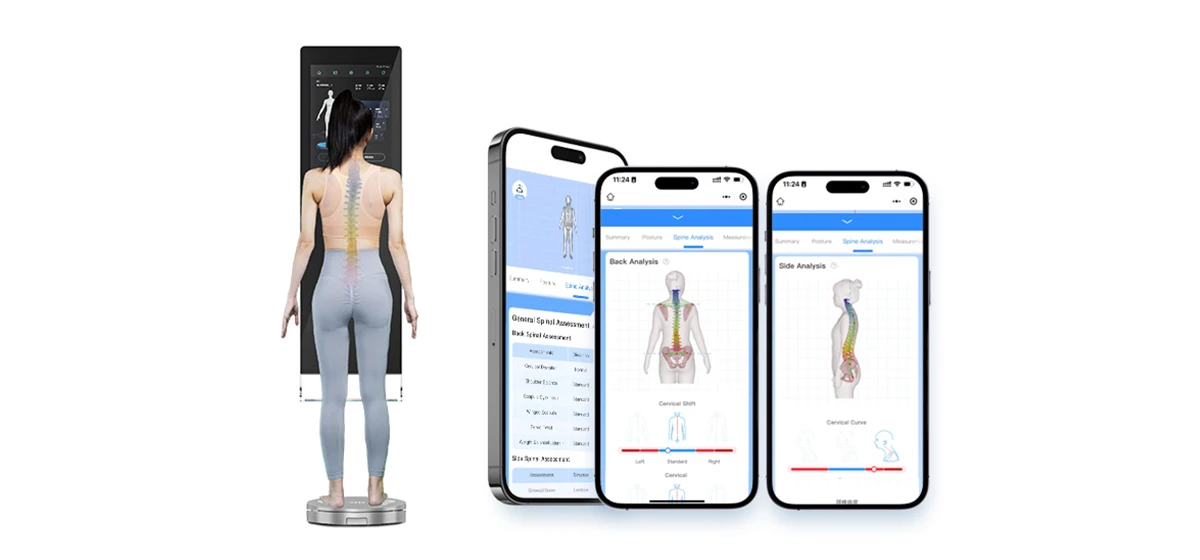
How Xianku Bridges the Gap
The Xianku 3D Body Scanner provides a radiation-free screening tool that quantifies spinal curvature with clinically relevant accuracy:
- Cobb angle estimation: ±0.5° accuracy for spinal curvature measurement
- Surface topography: 3D mapping of the back surface, revealing asymmetries
- Rotation assessment: Detection of vertebral rotation through surface analysis
- Progress tracking: Precise comparison over time without radiation exposure
While Xianku cannot replace X-ray for definitive diagnosis, it serves as an ideal screening and monitoring tool:
| Use Case | Traditional Approach | With Xianku |
|---|---|---|
| School screening | Adam's test (subjective) | 3D scan (objective) |
| Initial assessment | Refer for X-ray if suspected | Screen first, X-ray only if indicated |
| Curve monitoring | Repeat X-ray every 6-12 months | Scan every 3-6 months, X-ray less often |
| Treatment tracking | Photos, subjective notes | Objective 3D measurements |
Clinical Validation
Studies cited by Xianku demonstrate the scanner's effectiveness for scoliosis assessment:
- Correlation with X-ray: Cobb angle measurements from 3D surface scans show strong correlation (r > 0.85) with radiographic measurements
- Inter-rater reliability: Scan-based measurements are highly consistent between operators
- Sensitivity: Detects curves as small as 5°, enabling earlier intervention
Case Study: Pediatric Scoliosis Monitoring
- Practice: Children's Spine Center, a specialized pediatric chiropractic clinic in Chicago
- Patient: 12-year-old female with adolescent idiopathic scoliosis, 18° thoracic curve at diagnosis
- Traditional approach: X-ray every 6 months to monitor progression-cumulative radiation exposure a concern
Xianku implementation:
- Baseline 3D scan at initial visit
- Follow-up scans every 3 months
- X-ray only if scan shows significant progression (>5°)
18-month outcomes:
- 6 scans performed, zero X-rays needed (curve stable at 18-20°)
- Patient and parents relieved at reduced radiation exposure
- Compliance improved because scans are quick and non-threatening
- Data clearly shows stability, supporting conservative management
The treating chiropractor noted: "Before Xianku, I had to balance the need for monitoring against radiation concerns. Now I can scan as often as clinically useful, and I only order X-rays when truly indicated. It's changed how I manage young scoliosis patients."
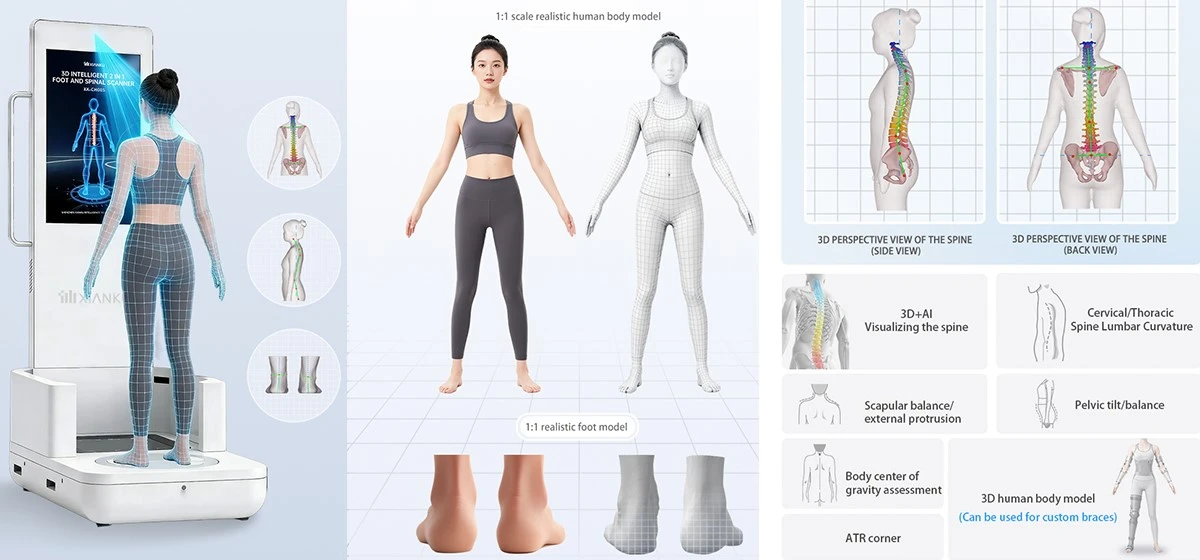
Beyond Screening: Comprehensive Spinal Assessment
The Xianku scanner provides additional data valuable for chiropractic care:
| Measurement | Clinical Application |
|---|---|
| Pelvic tilt | Identifies pelvic imbalances affecting spinal alignment |
| Shoulder asymmetry | Reveals compensations for spinal curvature |
| Forward head posture | Quantifies cervical stress from poor posture |
| Leg length discrepancy | Detects functional or anatomical differences |
| Kyphosis angle | Measures thoracic curvature |
This comprehensive assessment helps chiropractors understand the full picture of their patients' spinal health, not just the primary curve.
Integration with Chiropractic Practice
For chiropractors, the Xianku scanner integrates seamlessly into clinical workflow:
New Patient Intake:
- Patient completes intake forms
- 20-second scan captures full postural data
- Report generated automatically
- Doctor reviews findings with patient using 3D visualization
Progress Monitoring:
- Scheduled follow-up scans at clinically appropriate intervals
- Automated comparison with baseline
- Visual documentation of changes
- Data for treatment planning and patient education
Documentation and Compliance:
- Objective measurements for patient records
- Visual evidence for insurance documentation
- Clear tracking of treatment outcomes
The Economic Case
For chiropractic practices, adding Xianku scanning creates multiple revenue opportunities:
| Service | Typical Fee | Frequency |
|---|---|---|
| Initial postural assessment | $75-150 | One-time |
| Progress scan (with adjustment) | $25-50 add-on | Monthly/quarterly |
| Scoliosis monitoring package | $200-400/year | Annual subscription |
| Wellness scan (non-patients) | $50-100 | As desired |
Beyond direct revenue, practices report:
- 30-50% increase in patient retention (visual progress keeps patients engaged)
- 25% increase in referral rates (patients share their 3D images)
- Significant competitive differentiation
Conclusion
For chiropractors and spinal health professionals, the Xianku 3D Body Scanner represents a breakthrough in scoliosis screening and management. By providing objective, radiation-free measurements, it enables earlier detection, safer monitoring, and more effective treatment tracking. In an era where patients increasingly expect technology-enhanced care, Xianku delivers the tools to meet and exceed those expectations.
Call to Action: Ready to enhance your scoliosis screening and monitoring capabilities? Contact Xianku today to learn how our 3D body scanning technology can benefit your chiropractic practice.
Sources:
National Scoliosis Foundation statistics
Xianku clinical validation studies
Xianku chiropractic practice case studies
