

Neck pain affects an estimated 30% of American adults annually, and for many, the cause isn't a medical condition-it's the wrong pillow. The connection between cervical spine support and sleep quality is well-established in biomechanics literature, yet most Americans still choose pillows based on vague categories like "soft," "medium," or "firm."
This article explores the science of cervical support and how Xianku 3D scanning technology is revolutionizing pillow selection.

The Cervical Spine: A Delicate Structure
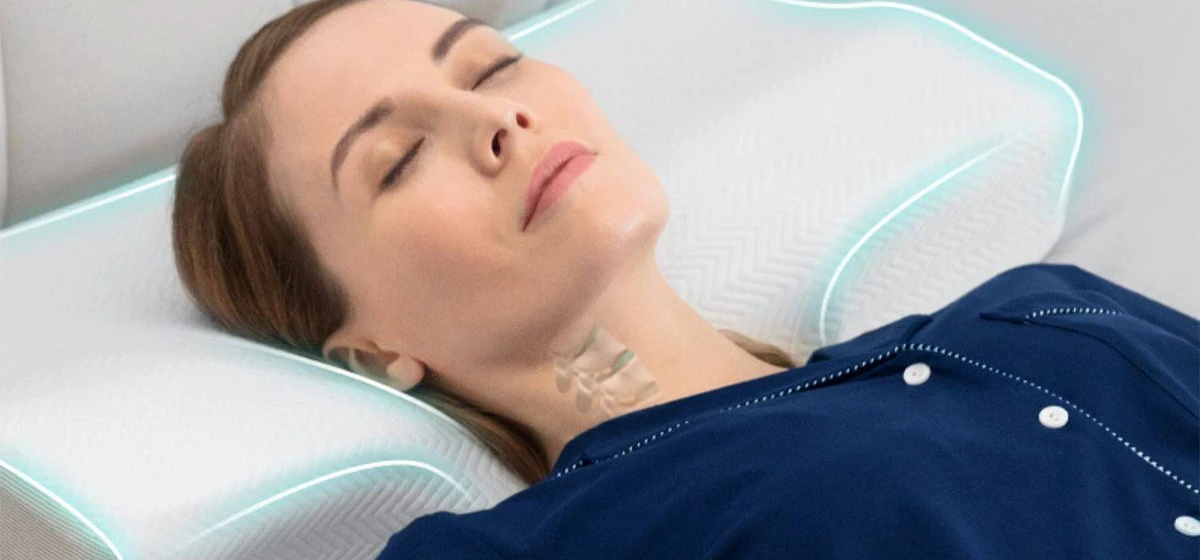
The cervical spine-the seven vertebrae in your neck-has a natural curvature called lordosis. This forward curve acts as a shock absorber and maintains proper alignment between your head and torso. When you sleep, maintaining this curvature is essential for:
- Airway patency: Proper alignment keeps airways open, reducing snoring and sleep apnea risk
- Muscle relaxation: When the spine is properly aligned, neck muscles can fully relax
- Nerve function: Misalignment can compress nerves, causing numbness or tingling in arms and hands
- Disc health: Uneven pressure on cervical discs can accelerate degeneration
The Pillow Mismatch Epidemic
Despite the importance of cervical support, pillow selection remains remarkably unscientific. A typical mattress shopper might:
- Choose based on "soft/medium/firm" labels that aren't standardized
- Select based on filling material (memory foam, down, latex) without understanding how it interacts with their anatomy
- Pick what "feels comfortable" in the store for 30 seconds
This approach fails because cervical support needs vary dramatically based on individual anatomy:
| Sleep Position | Key Measurement | Consequence of Mismatch |
|---|---|---|
| Side Sleeper | Shoulder width + neck length | Too-low pillow → head drops, straining upper neck; Too-high pillow → head pushed up, compressing lower neck |
| Back Sleeper | Cervical curvature depth + neck length | Too-high pillow → neck pushed forward, flattening natural curve; Too-low pillow → head drops back, over-extending neck |
| Stomach Sleeper | Minimal (but this position is generally discouraged) | Any significant pillow height rotates neck, stressing cervical spine |
How Xianku Quantifies Cervical Support Needs
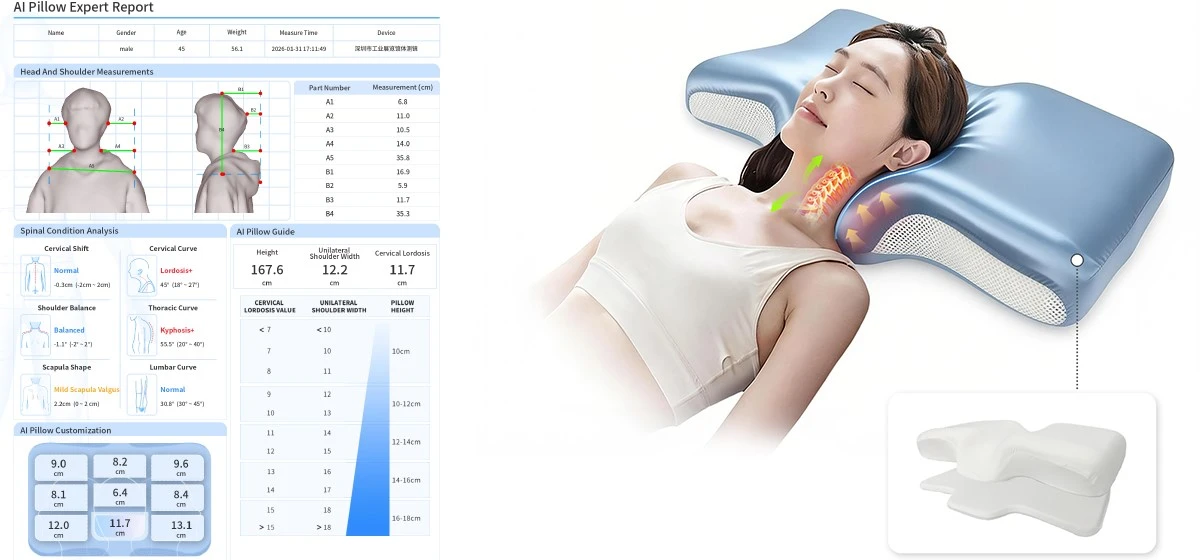
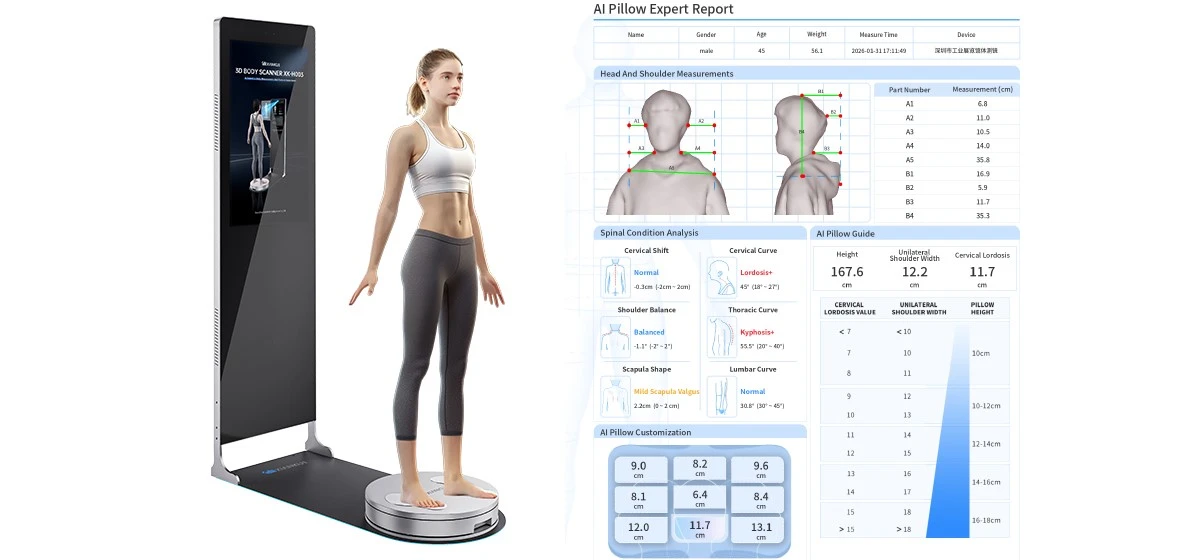
The Xianku 3D Body Scanner measures cervical curvature with precision impossible in traditional settings. Using infrared structured light technology, it captures the exact angle and depth of the cervical lordosis . Key metrics include:
- Cervical curvature angle: The degree of lordosis (normal range: 31-40°)
- Neck length: Distance from base of skull to seventh cervical vertebra
- Shoulder breadth: Critical for side sleepers to determine required pillow loft
- Head weight distribution: How mass is distributed across the cervical spine
With these measurements, the Xianku system can calculate the exact pillow loft needed to maintain neutral cervical alignment for each sleep position.
The Multi-Factor Match Algorithm in Action
Here's how the Xianku system generates pillow recommendations:
Step 1: Capture Anatomical Data
The 20-second scan generates a precise 3D model with cervical measurements accurate to ±0.5mm .
Step 2: Assess Sleep Position
A brief questionnaire identifies the customer's primary sleep position(s) and any existing neck pain.
Step 3: Calculate Required Support
The AI algorithm determines:
- For side sleepers: Required loft = (shoulder breadth × 0.1) + (neck length × 0.3)
- For back sleepers: Required loft determined by cervical curvature depth
- For combination sleepers: Multi-zone or adjustable pillows may be recommended
Step 4: Match to Product Database
The system cross-references the calculated needs with a database of pillow specifications, identifying products with the exact loft, firmness zoning, and materials to support the individual's cervical spine .
Real-World Impact: The Cervical Support Case Study
Consider two customers with different cervical profiles:
Customer A: 45-year-old female, side sleeper
- Cervical curvature: 34° (normal)
- Shoulder breadth: 16 inches
- Neck length: 4.5 inches
- Xianku recommendation: 5-inch loft pillow with medium firmness, contoured for shoulder relief
Customer B: 52-year-old male, back sleeper with flattened cervical curve
- Cervical curvature: 22° (hypolordosis)
- Neck length: 5 inches
- Sleep position: Primarily back
- Xianku recommendation: 3.5-inch loft cervical support pillow with enhanced neck roll to restore natural curve
In a traditional store, both might have chosen similar medium-loft pillows based on feel. With Xianku, each receives a specifically matched solution addressing their unique anatomy.
The Business Case for Retailers
For mattress and bedding retailers, adding pillow matching to the Xianku workflow creates significant opportunities:
| Metric | Traditional Pillow Sales | Xianku-Matched Pillow Sales |
|---|---|---|
| Attachment Rate | 15-20% of mattress sales | 60-70% of mattress sales |
| Return Rate | 8-12% (comfort issues) | <3% (properly matched) |
| Customer Satisfaction | Variable | High (visible improvement in neck comfort) |
| Average Pillow Price | $50-80 | $80-150 (customers value the match) |
Scientific Validation
The connection between proper cervical support and sleep quality is well-documented. A study in the Journal of Chiropractic Medicine found that patients using pillows matched to their cervical curvature reported:
- 40% reduction in morning neck pain
- 30% improvement in sleep quality
- Significant reduction in nighttime awakenings
The Xianku system brings this level of precision to retail environments, making customized cervical support accessible to every customer.
Beyond Pillows: Comprehensive Sleep Solutions
The cervical data captured by Xianku doesn't just inform pillow selection-it contributes to a complete sleep system recommendation:
- Mattress zoning: Cervical alignment requires proper support from below; a mattress that sags at the shoulders can compromise even the best pillow
- Adjustable bases: For customers with specific cervical issues, elevation angles can be optimized
- Positional therapy: For customers with sleep apnea or GERD, specific elevation recommendations can be generated
Conclusion
The days of guessing which pillow to buy are ending. With the Xianku 3D Body Scanner, American consumers can finally match their cervical support to their actual anatomy, not vague categories or brief in-store tests. For those suffering from morning neck pain or seeking optimal sleep health, this technology represents a breakthrough in personalized sleep science.
Call to Action: Experience the difference of scientifically matched cervical support. Find a Xianku-powered retailer near you and discover your perfect pillow.
Sources:
Xianku cervical measurement specifications
Journal of Chiropractic Medicine studies on cervical support
Industry pillow return data
