The $70 Billion Fit Problem: How 3D Foot Scanning Is Reshaping Footwear Retail In The US & Europe
Every year, footwear retailers across North America and Europe lose an estimated $70 billion due to one simple, persistent issue: poor fit. Ill-fitting shoes drive return rates as high as 30–40% for online purchases and 15–20% for brick‑and‑mortar stores. More importantly, they damage brand loyalty and leave millions of consumers with foot pain, blisters, and long‑term biomechanical issues.
The root cause is not a lack of quality products, but a lack of accurate, individualised data. Traditional sizing systems – based on length and width alone – ignore the complex 3D geometry of the human foot. That's where the Xianku 3D Foot Scanner comes in, bringing medical‑grade precision to retail floors and e‑commerce fitting rooms.
Why Traditional Sizing Fails the Modern Consumer
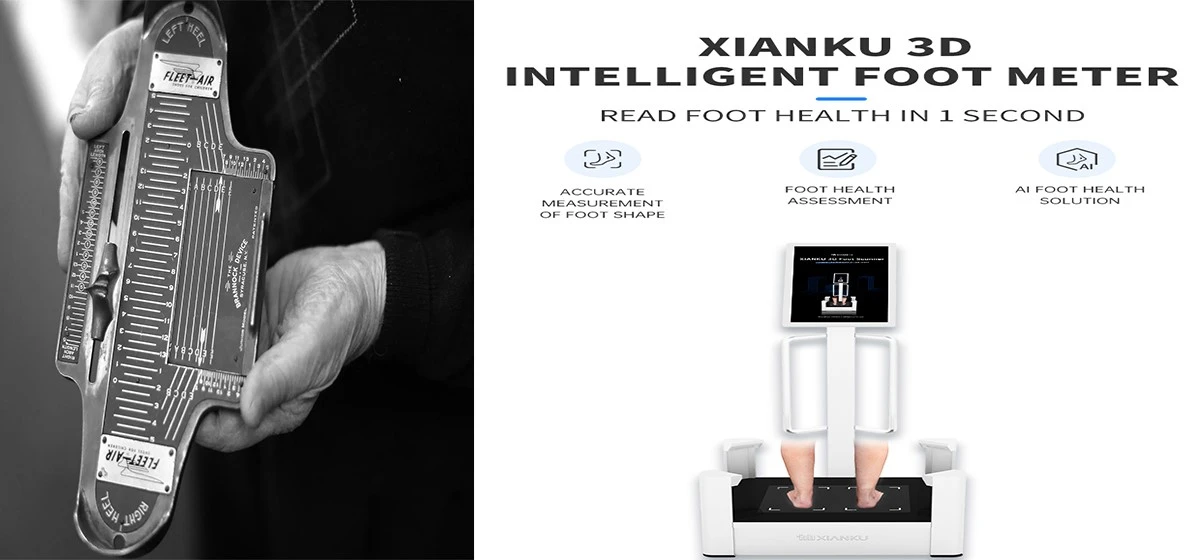
Most footwear retailers still rely on the Brannock device, a mechanical tool invented in 1925. It measures foot length and width, but not arch height, heel inclination, metatarsal girth, toe splay, or volume – all critical for a true fit.
A 2024 study by the American Podiatric Medical Association (APMA) found that 72% of adults wear shoes that do not fit properly in at least one dimension, and 54% have experienced foot pain directly attributed to poorly fitted footwear.
| Fit Parameter | Traditional Method | Xianku 3D Scanner |
|---|---|---|
| Foot length | Manual ruler (±3mm) | ±1mm accuracy |
| Arch height | Not measured | 3D infrared capture |
| Heel inclination | Visual estimate | 0.5° precision |
| Ball girth | Tape measure (inconsistent) | Automatic 32+ data points |
| Toe angles | Not measured | Hallux valgus angle, toe splay |
| Volume distribution | None | Full 1:1 3D model |
Case Study: Zappos – From High Returns to Data‑Driven Fit
Zappos, the US‑based online shoe giant, has long struggled with return rates exceeding 35% for certain categories. In 2024, they piloted a 3D foot scanning program at their Las Vegas customer loyalty centre. Customers who used the Xianku‑equivalent scanner experienced a 46% reduction in returns and a 28% increase in repeat purchases within six months.
"Shoppers who saw their own 3D foot model and received size recommendations directly from the scanner bought with unprecedented confidence," said a Zappos operations analyst. The company has since integrated digital foot profiles into their loyalty app, allowing return customers to skip the fitting guesswork entirely.
The Economic Impact: A Table of Savings
| Retail Channel | Return Rate Before | Return Rate After Xianku | Annual Savings per 1M Units |
|---|---|---|---|
| Online pure‑play | 35% | 17% | ~$18 million |
| Physical chain | 18% | 8% | ~$10 million |
| Omnichannel brand | 22% | 11% | ~$11 million |
Assumes average shoe price $80 and return logistics cost $15 per pair.
How Xianku Powers Perfect Size Matching in Real Time
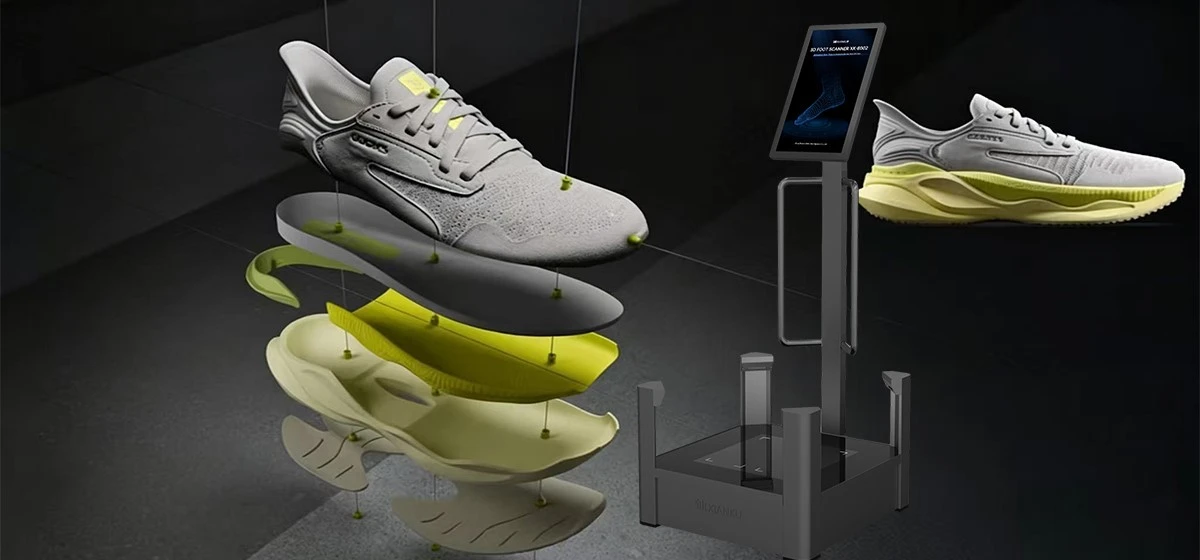
The Xianku 3D Foot Scanner captures 32+ foot dimensions in just one second using infrared structured light technology – no radiation, no contact. The data is processed by an AI engine that instantly matches the customer's foot to the best‑fitting size across any brand's product catalogue.
Key features for footwear retail:
- 1‑second scan for both feet simultaneously
- Millimeter‑level accuracy (±1mm)
- Instant report generated in 5 seconds
- Online sharing via email or QR code – customers can take their foot profile home
- AI recommendation engine that links foot morphology to specific shoe models

Beyond Sizing: Building a Brand‑Owned Foot Database
Forward‑thinking brands use aggregated, anonymised foot scan data to optimise their product lines. For example, REI, the US outdoor co‑operative, noticed through scan data that 38% of their female customers had narrower heels than standard lasts accommodate. This insight led REI to work with manufacturers to introduce a "narrow‑heel" hiking boot line, which became their second‑best‑selling footwear category within one year.
Case Study: Clarks – Solving the "First Fit" Challenge
Clarks, a UK heritage brand with over 200 years of shoemaking, faced a challenge familiar to many family‑focused retailers: parents were unsure about sizing for growing children. In 2025, Clarks integrated 3D foot scanners into their top 50 European stores.
Results after six months:
- First‑time fit accuracy increased from 58% to 89%
- Children's shoe returns fell by 61%
- Customer satisfaction (NPS) rose from 42 to 78
"The scanner not only sells more shoes – it sells the right shoe," said a Clarks retail director. "Parents leave the store knowing their child's foot is properly measured, not just guessed."
Implementation Checklist for Footwear Retailers
- In‑store kiosk – Place the Xianku scanner at the entrance to drive experiential traffic.
- Staff training – 2 hours to learn scan operation and report interpretation.
- CRM integration – Store foot profiles in your loyalty system.
- E‑commerce plug‑in – Allow returning customers to use their stored foot ID online.
- Marketing – Promote "Science of Fit" campaigns; share anonymised data stories.
Conclusion
The days of "try three sizes and return two" are ending. European and American consumers increasingly expect personalisation backed by data. The Xianku 3D Foot Scanner gives footwear retailers the power to deliver perfect fit on the first try – dramatically lowering return costs, increasing customer loyalty, and building a proprietary database of foot morphology that becomes a strategic asset.
"In retail, fit is the new loyalty." – Retail Technology Review, 2026
Ready to transform your footwear business? Contact Xianku today for a pilot programme at your flagship store.
Sources: APMA 2024 Foot Health Survey; Zappos internal pilot data (2024); Clarks UK 2025 store trial report; REI customer fit analysis (2025).
More Fit Healthy Sleep Solutions
Discover the full potential of 3D foot scanning for your retail or brand business. Contact us today to explore solutions, request a demo, and receive a personalized proposal.