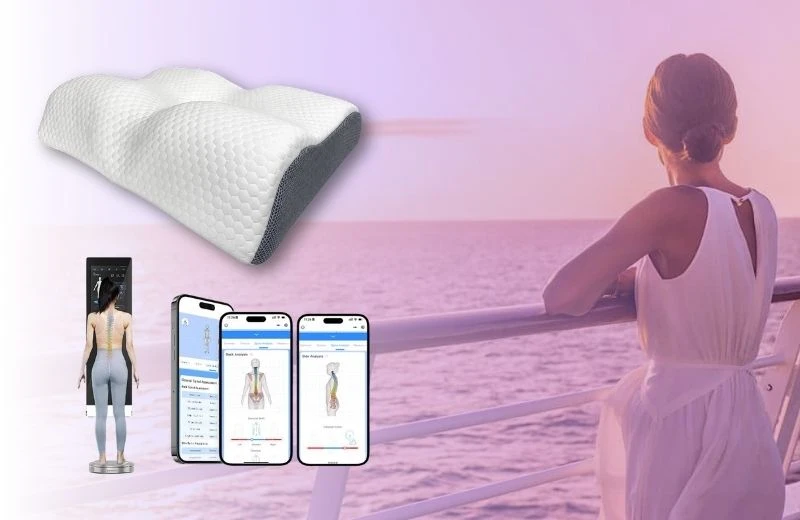
The Most Surprising Part of My Cruise Had Nothing to Do With the Ocean
Last summer, I boarded what was supposed to be the trip of a lifetime.
A luxury cruise sailing through the Mediterranean.
The brochure promised everything travelers dream about:
- Infinity pools overlooking the sea
- Michelin-inspired dining experiences
- Broadway-style entertainment
- Private island excursions
- Ocean-view suites
But strangely, the most memorable part of the journey wasn't the food.
It wasn't the sunset.
And it wasn't even the destinations.
It was a pillow.

A few days before departure, I received an unexpected message from the cruise line.
It read:
"To enhance your sleep experience onboard, we invite you to complete a complimentary AI body scan at our departure terminal. Your personalized sleep support system will be prepared before boarding."
Curious, I arrived at the port early.
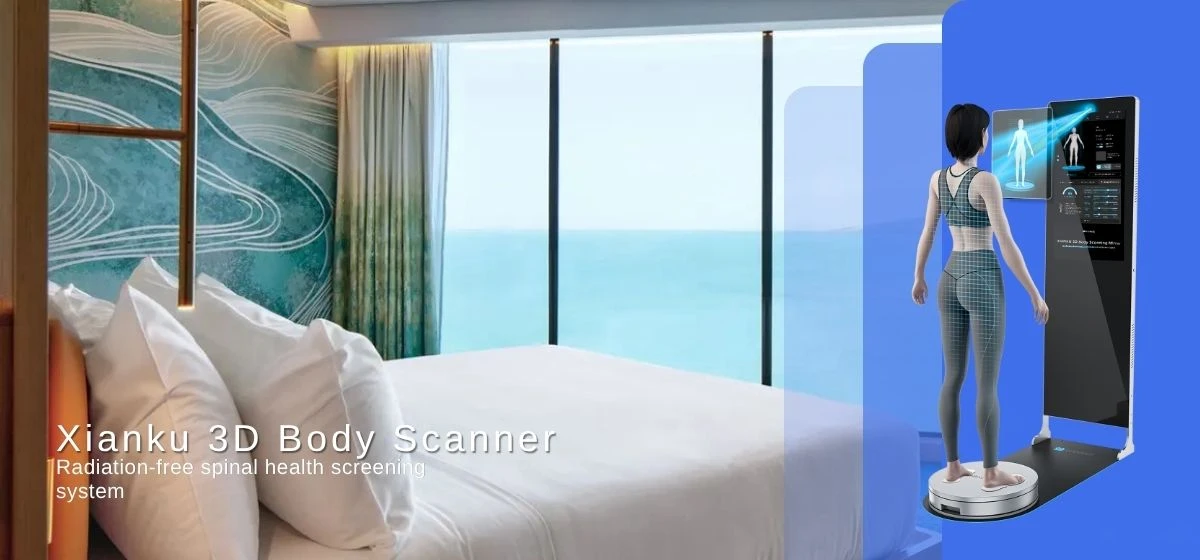
Near the VIP check-in area stood a futuristic full-body scanning mirror.
The process took less than a minute.
I stepped onto a rotating platform.
The screen instantly generated a remarkably detailed digital replica of my body.
- Shoulders.
- Neck.
- Spine.
- Posture.
- Weight distribution.
Everything appeared in real time.
The system then displayed a personalized sleep report and thanked me for participating.
I boarded the ship and forgot about it.
Hours later, after exploring the vessel, I entered my cabin.
Waiting on the bed was a card.
"This pillow has been customized based on your body data. Enjoy your journey."
I laughed.
How different could a pillow really be?
Three nights later, I understood.
For the first time on a cruise, I woke up without neck stiffness.
No shoulder soreness.
No awkward sleeping position.
No constant pillow adjustment.
The pillow simply worked.
And that's when I realized:
I wasn't experiencing a luxury cruise.
I was experiencing the future of hospitality.
The future of personalized sleep.
Powered by AI, 3D body scanning, and on-demand manufacturing.
The Dirty Secret of the Cruise Industry: Guests Spend More Time Sleeping Than You Think
Cruise operators invest billions every year into guest experiences.
They compete through:
- Bigger ships
- Better entertainment
- More restaurants
- Larger cabins
- Spectacular attractions
Yet one critical reality often gets overlooked.
Most guests spend:
7 to 9 hours every day sleeping.
On a seven-day cruise, that's nearly one-third of the entire vacation.
Ironically, one of the most common complaints found in cruise reviews is:
- Neck discomfort
- Poor pillow support
- Shoulder pain
- Lower sleep quality
- Fatigue after long travel days
Why?
Because traditional cruise cabins rely on standardized bedding.
One mattress.
One pillow specification.
Thousands of different passengers.
The math simply doesn't work.
A pillow that feels perfect for a 5'2" passenger may feel completely wrong for a 6'3" traveler.
A side sleeper has different support needs than a back sleeper.
A guest with forward head posture requires different cervical support than someone with ideal spinal alignment.
Yet cruise lines still try to solve these problems using the same pillow inventory for everyone.
This is where the next hospitality revolution begins.
Introducing the Concept of "One Passenger, One Pillow"
Imagine a cruise where every passenger receives a pillow uniquely designed for their body.
- Not selected.
- Not upgraded.
- Not chosen from a pillow menu.
Actually manufactured for them.
This is becoming possible through a combination of:
- AI-powered body scanning
- Cloud data management
- Smart sleep algorithms
- 3D printing technology
The result is a new operating model:
Scan Once. Sleep Better Everywhere.
The Technology Behind the Experience: XIANKU's AI Body Scanning Ecosystem
The system enabling this transformation originates from XIANKU Intelligence, a global innovator in intelligent body measurement technologies.
Step 1: Non-Radiation 3D Structured Light Scanning
Before boarding, passengers stand in front of a XIANKU 3D Body Scanner.
Using:
- Non-radiation 3D structured light scanning
- AI body reconstruction
- Infrared sensing technology
the system generates:
1:1 Realistic 3D human body models
within seconds.
Unlike traditional measurements, the scanner captures a complete digital representation of the body.
Step 2: AI Sleep Profile Generation
The scanner automatically analyzes:
- Cervical curvature
- Shoulder balance
- Shoulder width
- Head-to-neck alignment
- Upper spine posture
- Center of gravity distribution
It simultaneously captures:
45 body circumference data points
and dozens of biomechanical indicators.
Using XIANKU's:
AI Intelligent Recommendation System
the platform calculates the ideal support requirements for sleep.
Step 3: Personalized Pillow Blueprint
The system generates a custom support map containing:
- Pillow height
- Neck support height
- Shoulder pressure relief zones
- Side sleeping support
- Back sleeping support
- Material density recommendations
Each passenger receives a unique digital sleep profile.
No two pillows are exactly the same.
Step 4: On-Demand 3D Printing
Using advanced additive manufacturing technology, the pillow is produced before departure or onboard through a distributed production system.
Instead of mass-producing generic pillows, cruise operators manufacture support systems optimized for individual guests.
This dramatically improves comfort while reducing unnecessary inventory.
Step 5: Cloud-Based Sleep Identity
Perhaps the most powerful innovation is long-term data continuity.
The passenger's profile is securely stored within a:
3D Body Measurement CRM System
The next time they sail with the same cruise group:
No rescanning required
No preference forms
No setup process
Their personalized sleep configuration is automatically ready.
Every voyage becomes smarter than the last.
Traditional Cruise Bedding vs AI-Driven Personalized Sleep
| Dimension | Traditional Cruise Pillow Program | XIANKU AI-Driven Personalized Sleep System |
|---|---|---|
| Guest Sleep Quality | Inconsistent | Highly personalized |
| Neck & Shoulder Support | Generic | Data-driven precision |
| OTA & Review Performance | Moderate impact | Significant guest satisfaction improvement |
| Customer Loyalty | Limited differentiation | Strong emotional connection |
| Operational Intelligence | No guest sleep data | Cloud-based sleep profiles |
| Future Revenue Potential | Bedding cost center | Premium wellness service |
Why Cruise Ships Are the Perfect Environment for This Innovation
Among all hospitality sectors, cruise ships may benefit the most.
Longer Guest Exposure
Hotels host guests for one or two nights.
Cruises often host guests for:
7 days
10 days
14 days
Even longer world voyages
Sleep quality compounds daily.
Small improvements create major satisfaction gains.
High Customer Expectations
Cruise passengers are already paying premium prices.
They expect personalized experiences.
A custom sleep system feels aligned with luxury positioning.
Captive Environment
Unlike hotels, cruise operators control the entire guest journey.
This makes it easier to integrate:
- Body scanning
- Sleep assessments
- AI recommendations
- Onboard manufacturing

into a seamless ecosystem.
Beyond Pillows: The Future Floating Wellness Resort
What begins with pillows quickly expands.
The same body data can support:
Personalized Mattresses
AI-adjusted pressure distribution.
Ergonomic Lounge Chairs
Custom support for deck relaxation.
Recovery Programs
Body posture-based wellness plans.
Motion-Sickness Optimization
Improved body alignment during sailing.
Senior-Friendly Cruises
Fall-risk and posture assessment.
Premium Wellness Memberships
Long-term health monitoring across multiple voyages.
Eventually, cruise ships may evolve into floating health and wellness ecosystems powered by digital body intelligence.
The Next Great Competition in Cruising Will Not Be Bigger Ships
For decades, cruise lines competed through scale.
Bigger ships.
More restaurants.
Larger water parks.
More attractions.
But tomorrow's competition will be different.
The winning cruise lines will compete through personalization.
They will understand each guest better.
They will deliver comfort more precisely.
They will transform biometric data into unforgettable experiences.
Because in a world where every cruise offers entertainment and luxury, the true differentiator becomes how guests feel.
And nothing influences that feeling more than sleep.
A Call to Action for Cruise Industry Leaders
To cruise executives, hospitality innovators, wellness operators, and luxury travel brands:
The future of guest experience is no longer about adding another restaurant deck.
It is about creating experiences that passengers physically feel.
Every five-star review begins with comfort.
Every memorable vacation begins with recovery.
Every loyal guest begins with trust.
And trust begins when technology understands the individual.
-
Every glowing review hides a well-rested traveler.
-
Every premium voyage deserves premium sleep.
-
Embrace AI, 3D Body Scanning, and 3D Printing today.
-
Create a future where every passenger receives a pillow as unique as their journey.
Because the next great cruise experience won't start when the ship leaves the harbor.
It will start the moment AI designs the perfect night's sleep.
Frequently Asked Questions
Q1: How can personalized pillows improve cruise guest satisfaction?
Personalized pillows reduce neck strain, shoulder discomfort, and sleep disturbances, leading to higher guest satisfaction, stronger online reviews, and increased customer loyalty.
Q2: How does a 3D Body Measurement CRM System benefit cruise operators?
The system creates persistent guest profiles that can be reused across future voyages, enabling seamless personalization and stronger long-term customer relationships.
Q3: Can AI-powered sleep systems help cruise lines increase premium cabin sales?
Yes. Sleep quality is one of the most valued aspects of travel. Offering personalized sleep solutions can justify premium pricing, strengthen brand differentiation, and create a compelling wellness-focused upselling opportunity.