

Introduction: The Digital Habit Changing the Way We Hold Our Bodies
Look around any street, café, office, or public transportation.
You will see the same posture everywhere:
A person holding a smartphone, head tilted downward, shoulders slightly rounded, eyes fixed on a small screen.
For many people, this position has become a normal part of everyday life.
We use smartphones to communicate, work, learn, and relax. The device itself is not the problem. The hidden challenge comes from repeating the same posture for hours every day.
Modern lifestyles have created a new relationship between humans and technology - but our bodies are still designed for movement, balance, and natural alignment.
When a temporary posture becomes a daily habit, it can gradually influence how we position our head, neck, and shoulders.
This has created growing interest in understanding a simple but important question:
How are smartphone habits affecting human posture, and how can technology help us better understand our bodies?

The answer begins with one concept:
Human posture should be measured, not guessed.
1. The Rise of the Digital Posture Problem
Over the past decade, smartphones have become one of the most frequently used objects in daily life.
People spend hours:
- Checking messages
- Scrolling social media
- Watching videos
- Reading articles
- Working remotely
- Playing mobile games
Unlike traditional activities, smartphone usage often involves a forward-looking and downward-facing position.
This creates a repetitive posture pattern:
- The head moves forward
- The shoulders rotate inward
- The upper body becomes less aligned
- Neck and shoulder muscles experience increased workload
This posture pattern is commonly referred to as forward head posture.
Forward head posture occurs when the head moves forward relative to the natural alignment of the shoulders and spine.
The human body is highly adaptable. However, when the same movement pattern is repeated every day, the body may gradually adjust to that position.
This is why posture has become an important topic in modern wellness.
2. Why Looking Down Changes Neck Alignment
The human head weighs several kilograms and is naturally balanced above the spine.
In an ideal standing position:
- The ears align approximately above the shoulders
- The spine maintains a natural curve
- Muscles work together efficiently to support the body
However, when looking down at a smartphone:
The head moves away from this balanced position.
As the head moves forward:
- Neck muscles need to provide additional support
- Shoulder muscles may compensate for the changed position
- The upper body may gradually develop different movement patterns
The problem is not a single moment of looking at a phone.
The challenge is repetition.
A few minutes of looking down is normal.
Several hours every day, combined with long periods of sitting and limited movement, creates a completely different situation.
This is why modern posture concerns are not only about technology usage - they are about understanding how daily habits interact with the human body.
3. The Problem With Traditional Posture Assessment
Many people only start paying attention to posture when they feel discomfort or notice visible changes.
However, posture is a complex system involving:
- Body proportions
- Spine alignment
- Shoulder position
- Movement habits
- Daily lifestyle
Two people may both spend five hours looking at their phones, but their bodies may respond differently.
Why?
Because every human body is unique.
Traditional posture evaluation often relies on:
- Visual observation
- Manual measurement
- Professional experience
These methods can provide valuable information, but they may not fully capture the complete relationship between body structure and posture.
In the era of digital health and personalized wellness, a new approach is emerging:
Using body data to understand individual differences.
4. Why Human Body Data Is Becoming More Important
For decades, many wellness products were created based on general assumptions.
A standard pillow.
A standard chair.
A standard support solution.
But the human body is not standard.
People have different:
- Heights
- Body proportions
- Shoulder widths
- Neck lengths
- Sleeping positions
- Posture habits
A solution that works for one person may not provide the same experience for another.
This is why personalization has become one of the biggest trends in the wellness industry.
The future is moving from:
One product for everyone
to:
A solution designed around individual needs.
To achieve this, businesses need one essential element:
Accurate human body data.
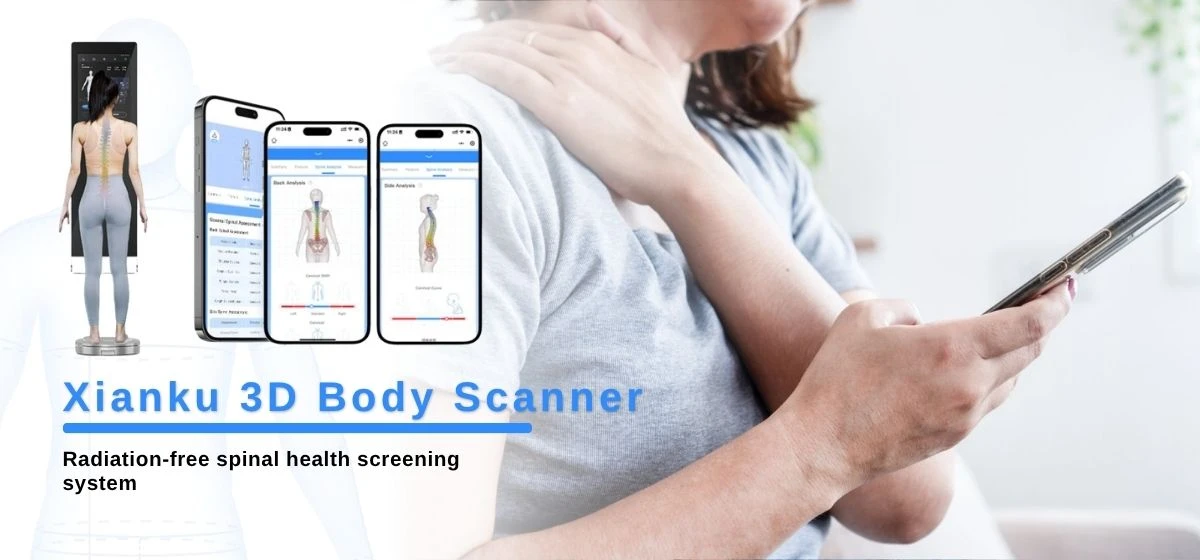
5. How 3D Body Scanning Creates a New Approach to Understanding Posture
As technology develops, the way we understand the human body is also changing.
Instead of relying only on visual observation, modern solutions are using digital technology to capture measurable body information.
A 3D Body Scanner provides a new approach by transforming the human body into digital data.
Using non-contact structured light technology, a 3D Body Scanner can capture detailed body measurements within seconds and create a digital representation of an individual's body structure.
Unlike traditional measurement methods, 3D scanning allows businesses and professionals to analyze the body from a more comprehensive perspective.
The scanning process typically includes several key steps:
Step 1: Capturing Human Body Data
During the scanning process, the system collects three-dimensional information from the human body.
This includes:
- Body dimensions
- Body shape
- Surface geometry
- Key measurement points
The process is completely non-contact, allowing users to complete the scan naturally without wearing special equipment or experiencing physical contact.
Step 2: Creating a Digital Body Model
After capturing the data, the system generates a digital 3D model of the individual.
This digital representation allows professionals to visualize body characteristics that may not be obvious through simple observation.
Instead of seeing only a person's appearance, businesses can better understand:
- Body proportions
- Alignment characteristics
- Structural differences
- Individual variations
The human body becomes measurable data.
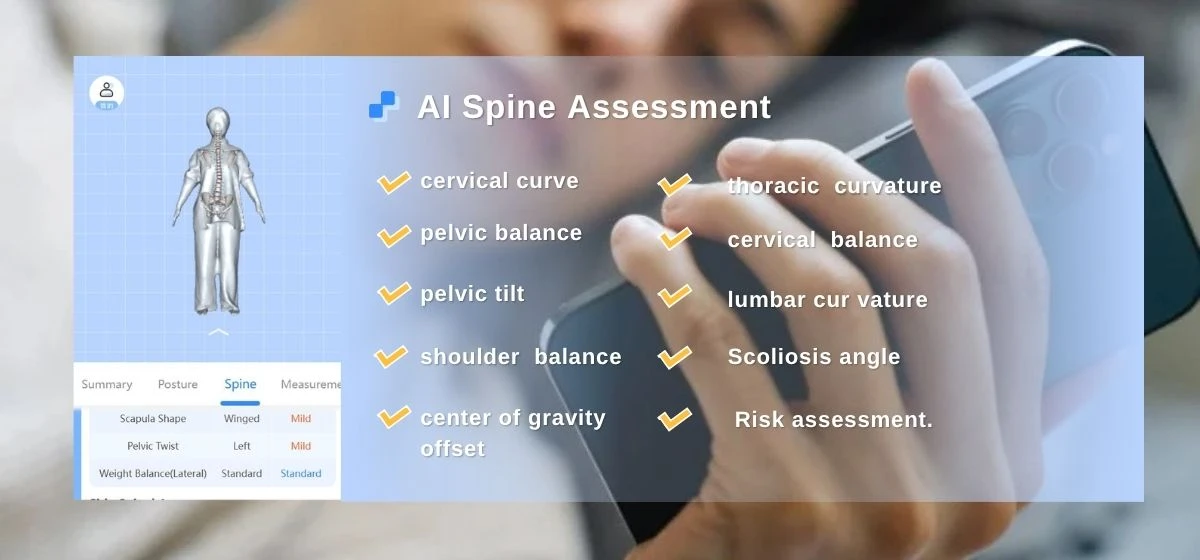
Step 3: Analyzing Posture Patterns Through Data
With digital body information, posture analysis becomes more objective.
A 3D body scanning system can help identify characteristics related to:
- Shoulder balance
- Body symmetry
- Standing posture
- Body alignment tendencies
The purpose is not to replace professional judgment, but to provide additional measurable information that supports better decision-making.
As the wellness industry moves toward personalization, objective body data is becoming an important foundation.
6. From Body Data to Personalized Sleep Solutions
One of the most promising applications of body data is personalized sleep.
Sleep quality is influenced by many factors:
- Sleeping position
- Neck support
- Pillow height
- Body structure
- Individual comfort preferences
However, traditional pillow selection is often based on general categories:
- Soft pillow
- Firm pillow
- High pillow
- Low pillow
The challenge is simple:
A pillow that feels comfortable for one person may not provide the same support for another.
This is where body data creates new possibilities.
By combining:
3D Body Scanning + AI Analysis + Digital Design
businesses can move from standard pillow selection toward personalized sleep solutions.
The process can include:
- Capturing individual body information through 3D scanning
- Analyzing posture characteristics and support requirements
- Generating personalized recommendations
- Creating customized sleep products based on digital models
Instead of asking:
"Which pillow should I choose?"
Consumers can move toward:
"Which pillow is designed for my body?"
7. The Future of Wellness: Personalization Powered by AI and Human Data
Artificial intelligence is changing many industries.
But AI itself requires one important resource:
Data.
Without accurate human information, personalization remains limited.
This is why human body data is becoming a valuable foundation for future wellness solutions.
The combination of:
- 3D scanning technology
- Artificial intelligence
- Digital modeling
- Personalized manufacturing
is creating a new approach to products and services.
In the future, consumers may no longer simply select products from a shelf.
Instead, products may be created based on their own body characteristics.
This transformation can already be seen across multiple industries.
8. Beyond Sleep: How 3D Body Scanning Is Transforming Different Industries
1. Sleep Industry
The sleep industry is moving beyond traditional mattresses and pillows.
Hotels, bedding brands, and sleep solution providers are exploring personalized experiences based on individual body information.
With 3D body scanning technology, businesses can provide:
- More personalized recommendations
- Better customer experiences
- Premium wellness services
The value is not only selling a pillow.
It is creating a complete personalized sleep experience.
2. Wellness and Health Assessment
Modern consumers increasingly want to understand their bodies.
Wellness centers and clinics can use body scanning technology to provide customers with:
- Digital body measurements
- Posture insights
- Personalized wellness recommendations
Instead of providing general advice, businesses can create services based on individual characteristics.
3. Apparel and Custom-Fit Solutions
The traditional apparel industry faces a long-standing challenge:
How can one standard size fit millions of different bodies?
3D body scanning provides a data-driven solution.
By capturing accurate body measurements, businesses can develop:
- Better fitting experiences
- Personalized clothing
- Digital fitting solutions
The same principle applies:
The better we understand the body, the better we can design solutions.
9. Why the Future Belongs to Data-Driven Personalization
For many years, industries have focused on improving materials, designs, and manufacturing processes.
But one important factor has often been overlooked:
The person using the product.
A pillow is not just a pillow.
A chair is not just a chair.
A pair of shoes is not just a pair of shoes.
Every product interacts with a unique human body.
The next generation of wellness and lifestyle products will be built around one key idea:
Understanding the individual before creating the solution.
3D body scanning makes this possible by connecting human needs with measurable data.
Frequently Asked Questions (FAQ)
1. Can smartphone use affect neck posture?
Long periods of smartphone use involving a downward head position may contribute to posture changes such as forward head posture. Maintaining varied movement and healthy ergonomic habits can help support better posture.
2. What is forward head posture?
Forward head posture is a posture pattern where the head moves forward relative to the shoulders and spine. It is commonly associated with prolonged activities involving forward head positioning.
3. Why is smartphone posture becoming more common?
Smartphones, computers, and digital devices have increased the amount of time people spend in seated and forward-facing positions, making posture awareness increasingly important.
4. How does a 3D Body Scanner work?
A 3D Body Scanner uses technologies such as structured light to capture three-dimensional body information and create a digital model of an individual's body.
5. Is 3D body scanning safe?
Yes. Non-contact structured light 3D scanning does not use radiation and is designed to safely capture external body measurements.
6. What information can a 3D Body Scanner capture?
Depending on the system and application, 3D body scanning can capture body dimensions, shape information, and posture-related data.
7. Can 3D scanning create personalized pillows?
Yes. By combining body data, AI analysis, and digital design, businesses can develop personalized pillow solutions based on individual characteristics.
8. Why is personalized wellness becoming popular?
Because consumers increasingly expect products and services that match their individual needs rather than standardized solutions.
9. What industries can use 3D body scanning technology?
Applications include:
- Sleep solutions
- Wellness centers
- Healthcare-related services
- Apparel customization
- Ergonomic solutions
10. What is the future of body data?
Human body data will become an important foundation for personalized products and services, helping industries create solutions designed around individual differences.
Conclusion: From Looking Down at Screens to Understanding Ourselves
Smartphones have changed the way we communicate, work, and live.
But they have also reminded us of an important truth:
The human body is not designed to be treated as a standard model.
Every person has different structures, habits,
and needs.
The future of wellness will not come from more generic products.
It will come from better understanding.
Through 3D body scanning, artificial intelligence, and human-centered design, we are entering an era where products can be created around the individual.
The question is no longer:
"Which product should I choose?"
The future question is:
"How can technology understand me and create what I truly need?"
