The Future of Healthcare Is Not Only About Smarter AI - It Is About Better Human Data
For decades, healthcare has followed a reactive model.
Patients visit hospitals when they experience symptoms. Doctors analyze medical records, imaging results, and laboratory tests to identify problems and provide treatment.
But as populations age and chronic diseases become more common, traditional healthcare systems are facing increasing pressure.
More people need long-term health management, while medical resources remain limited.
This challenge is accelerating the development of artificial intelligence in healthcare.
AI is already transforming medical imaging, clinical decision support, drug discovery, and patient monitoring. In the future, AI systems may become powerful healthcare assistants that help analyze complex information, identify potential risks, and provide personalized health recommendations.
However, one question remains:
How well can AI understand the human body?
The answer depends on one critical factor:
Human body data.

As AI becomes more intelligent, accurate and comprehensive human data will become the foundation of the next generation of healthcare.
AI Can Analyze Information - But It Needs a Complete Understanding of the Human Body
Modern AI healthcare systems are mainly trained on traditional medical data, including:
- Electronic health records
- Medical imaging
- Blood test results
- Genetic information
- Patient history
These sources provide valuable insights into human health.
However, most of this information focuses on what happens inside the body.
Healthcare in the future will require a broader perspective.
Many health problems are connected to physical structures, movement patterns, posture, and daily habits.
For example:
- Poor posture can contribute to chronic neck and back discomfort.
- Foot imbalance can affect walking patterns and lower-body alignment.
- Incorrect sleeping support can influence spinal comfort and sleep quality.
These physical signals are often difficult to measure through traditional healthcare methods.
This creates a new opportunity:
Digital human body data.
From Disease Treatment to Health Prevention
The future of healthcare is shifting from:
Treatment after illness
to:
Prediction and prevention before problems occur.
This transformation requires continuous monitoring of individual health conditions.
Instead of asking:
"Why does this patient have pain?"
Future healthcare systems will increasingly ask:
"How is this person's body changing over time?"
This is where 3D scanning technology becomes increasingly valuable.
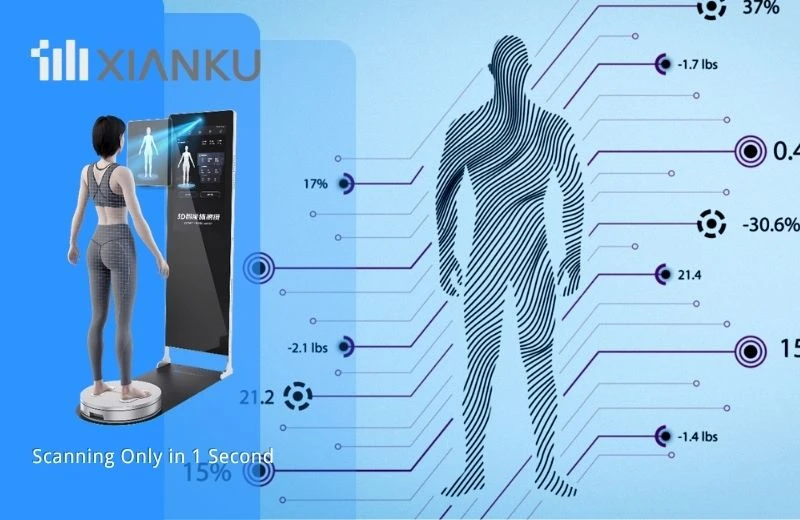
Unlike traditional measurements that only capture limited information, 3D scanning creates a digital representation of the human body.
It allows healthcare providers and AI systems to understand:
- Body shape
- Posture alignment
- Physical symmetry
- Foot structure
- Pressure distribution
- Movement-related patterns
This additional layer of information helps AI create more personalized health recommendations.
Why 3D Body Scanning Could Become a New Healthcare Data Source
The human body is complex.
Two people may have the same height and weight but completely different body structures.
One person may have:
- Rounded shoulders
- Uneven posture
- Forward head position
Another may have:
- Balanced alignment
- Stable posture
- Better body symmetry
Traditional measurements may not fully capture these differences.
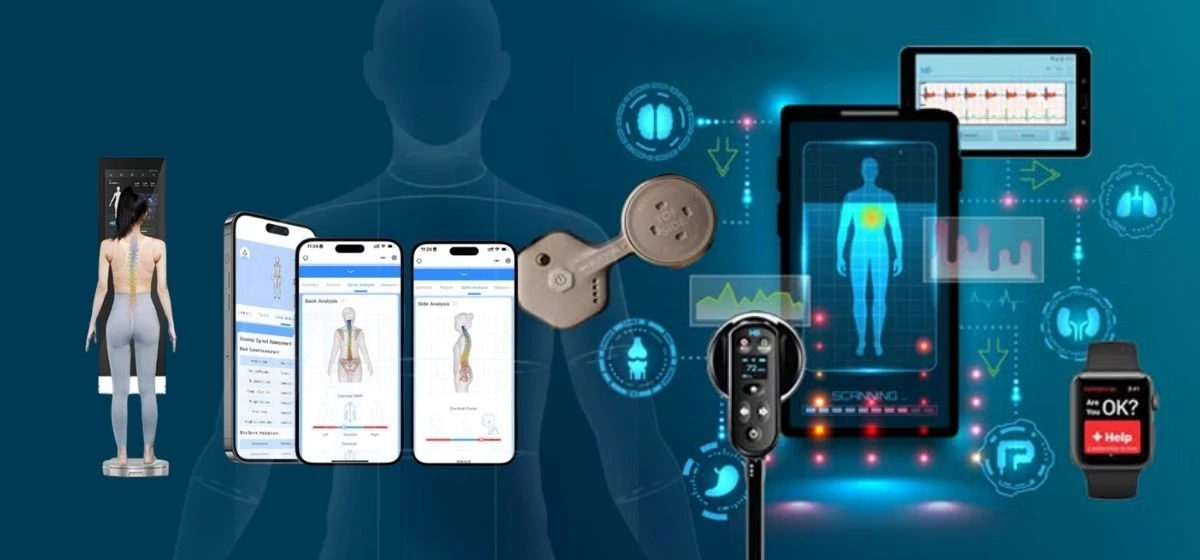
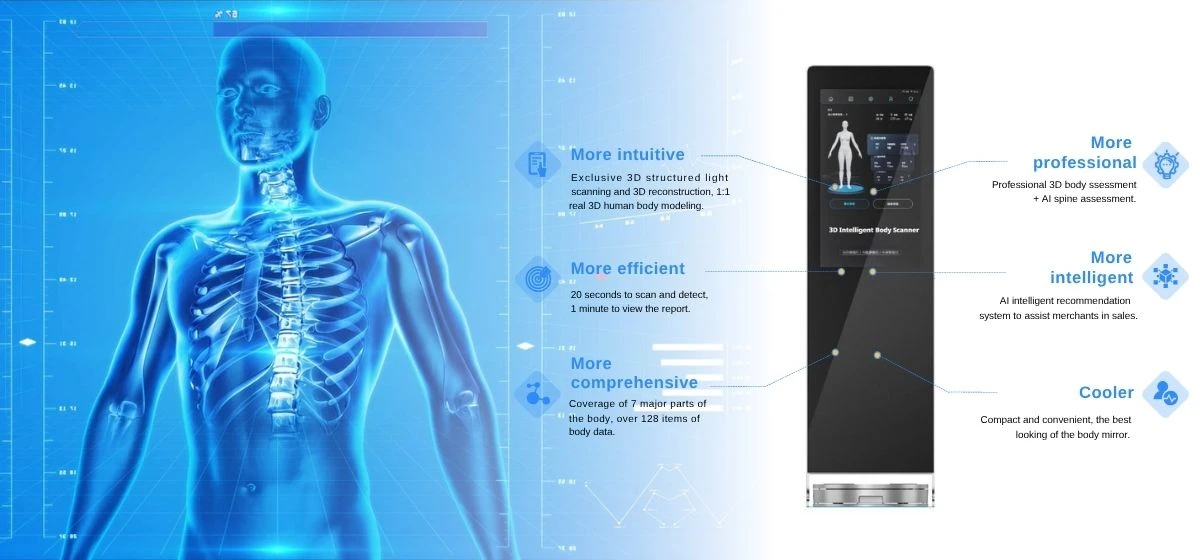
A 3D Body Scanner provides a more complete view by collecting detailed body structure information through non-contact scanning technology.
With AI-powered analysis, this data can help identify:
Posture and Alignment Patterns
AI can analyze:
- Shoulder balance
- Spine alignment
- Body asymmetry
- Postural tendencies
This provides valuable information for wellness centers, rehabilitation facilities, and health-focused businesses.
Personalized Sleep Health
Sleep is another area where body data can create meaningful improvements.
A pillow is not just a comfort product.
The correct pillow height and support depend on:
- Neck curve
- Shoulder width
- Sleeping position
- Body structure
By combining 3D body scanning and AI analysis, businesses can move beyond traditional pillow recommendations based only on customer preference.
Instead, they can provide:
Data-driven personalized sleep solutions.
Personalized Foot Health Solutions
Feet are the foundation of the human body.
Small structural differences can influence:
- Walking patterns
- Body balance
- Lower-body alignment
3D Foot Scanning technology can analyze:
- Foot length
- Foot width
- Arch height
- Foot shape
- Pressure distribution
This information creates opportunities for personalized solutions such as:
- Custom insoles
- Personalized footwear
- Foot health management programs
The Future Healthcare Ecosystem: AI + Human Body Data
The future of healthcare will not be built by AI alone.
AI provides intelligence.
But human body data provides understanding.
Together, they create a new healthcare ecosystem:
3D Scanning → Human Body Data → AI Analysis → Personalized Health Solutions
This model changes healthcare from a standardized approach into an individualized experience.
Instead of providing the same solution to everyone, healthcare providers can understand each person's unique physical condition and deliver recommendations designed specifically for them.
Beyond Hospitals: The Rise of Preventive Health Businesses
AI-powered healthcare will not only exist inside hospitals.
It will expand into everyday health experiences:
- Wellness centers
- Fitness facilities
- Footwear retailers
- Sleep brands
- Rehabilitation clinics
- Preventive health centers
These businesses will become important health data collection points.
A customer may not visit a hospital every month, but they may:
- Buy shoes
- Improve their sleep
- Check their posture
- Monitor their body changes
By integrating 3D scanning technology, traditional businesses can evolve from product sellers into health solution providers.
For example:
- A footwear store can become a foot health center.
- A pillow retailer can become a sleep wellness provider.
- A fitness center can become a personalized health management platform.
The Next Medical Revolution Will Be Built on Understanding the Human Body
The future of healthcare is not simply about creating smarter algorithms.
It is about creating a deeper connection between technology and human health.
AI may become the future healthcare assistant, but AI cannot make meaningful recommendations without accurate human information.
The next generation of healthcare infrastructure will not only include hospitals, databases, and AI models.
It will also include technologies that capture the most important data source of all:
The human body itself.
As healthcare moves toward personalization and prevention, companies that can provide accurate, continuous, and meaningful human body data will become an essential part of this transformation.
The future of healthcare will belong to those who help AI understand people better.
Frequently Asked Questions (FAQ)
Will AI replace doctors in the future?
AI is unlikely to completely replace doctors. Instead, AI will become a powerful healthcare assistant that helps medical professionals analyze information, improve efficiency, and provide more personalized care.
Why is human body data important for AI healthcare?
AI systems require accurate and comprehensive data to understand individual health conditions. Human body data provides physical information that traditional medical records often cannot capture.
How can 3D scanning support healthcare?
3D scanning technology can capture detailed body and foot structures, helping create personalized solutions for posture improvement, sleep support, footwear, and preventive health management.
What is the future of personalized healthcare?
The future of healthcare will focus on prevention, continuous monitoring, and personalized recommendations based on each individual's unique body data.