

Quick Answer: How Can Your Feet Affect Your Whole Body Alignment?
Your feet are the foundation of your entire body.
Every movement begins from the moment your feet contact the ground. The way your feet distribute pressure, support your weight, and maintain stability can influence the alignment of your ankles, knees, hips, and spine.
This connection is known as the kinetic chain - a system where different parts of the body work together to create balanced movement.
When foot structure or movement patterns change, the body may create adjustments to maintain stability. Over time, these compensations can influence overall posture and body alignment.
A 3D Foot Scanner helps reveal these hidden patterns by analyzing foot shape, arch structure, pressure distribution, and left-right balance, providing valuable data for understanding how the feet interact with the entire body.
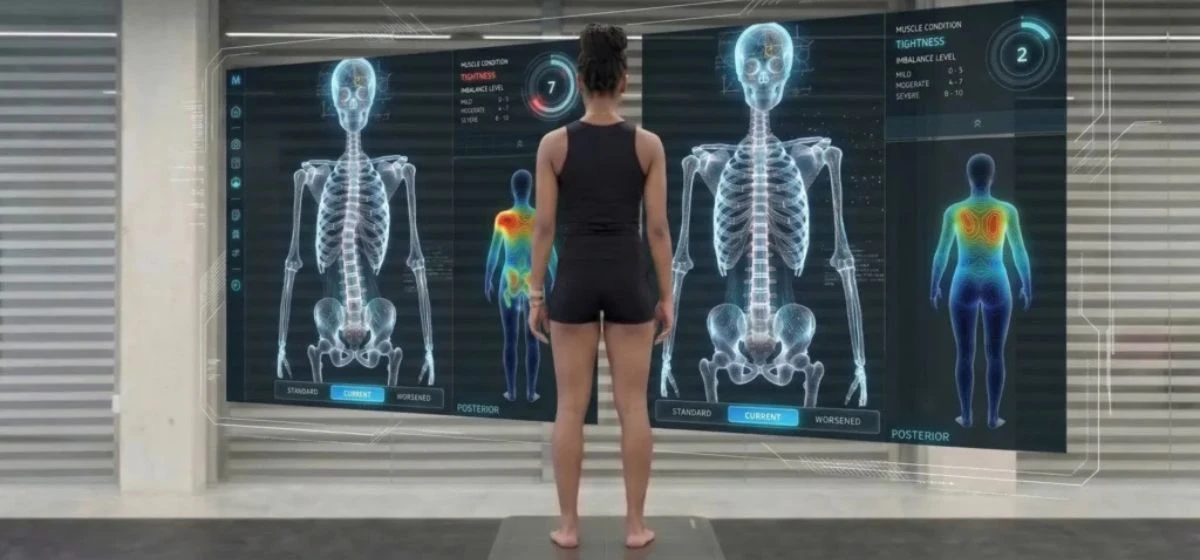
Your Feet Are the Foundation of Your Body
Imagine building a tower.
If the foundation is uneven, every level above it must adjust to keep the structure standing.
Your body works in a similar way.
Your feet are the first connection between your body and the ground. They carry your weight, absorb impact, and provide stability during every step.
Whether you are:
- walking
- running
- standing
- exercising
- working for long hours
your feet are constantly helping your body maintain balance.
But when the foundation changes, the entire structure may respond.
This is why foot health is not only about the feet.
It is about how your entire body moves.
The Hidden Chain Reaction From Feet to Spine
Many people think posture problems start from the shoulders or spine.
However, the body's alignment system begins much lower - at the feet.
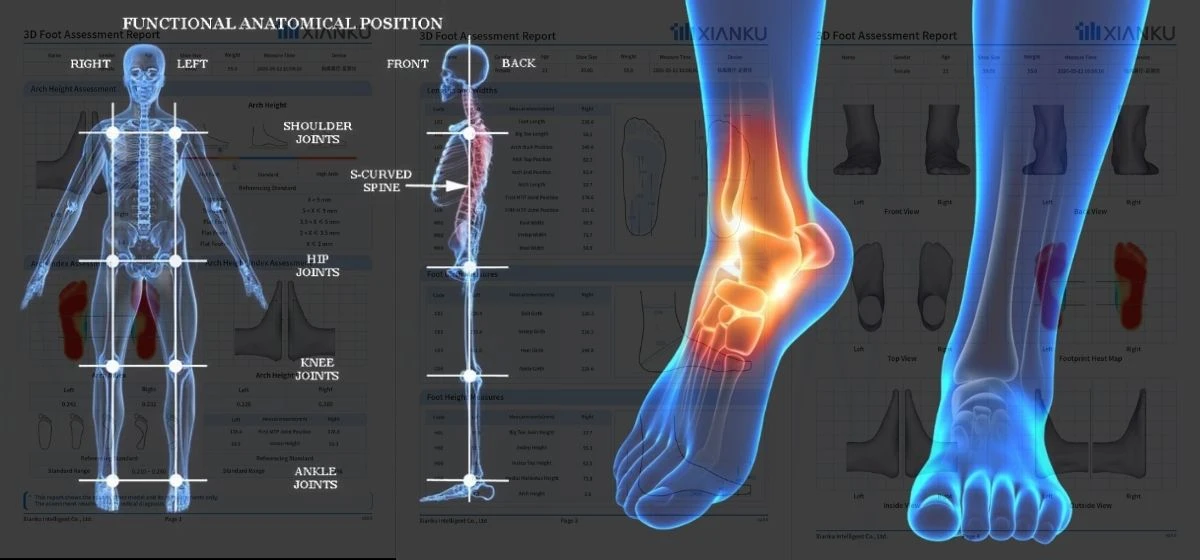
The feet influence a connected chain:
Feet → Ankles → Knees → Hips → Pelvis → Spine → Shoulders
A small change at one point can affect the way other parts move and adapt.
For example:
- A change in foot pressure may influence ankle stability.
- An unstable ankle may affect knee movement.
- Knee compensation may influence hip alignment.
- Hip imbalance may affect the position of the spine.
Your body is constantly adjusting to maintain balance.
How Foot Structure Influences Body Alignment
1. Foot Arch: The Natural Support System
The arch of your foot acts like a natural shock absorber.
It helps:
- distribute body weight
- absorb impact
- provide stability during movement
However, differences in arch structure can influence how pressure is transferred through the lower body.
People may have different foot characteristics, such as:
- high arches
- low arches
- different arch heights between both feet
These variations can affect how the body adapts during standing and walking.
2. Foot Pressure Distribution: Where Your Body Weight Goes
Your feet are constantly managing forces from the ground.
When standing or moving, body weight is distributed across different areas of the feet.
A balanced pressure pattern supports efficient movement.
However, uneven pressure distribution may indicate differences in:
- foot stability
- walking patterns
- weight-bearing habits
Without measurement, these differences can be difficult to identify.
Many people cannot feel small changes in pressure until their body has already adapted.
3. Left and Right Foot Differences Can Affect Balance
Human bodies are not perfectly symmetrical.
It is common for people to have differences between their left and right sides.
These differences may appear in:
- foot length
- foot width
- arch shape
- pressure patterns
When one side provides different support from the other, the body may create compensation strategies to maintain balance.
Understanding these differences is an important part of personalized foot analysis.
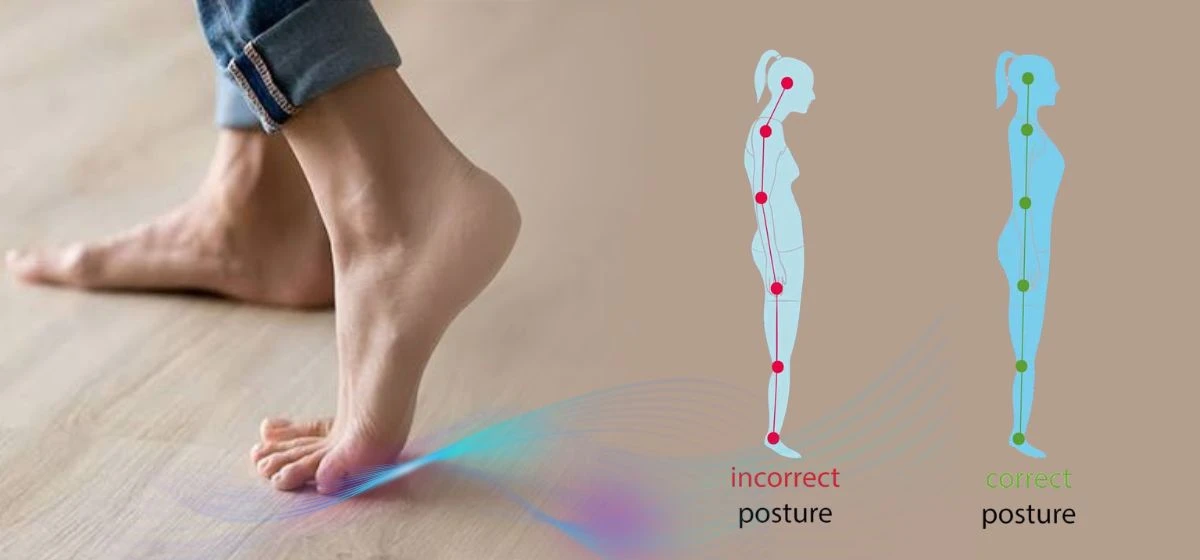
Why Foot Problems Are Often Invisible
One of the biggest challenges with foot health is that many changes happen slowly.
Your body is designed to adapt.
A person may develop new movement habits without realizing it.
For example:
- shifting weight more onto one foot
- changing walking patterns
- adjusting posture while standing
Over time, these adaptations can become normal.
This is why simply asking:
"Do my feet look normal?"
may not provide the complete answer.
The important question is:
"Are my feet supporting my body in the way they should?"
Why Traditional Foot Evaluation Has Limitations
Traditional foot assessments often rely on:
- visual inspection
- manual measurement
- experience-based evaluation
These methods can provide useful information, but they may not fully capture detailed differences in foot structure and pressure patterns.
- Two people may wear the same shoe size but have completely different needs.
- One person may require more arch support.
- Another may need different pressure distribution.
- Another may simply need a better understanding of their body alignment.
This is why modern foot health is moving toward digital analysis.
How 3D Foot Scanning Technology Reveals Hidden Foot Data
A 3D Foot Scanner uses advanced scanning technology to capture detailed information about the feet and create a digital foot model.
Instead of relying only on appearance, the system transforms foot conditions into measurable data.
A professional foot scanning system can analyze:
Foot Dimensions
Measure the unique size and shape of each foot.
Arch Characteristics
Understand the structure and support requirements of the foot.
Pressure Distribution
Analyze how weight is distributed across different areas.
Foot Symmetry
Compare differences between the left and right feet.
Alignment Information
Provide insights into how foot structure may influence movement patterns.
This data allows professionals to move from general recommendations to more personalized solutions.
From Foot Data to Personalized Solutions
Every person's body is unique.
There is no universal solution that works perfectly for everyone.
Foot scanning technology allows professionals to better understand individual differences and provide personalized services.
Applications include:
Custom Orthotic Insoles
Foot scan data can support the development of customized insoles designed according to individual foot structure and support needs.
Sports Performance Optimization
Athletes can analyze movement patterns and improve training strategies based on body data.
Rehabilitation Support
Clinics can use digital foot analysis as part of a broader posture and movement evaluation process.
Smart Footwear Recommendations
Shoe retailers can provide customers with a more scientific fitting experience instead of relying only on shoe size.
The Future of Foot Health Starts With Understanding Your Foundation
Your feet do much more than carry your body.
They influence how you stand, walk, move, and maintain balance every day.
For years, people have focused on treating visible problems.
But modern health technology is changing the approach.
Instead of waiting until discomfort appears, people can better understand their body through accurate measurement and digital analysis.
A 3D Foot Scanner transforms invisible foot characteristics into meaningful data.
Because better body alignment does not start from the shoulders.
It starts from the ground up.
Frequently Asked Questions
Can my feet affect my posture?
Yes. Since the feet are the foundation of movement, differences in foot structure, stability, and pressure distribution can influence how the body maintains balance.
How are feet connected to the spine?
The feet connect with the rest of the body through the kinetic chain. Changes in foot position can influence the ankles, knees, hips, pelvis, and eventually spinal alignment.
What can a 3D Foot Scanner measure?
A 3D Foot Scanner can measure foot dimensions, arch structure, pressure distribution, symmetry, and other characteristics related to foot health and body alignment.
Can foot scanning help create custom insoles?
Yes. Digital foot data can be used to design personalized insoles based on individual support requirements.
Who can benefit from 3D Foot Scanning?
3D Foot Scanning can benefit:
- footwear retailers
- podiatry clinics
- orthopedic professionals
- rehabilitation centers
- sports performance facilities
- wellness organizations
Final Thoughts
Your feet are the starting point of every movement.
They support your body, absorb impact, and influence the way your entire structure stays balanced.
Understanding your feet means understanding your body.
With 3D Foot Scanning Technology, professionals can discover hidden patterns, provide personalized recommendations, and help people build healthier movement habits.
Your feet are not just supporting you.
They are shaping the way your entire body moves.
