
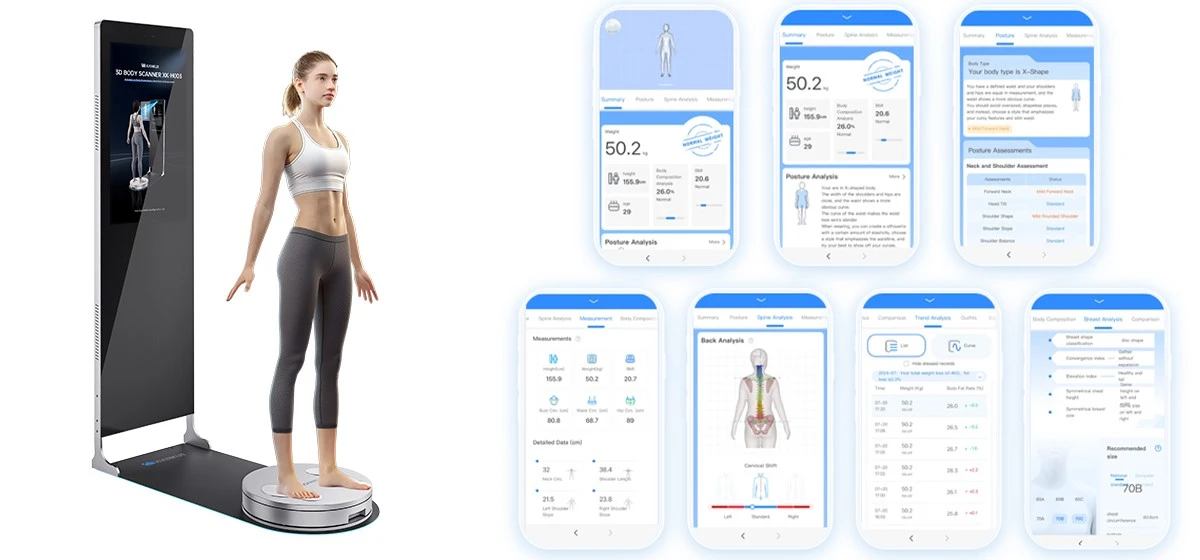
The orthotic bracing industry-encompassing spinal, postural, orthopedic, and foot support devices-stands at a critical juncture. Despite technological advancements across healthcare, this essential sector continues to grapple with fundamental challenges that impact patient outcomes, clinical efficiency, and business sustainability. Traditional approaches to orthotic assessment, design, and fitting have remained largely unchanged for decades, creating significant gaps between technological possibilities and clinical realities.
According to recent market analysis, the global orthotic devices market is projected to reach $5.9 billion by 2027, growing at a CAGR of 6.2%. This growth is driven by an aging population, increasing prevalence of musculoskeletal disorders, and rising awareness of preventive care. However, beneath these promising numbers lies a complex landscape of operational challenges and unmet needs that hinder both patient care and business growth.
The emergence of advanced 3D body scanning technology represents a significant opportunity to address these longstanding industry challenges. The Xianku3D Body Scanner, with its sophisticated capabilities, offers a comprehensive solution that bridges the gap between traditional orthotic practices and modern technological possibilities.
1. Critical Challenges in the Orthotic Bracing Industry
The orthotic industry faces multifaceted challenges that impact all stakeholders-from clinicians and manufacturers to patients themselves. These challenges represent significant barriers to optimal care delivery and business operations.
1.1 Precision and Measurement Limitations:
Traditional measurement techniques for orthotic devices rely on manual methods including tape measures, calipers, and impression materials. These approaches present substantial limitations in achieving the precision required for optimal orthotic function. Research indicates that manual measurement error rates can exceed 15-20%, particularly for complex spinal and postural applications where millimeter-level accuracy dramatically affects clinical outcomes.
The subjective nature of these measurements introduces significant variability between practitioners. A study published in the Journal of Prosthetics and Orthotics found that inter-clinician measurement variance reached up to 30% for complex spinal orthotic applications, directly impacting device efficacy and patient comfort.
1.2 Service Standardization Issues:
The orthotic industry suffers from a pronounced lack of standardization in assessment protocols, measurement techniques, and fitting procedures. This variability creates inconsistent patient experiences and outcomes across different providers and locations. The American Orthotic and Prosthetic Association has identified standardization as one of the most significant challenges facing the industry, particularly as care becomes more distributed across multiple locations.
This lack of standardization extends to documentation and communication between clinicians, technicians, and patients. Without objective, standardized data, the entire orthotic care continuum becomes fragmented and inefficient.
1.3 Patient Experience Deficiencies:
Traditional orthotic assessment processes often create negative patient experiences that impact compliance and outcomes. The process typically involves:
- Physical touching and manipulation that may cause discomfort
- Lengthy assessment sessions (often 45-90 minutes)
- Multiple appointments for assessment, fitting, and adjustments
- Uncertainty about outcomes and timeline
These experiences particularly impact pediatric and geriatric populations, where tolerance for lengthy clinical procedures is limited. Patient satisfaction surveys consistently identify the assessment and fitting process as the most challenging aspect of orthotic care.
1.4 Operational Inefficiencies and Scalability Constraints:
The orthotic industry faces significant operational challenges that limit growth and accessibility:
- High dependency on skilled practitioners for assessments
- Lengthy device turnaround times (typically 2-4 weeks)
- Limited capacity for remote assessment or teleorthotics
- Difficulty scaling successful practice models across multiple locations
- High overhead costs associated with traditional assessment methods
These operational constraints directly impact patient access to care, particularly in underserved rural areas where orthotic specialists may be unavailable.
Table 1: Orthotic Industry Challenges and Impact Analysis
| Challenge Category | Specific Issues | Impact on Practice | Impact on Patient |
|---|---|---|---|
| Measurement Precision | Manual measurement errors >15%, Inter-clinician variability 20-30%, Limited 3D data capture | Increased remake rates (15-25%), Longer appointment times, Higher labor costs | Ill-fitting devices, Extended wear time, Multiple adjustments |
| Service Standardization | Inconsistent protocols, Subjective assessment, Varied documentation | Difficulty scaling operations, Training challenges, Quality control issues | Inconsistent outcomes, Confusion about care process |
| Patient Experience | Lengthy assessments, Physical discomfort, Uncertainty | Limited appointment capacity, Higher no-show rates, Reduced referrals | Anxiety about treatment, Non-compliance, Dissatisfaction |
| Operational Efficiency | High skill dependency, Lengthy processes, Limited scalability | Higher operating costs, Limited growth capacity, Geographic constraints | Longer wait times, Limited access, Higher costs |
2. Technological Solutions: The Xianku3D Body Scanner Approach
The Xianku3D Body Scanner addresses these industry challenges through a comprehensive technological approach that transforms orthotic assessment, design, and fitting processes. This advanced system represents a significant leap forward in orthotic care delivery.
2.1 Precision Measurement Capabilities:
The Xianku3d system utilizes advanced infrared structured light technology to capture over 2 million data points in a single scan, achieving sub-millimeter accuracy (0.5mm resolution) that far surpasses manual measurement techniques. This precision is maintained across diverse patient body types and positions, ensuring consistent reliability.
The system's comprehensive measurement protocol captures over 120 anatomical parameters critical for orthotic design, including:
- Spinal curvature metrics (Cobb angles, lateral deviation)
- Pelvic alignment and tilt measurements
- Limb length discrepancies
- Joint angles and ranges of motion
- Circumferential measurements at multiple levels
- Surface topography and pressure distribution patterns
This comprehensive data capture enables orthotic designers to create devices that address both structural alignment and functional movement patterns.
2.2 Standardized Assessment Protocol:
The Xianku3d system implements a standardized assessment protocol that ensures consistency across operators, locations, and time points. The automated process includes:
- Standardized patient positioning protocols
- Automated measurement identification and calculation
- Consistent data capture and documentation
- Unified reporting format and parameters
This standardization enables multi-center practices to maintain consistent quality across locations and facilitates objective progress monitoring over time.
2.3 Enhanced Patient Experience:
The scanning process transforms the patient experience through:
- Non-invasive assessment: No physical manipulation or discomfort
- Rapid procedure: Complete scan in under 60 seconds
- Visual engagement: Real-time 3D visualization of anatomy
- Immediate feedback: Preliminary assessment during appointment
- Educational value: Visual explanation of orthotic needs
This improved experience significantly enhances patient satisfaction, compliance, and treatment outcomes.
2.4 Operational Efficiency Improvements:
The Xianku3d system delivers substantial operational benefits:
- Reduced assessment time from 45+ minutes to under 5 minutes
- Decreased dependency on highly specialized assessment skills
- Automated documentation and report generation
- Remote assessment capabilities through teleorthotics integration
- Scalable operations across multiple locations
These efficiencies directly address the industry's scalability challenges while maintaining high-quality standards.
Table 2: Xianku3D Body Scanner Technical Specifications and Benefits
| Technical Feature | Specification | Clinical Benefit | Operational Benefit |
|---|---|---|---|
| Scanning Technology | Infrared structured light, 2M+ data points | Sub-millimeter accuracy (0.5mm), Complete 3D surface mapping | Consistent results, Minimal training required |
| Measurement Parameters | 120+ anatomical measurements | Comprehensive assessment, Multi-planar analysis | Standardized data capture, Objective documentation |
| Scan Duration | <60 seconds | Reduced patient burden, Increased tolerance | Higher patient throughput, More appointments |
| Data Output | 3D digital model, PDF report, Raw data | Enhanced visualization, Progress tracking, Surgical planning | Easy storage and retrieval, Telemedicine compatible |
| Safety Certification | FDA Class II medical device, CE certified | No radiation risk, Suitable for all populations | Reduced liability, Regulatory compliance |
| Integration Capability | DICOM, HL7, API interfaces | EMR integration, Device design software compatibility | Workflow integration, Data interoperability |
3. Clinical Applications Across Orthotic Domains
The Xianku3D Body Scanner demonstrates particular value across multiple orthotic specialties, each with unique requirements and challenges.
3.1 Spinal Orthotics:
For spinal bracing applications, the system provides critical capabilities including:
- Precise Cobb angle measurement for scoliosis management
- Vertebral rotation assessment
- Trunk asymmetry quantification
- Brace design and fitting optimization
- Progress monitoring without repeated radiation exposure
Clinical studies have shown that brace designs based on 3D scan data achieve 40% better in-brace correction compared to traditional methods, significantly improving treatment outcomes for scoliosis patients.
3.2 Postural Support Systems:
The system enables sophisticated postural assessment and support design through:
- Gravity line analysis and postural deviation quantification
- Muscle imbalance identification
- Custom orthotic design for shoulder, chest, and back supports
- Ergonomic evaluation and workplace modification planning
These capabilities are particularly valuable for occupational medicine and preventive postural care applications.
3.3 Lower Limb Orthotics:
For foot and lower limb applications, the system provides:
- Dynamic gait analysis integration
- Plantar pressure distribution mapping
- Joint alignment assessment
- Custom foot orthotic design data
- Prosthetic socket design optimization
The integration of static and dynamic assessment data enables truly comprehensive lower limb orthotic management.
3.4 Pediatric Applications:
The non-invasive nature of the scanning process makes it particularly valuable for pediatric orthotics, where:
- Rapid assessment minimizes child anxiety
- No radiation enables frequent monitoring
- Growth progression can be tracked quantitatively
- Family education is enhanced through visualizations
4. Implementation and Integration Considerations
Successful implementation of 3D body scanning technology requires careful consideration of several factors:
4.1 Workflow Integration:
Effective integration into clinical workflows involves:
- Staff training and competency development
- Process redesign to leverage technology capabilities
- Quality assurance protocols
- Data management and security implementation
Practices typically require 4-6 weeks for complete integration, with most reporting full ROI within 6-9 months through increased efficiency and expanded services.
4.2 Technical Infrastructure:
The system requires appropriate technical infrastructure including:
- Adequate physical space for scanning operations
- Network capabilities for data management
- Integration with existing practice management systems
- Backup and disaster recovery protocols
4.3 Quality Assurance and Validation:
Ongoing quality assurance involves:
- Regular system calibration verification
- Staff competency assessments
- Outcome monitoring and continuous improvement
- Patient satisfaction tracking
5. Future Directions and Industry Implications
The integration of 3D body scanning technology represents just the beginning of the digital transformation in orthotic care. Several emerging trends suggest continued evolution:
5.1 Artificial Intelligence Integration:
Machine learning algorithms will increasingly assist with:
- Automated measurement identification
- Predictive outcome modeling
- Design optimization recommendations
- Quality control automation
5.2 Teleorthotics Expansion:
Remote assessment capabilities will expand access through:
- Home-based scanning devices
- Remote practitioner consultation
- Distributed manufacturing networks
- Global specialist collaboration
5.3 Advanced Materials Integration:
Scan data will directly drive:
- 3D printing of custom orthotic devices
- Smart materials with responsive properties
- Biomechanically optimized designs
- Patient-specific material selection
5.4 Preventive and Predictive Applications:
The technology will enable:
- Early intervention identification
- Preventive orthotic applications
- Personalized exercise programming
- Long-term health monitoring
6. Conclusion: Transforming Orthotic Care Through Technology
The Xianku3D Body Scanner represents a significant advancement in orthotic care delivery, addressing fundamental industry challenges while creating new opportunities for improved patient outcomes and practice growth. By providing precise, standardized, and efficient assessment capabilities, this technology enables a new standard of care in orthotic management.
The transformation extends beyond technical capabilities to encompass entire care delivery models, enabling more accessible, efficient, and effective orthotic services. As the industry continues to evolve, technologies like the Xianku3d system will play an increasingly important role in shaping the future of orthotic care.
For orthotic professionals seeking to enhance their practice capabilities, improve patient outcomes, and position themselves for future growth, 3D body scanning technology offers a powerful solution to longstanding industry challenges. The integration of this technology represents not just an operational improvement, but a fundamental advancement in orthotic care delivery.
7. Appendix: Industry Terminology
- Orthotic Device: External apparatus used to support, align, prevent, or correct deformities
- Cobb Angle: Standard measurement for quantifying spinal curvature in scoliosis
- Surface Topography: Non-invasive assessment of body surface shape
- Structured Light Scanning: 3D measurement technique using projected light patterns
- Teleorthotics: Remote delivery of orthotic services using technology
References
- American Orthotic and Prosthetic Association. (2023). Industry State of Care Report.
- Journal of Prosthetics and Orthotics. (2022). "Accuracy of 3D Scanning Versus Traditional Methods in Orthotic Assessment."
- Global Orthotic Devices Market Analysis. (2023). Market Research Future.
- Journal of Spinal Disorders & Techniques. (2021). "Digital Assessment Techniques in Scoliosis Management."
- Clinical Biomechanics. (2022). "Three-Dimensional Assessment in Orthotic Design: A Systematic Review."
(86)-181-2464-3821
alexliu@xianku.com