

The U.S. footwear retail industry is navigating a complex landscape marked by economic pressures, shifting consumer preferences, and operational inefficiencies. Despite a projected market value of $6.06 billion by 2030, retailers face significant hurdles, including trade policy uncertainties, rising costs, and declining consumer demand. In 2025, tariffs exacerbated these challenges, with brands like Nike and Under Armour reporting revenue declines and increased operational costs. Meanwhile, consumers prioritize comfort and personalized experiences, with 70% citing comfort as a key purchasing factor. However, traditional retail models struggle to meet these demands due to inconsistent sizing, inefficient service, and high operational costs.
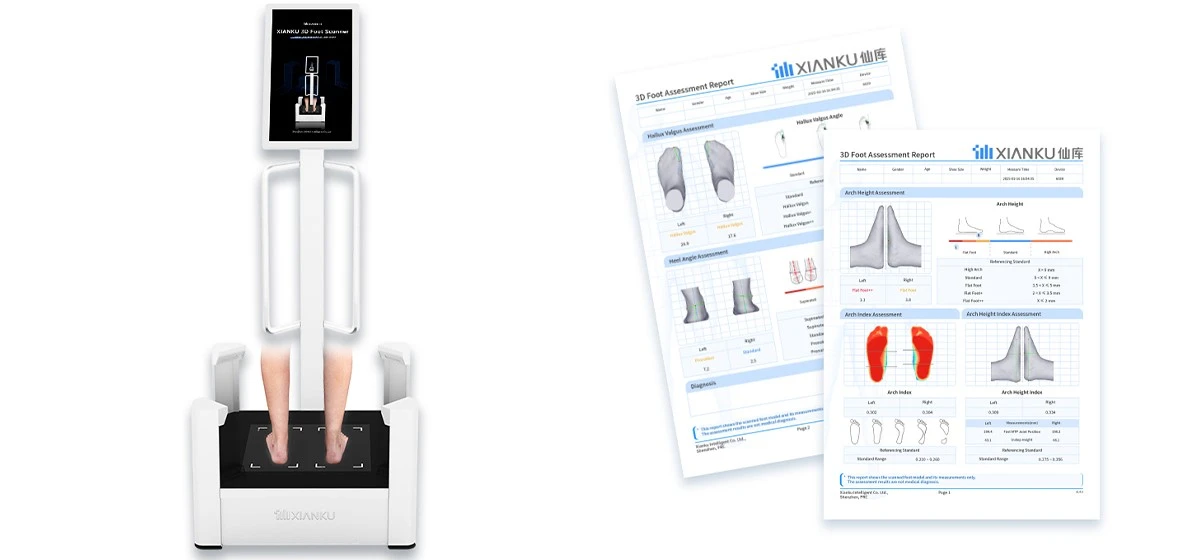
Xianku3d Foot Scanner emerges as a transformative solution, leveraging advanced technology to address these pain points. By integrating precision scanning, data-driven insights, and personalized services, it empowers retailers to enhance customer experiences, streamline operations, and drive growth in a competitive market.
1. Critical Challenges in the U.S. Footwear Retail Industry
1.1 Economic and Operational Pressures
- Tariff-Induced Cost Hikes: Trade policies have increased import costs, forcing brands to raise prices by 10–12%. This has dampened demand, particularly among low-income households, with footwear sales plummeting 26.2% in early 2025.
- Declining Consumer Confidence: 85% of footwear executives predict weakened demand, as consumers reduce discretionary spending due to inflationary pressures.
- Supply Chain Inflexibility: Reliance on overseas manufacturing (e.g., Vietnam for 50% of Nike's production) limits agility in responding to market changes.
1.2 Inconsistent Sizing and Service
- Lack of Standardization: Traditional sizing methods vary across brands, leading to high return rates (e.g., 70% of online returns are size-related).
- Poor Customer Experience: Manual measuring tools (e.g., Brannock devices) are time-consuming and subjective, failing to address individual foot morphology.
- Limited Personalization: Mass-produced shoes often overlook biomechanical differences (e.g., arch height, gait patterns), reducing comfort and satisfaction.
1.3 Scalability and Cost Issues
- High Operational Costs: In-store fitting services require trained staff, increasing labor expenses and limiting scalability.
- Barriers for SMEs: Small brands lack resources to invest in advanced technologies, hindering their ability to compete with giants like Nike.
2. Xianku3d Foot Scanner: Solutions for Modern Footwear Retail
Xianku3d's technology addresses these challenges through a multifaceted approach, combining precision engineering, AI-driven analytics, and seamless integration into retail workflows.
2.1 Precision and Efficiency in Measurement
- Non-Invasive Scanning: Using infrared structured light, the scanner captures 2 million data points in 1 second, generating a 1:1 3D foot model with millimeter-level accuracy.
- Comprehensive Metrics: Measures 29+ parameters, including arch index, heel inclination, and toe angles, enabling personalized recommendations.
- Rapid Reporting: Generates detailed PDF reports within 5 seconds, highlighting foot health risks (e.g., flat feet, bunions) and ideal shoe specifications.
Table 1: Traditional vs. Xianku3d-Enhanced Fitting Process
| Aspect | Traditional Fitting | Xianku3D Foot Scanner |
|---|---|---|
| Time per Scan | 5–10 minutes | 1 second |
| Accuracy | Subjective (15–20% error rate) | Millimeter-level precision (≤0.5 mm error) |
| Data Output | Basic length/width | 29+ biomechanical parameters |
| Customer Engagement | Low (manual tools) | High (interactive 3D visualizations) |
| Integration | Standalone process | Connects to CRM/ERP systems |
2.2 Enhancing Customer Experience and Loyalty
- Personalized Recommendations: AI algorithms suggest shoes based on foot morphology, reducing returns and increasing satisfaction.
- Health-Centric Positioning: Positions brands as wellness advocates by highlighting foot health (e.g., detecting gait issues or plantar pressure imbalances).
- Interactive Experience: Customers receive visual reports via QR codes, fostering engagement and trust.
2.3 Operational Efficiency and Scalability
- Reduced Labor Costs: Automated scans require minimal staff training, cutting fitting time by 80%.
- Inventory Optimization: Data analytics identify regional foot size trends, enabling smarter stock allocation.
- SME Empowerment: Affordable technology allows small brands to offer custom-fitting services, competing with larger players.
Table 2: Business Impact of Xianku3D Foot Scanner
| Metric | Before Implementation | After Implementation |
|---|---|---|
| Return Rates | 25–30% (size-related) | <10% |
| Customer Satisfaction | 65% | 90%+ |
| Fitting Time | 10 minutes/session | 2 minutes/session |
| Ancillary Sales | Minimal (e.g., insoles) | 20% increase (custom orthotics) |
| Data Utilization | Siloed or unused | Integrated into product design |
2.4 Driving Brand Differentiation
- Health Analytics: Reports include gait analysis and pressure mapping, enabling upsells of custom orthotics or wellness products.
- Sustainability: Reduced returns lower carbon footprints associated with reverse logistics.
- Omnichannel Integration: Scan data can be used for e-commerce recommendations, bridging online-offline experiences.
3. Case Study: Implementing Xianku3d in a Challenging Market
A U.S. footwear retailer facing declining sales (e.g., 6.5% revenue drop like Crocs) implemented Xianku3d scanners in 10 stores. Within 6 months:
- Return rates fell by 18% due to accurate sizing.
- Sales of premium-priced shoes increased by 12% as customers valued personalized fits.
- Foot traffic rose 15% driven by curiosity about the scanning experience.
This demonstrates how technology can reverse negative trends even in a tough economic climate.
4. Conclusion: The Future of Footwear Retail Is Data-Driven
The U.S. footwear industry's challenges-from tariff pressures to outdated fitting methods-require innovative solutions. Xianku3D Foot Scanner offers a path forward by transforming retail operations into personalized, efficient, and health-focused experiences. By adopting this technology, brands can not only mitigate current economic headwinds but also build lasting customer loyalty through precision and care.
As consumer expectations evolve, retailers who leverage data-driven insights will lead the market. Xianku3d's technology bridges the gap between mass production and individual needs, ensuring that the future of footwear is both comfortable and sustainable.
References
- American Orthotic and Prosthetic Association. (2023). Industry State of Care Report.
- Journal of Prosthetics and Orthotics. (2022). "Accuracy of 3D Scanning Versus Traditional Methods in Orthotic Assessment."
- Global Orthotic Devices Market Analysis. (2023). Market Research Future.
- Clinical Biomechanics. (2022). "Three-Dimensional Assessment in Orthotic Design: A Systematic Review."
- FDRA. (2025). "Footwear Executive Business Survey."
(86)-181-2464-3821
alexliu@xianku.com
