

If you've stayed in more than a few hotels, the experience begins to blend. The crisp, white linens, the artfully arranged throw pillows, the generic mint on the pillow-it's a formula perfected for consistency, but often at the expense of genuine personalization. Nowhere is this more apparent than in the very core of the guest experience: sleep. While hotels invest heavily in thread counts and blackout curtains, the foundational elements of rest-the mattress and the pillow-remain stubbornly standardized. This one-size-fits-all approach is creating a significant gap between guest expectations and the reality of their stay.
The modern traveler, especially in markets like the US, isn't just looking for a place to crash; they are seeking wellness-oriented experiences that cater to their individual needs. The luxury segment, in particular, has trained consumers to expect customization. Yet, when it comes to sleep, a deeply personal and health-critical function, the industry has hit a wall.
The Unseen Cost of Standardized Sleep
The challenges are multifaceted and deeply embedded in traditional hotel operations.
1. The Illusion of Luxury Comfort:
Hotel chains pride themselves on their signature beds. Brands like Marriott and Westin have built marketing campaigns around them. However, a "signature" bed, by definition, is the same for everyone. It cannot account for the vast physiological differences between guests. A 6'5" athletic build with a pronounced lumbar curve and a 5'2" guest with shoulder tension have fundamentally different support requirements. A single pillow type, whether down, foam, or fiberfill, becomes a compromise, not a solution. This lack of personalization directly impacts sleep quality, leading to those all-too-common guest complaints of waking up with a stiff neck or back pain-hardly the hallmark of a premium experience.
2. The Procurement Paradox:
From a management perspective, bedding is often viewed through a logistical and financial lens. The procurement team's key performance indicators (KPIs) are typically centered on cost-per-unit, durability, and ease of maintenance. A mattress is a capital expense to be amortized; pillows are consumables to be replaced. The conversation rarely elevates to considering these items as "health delivery systems." Why? Because the return on investment (ROI) for a "better sleep experience" has been notoriously difficult to quantify. Without hard data to link a specific mattress or pillow investment to increased guest satisfaction scores, direct bookings, or revenue per available room (RevPAR), such initiatives struggle to secure budget approval.
3. The Broken Feedback Loop:
Loyalty programs are excellent at tracking stays and preferences for things like room type or hypoallergenic bedding. But knowing a guest "prefers a firmer pillow" is a crude data point. What does "firmer" mean? What specific physical need does it address? This information is lost between stays and is impossible to translate across different properties or brands. The opportunity to create a truly seamless, evolving profile of a guest's wellness needs remains largely untapped.
The industry is at an inflection point. The next frontier of luxury hospitality isn't just about more opulent amenities; it's about hyper-personalized, health-integrated experiences. And the key to unlocking this frontier lies in a technology that is already revolutionizing other sectors: the body scan.
The Measured Approach: Xianku3d Body Scan as a Gateway to Personalized Wellness
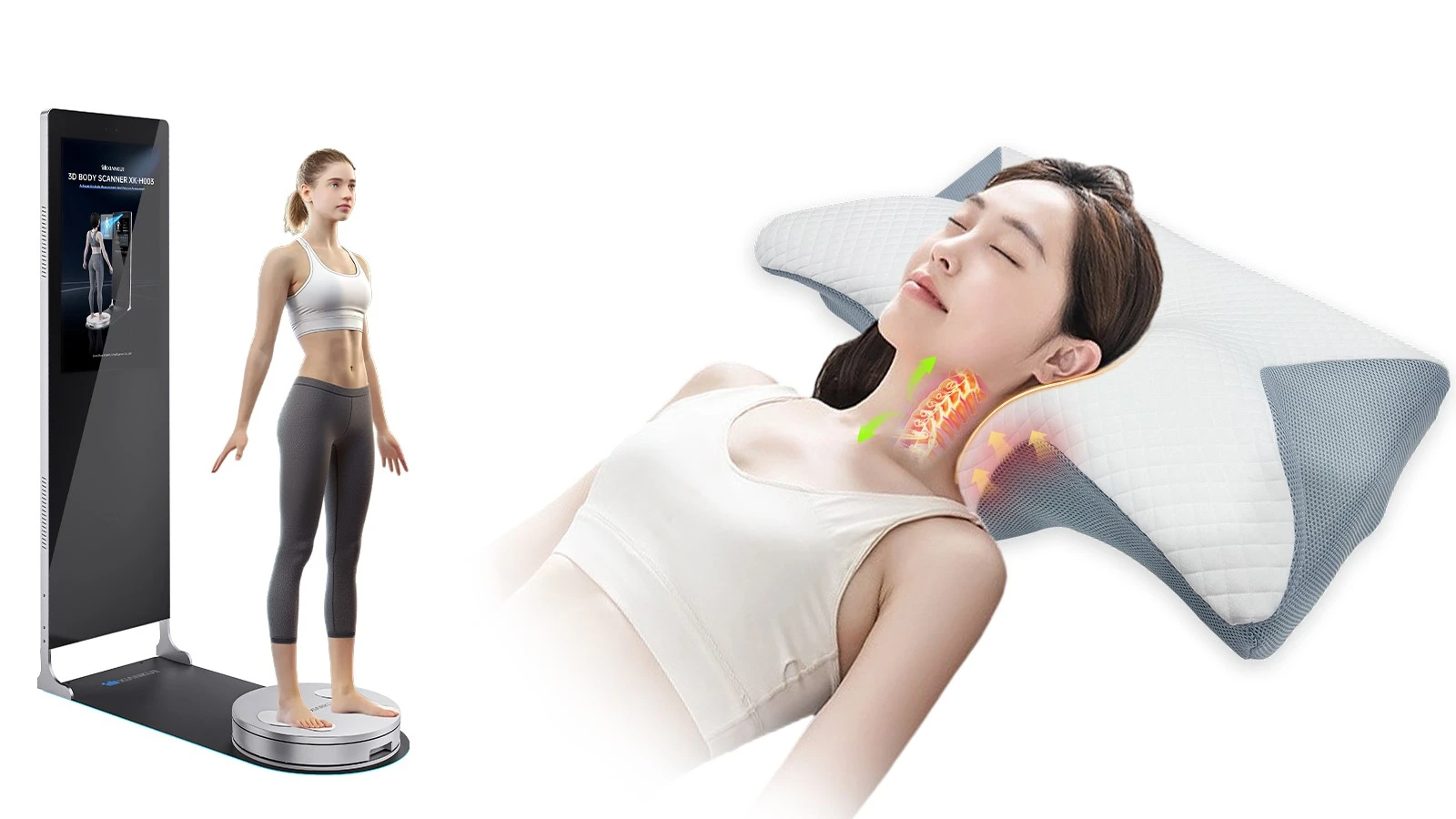
Enter the Xianku3d Body Scanner, a sophisticated piece of hardware and AI software that is shifting the paradigm from guesswork to precision. This isn't about gimmicky tech; it's about applying clinical-grade measurement to the art of hospitality. The process is elegantly simple for the guest but profoundly powerful for the hotel.
A guest simply stands on the platform for approximately 20 seconds. During this time, the scanner, using safe 3D structured light technology, captures hundreds of thousands of data points to construct a precise, 1:1 digital twin of the guest's body. This is where the magic begins. The subsequent AI analysis is anything but simple. It deconstructs this model with millimeter-level accuracy, generating a comprehensive report in under one minute.
This report is a treasure trove of actionable data, far beyond simple height and weight. It includes:
- Detailed Body Composition Metrics: Breaking down fat mass, muscle mass, and distribution.
- AI-Powered Postural Analysis: A detailed assessment of the guest's standing posture.
- 3D Spinal Health Evaluation: A groundbreaking feature that visually and quantitatively assesses the spine's curvature, identifying potential issues like lordosis, kyphosis, and scoliosis risk, as well as pelvic tilt.
This last point is critical. The spine's alignment during sleep is the single most important factor in achieving restorative rest. By understanding a guest's unique spinal geometry, the hotel can move beyond generic comfort and into the realm of orthopedic support.
Table 1: Standard Hotel Pillow vs. Xianku3d Body Scan-Driven Recommendation
| Feature | Standard Hotel Pillow | Xianku AI-Recommended Pillow |
|---|---|---|
| Basis of Selection | General "firmness" level, guest verbal request | Precise 3D body morphology, spinal alignment data, sleeping habit questionnaire |
| Support Target | Generic head and neck comfort | Personalized support for cervical curve, shoulder width, and sleeping position (back, side, stomach) |
| Health Value | Minimal, potentially negative if misaligned | High, addresses postural issues to mitigate neck/back pain |
| Guest Perception | A commodity amenity | A personalized health solution |
| Data Foundation | Anecdotal or absent | Quantified, storable, and actionable data points |
Building a Data-Driven Health Ecosystem
The value of the Xianku3d body scan extends far beyond a single pillow recommendation. It enables the creation of a standardized, high-value service protocol that transforms a part of the hotel-perhaps a dedicated wellness lounge or the spa area-into a hub of personalized health innovation.
The service workflow is seamless:
- Body Measurement: The 20-second, non-invasive body scan.
- Posture & Health Analysis: The AI-generated report is reviewed with the guest, often by a trained wellness concierge. This step provides immense "aha!" value as guests see their own posture and spinal alignment visualized for the first time.
- Data-Driven Recommendation: The system's AI cross-references the body scan data with the guest's stated sleep habits (e.g., primary sleep position) to identify the optimal pillow from a range of 3D-printed, fully customizable options.
- Conversion & Fulfillment: The guest can then purchase their recommended pillow, turning a night's stay into a long-term wellness investment.
- This process creates a powerful new revenue stream. The custom pillow is not just an upsell; it is the logical, data-validated conclusion of a health consultation. The ability to offer a tangible product that directly addresses a quantified need dramatically increases conversion rates and average spend per guest.
Furthermore, with guest permission, the body scan data and recommendation can be saved to their profile. On subsequent visits, whether to the same property or a sister property within the group, their perfect pillow can be waiting for them, truly automating personalized comfort. This creates an incredibly sticky loyalty benefit and opens the door for targeted, relevant marketing about related wellness products long after checkout.
The New Frontier of Personalization: Lessons from Luxury Leaders
The concept of hyper-personalization isn't new to the luxury market. The world's most admired brands have built their empires on it.

- The Ritz-Carlton is legendary for its proactive, personalized service, where staff are empowered to create unique, memorably tailored experiences for guests based on observed preferences, a philosophy that turns a stay into a personal narrative.
- Four Seasons Hotels and Resorts has long understood that luxury is in the details, offering customized itineraries, preferred amenities remembered from previous stays, and a level of attunement to guest needs that feels less like service and more like intuitive hospitality.
- Marriott International's Bonvoy loyalty program excels at leveraging data to personalize the digital guest journey, from tailored offers to room preferences, creating a sense of recognition and value across its vast portfolio.
- Aman Resorts focuses on holistic wellness, integrating personalized spa treatments, nutrition, and activities into a guest's stay, demonstrating a commitment to individualized health that goes far beyond the gym.
- Hoxton Hotels has mastered cultural personalization, curating its lobby and common spaces to reflect the local scene, making each property feel uniquely tied to its neighborhood and appealing to guests seeking an authentic, bespoke experience.
These brands succeed because they make the guest feel uniquely understood. Yet, until now, the most fundamental aspect of the stay-sleep itself-has remained stubbornly immune to this level of customization. This is the gap that the Xianku 3D Body Scanner is designed to close.
Quantifying the Opportunity: The Tangible ROI of a Body Scan Program
Adopting a technology like the Xianku3d body scanner is a strategic business decision, and its success can be measured with concrete metrics. Let's look at a potential financial model for a 300-room upscale hotel implementing this program.
Table 2: Projected Financial Impact of Xianku3d Body Scan Program (Annual)
| Metric | Calculation | Estimated Value |
|---|---|---|
| Guests Scanned (Yr 1) | 15% of occupied rooms (70% occupancy) = (300 * 0.7 * 365 * 0.15) | ~11,500 guests |
| Pillow Conversion Rate | Conservative estimate based on high-intent, data-backed offer | 12% |
| Custom Pillows Sold | 11,500 guests * 12% conversion | 1,380 units |
| Avg. Revenue per Pillow | Premium 3D-printed product with customization | $225 |
| Direct Pillow Revenue | 1,380 units * $225 | $310,500 |
| Ancillary Revenue Uplift | Increased spend in spa, wellness, F&B due to enhanced positioning | +$85,000 |
| Increased Direct Booking | 2% uplift from unique wellness offering, capturing higher-margin business | +$120,000 |
| Total Incremental Revenue | Sum of direct and ancillary revenue | $515,500 |
This model doesn't even account for the significant long-term value derived from improved guest satisfaction scores, positive online reviews mentioning the high-tech wellness amenity, and the enhanced brand differentiation that makes the hotel a destination for health-conscious travelers.
The Future is Personalized
The move towards hyper-personalization in hospitality is inevitable. The brands that will lead the next decade are those that view technology not as a cost center, but as an enabler of deeper, more meaningful human experiences. The Xianku 3D Body Scanner provides the missing link-the quantifiable data-that allows hotels to transition from offering a standardized bed to curating a personalized sleep sanctuary.
It transforms the pillow from a simple amenity into a key part of a sophisticated health and wellness ecosystem. This kind of innovative body scan application represents a fundamental shift. It's about meeting the modern traveler's demand for control, transparency, and solutions tailored specifically to their well-being. For forward-thinking hoteliers, the question is no longer if they should invest in such personalization technologies, but how quickly they can integrate them to stay ahead of the curve and finally solve the ancient problem of the imperfect hotel pillow.
Table 3: Data Points Captured by a Single Xianku3d Body Scan Session
| Category | Specific Metrics | Application in Sleep |
|---|---|---|
| Body Dimensions & Composition | Height, Weight, Hip Circumference, Waist Circumference, Shoulder Width, Body Fat %, Segmental Lean Mass | Determines overall body size and mass distribution for general product sizing and support needs. |
| Postural & Skeletal Alignment | 3D Spinal Curvature (Cervical, Thoracic, Lumbar), Pelvic Tilt Angle, Shoulder Elevation, Head Tilt | The core data for pillow/ mattress design. Identifies specific areas requiring corrective or pressure-relieving support during sleep. |
| Sleep Habit Data (Via Questionnaire) | Primary Sleeping Position (Back, Side, Stomach), Partner Disturbance, Common Pain Points (Neck, Lower Back) | Contextualizes the physical data to fine-tune the product recommendation for real-world use. |
| Historical Tracking | Changes in posture and measurements over successive scans | Allows the hotel to offer evolving wellness solutions and demonstrates long-term value to the guest. |
(86)-181-2464-3821
alexliu@xianku.com
