

The Persistent Challenges
Two fundamental issues continue to constrain innovation and profitability across the sector. First, the legacy manufacturing framework-optimized for large-batch production-struggles to accommodate the demand for personalized solutions. This structural rigidity creates significant delays in responding to market shifts and makes true customization economically challenging for most manufacturers.
Compounding this problem, many manufacturers default to safe, derivative designs to minimize risk. The resulting market saturation of similar products triggers destructive price competition that erodes brand value and consumer loyalty. When choosing between nearly identical options, customers naturally gravitate toward the lowest price, making it difficult for companies to command premium positioning.
The operational consequences are quantifiable and severe. Recent industry analysis indicates inventory carrying costs have increased by approximately 18% over the past two years, while profit margins have contracted by 15-25% due to persistent discounting. In the e-commerce channel, return rates for key categories like mattresses and seating frequently reach 30%, primarily driven by product-performance mismatches.
Precision Measurement as Solution: Introducing the Xianku3d Body Scanner
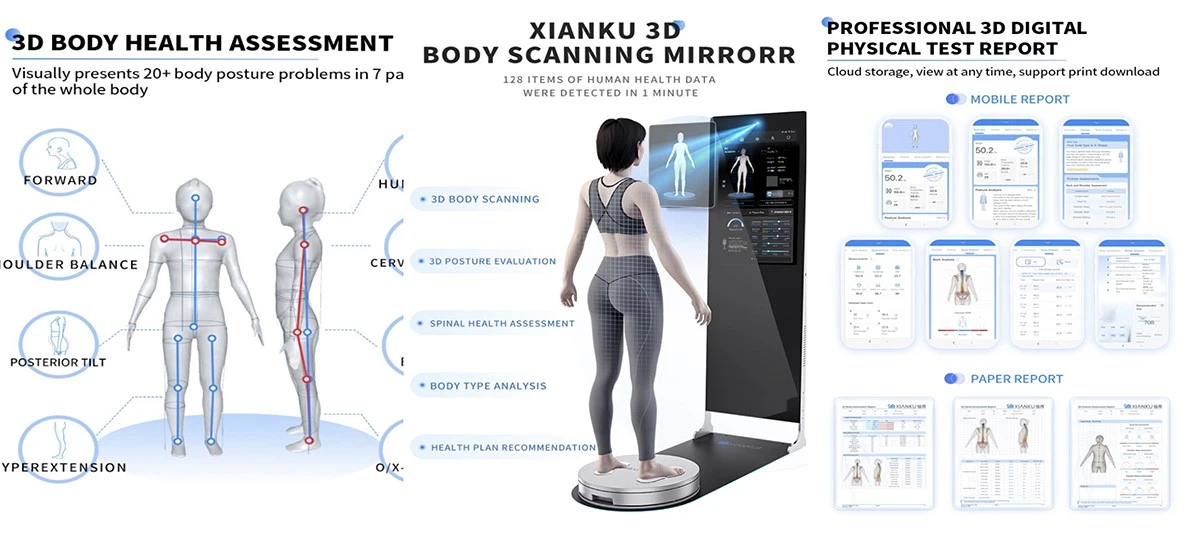
Enter the Xianku3d body scanner, a sophisticated piece of technology that is quietly initiating a shift from mass production to mass personalization. This isn't about a flashy gimmick; it's about integrating clinical-grade assessment into the retail journey.
The device itself is a marvel of engineering, utilizing 3D structured light scanning to capture a precise point-cloud map of an individual's body. In under 20 seconds, it performs a non-contact scan. Within one minute, a proprietary reconstruction engine generates a photorealistic 3D avatar of the user. This model is not just a visual replica; it's a data-rich digital twin. The system extracts over 200 anthropometric dimensions, analyzes body composition, and, most critically, performs an AI-powered postural assessment.
This is where the technology transcends simple measurement. Its AI algorithms perform a comprehensive biomechanical evaluation, including:
- 3D Spine Analysis: Quantifying the curvature of the cervical, thoracic, and lumbar spine, assessing risks for scoliosis, and identifying issues like hyperlordosis or a straightened spine.
- Head and Neck Posture Assessment: Calculating the forward head posture angle and cervical alignment.
- Pelvic and Overall Posture Evaluation: Diagnosing pelvic tilt and overall body balance in a standing position.
- This granular, data-driven insight provides an objective foundation for product recommendation that simply never existed before.
- From Data to Differentiation: Unlocking Tangible Value
- The application of this body scan technology creates multiple vectors of value for forward-thinking furniture brands.
1. The AI-Powered, Hyper-Personalized Recommendation Engine
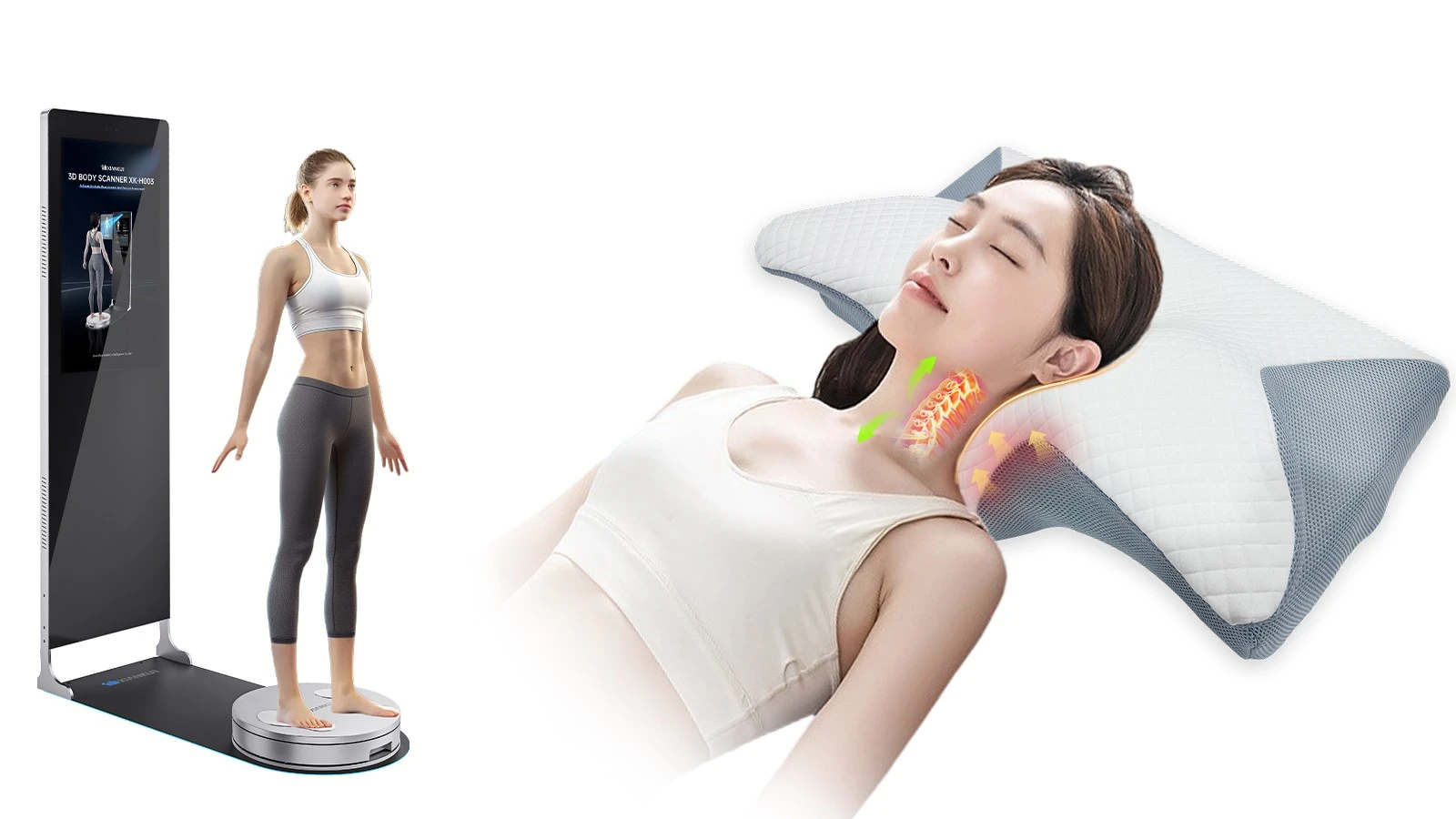
The end of generic advice is here. Instead of a salesperson suggesting a mattress based on sleep position alone, the system correlates a customer's unique spinal data with product attributes.
*Table 1: Example of AI-Driven Product Matching Based on Body Scan Data
| Identified Postural Metric | AI Interpretation | Recommended Product Feature |
|---|---|---|
| Excessive Forward Head Posture (>45 degrees) | High stress on cervical spine; often associated with tech neck. | A pillow with enhanced cervical support and contouring to promote neutral alignment, and an office chair with a dynamically adjustable headrest. |
| Reduced Lumbar Lordosis (Flattened Lower Back) | Lack of natural curve increases disc pressure. | A mattress with targeted lumbar zone reinforcement and a seat with pronounced, adaptive lumbar support to restore curvature. |
| Anterior Pelvic Tilt (>10 degrees) | Tight hip flexors, potential lower back pain. | A mattress with variable firmness levels to accommodate the hip and lumbar regions differently, promoting proper pelvic positioning overnight. |
2. A New Standard for the Customer Journey: The "Clinical Retail" Experience
The shopping process is transformed from a transactional pitch into a consultative, educational experience. A customer doesn't just hear "this mattress is firm"; they see their own 3D avatar, understand their pelvic tilt, and are shown how a specific mattress's zoning system is designed to address it. This shifts the conversation from price to personal health and comfort, building immense trust and justifying premium pricing. Brands like Hästens, with its narrative of natural materials and orthopedic support, and Humanscale, with its science-backed approach to ergonomic seating, have thrived by building this aura of expertise. Body scan technology democratizes this capability.
3. Data as a Strategic Asset: Informing Design and Operations
The aggregated, anonymized data from thousands of scans is a goldmine for R&D departments. Instead of designing for a hypothetical "average" user, engineers can now design for a population with known, quantified postural challenges.
Table 2: Leveraging Aggregate Body Scan Data for Strategic Decisions
| Data Application Area | How it Informs Action | Business Outcome |
|---|---|---|
| Product Innovation & Development | Identifying that 40% of scanned users exhibit a combination of thoracic kyphosis and forward head posture. | Develop a new line of high-back reading chairs or sofa sections with integrated upper-back and neck support. |
| Inventory Optimization | Data reveals 70% of local clientele require medium-firm support with specific lumbar focus. | Adjust local store inventory to stock more products matching this profile, reducing overstock on less relevant items. |
| Reduction in Return Rates | Providing objective data to justify a product's suitability at point-of-sale. | Dramatically reduces buyer's remorse and "fit-based" returns, potentially cutting the 30% e-commerce return rate by half or more. |
4. Streamlined Operations and Enhanced Monetization
The in-store process becomes a standardized, tech-forward protocol: Body Scan --Postural Analysis --Data Review --AI Product Matching -- Purchase. This not only ensures consistency but also allows staff to act as knowledgeable guides. Furthermore, the technology opens new revenue streams. After a scan for a mattress, the system can identify foot pressure imbalances or spinal alignment issues that can be alleviated with complementary products, leading to natural cross-selling opportunities for 3D-printed pillows, ergonomic footrests, or even supportive backpacks.
The Future is Measured
This is not a distant future concept. The integration of body scan technology represents the next logical step in the evolution of the home furnishings industry. It's a convergence of wellness and retail, of data and design. It allows brands to compete not on who can produce the cheapest item, but on who can best solve the individual consumer's unique comfort and health needs.
By adopting this technology, brands can begin to emulate the data-centric, user-focused approaches of companies like Sleep Number, with its adjustable air chambers, or Knoll, with its deep research in workplace ergonomics. They move beyond simply selling furniture to curating personalized well-being ecosystems. In a crowded market, the ability to offer a truly unique, scientifically-grounded solution is the ultimate competitive advantage. The brands that embrace this measured approach will be the ones that not only survive the current challenges but will define the next era of the industry.
(86)-181-2464-3821
alexliu@xianku.com
