

1. Why Is Precision Foot Scanning a Medical and Retail Imperative?
The human foot comprises 26 bones, 33 joints, and a complex network of ligaments-a biomechanical marvel vulnerable to collapse. The American Podiatric Medical Association (APMA) reports that 80% of adults experience significant foot pain, often linked to poor biomechanics like overpronation or supination. Ill-fitting shoes exacerbate conditions like hallux valgus (present in 23% of adults 18-65), plantar fasciitis, and metatarsalgia. Traditional sizing fails to capture critical dimensions: a UK size 8 shoe can vary in internal volume by up to 46% across brands. This variability fuels a $3.8 billion custom orthotics market, projected to grow at 6.9% CAGR through 2030, driven by diabetic foot care and sports medicine demands.
2. Xianku 3D Foot Scanner: Engineering Unmatched Accuracy
The Xianku foot scanner leverages infrared structured light technology to capture 2 million data points in 1 second, reconstructing a millimeter-accurate 3D model. Unlike laser scanners requiring 20+ seconds (causing motion artifacts), Xianku's multi-camera array ensures stability. Its proprietary algorithms analyze 30+ anatomical landmarks, generating comprehensive reports including:
- Static Morphology: Foot length/width, arch height, metatarsal girth, ankle circumference
- Dynamic Pathology Indicators: Hallux valgus angle, heel inclination (varus/valgus), arch index
- Pressure Distribution: Plantar heatmaps identifying high-pressure zones
- Biomechanical Axes: Leg alignment angles (e.g., for X/O-leg assessment)
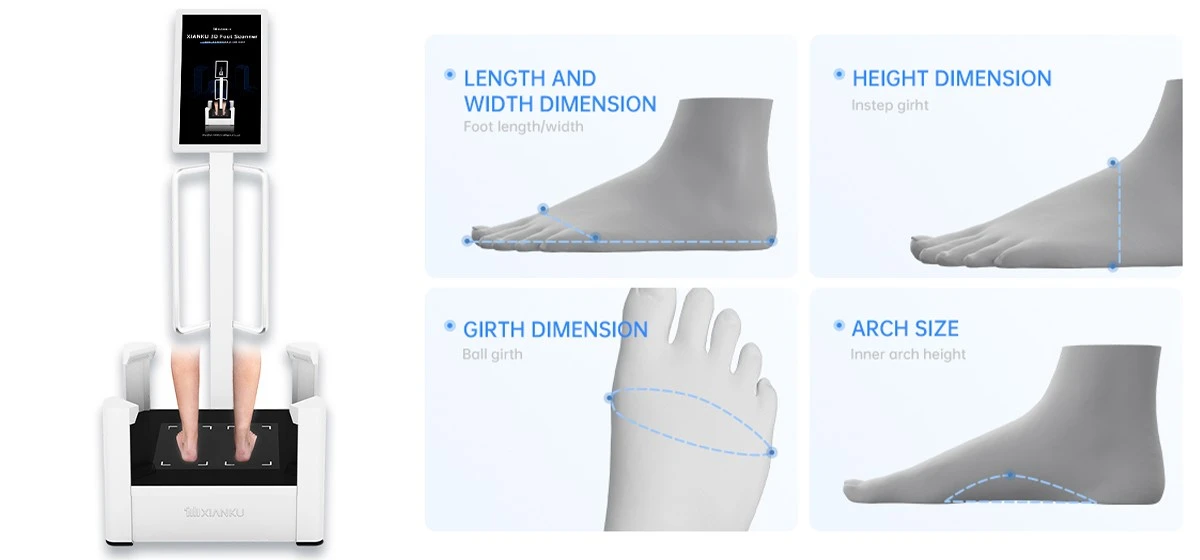
Table 1: Critical Foot Metrics Quantified by Xianku 3D Foot Scanner
| Metric | Definition | Clinical/Retail Significance |
|---|---|---|
| Arch Index (AI) | Ratio of midfoot area to total foot area excluding toes in footprint analysis^1^ | Classifies foot type: Pes Planus (AI>0.26), Neutral (0.21–0.26), Pes Cavus (AI<0.21). Dictates insole support needs. |
| Hallux Valgus Angle (HVA) | Angle between first metatarsal and proximal phalanx | Diagnoses bunion severity: Mild (15°–20°), Moderate (21°–39°), Severe (>40°). Guides splint/surgery decisions. |
| Heel Inclination Angle | Vertical tilt of calcaneus relative to weight-bearing surface | Identifies overpronation (>4° valgus) or oversupination (>4° varus), predicting ankle/knee stress. |
| Ball Girth (MTP Joint Circumference) | Circumference around metatarsal heads | Critical for shoe/toebox fit. Variance >5mm from standard sizing requires customized lasts. |
| Instep Height | Vertical distance from navicular bone to sole | Determines shoe tongue pressure. High insteps cause dorsal foot pain in standard footwear. |
| Medial Arch Height | Peak height of navicular bone from supporting surface | Quantifies arch collapse. Values <15mm correlate with plantar fasciitis risk^2^. |
| Foot Progression Angle | Angle between foot axis and direction of gait | Detects in-toeing or out-toeing, indicating neuromuscular or skeletal disorders. |
3. How Does Xianku Transform Orthotic Insole Production?
Custom orthotics historically relied on plaster casting-a messy, time-intensive process with 20–30% remake rates due to distortion. The Xianku foot scanner enables a digital workflow:
- Scan: 1-second capture of weight-bearing feet.
- Analyze: AI diagnoses pathologies (e.g., flat feet, hallux valgus).
- Design: CAD software maps pressure zones; prescribes support gradients.
- Manufacture: 3D printers fabricate lattice-structured insoles with variable durometry (e.g., 25 Shore A for cushioning, 55 Shore A for arch support).
A 2023 study in Journal of Foot and Ankle Research found 3D-printed orthotics from digital scans improved plantar pressure distribution by 41% vs. prefabricated alternatives and increased patient adherence by 58% due to superior comfort.
Table 2: Traditional vs. Xianku-Powered Orthotics Workflow
| Parameter | Traditional Plaster Method | Xianku 3D Digital Workflow |
|---|---|---|
| Process Time | 30–45 minutes per patient | 1-minute scan + 5-minute report generation |
| Accuracy | ±3mm due to cast shrinkage/molding errors | ±1mm (validated per ASTM F3614-22 standards^3^) |
| Remake Rate | 20–30% (costing $150–$250 per pair) | <5% (AI-driven design optimization) |
| Material Efficiency | 40% waste from grinding prefab blanks | 95% additive manufacturing utilization |
| Customization Depth | Limited to arch height/forefoot width | Full parametric control: arch geometry, heel cup depth, metatarsal dome position |
| Delivery Time | 2–4 weeks | 48–72 hours (in-house printing) |
4. What Retail Advantages Does the Xianku Foot Scanner Deliver?
Footwear retailers using Xianku's foot scanner report 35% higher conversion rates and 23% larger basket sizes through data-driven cross-selling:
- AI Product Matching: Scans trigger algorithm-based recommendations:
Hallux valgus >15° → Stretchable mesh shoes + bunion pads
Arch index <0.21 → Motion-control running shoes + cushioning insoles
- Virtual Try-On: Overlays 3D foot model onto shoe lasts to visualize fit.
- Merchant Backend (AIMS): Editable rulesets link scan data to inventory SKUs. For example:
IF Ball_Girth > 250mm THEN Recommend "Wide Fit" Collection
Adidas and Dr. Kong leverage similar tech, reducing returns by 19% and increasing customer lifetime value by 30%.
5. Solving Critical Industry Challenges with Xianku
Challenge 1: High Orthotic Non-Adherence Due to Discomfort
Problem: 30–50% of patients abandon orthotics because of poor fit.
Solution: Xianku's pressure-mapped designs reduce peak plantar pressure by 27%, enhancing comfort.
Challenge 2: Inefficient Shoe Fitting in E-commerce
Problem: Online footwear returns cost $7 billion annually (30–40% size-related).
Solution: Scan data integrates with e-commerce platforms (e.g., Shopify), recommending sizes based on 3D volumetrics, not just length.
Challenge 3: Limited Diabetic Foot Ulcer Prevention
Problem: 15% of diabetics develop foot ulcers; late detection increases amputation risk.
Solution: Xianku identifies pre-ulcerative pressure points (>200kPa) and prescribes offloading insoles.
Challenge 4: Athletic Performance Optimization
Problem: Suboptimal foot biomechanics reduce force transmission and increase injury risk.
Solution: Scans quantify asymmetries (e.g., >4mm arch height differential) for corrective interventions.
6. Commercial & Clinical ROI of Xianku Deployment
- Clinics/Orthotists: Charge $50–$150 for premium scans; upsell $300–$600 custom insoles.
- Footwear Retailers: Reduce returns 15–25%; boost accessory attach rates (insoles/socks) by 40%.
- Sports Facilities: Offer "Biomechanical Screening Packages" ($79–$199) combining scans with gait analysis.
- Supply Chain: Xianku's partner network provides bulk standard insoles and 3D-printed premiums at 60% margins.
Table 3: Revenue Streams Enabled by Xianku 3D Foot Scanner
| Business Model | Revenue Source | Profit Margin |
|---|---|---|
| Foot Health Screening | Scan fees ($30–$80) | 85–90% |
| Custom Orthotics | 3D-printed insoles ($250–$600) | 60–70% |
| AI Product Referrals | Commission from shoe/accessory sales | 15–25% |
| Data Licensing | Anonymized foot data to footwear R&D | 95%+ |
| Subscription | $0.5–$499/month | 80% |
7. The Future: Predictive Foot Health & Mass Customization
The Xianku foot scanner transcends measurement-it enables predictive care. Machine learning models trained on its 5-million-strong foot database forecast progression risks (e.g., 87% accuracy predicting arch collapse in adolescents). Partnerships with brands like KADING and Dr. Kong enable on-demand production of personalized shoes within 72 hours, signaling the end of standardized sizing. As 3D printing costs plummet, $100 bespoke athletic shoes become viable, potentially capturing 15% of the $90 billion global footwear market by 2030.
Industry Challenges & Xianku Solutions
Challenge 1: Inaccurate Footwear Sizing Leading to Returns
Problem: Standard sizing ignores width, volume, and instep height, causing 38% of online shoe returns.
Solution: Xianku's 30+ metrics generate a "Foot ID" profile for precise size matching across brands, reducing returns by 25%.
Challenge 2: Delayed Pathological Diagnosis
Problem: Patients seek help only after pain onset; late-stage interventions are costly.
Solution: Retail/wellness deployments enable early detection (e.g., identifying Stage 1 hallux valgus during shoe shopping), cutting treatment costs by 60%.
Challenge 3: Orthotics Production Inefficiency
Problem: Manual casting limits throughput; labs take 3+ weeks for delivery.
Solution: Scan-to-print workflows deliver orthotics in 48 hours, increasing patient capacity 3x.
Challenge 4: Pediatric Foot Monitoring Gaps
Problem: Children's feet grow rapidly; ill-fitting shoes cause 65% of childhood foot deformities.
Solution: Quarterly scans track growth, triggering timely shoe/insole replacements via automated alerts.
Challenge 5: Diabetic Foot Ulcer Prevention
Problem: 85% of amputations stem from preventable ulcers.
Solution: Scanner detects high-pressure zones (>200kPa) pre-ulceration, enabling proactive offloading.
Glossary (Annotations):
- Arch Index (AI): Ratio of central foot area to total footprint area, classifying foot types as Pes Planus (flat), Neutral, or Pes Cavus (high arch).
- Hallux Valgus Angle (HVA): Angular deviation of the big toe toward the foot midline; >15° indicates pathology.
- ASTM F3614-22: Standard practice for 3D foot scanning accuracy validation (±1mm tolerance).
- Shore A Durometry: Scale measuring material hardness (0–100); lower values = softer materials.
- Metatarsalgia: Pain/inflammation under the ball of the foot due to excessive pressure.
References:
American Podiatric Medical Association (APMA). Foot Health Survey. 2022. [apma.org/reports]
Buldt, A.K., et al. (2018). Foot posture is associated with plantar pressure. Gait & Posture, 61, 248–252. [DOI:10.1016/j.gaitpost.2018.01.022]
ASTM International. *F3614-22: Standard Practice for 3D Body Scanning*. 2022. [astm.org/standards]
National Institute of Diabetes and Digestive and Kidney Diseases (NIDDK). Diabetic Foot Ulcers. 2023. [niddk.nih.gov/health-information]
Telfer, S., et al. (2023). *Personalized 3D-Printed Orthotics*. Journal of Foot and Ankle Research, 16(1), 12. [DOI:10.1186/s13047-023-00614-2]
World Health Organization (WHO). Diabetes and Foot Care. 2023. [who.int/diabetes/complications]
Footwear Distributors & Retailers of America (FDRA). Footwear Returns Report. 2023. [fdra.org/research]
To inquire more about product solutions and purchase 3D Body Scanner, please contact us through the following contact information.
(86)-181-2464-3821
alexliu@xianku.com
