

In an era of desk jobs and smartphone addiction, poor posture has become an epidemic. Studies indicate that over 80% of adults in the U.S. suffer from posture-related issues, yet most remain unaware of their specific misalignments . Forward head posture, rounded shoulders, and pelvic tilt affect millions, contributing to chronic pain, reduced mobility, and long-term spinal degeneration.
This article explains how the Xianku 3D Body Scanner identifies these hidden issues and enables targeted correction programs.
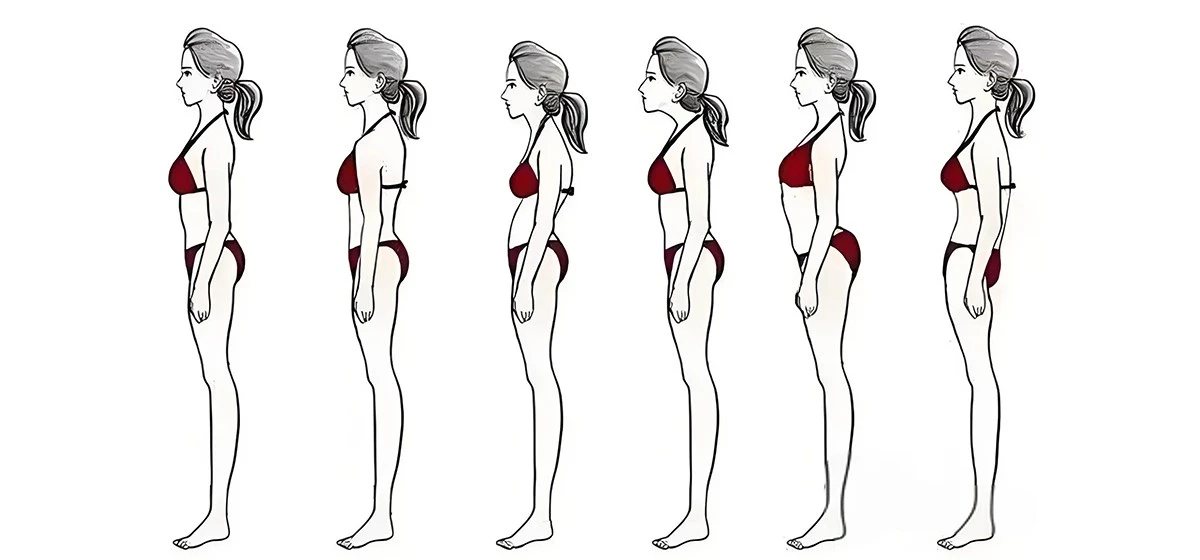
The Three Most Common Posture Problems
1. Forward Head Posture (FHP)
Forward head posture occurs when the head protrudes forward from the shoulders, rather than aligning directly above. For every inch the head moves forward, the effective weight on the cervical spine doubles .
Prevalence: Affects an estimated 89% of office workers
Consequences:
- Chronic neck and shoulder pain
- Tension headaches
- Reduced range of motion
- Potential for cervical disc degeneration
- Impaired breathing (due to shortened neck muscles)
Traditional detection: Visual observation by a therapist, often missing subtle cases
Xianku detection: Precise measurement of head position relative to shoulders, quantified in degrees and millimeters
2. Anterior Pelvic Tilt (APT)
Anterior pelvic tilt occurs when the front of the pelvis rotates forward and down, while the back rises. This creates an exaggerated curve in the lower back.
Prevalence: Extremely common, especially among those who sit extensively
Consequences:
- Lower back stress and pain
- Hip flexor tightness
- Gluteal weakness
- Hamstring strain
- Apparent "pot belly" even with low body fat
Traditional detection: Visual assessment of pelvic position, often subjective
Xianku detection: Exact measurement of pelvic angle (±0.5° accuracy)
3. Scoliosis and Spinal Asymmetry
Scoliosis-lateral curvature of the spine-affects 2-3% of the population, but milder asymmetries affect many more.
Consequences:
- Uneven shoulder and hip heights
- Muscle imbalances
- Potential for progression
- Reduced athletic performance
- Aesthetic concerns
Traditional detection: Adam's forward bend test, followed by X-ray confirmation
Xianku detection: Non-invasive screening with 0.5° accuracy for Cobb angle measurement
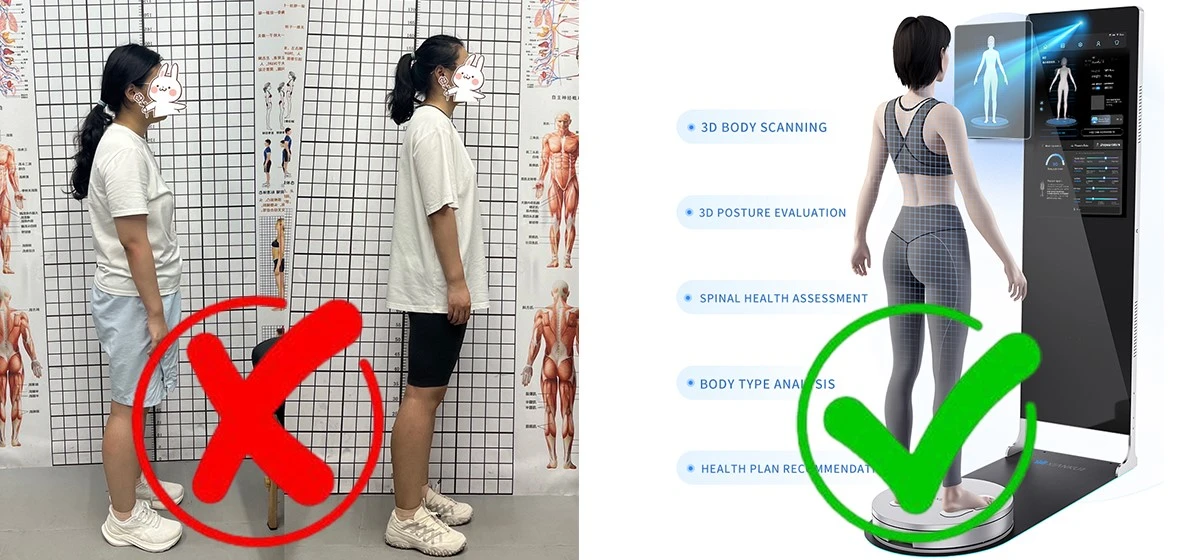
The Xianku Posture Assessment
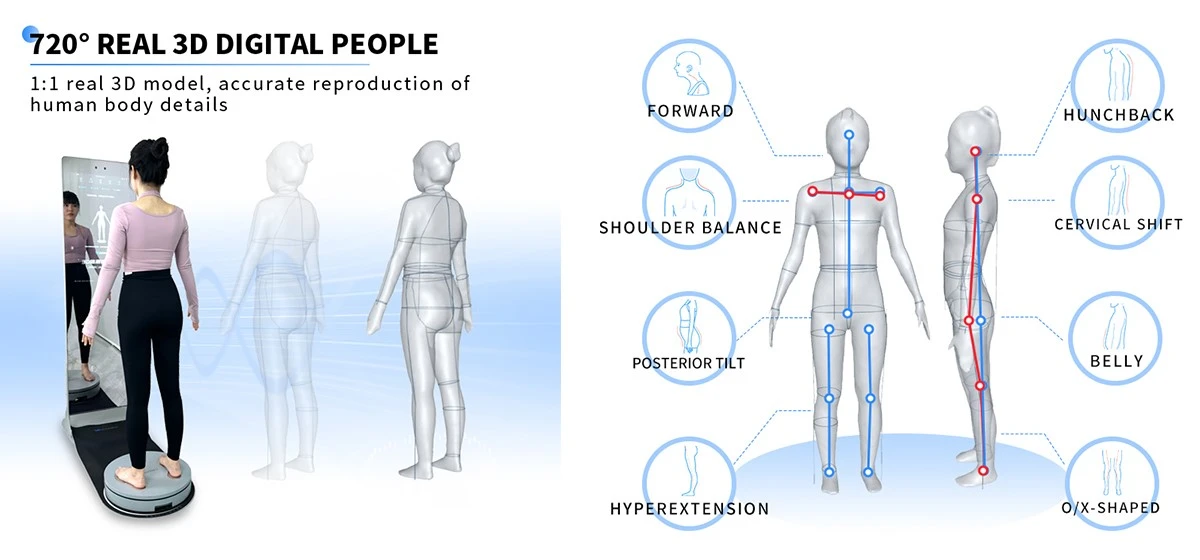
The Xianku 3D Body Scanner provides a comprehensive postural assessment in 20 seconds . Key metrics include:
| Postural Metric | What It Measures | Why It Matters |
|---|---|---|
| Cervical curvature | Neck curve angle | Indicates FHP, tech neck severity |
| Thoracic curvature | Upper back curve | Reveals kyphosis (hunchback) |
| Lumbar curvature | Lower back curve | Shows lordosis, spinal stress |
| Pelvic tilt | Forward/backward rotation | Affects entire spinal alignment |
| Shoulder symmetry | Height difference | Indicates scoliosis or muscle imbalance |
| Scapular position | Shoulder blade placement | Reveals rounded shoulders |
| Leg length discrepancy | Functional or anatomical | Affects gait, hip stress |
| Knee alignment | Varus/valgus angle | Shows knock-knee or bow-leg |
Case Study: The Desk Worker's Transformation
Client Profile: 34-year-old male, software engineer, 10+ years of desk work
Chief Complaint: Chronic neck pain, frequent headaches, lower back stiffness
Initial Xianku Findings:
- Forward head posture: 2.3 inches (severe)
- Cervical curvature: Flattened (22°, normal range 31-40°)
- Anterior pelvic tilt: 14° (moderate)
- Rounded shoulders: 27° forward deviation
- 3D avatar: Visually confirmed the findings
Prescribed Intervention:
- Targeted stretching for chest and hip flexors
- Strengthening for deep neck flexors and glutes
- Ergonomic workstation modifications
- Specific sleeping position adjustments
3-Month Follow-up Scan:
- Forward head posture: Reduced to 1.1 inches (52% improvement)
- Cervical curvature: Improved to 28° (closer to normal)
- Anterior pelvic tilt: Reduced to 8° (43% improvement)
- Rounded shoulders: Improved to 18° (33% improvement)
- Symptom improvement: Neck pain reduced by 80%, headaches eliminated
The client reported: "I've known my posture was bad for years, but I never knew exactly what was wrong. Seeing my 3D scan and getting specific numbers made the problem real and the solution clear. The follow-up scan showing actual improvement kept me motivated."
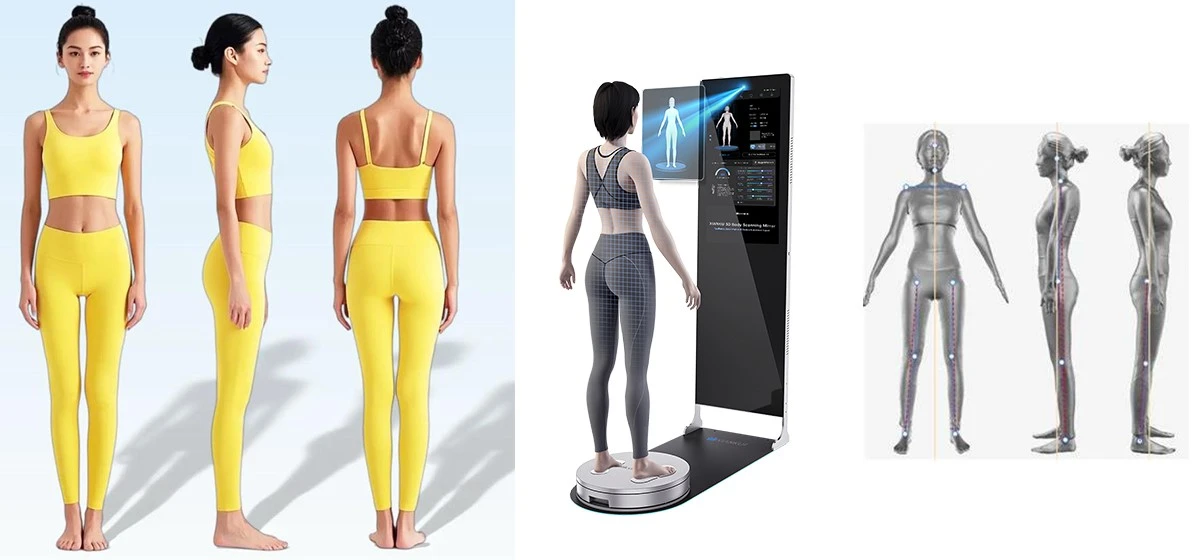
Why Visualization Matters
Traditional posture assessment relies on the practitioner's explanation. Even with the best intentions, patients struggle to visualize abstract concepts like "pelvic tilt."
Xianku's 3D visualization solves this:
- Color-coded maps show areas of misalignment
- Side-by-side comparisons with ideal alignment illustrate the gap
- Progress tracking over time shows improvement visually
- Shareable reports allow patients to show family, trainers, or other providers
The Link Between Posture and Health
Poor posture isn't just an aesthetic concern. Research cited by Xianku reveals significant health impacts:
- 78% of adults with posture-related spinal issues report chronic pain
- $14 billion in annual productivity loss from posture-related conditions
- 9 million+ fall-related injuries in seniors linked to postural instability
- Respiratory restriction from thoracic kyphosis can reduce lung capacity by up to 30%
Posture in Special Populations
Athletes: Postural imbalances limit performance and increase injury risk. A runner with pelvic tilt will have inefficient gait mechanics. A golfer with spinal asymmetry will have inconsistent swing plane.
Seniors: Postural decline accelerates with age. Kyphosis (dowager's hump) increases fall risk and can compress internal organs. Early detection enables intervention.
Children and Adolescents: With increased screen time, postural issues are appearing earlier. Screening can identify problems before they become fixed.
Pregnant and Postpartum Women: Pregnancy alters posture significantly, often creating lasting changes. Postpartum assessment enables targeted rehabilitation.
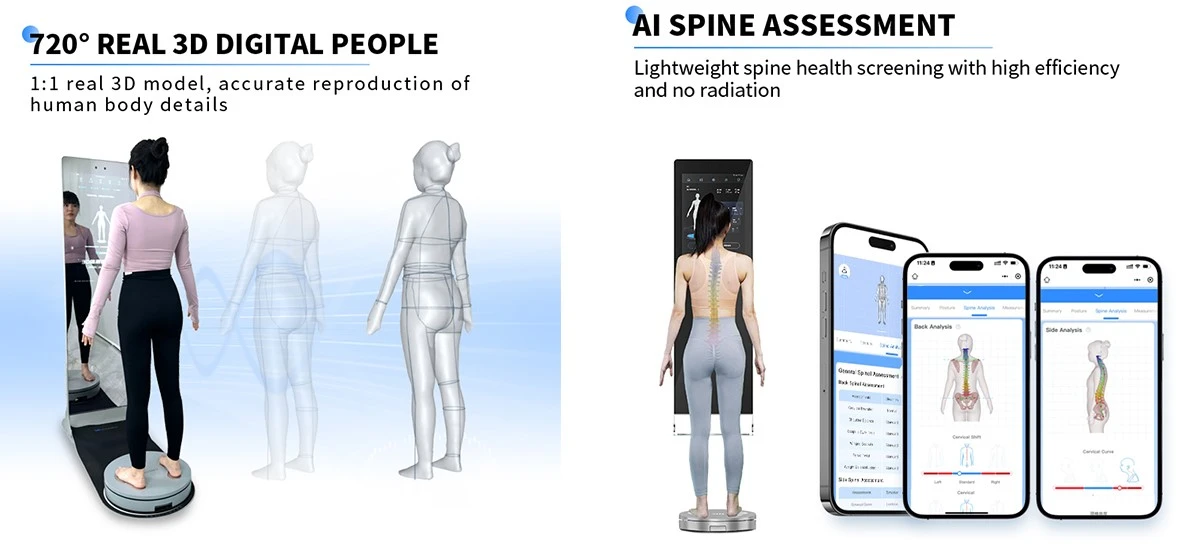
The Posture Correction Ecosystem
The Xianku scanner doesn't just identify problems-it connects to solutions:
- Exercise prescription: AI-generated recommendations based on specific findings
- Equipment matching: Ergonomic chairs, standing desks, and supportive products matched to individual needs
- Progress tracking: Objective measurement of intervention effectiveness
- Integration with professionals: Data can be shared with physical therapists, chiropractors, and trainers
Conclusion
Posture problems are nearly universal but rarely understood. The Xianku 3D Body Scanner brings scientific precision to posture assessment, revealing hidden issues and enabling targeted correction. For the millions of Americans suffering from posture-related pain, this technology offers a path to relief through understanding.
Call to Action: Curious about your own posture? Find a Xianku-powered wellness center and discover what your 3D scan reveals.
Sources:
Xianku posture management industry analysis
Xianku fitness and posture data
WHO Posture Guidelines
