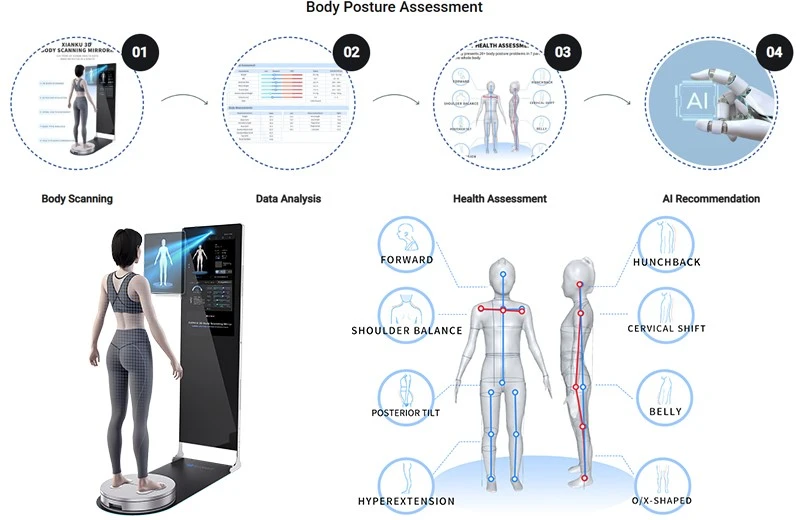
For decades, posture assessment has relied on the trained eye of practitioners. Physical therapists, chiropractors, and personal trainers have developed skills to visually identify misalignments and prescribe corrective exercises. But how accurate is visual assessment, really?
Research cited by Xianku reveals a concerning truth: manual assessments can vary by 15-40% between practitioners, and even experienced clinicians miss subtle deviations that affect long-term health outcomes .
This article compares traditional visual assessment with 3D scanning technology and explains why objective measurement is becoming the new standard of care.

The Limitations of Visual Assessment
1. Subjectivity and Variability
When two practitioners assess the same client, their conclusions often differ. One might note "mild forward head posture"; the other might consider it within normal range. Without objective measurements, these judgments are inherently subjective.
Quantified difference: Studies show inter-rater reliability for visual posture assessment ranges from 0.4 to 0.7 (where 1.0 is perfect agreement). This means significant variability between practitioners .
2. Inability to Quantify
Even when a practitioner correctly identifies an issue, they struggle to quantify it. "Moderate anterior pelvic tilt" is a qualitative judgment, not a measurement. Without numbers, tracking progress becomes guesswork.
3. Hidden Compensations
The human body is remarkably good at compensating. A client with a leg length discrepancy might tilt their pelvis to level their shoulders, masking the underlying issue. The naked eye sees the level shoulders, missing the compensation.
4. Memory Limitations
When a client returns after 12 weeks of treatment, the practitioner must rely on memory of the initial presentation. Human memory is fallible and biased. What looks like "improvement" might simply be forgetting how bad it was.
5. Documentation Challenges
Notes like "improved posture" in a client file provide no objective evidence. For insurance purposes, legal documentation, or simply tracking outcomes, subjective notes are inadequate.
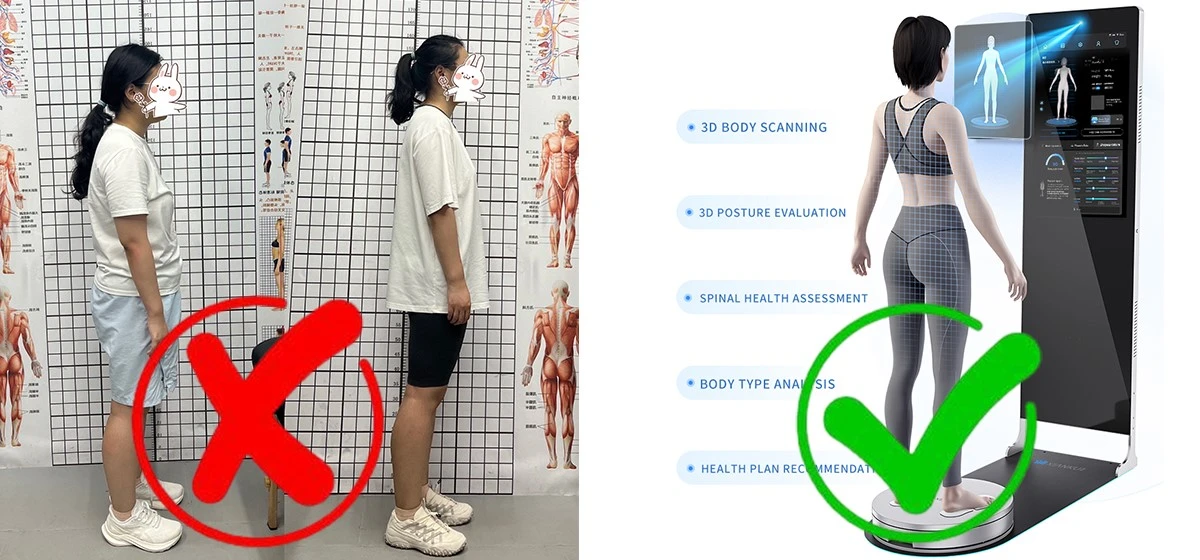
What Xianku Measures That the Eye Misses
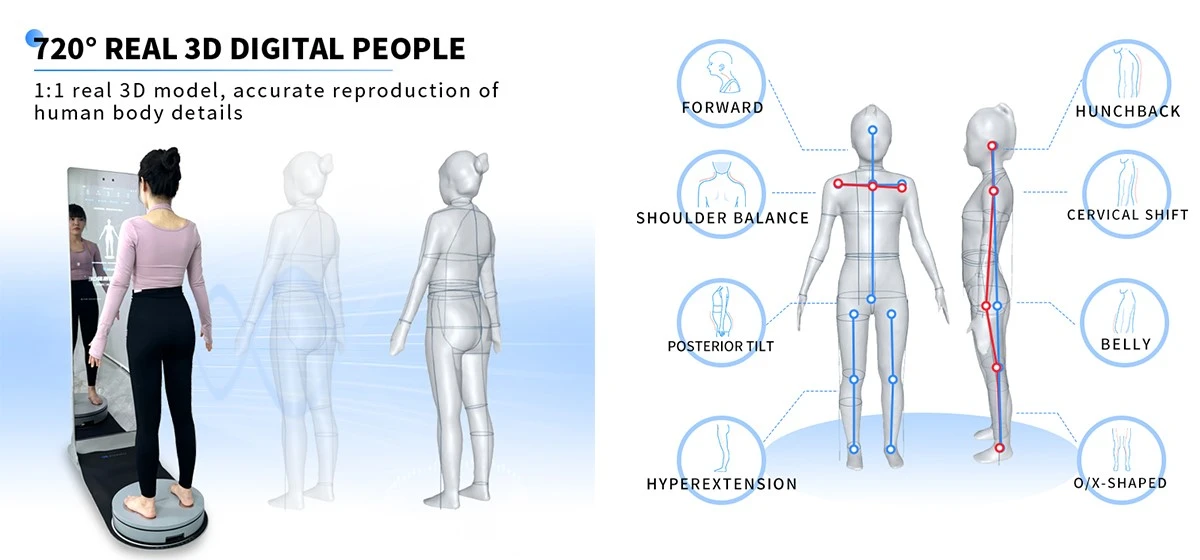
The Xianku 3D Body Scanner captures what visual assessment cannot:
| Measurement | Visual Assessment | Xianku 3D Scanner |
|---|---|---|
| Cervical curvature angle | Estimated | ±0.5° accuracy |
| Pelvic tilt degree | Estimated | Precise angle measurement |
| Leg length discrepancy | Approximate | 0.8mm accuracy |
| Cobb angle (scoliosis) | Not possible (needs X-ray) | 0.5° accuracy for screening |
| Asymmetry percentage | Subjective | Exact left-right differential |
| Progress over time | Memory-dependent | Precise comparison with baseline |
The Clinical Impact of Objective Measurement
Case Study: The Hidden Scoliosis
A 28-year-old female presented to a physical therapy clinic with right shoulder pain. Visual assessment by an experienced PT revealed:
- Slightly elevated right shoulder
- Mild asymmetry in shoulder blade position
- No obvious spinal curvature
Xianku scan revealed:
- 11° thoracic scoliosis (previously undetected)
- 8mm leg length discrepancy
- Compensatory pelvic tilt
The treatment plan changed dramatically. Instead of treating shoulder pain in isolation, the PT addressed the underlying spinal curvature and leg length discrepancy. Three months later, follow-up scans showed objective improvement in all metrics.
The PT noted: "Without the scan, I would have treated symptoms, not causes. The patient might have improved temporarily, but the underlying issues would have remained. The scan didn't just add precision-it completely changed my clinical approach."
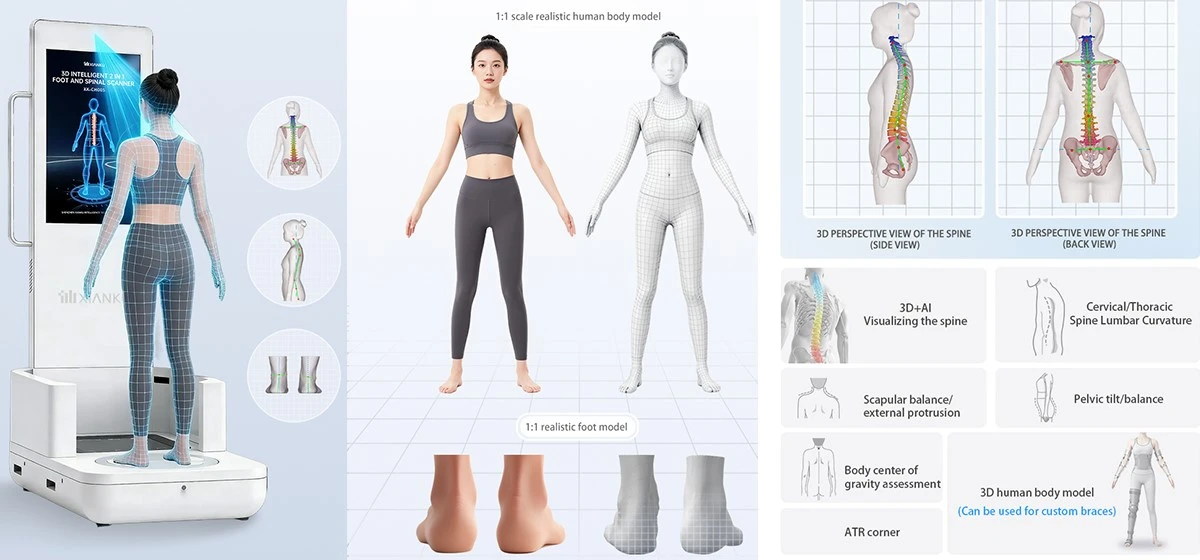
The Accuracy Gap
Research cited by Xianku quantifies the difference between visual and 3D assessment:
| Condition | Clinical Detection Threshold | Xianku Detection Threshold |
|---|---|---|
| Scoliosis (Cobb angle) | 15-20° (visible on exam) | 5° (pre-clinical) |
| Leg length discrepancy | 10-15mm (visible gait change) | 1mm |
| Pelvic tilt | 5-8° (visually noticeable) | 0.5° |
| Forward head posture | 2+ inches (visually obvious) | 1mm increments |
The clinical implication is clear: by the time an issue is visible to the naked eye, it has likely been developing for years. Early detection enables early intervention.
Applications Across Disciplines
Physical Therapy
- Baseline documentation for insurance and legal purposes
- Objective tracking of treatment effectiveness
- Patient education through visualization
- Early detection of developing issues
Chiropractic Care
- Pre- and post-adjustment documentation
- Visualization of spinal alignment changes
- Patient compliance through visible progress
- Marketing differentiation through technology
Personal Training
- Assessment-based program design
- Progress tracking that clients can see
- Injury risk identification before training begins
- Premium service differentiation
Medical Settings
- Non-invasive scoliosis screening
- Postural assessment for various conditions
- Research and data collection
- Referral documentation
The Economic Argument
For practices considering Xianku adoption, the economic case is compelling:
| Practice Type | Typical Assessment Fee | With Xianku Premium | Revenue Increase |
|---|---|---|---|
| Physical Therapy | $75-150 | $125-250 | +50-70% |
| Chiropractic | $50-100 | $100-200 | +60-100% |
| Personal Training | $0 (included) | $50-150 add-on | New revenue stream |
| Wellness Center | $50 | $100-200 | +100-300% |
Beyond direct fees, practices report:
- 30-50% increase in patient compliance (visible progress motivates)
- 25-40% reduction in dropout rates
- Significant marketing advantage over competitors
The Future of Posture Assessment
As 3D scanning technology becomes more accessible, the standard of care is shifting. Insurance companies increasingly demand objective outcome measures. Patients increasingly expect technology-enhanced care. Practitioners who adopt 3D scanning position themselves for the future rather than clinging to the past.
Conclusion
The naked eye, for all its sophistication, cannot match the precision of 3D scanning. Visual assessment misses early-stage issues, fails to quantify findings, and provides inadequate documentation. The Xianku 3D Body Scanner represents the evolution of posture assessment from art to science-from subjective judgment to objective measurement.
For practitioners committed to the highest standard of care, 3D scanning is no longer optional. It's essential.
Call to Action: Ready to elevate your practice with objective posture assessment? Contact Xianku today to learn how our 3D body scanning technology can transform your clinical outcomes and business performance.
Sources:
Xianku posture management data
Clinical Biomechanics research on assessment variability
Xianku technical specifications