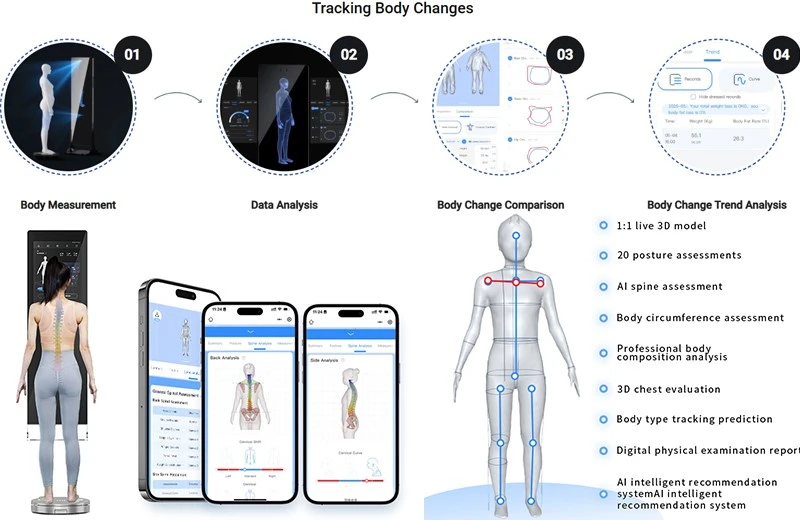
Rehabilitation medicine is fundamentally about restoration-helping patients regain function after injury, surgery, or illness. Yet traditional rehabilitation relies heavily on subjective assessment and patient self-report. Range of motion is estimated, strength is graded subjectively, and progress is documented with notes that lack precision.
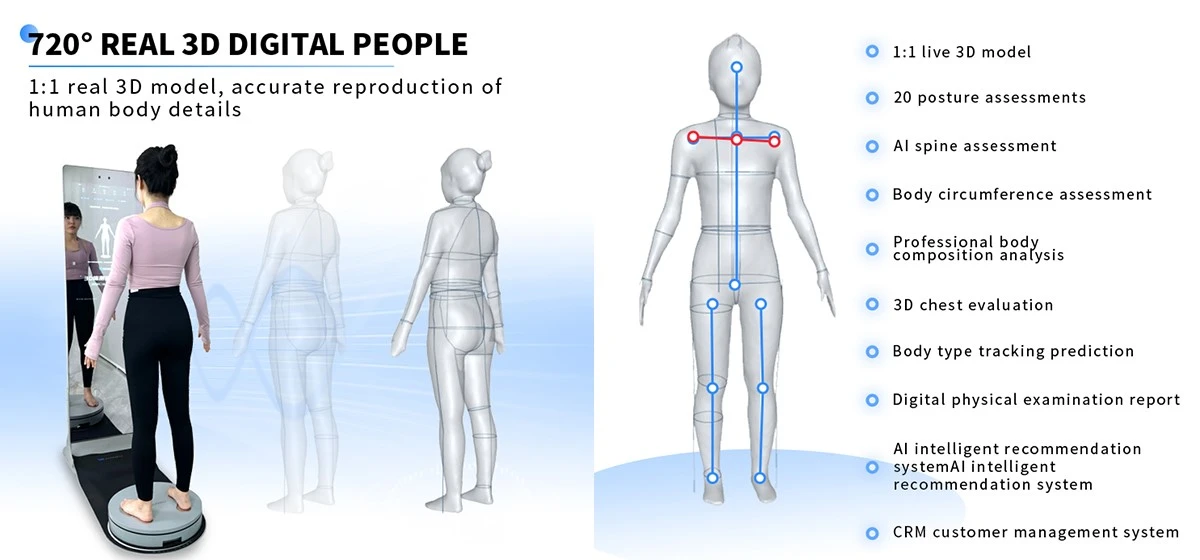
The Xianku 3D Body Scanner brings objective measurement to rehabilitation, enabling more precise assessment, better treatment planning, and documented outcomes that satisfy patients, payers, and regulators.
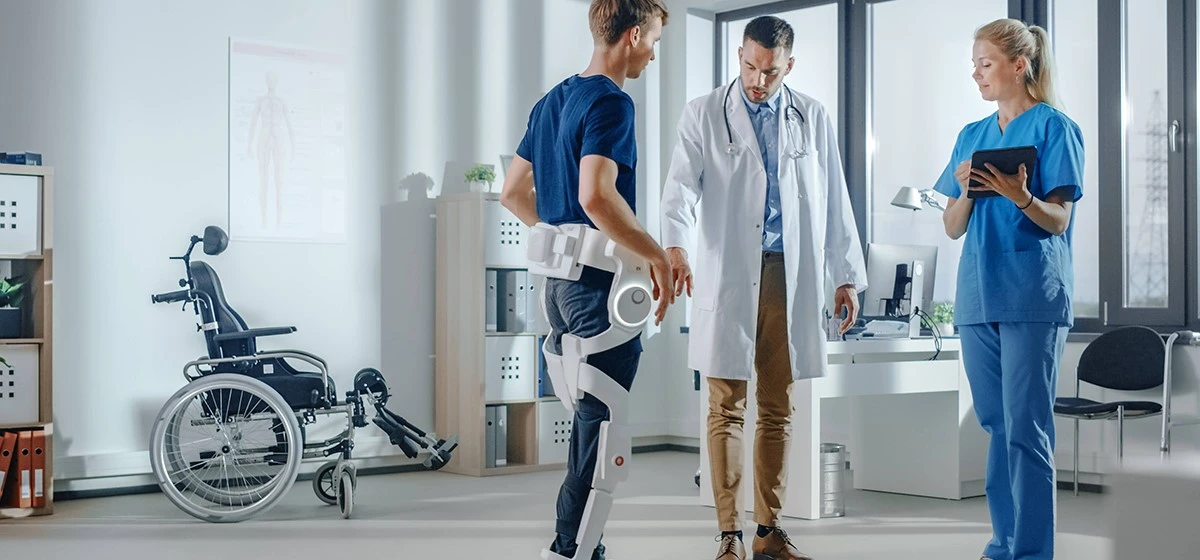
Applications in Rehabilitation
1. Custom Orthotics and Prosthetics
Traditional orthotic fitting involves casting or foam impressions-messy, time-consuming processes that capture only static shape. Xianku scanning offers:
- 30-second capture of foot and ankle geometry with 0.5mm accuracy
- Weight-bearing and non-weight-bearing options for different clinical needs
- Digital storage for repeat orders and modifications
- Integration with CAD/CAM for direct manufacturing
For orthotists, this means faster turnaround, better fit, and the ability to serve more patients. One practitioner reported: "I used to spend 20 minutes per patient on casting. Now I scan in 30 seconds, and the digital file goes directly to our fabrication lab. I've doubled my patient capacity."
2. Post-Surgical Rehabilitation
After joint replacement or spinal surgery, tracking recovery is essential. Xianku provides:
| Metric | Clinical Application |
|---|---|
| Range of motion | Quantify improvements in joint flexibility |
| Swelling measurement | Track edema resolution with precise circumference |
| Gait analysis | Identify compensations and asymmetries |
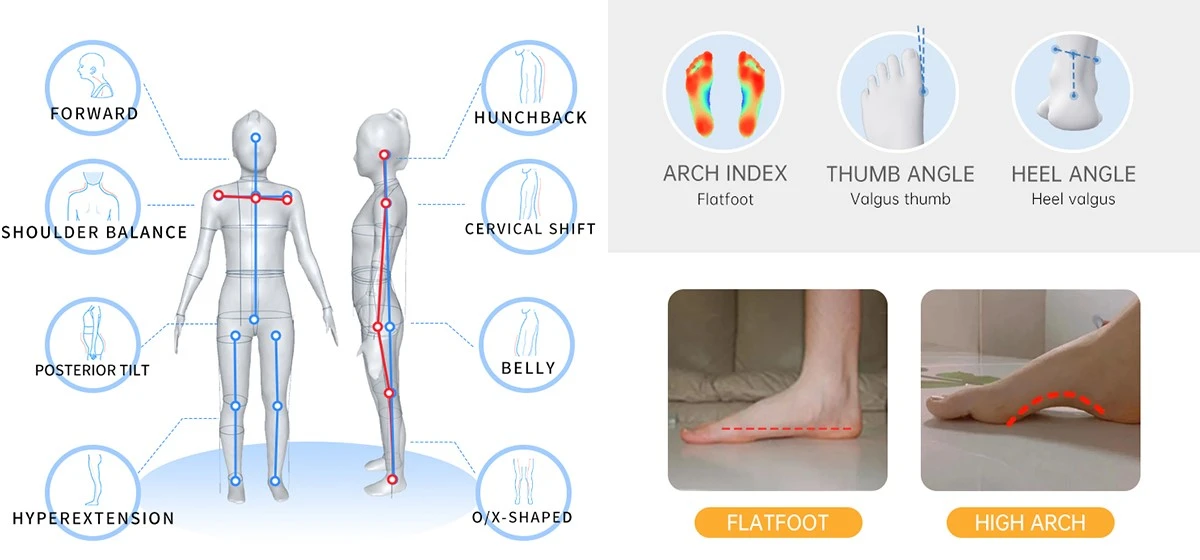
| Postural alignment | Monitor return to neutral alignment |
| Muscle mass | Track atrophy and recovery |
A physical therapist specializing in knee replacements noted: "Patients often think they're recovering faster than they are, or they're discouraged when progress seems slow. The scan shows them the truth-either validating their perception or revealing areas needing more work. It keeps everyone honest and motivated."
3. Gait and Movement Analysis
Abnormal gait patterns contribute to pain, falls, and secondary injuries. Xianku's 3D capture enables:
- Static alignment assessment before movement begins
- Pressure mapping to identify abnormal loading
4. Fall Risk Assessment in Seniors
Falls are a leading cause of injury in older adults, affecting millions annually. Xianku identifies fall risk factors:
- Postural instability (forward lean, kyphosis)
- Muscle asymmetry and weakness
- Balance impairments visible in stance
- Progress tracking through balance interventions
Case Study: Total Knee Replacement Rehabilitation
Patient: 68-year-old female, 6 weeks post-right total knee replacement
Presenting: Limited range of motion, persistent swelling, gait deviation
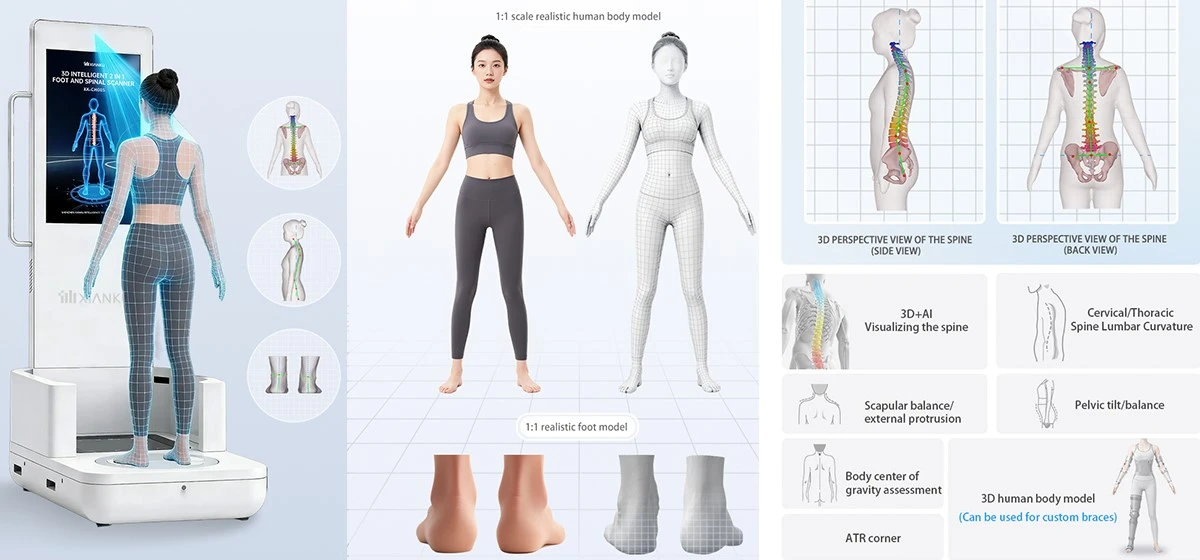
Initial Xianku Assessment:
- Range of motion: 95° flexion (target 120°), -5° extension (should be 0°)
- Swelling: Right knee circumference 4.2 cm larger than left
- Gait: Visible limp, reduced stance time on affected side
- Muscle mass: 12% quadriceps atrophy compared to left
Intervention: Targeted physical therapy focusing on ROM, swelling management, and quadriceps strengthening
8-Week Follow-up Scan:
- Range of motion: 115° flexion, 0° extension
- Swelling: Difference reduced to 1.1 cm
- Gait: Symmetrical, limp resolved
- Muscle mass: Atrophy reduced to 4%
Patient response: "Seeing the numbers improve week by week kept me going when the exercises were hard. My therapist showed me my swelling going down on the scan-I could actually see the progress. I'm more motivated than ever."
The Data-Driven Rehabilitation Practice
Rehabilitation practices adopting Xianku scanning report transformative results:
| Metric | Before Xianku | After Xianku |
|---|---|---|
| Initial assessment time | 45-60 minutes | 20-25 minutes (scan + review) |
| Objective data points | 5-10 manual measurements | 2+ million automated measurements |
| Progress tracking | Subjective notes | Precise comparisons |
| Patient understanding | Moderate | High (visual proof) |
| Insurance documentation | Notes only | Objective measurements + visuals |
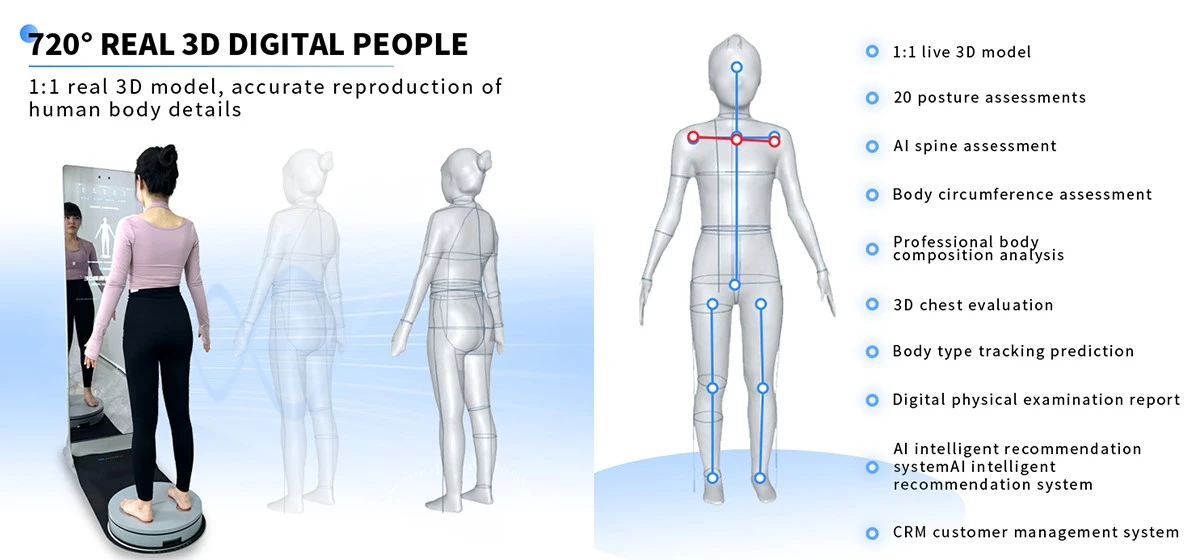
Reimbursement and Documentation
With increasing pressure from payers for objective outcome measures, Xianku scanning provides:
- Baseline documentation establishing medical necessity
- Progress tracking justifying continued care
- Outcome data supporting discharge decisions
- Visual evidence for appeals and reviews
A rehabilitation director noted: "Insurance companies love objective data. Since we started including scan measurements in our documentation, we've had fewer denials and faster approvals. The scanner pays for itself in reduced administrative hassle alone."
Integration with Rehabilitation Technology
Xianku data integrates with other rehabilitation tools:
- EMR systems: Scan reports attach directly to patient records
- Motion capture: Combine with dynamic analysis for comprehensive assessment
- 3D printing: Generate orthotics and prosthetics directly from scan data
- Telehealth: Share scans with patients for remote consultations
Special Populations
Pediatric Rehabilitation: Children respond well to the "video game" aspect of 3D scanning. Non-threatening and quick, it captures data without the anxiety that manual measurements can provoke.
Sports Rehabilitation: Athletes appreciate the detailed metrics and visual proof of return to baseline. Scans document readiness for return to play.
Neurological Rehabilitation: For patients with movement disorders, the scan captures static posture and can be combined with dynamic assessment to track changes over time.
Conclusion
Rehabilitation medicine is entering a new era-one where objective measurement replaces subjective estimation, where visual proof motivates patients, and where data drives clinical decisions. The Xianku 3D Body Scanner provides the tools rehabilitation professionals need to deliver this higher standard of care.
From custom orthotics to post-surgical recovery, from fall prevention to sports rehab, Xianku enables better outcomes, more engaged patients, and more efficient practices.
Call to Action: Ready to bring objective measurement to your rehabilitation practice? Contact Xianku today to learn how our 3D body scanning technology can transform your clinical outcomes.
Sources:
Xianku rehabilitation applications data
Xianku clinical case studies
Industry rehabilitation benchmarks