
Introduction
The global athletic footwear market thrives on innovation, yet beneath the surface of dazzling colorways and ever-evolving cushioning systems lies a persistent, unaddressed challenge: a fundamental disconnect between shoe design and the intricate, individual biomechanics of the human foot. While major brands compete on material science and celebrity endorsements, a critical dimension-personalized foot health-remains largely overlooked. This gap presents significant operational hurdles for retailers and brands while leaving consumers vulnerable to ill-fitting products that can undermine performance and long-term wellness.
This article examines the systemic issues within the athletic footwear ecosystem and explores how integrating professional-grade foot scan technology, creates a new paradigm centered on health assessment, precision fit, and data-driven value.
Part 1: The Pressing Challenges in the Modern Athletic Footwear Landscape
The market is saturated, yet genuine differentiation is increasingly difficult. The focus has predominantly been on the shoe itself rather than the unique foot it is meant to support, leading to widespread industry pain points.
1.1 Market Saturation and the New Brand Barrier to Entry
For emerging brands, breaking through in a market dominated by giants like Nike, Adidas, and Under Armour is exceptionally daunting. Competing on similar aesthetics or marginally different midsole foams often leads to a price war or obscurity. Without a unique, defensible value proposition tied to a tangible consumer benefit-like proven, personalized fit and health outcomes-new entrants struggle to gain traction.
1.2 The Glaring Omission of Proactive Health Attributes
Mainstream marketing focuses on "comfort" and "energy return," but rarely addresses specific foot morphologies. Conditions like overpronation (flat feet), supination (high arches), hallux valgus (bunions), or leg length discrepancies are common. Standard footwear offers generic "stability" or "neutral" categories, a blunt instrument for a precise problem. Only specialized brands like Brooks (with its extensive gait analysis heritage), HOKA (focused on maximalist stability and meta-rocker geometry), and ON Running (with its mission to promote natural motion) have built stronger narratives around biomechanical support. Yet, even these rely on consumer self-identification of issues or broad categorizations, not objective, individual data.
1.3 The Declining In-Store Experience and Conversion Struggle
Retail foot traffic is hard-won. The traditional try-on experience is passive and subjective: a customer selects a few styles based on looks, tries them on with limited guidance, and makes a purchase decision based on short-term feel. This process fails to engage, educate, or inspire confidence. It makes conversion highly unpredictable and does little to build brand loyalty or justify premium pricing.
1.4 The Innovation Plateau and Data Deficiency
R&D cycles are expensive and often based on trend forecasting and athlete testing, not aggregated population foot data. Brands lack access to large-scale, precise 3D foot morphology datasets. This hinders the development of lasts that truly match the demographic diversity of their customers, leading to inconsistent fit across product lines and high rates of online returns-a massive cost center.
1.5 The Limits of Cushioning-Centric Design
While advances in cushioning (Air, Boost, React, etc.) are impressive, they represent a unilateral approach: softening the impact of the ground on the foot. True foot health, however, involves alignment, stability, and proper motion control. A super-soft shoe can exacerbate instability for an overpronator. The industry's overwhelming focus on cushioning has, perhaps unintentionally, marginalized the more complex science of holistic foot support and gait biomechanics.
Table 1: The Athletic Footwear Market Dilemma: Symptoms vs. Root Causes
| Symptom (Visible Challenge) | Root Cause (Systemic Issue) | Consequence for Stakeholders |
|---|---|---|
| High return rates (~30%+ online) | Ineffective sizing standards & lack of personal fit guidance. | Lost revenue, logistical costs, environmental waste. |
| Difficulty justifying premium prices | Transaction focused on the shoe, not a personalized health solution. | Eroded margins, increased price sensitivity. |
| Homogenized product offerings | R&D based on trends, not empirical foot shape data. | Stifled innovation, weakened brand loyalty. |
| Declining retail relevance | Passive, non-educational in-store experience. | Lost traffic to e-comm, decreased customer engagement. |
| Unaddressed foot health issues | No standardized process for assessment during purchase. | Consumer discomfort, potential long-term injury risk. |
Part 2: The Xianku 3D Foot Scanner: Integrating Health Intelligence into the Core Retail Model
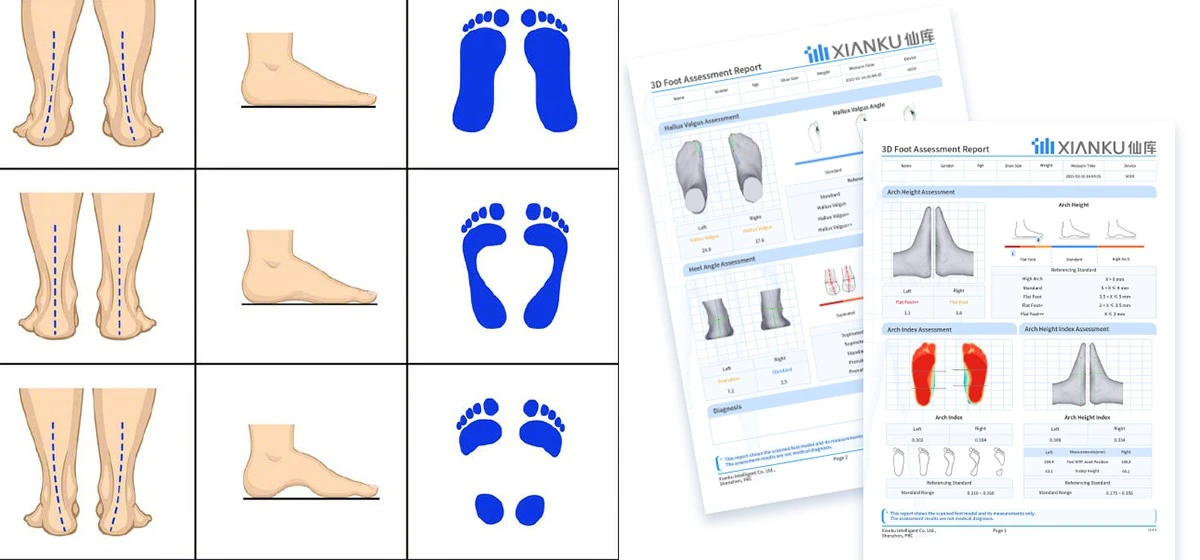
The Xianku system addresses these challenges not as isolated problems, but by introducing a foundational new layer into the retail and product ecosystem: objective, biometric intelligence. It transforms a store from a showroom into a foot health and performance consultation hub.
2.1 The Foundational Step: Comprehensive 3D Foot Scanning and Health Assessment
The process begins with a rapid, non-invasive foot scan. In seconds, the system captures over 32 dimensions, constructing a precise digital twin of each foot. This goes beyond length and width to include arch height and type, forefoot splay, heel width, and plantar surface contours. Crucially, the integrated software analyzes this data to flag potential health indicators-such as the degree of pronation/supination, arch collapse, or asymmetries. This initial foot scan provides an authoritative, visual baseline of the customer's foot health, immediately establishing credibility and shifting the conversation.
2.2 From Generic Categories to AI-Powered, Hyper-Personalized Matching
The true power lies in the backend. Retailers can digitally encode the "biomechanical profile" of each shoe. For example, a Brooks Adrenaline GTS, designed for stability, can be tagged as ideal for feet with a medium-to-low arch and moderate pronation. A HOKA Arahi with its J-Frame™ technology gets a similar but distinct profile. When a customer completes their foot scan, the AI doesn't just suggest a size; it matches the foot's 3D model and health profile against the entire digitally-tagged inventory, recommending only the models engineered for their specific morphology. This moves past "stability vs. neutral" to a truly personalized recommendation.
2.3 The Health-Centric Consultation: Redefining the Sales Dialogue
Armed with the visual foot scan report, the sales associate transitions from a cashier to a consultant. The dialogue changes from "How does that feel?" to "Your scan shows a moderately low arch, which can lead to inward rolling. Let me show you how this ON Running Cloudstratus, with its dual CloudTec® layer and stability sockliner, is designed to support that motion." This empowers the customer with knowledge, frames the purchase as an investment in their well-being and performance, and naturally supports a higher average transaction value (ATV).
2.4 Creating an Unforgettable, Technologically-Advanced Retail Experience
The act of undergoing a foot scan is a memorable event. It provides a "wow" factor that draws customers in and differentiates the physical store. Seeing one's own 3D foot model and receiving a data-driven analysis feels expert, objective, and personalized. This builds immense trust and turns a routine purchase into a valued professional service, fostering powerful brand loyalty.
2.5 Data Capital: The Strategic Asset for Inventory and Innovation
The aggregated, anonymized data from thousands of foot scan sessions is transformative.
- Inventory Optimization: Understanding the precise distribution of foot shapes in a local market allows for smarter size and width buying, reducing dead stock and improving turnover.
- Product Development: Brands can access (with consent) crucial data to validate and refine last designs, create new width offerings, or develop products for underserved foot types. This enables smaller brands to compete on scientifically-backed fit rather than marketing budget.
- Reducing E-commerce Friction: Offering a "Find Your Fit Profile" foot scan in flagship stores creates a digital passport. Customers can shop online with confidence, using their stored profile to filter for compatible models, drastically cutting return rates.
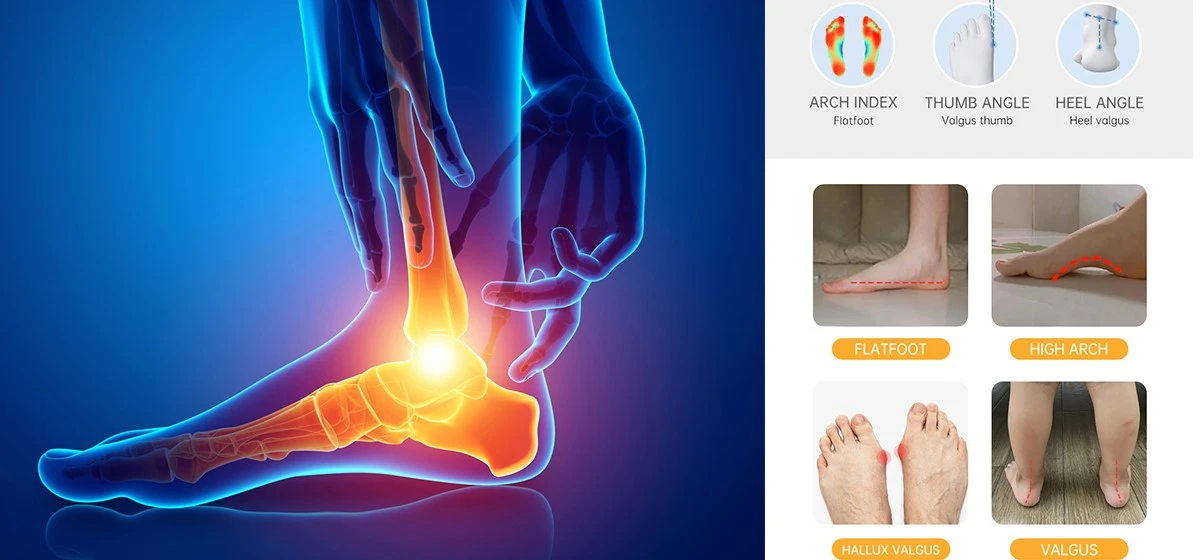
Table 2: Key Foot Health Metrics Revealed by a Professional 3D Foot Scan
| Health & Biomechanical Category | Specific Metrics & Identifiers | Relevance to Athletic Shoe Selection |
|---|---|---|
| Arch Structure & Type | Arch Height Index, Arch Rigidity, Medial Longitudinal Arch Angle. | Determines need for arch support, motion control (stability), or neutral cushioning. |
| Foot Posture & Alignment | Pronation/Supination Angle, Heel Valgus/Varus, Forefoot Alignment. | Identifies gait abnormalities; critical for selecting shoes that correct or accommodate alignment. |
| Forefoot Morphology | Hallux Valgus Angle, Toe Splay Index, Metatarsal Head Spread. | Informs toe box width and shape needs; crucial for preventing blisters and bunions. |
| Weight Distribution & Pressure | Plantar Pressure Map (relative), Center of Pressure Path. | Highlights areas of high stress; guides toward cushioning or dispersion technologies. |
2.6 Building a Long-Term Consumer Relationship Through Data
Each foot scan creates a digital client profile, including their foot morphology and purchase history. This enables sophisticated CRM: reminders for gait re-assessment (feet change over time), personalized promotions for complementary products (e.g., orthopedic insoles, recovery socks), and invitations to new product launches that match their profile. It builds a private community of engaged, data-enriched customers.
Table 3: The Value Chain Transformation Enabled by Foot Scan Integration
| Business Function | Traditional Model | Model Enhanced with Foot Scan Data |
|---|---|---|
| Marketing & Acquisition | Broad campaigns based on lifestyle. | Targeted "Free Foot Health Assessment" events; value-driven lead generation. |
| In-Store Sales Process | Subjective, product-centric try-on. | Standardized, health-centric consultation: Scan -> Analyze -> Educate -> Match. |
| Product Strategy | Based on trends and athlete feedback. | Informed by aggregate population foot shape and health indicator data. |
| Inventory Management | Based on historical sales of sizes S/M/L. | Optimized based on actual local foot dimension distributions. |
| Customer Retention | Loyalty points, email blasts. | Proactive health follow-ups, personalized product alerts based on biomechanics. |
Conclusion
The athletic footwear industry's next frontier is not a new foam compound, but a deeper understanding of its end-user. The challenges of market saturation, impersonal retail, and health-agnostic design are interconnected, rooted in a lack of individualized data. Technology like the Xianku 3D Foot Scanner provides a viable, sophisticated pathway forward. By making professional-grade foot scan assessments accessible at retail, businesses can transform their value proposition. They move from selling shoes to providing personalized foot health and performance solutions. This builds unbreakable consumer trust, creates operational efficiencies through data, and opens a new lane for innovation centered on true human biomechanics.
In the future, the most successful brands and retailers will be those who recognize that the most important piece of sports equipment is not the shoe, but the foot inside it-and they will have the data to serve it precisely.