
1. The Structural Challenges Facing the Global Protective Footwear Market
Protective footwear plays a critical role in industries such as construction, manufacturing, logistics, energy, and public services. However, despite its importance, the global protective shoe market faces persistent operational and commercial challenges. In Europe and North America, where safety regulations are strict and labor standards are high, brands and retailers are under increasing pressure to deliver products that are not only compliant, but also comfortable, healthy, and easy to choose.
One of the most pressing issues is shoe size mismatch. Unlike casual footwear, protective shoes must accommodate toe caps, reinforced midsoles, and rigid uppers. These design constraints magnify fit errors, leading to discomfort, fatigue, and even workplace injuries. A single incorrect size decision can result in long-term foot pain, reduced productivity, and higher return rates.
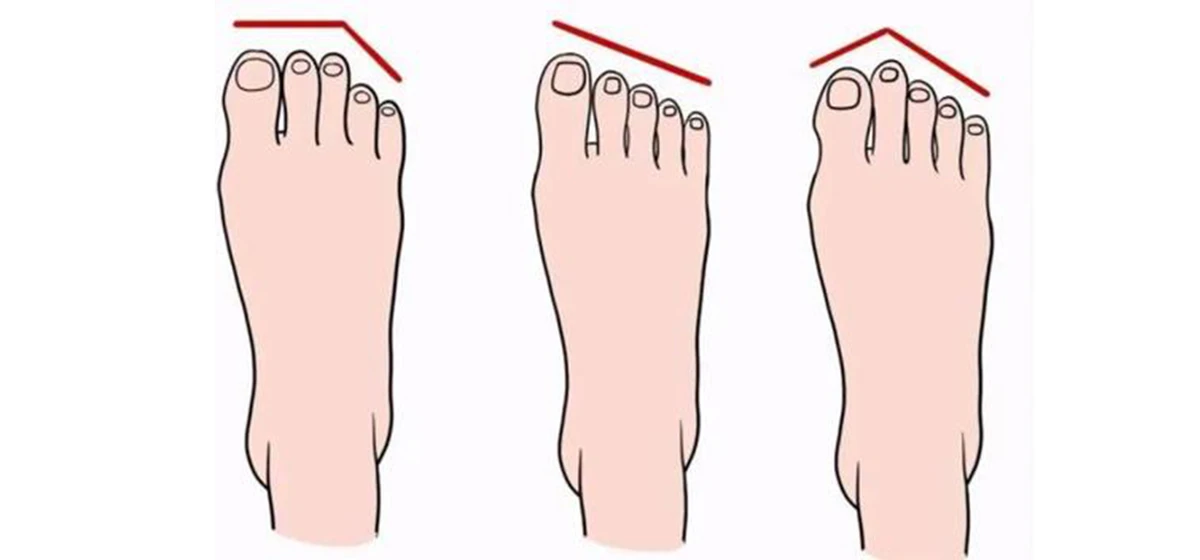
Beyond sizing, the market suffers from severe homogenization. Many protective shoe models look similar, use comparable materials, and rely on traditional size charts that ignore real foot shape diversity. Innovation is often limited to materials or certifications, while the consumer experience remains outdated.
Key Industry Pain Points
| Market Challenge | Impact on Brands and Retailers |
|---|---|
| Difficulty choosing correct shoe size | High return rates, poor customer trust |
| Lack of health attributes | Foot fatigue, chronic foot problems |
| In-store customer acquisition difficulty | Low foot traffic and weak conversion |
| Low transaction efficiency | Long decision cycles, price sensitivity |
| Weak R&D data foundation | Slow innovation, poor size optimization |
| Limited brand differentiation | Price competition and low loyalty |
Even leading global protective footwear brands such as CAT Footwear, Timberland PRO, Red Wing Shoes, and Dr. Martens Industrial face these challenges. While these brands excel in durability and safety standards, they still rely largely on conventional size systems that struggle to reflect real-world foot diversity.
2. Why Shoe Size Matching Has Become a Strategic Bottleneck
In protective footwear, size mismatch is not a minor inconvenience-it is a structural business problem. Studies in occupational health show that more than 60% of workers experience foot discomfort related to poor shoe fit, especially when wearing safety shoes for extended hours. Traditional size charts consider only foot length, ignoring width, instep height, arch type, and heel alignment.
This gap creates cascading problems:
- Workers choose larger sizes to avoid pressure, reducing stability.
- Narrow-footed users suffer friction and blisters.
- Flat-footed or high-arch users receive no functional support.
- Brands accumulate excess inventory in unpopular sizes.
In this context, foot scan technology is increasingly recognized as a foundational tool rather than an optional upgrade.
3. Xianku 3D Foot Scanner: Reframing Shoe Size Matching Through Data
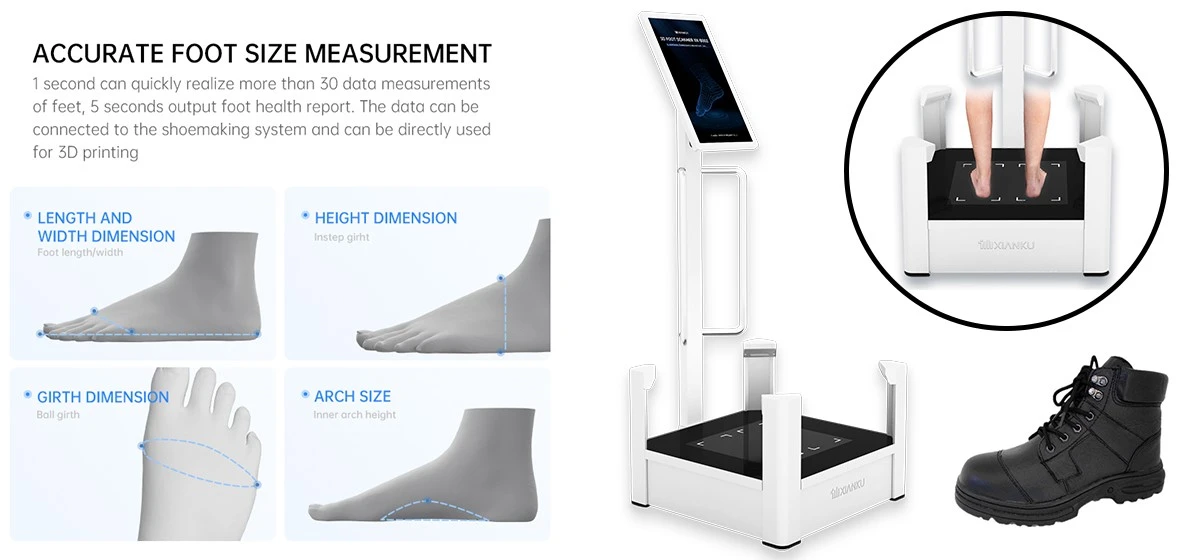
The Xianku 3D foot scanner introduces a data-driven approach to shoe size matching in the protective footwear sector. Instead of relying on static size labels, it performs a rapid foot scan using high-precision 3D structured-light technology.
Within one second, the system captures 32 foot dimensions, including:
- Foot length
- Foot width
- Arch height
- Instep height
- Heel width
- Forefoot volume
- Load distribution tendencies
This data is instantly transformed into a precise 3D foot model and a detailed foot analysis report, forming the foundation of a closed-loop sales and recommendation process.
Closed-Loop Experience Design
Foot scan → Foot data analysis → Foot health analysis → Product recommendation → Transaction
By embedding health and personalization into the purchasing journey, the decision process shifts from subjective guesswork to evidence-based confidence.
4. Personalized Product Selection Powered by AI Logic
One of the most valuable aspects of the Xianku 3D foot scanner lies in its AI-driven recommendation engine. Through the merchant backend, retailers can define precise recommendation rules based on product characteristics and foot data compatibility.
Examples include:
- Toe box width compatibility
- Foot length tolerance range
- Arch type suitability
- Heel alignment requirements
- Functional needs for flat feet or high arches
When a customer completes a foot scan, only products that match their specific foot profile appear as recommended options. This eliminates random browsing and significantly improves conversion efficiency.
| Recommendation Factor | Traditional Retail | Xianku Foot Scan |
|---|---|---|
| Size matching | Manual estimation | Automated data matching |
| Width compatibility | Rarely considered | Precisely calculated |
| Arch suitability | Not evaluated | Automatically identified |
| Decision confidence | Low | High |
5. Health Attributes as a Value Multiplier in Protective Footwear
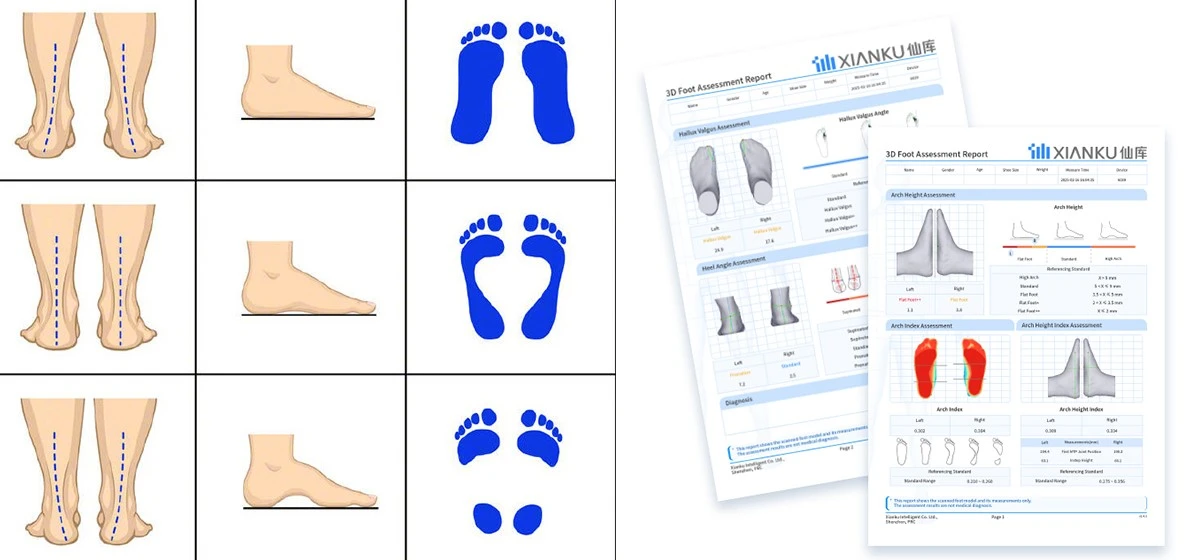
Protective shoes are worn for long hours, often under high physical stress. Foot health issues such as flat feet, high arches, heel valgus, heel varus, and hallux valgus are common among industrial workers, yet are rarely addressed during purchase.
The Xianku system integrates foot health screening directly into the foot scan process. Customers can visually see their foot conditions through intuitive graphics and explanations, guided by store staff.
This health-oriented approach changes purchasing behavior:
- Customers shift from "buying a shoe" to "investing in foot health"
- Functional insoles and accessories become logical add-ons
- Average order value increases naturally
6. Standardizing the In-Store Service Process
Retail inconsistency is a major challenge in the protective footwear sector. Sales quality often depends on individual staff experience. Xianku enables a standardized service workflow supported by technology.
Standard SOP:
Foot scan → Health interpretation → Data explanation → AI recommendation → Purchase
This standardized process ensures:
- Consistent customer experience across locations
- Reduced reliance on subjective sales skills
- Faster onboarding of new staff
7.Data Accumulation as a Foundation for Product Innovation
Beyond sales, continuous foot scan data accumulation creates long-term strategic value. Aggregated foot data enables brands to:
- Optimize size grading systems
- Identify regional foot shape trends
- Improve last design accuracy
- Reduce overproduction of low-demand sizes
- Lower online return rates
| Data Application | Business Outcome |
|---|---|
| Foot shape analytics | Improved last design |
| Size demand distribution | Inventory optimization |
| Health trend insights | Functional product development |
| Online fit accuracy | Reduced returns |
For global protective footwear brands such as CAT, Timberland PRO, and Red Wing, this data layer represents a critical evolution from experience-based design to evidence-based innovation.
8. Strengthening Brand Capability Through Digital Foot Data
Brands that integrate foot scan technology gain more than operational efficiency-they build long-term brand credibility. Customers perceive the brand as professional, health-aware, and technologically advanced.
In competitive retail environments, offering free foot scans or foot health assessments becomes a powerful traffic driver. Once inside the store, the technology itself becomes the strongest sales assistant.
9. Conclusion: From Size Guessing to Precision Matching
The global protective footwear market is entering a phase where fit accuracy, health awareness, and data intelligence define competitiveness. Traditional size systems are no longer sufficient.
By enabling precise foot scan measurement, AI-based product matching, health screening, and data-driven decision-making, the Xianku 3D foot scanner provides a comprehensive solution for both consumers and operators.
For customers, it means finally finding protective shoes that truly fit.
For brands and retailers, it means higher conversion, stronger differentiation, and a sustainable path toward innovation.
In an industry built on protection, precision has become the new standard.