
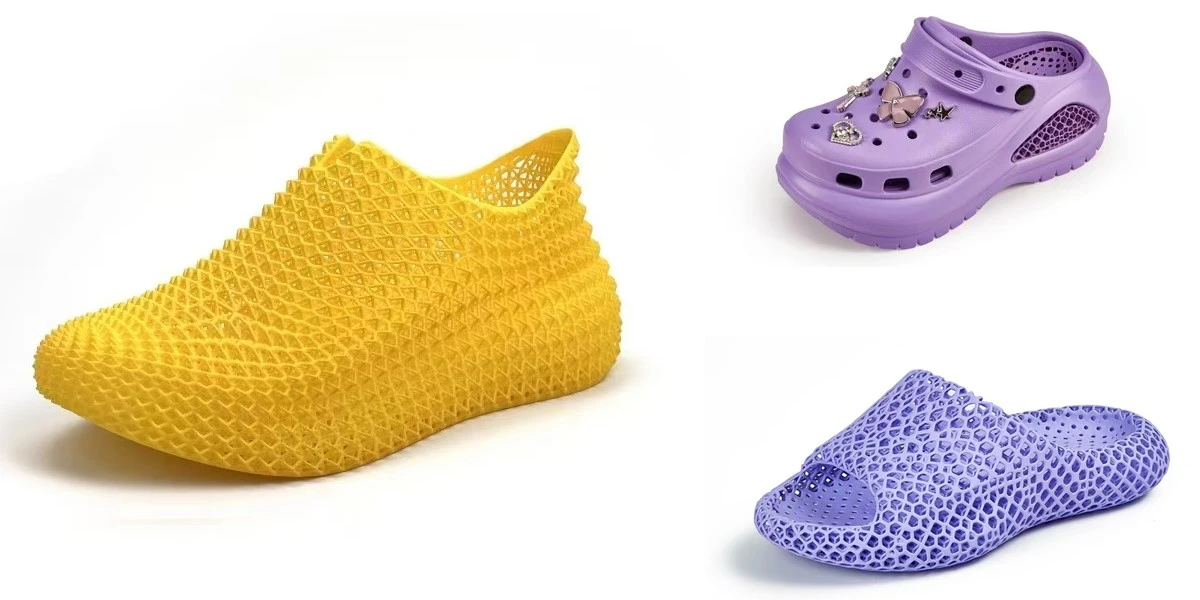
The footwear industry stands on the brink of a revolution. For decades, the paradigm of mass production has forced billions of feet into a limited array of standardized sizes and shapes, often compromising comfort, performance, and health. The promise of 3D printing shoes has long been a beacon of change, offering the potential for ultimate customization. However, a critical missing link has hindered its widespread adoption: the ability to accurately, quickly, and comprehensively capture the intricate biomechanical data of the human foot to inform the digital design process. Enter the Xianku3D Foot Scanner. This device is not merely a scanner; it is the foundational data engine that makes truly bespoke, additive manufactured footwear not just a possibility, but a practical and profitable reality, closing the loop from measurement to manufacturing.
The Fatal Flaw in Modern Shoemaking: One Size Does Not Fit All
Traditional footwear design relies on standardized lasts-the foot-shaped forms around which shoes are built. These lasts are based on population averages, ignoring the vast spectrum of human anatomical variation. This one-size-fits-all approach is fundamentally flawed. A study in the Journal of Foot and Ankle Research found that between 63% and 72% of people are wearing incorrectly sized shoes, a primary contributor to pathologies like hallux valgus, plantar fasciitis, and metatarsalgia.
The initial promise of 3D printing shoes was to solve this by creating shoes tailored to an individual's foot. However, early attempts often relied on incomplete data-simple length and width measurements or low-resolution scans. This resulted in custom shoes that were only marginally better than their off-the-shelf counterparts. The true potential of additive manufacturing lies in its ability to create complex, graded geometries that can provide variable support, cushioning, and flexibility precisely where needed. But without a high-fidelity digital twin of the foot, this potential remains locked. Xianku3d's technology provides the key by capturing the essential data to unlock true personalization in 3D printing shoes.
The Digital Foundation: Xianku's Role in the 3D Printed Shoe Workflow
The journey of a fully custom 3D printed shoe begins and ends with data. The Xianku3D Foot Scanner acts as the critical data acquisition node. Using infrared structured light technology, it captures over 2 million data points with millimeter-level accuracy (±1mm) in a single second, generating a complete 1:1 realistic 3D model of the foot.
This model is far more than a visual asset; it is a rich dataset comprising over 30 precise metrics crucial for functional footwear design:
- Volumetric Dimensions: Length, width, ball girth, instep height, and heel width create the basic shell of the last.
- Biomechanical Angles: Hallux valgus angle, heel inclination angle, and ankle alignment data inform where to apply corrective pressures or reinforce stability.
- Arch Architecture: Precise measurements of arch height, length, and start/end points are perhaps the most critical data for designing midsole geometry. This determines the foot's pronation/supination tendency and directly dictates the lattice structure and density needed in a 3D printed midsole for optimal support and energy return.
This comprehensive dataset provides the digital blueprint. It is this blueprint that can be seamlessly imported into CAD (Computer-Aided Design) and generative AI design software to create a perfect digital last and a functionally graded midsole and upper design, ready for 3D printing shoes.
Table 1: From Scan to Print: Data Points Driving 3D Shoe Design
| Xianku3d Scan Metric | Functional Purpose in Shoe Design | Application in 3D Printing |
|---|---|---|
| Foot Length & Width | Determines overall shoe size and volume. | Defines the outer dimensions and internal volume of the printed last. |
| Ball Girth & Instep Height | Ensures proper fit across the vamp, preventing slippage or pinching. | Informs the variable width of the upper design and lacing system geometry. |
| Arch Index & Arch Height | Identifies foot type (pes planus, cavus, neutral). Dictates midsole support requirements. | Most Critical: Directly maps the design of the midsole's lattice structure. A low arch requires a denser, more supportive medial post. |
| Hallux Valgus Angle | Measures bunion severity. | Designs a widened toe box in the exact location of the deformity, eliminating pressure points. |
| Heel Inclination Angle | Indicates gait abnormalities and Achilles tendon stress. | Informs the heel counter's geometry and the cushioning gradient in the heel area of the printed midsole. |
| Plantar Pressure Map (Inferred) | Shows high-pressure zones (e.g., metatarsal heads). | Allows for strategic zoning in the midsole: cushioning lattices under high-pressure areas, firmer support elsewhere. |
Beyond Measurement: Xianku3d's Closed-Loop Ecosystem for 3D Printing
Many 3D scanners can capture a point cloud of a foot. Xianku3d's superiority lies in its integrated, AI-driven ecosystem designed explicitly for commercial and manufacturing applications. It doesn't just provide data; it provides a Closed-Loop Recommendation for the entire footwear creation process.
- AI-Powered Material Suggestion: Based on the scan analysis (e.g., high impact pressure on the heel), the system can recommend specific materials suitable for 3D printing shoes, such as a flexible TPU (Thermoplastic Polyurethane) for the upper and a more rigid, energy-returning resin for the lattice midsole.
- Generative Design Integration: The data is structured to be compatible with generative design algorithms that can create optimized lattice structures for midsoles, minimizing weight while maximizing support and cushioning based on the individual's weight and pressure points.
- Direct-to-Manufacturer Workflow: The system is built to integrate with C2M (Consumer-to-Manufacturer) digital supply chains. The scan data can be directly sent to a 3D printing facility, drastically reducing the time from measurement to production.
Table 2: Competitive Advantage: Xianku3d's End-to-End Solution vs. Isolated Scanning
| Aspect | Isolated 3D Foot Scanner | Xianku3D Foot Scanner Ecosystem |
|---|---|---|
| Output | A 3D model file (e.g., STL, OBJ). | A comprehensive biomechanical report + a ready-to-use 3D model pre-analyzed for footwear design. |
| Design Process | Manual. A designer must interpret the scan and manually create a last. | AI-assisted. The system provides data-driven suggestions for last modifications and support zones. |
| Manufacturing Link | None. The user must find and manage a separate manufacturing partner. | Closed-loop. Integrated pathway to 3D printing service providers or in-house additive manufacturing. |
| Value Proposition | Data acquisition tool. | An end-to-end 3D printing shoes solution: Measure -> Analyze -> Design -> Print -> Deliver. |
| Commercial Application | Limited to selling scans or consultations. | Enables businesses to sell high-margin, bespoke 3D printed shoes, orthotics, and performance footwear. |
Addressing Industry Challenges
Problem 1: The High Cost and Skill Barrier of Custom Last Creation
Solution: Traditionally, carving a custom last is a artisanal skill that is time-consuming and expensive. Xianku3d's digital workflow automates this. The scan data can be used with AI-driven software to automatically generate a perfect digital last in minutes, not days. This digital file can then be used for 3D printing shoes directly (for sandals or clogs) or to create a mold for traditional uppers, slashing the cost and time barrier to entry for custom footwear.
Problem 2: Inefficient Prototyping and Sizing in Traditional Shoe Design
Solution: For athletic brands, prototyping new midsole geometries is a multi-million dollar process involving countless physical samples. With Xianku3d, they can scan athletes' feet, create a digital twin, and test countless midsole designs virtually through simulation software. Once a design is finalized, it can be directly 3D printed for real-world testing. This "digital-first" approach accelerates R&D and allows for the creation of athlete-specific performance models.
Problem 3: Scaling Customization in a Retail Environment
Solution: The idea of offering custom 3D printed shoes in a store seemed far-fetched due to long wait times. Xianku3d's 1-second scan and rapid data processing make it feasible. A customer can get scanned, finalize their design, and have the order sent to a distributed manufacturing hub for printing and shipping within days. For simpler items like custom insoles, some stores could even offer same-day production with in-house 3D printers, creating an incredibly powerful retail experience.
References & Technical Notes
- Generative Design: An iterative design process that involves a program that will generate a certain number of outputs that meet certain constraints, often resulting in organic, lightweight structures ideal for additive manufacturing. (Source: Autodesk).
- TPU (Thermoplastic Polyurethane): A class of polyurethane plastics with high elasticity, transparency, and resistance to oil, grease, and abrasion. It is the primary material used in flexible 3D printing for wearable goods like shoe midsoles and uppers.
- Hallux Valgus Angle: The angle between the first metatarsal bone and the proximal phalanx of the big toe. An angle greater than 15 degrees is a key diagnostic marker for bunions and must be accommodated in footwear design.
- Plantar Pressure Distribution: The measurement of how force is applied across the sole of the foot during standing or gait. This data is crucial for designing cushioning systems in soles. (Source: Journal of Biomechanics).
- Telfer, S., & Woodburn, J. (2010). The use of 3D surface scanning for the measurement and assessment of the human foot. This study outlines the critical importance of precise 3D data in footwear research and development.
- Witana, C. P., et al. (2006). Dimensional differences for evaluating the quality of footwear fit. Highlights the limitations of traditional sizing systems.
Conclusion
The future of footwear is not on a store shelf; it is in a digital file, born from precise anatomical data and realized through additive manufacturing. The Xianku3D Foot Scanner is the indispensable catalyst for this future. It moves beyond the realm of simple measurement into the core of the design and manufacturing process for 3D printing shoes. By providing a complete, accurate, and instantly actionable digital twin of the foot, it finally closes the loop, enabling a world where every shoe can be a perfect extension of the individual-optimized for comfort, performance, and health. For brands, retailers, and orthotic specialists, this isn't just new technology; it's an entirely new business model built on the pillars of personalization, precision, and profit.
(86)-181-2464-3821
alexliu@xianku.com