

The Current Landscape: Challenges in School-Based Spinal Screening
The need for proactive spinal health monitoring is underscored by data. The American Academy of Orthopaedic Surgeons notes that adolescent idiopathic scoliosis (AIS) affects approximately 2-3% of the population, with girls being more frequently and severely affected. Early detection before skeletal maturity is crucial, as it opens a window for non-invasive interventions. Yet, the traditional ecosystem for school-based is fraught with limitations.
Table 1: Traditional vs. Ideal School Spinal Screening Parameters
| Parameter | Traditional Method (Visual/Manual) | Ideal Screening Solution |
|---|---|---|
| Detection Basis | Subjective visual inspection (Adam's Forward Bend Test), palpation | Objective, data from 3D reconstruction |
| Radiation Exposure | Referral for X-ray (ionizing radiation) for confirmation | Zero radiation, non-invasive 3D light |
| Data Output | Qualitative notes ("mild curve," "shoulder asymmetry") | Quantitative report with metrics (e.g., Cobb angle estimation, pelvic tilt in mm/°) |
| Efficiency | ~3-5 minutes per student, physically demanding for screener | ~20 seconds scan time, automated analysis |
| Privacy | Often requires torso exposure, can cause student discomfort | Full scan performed in standard attire; private booth |
| Longitudinal Tracking | Manual comparison of notes; no visual baseline | Digital 3D archive enabling direct model-over-model comparison over time |
1. The Limitations of Legacy Methods. The staple of many school screenings, the forward bend test, relies heavily on the screener's experience. It lacks quantifiable data, leading to inconsistencies and both over-referrals (causing unnecessary anxiety and healthcare costs) and under-referrals (missing early cases). Definitive diagnosis still depends on radiographic Cobb angle measurement, involving repeated ionizing radiation exposure, which is a significant concern for growing children.
2. The Scale and Sensitivity Problem. Schools are tasked with screening thousands of students within tight timelines. Manual methods simply cannot keep up without compromising thoroughness. Furthermore, the requirement for partial disrobing during some examinations creates understandable privacy concerns for adolescents, potentially leading to non-participation or distress.
3. The Broken Chain of Care. Perhaps the most critical gap lies after the initial flag. that ends with a note home often lacks the compelling, visual evidence needed to spur urgent parental action. The connection between school and clinical care is frequently weak. There is typically no standardized, digital health record that follows the student, meaning year-over-year progression cannot be tracked efficiently. This disrupts the essential "screen-assess-manage" continuum, leaving many cases in a limbo until they worsen.
A New Paradigm: The Xianku3d Body Scanner in Action
This is where precision technology steps in. The Xianku3d body scanner represents a convergence of advanced optical sensing,AI, and biomechanical modeling designed specifically for accessible, repeatable human measurement.
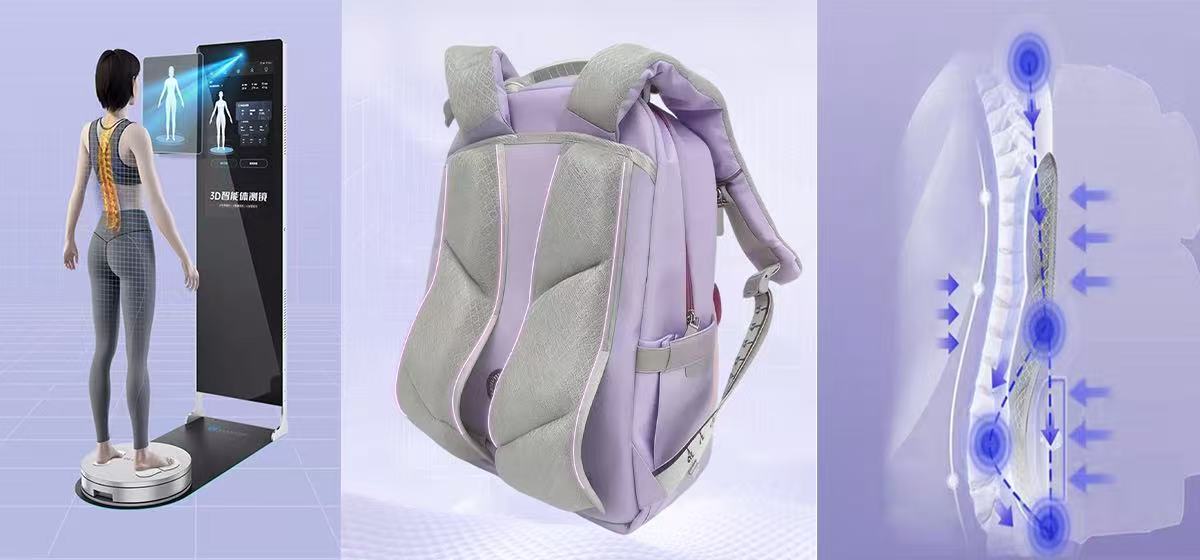
Core Technology and Workflow: Utilizing safe, eye-friendly 3D structured light technology, the scanner projects a pattern of light onto an individual standing naturally. In approximately 20 seconds, it captures hundreds of thousands of data points to construct a highly accurate, true-to-scale 3D avatar of the body's surface topography. Sophisticated AI algorithms then analyze this model, not just for anthropometrics but specifically for postural alignment and spinal health indicators.
Table 2: Xianku3d Body Scanner Posture & Spinal Health Assessment Output
| Assessment Category | Specific Metrics Generated | Clinical/Educational Relevance |
|---|---|---|
| Spinal Alignment Analysis | AI-visualized spine curvature, asymmetry analysis, torso rotation, estimated lateral deviation | Flags potential scoliosis patterns without radiation. |
| Postural Assessment | Shoulder height differential (mm), pelvic tilt & obliquity (°/mm), head protrusion, kyphotic/lordotic angle estimation | Identifies rounded shoulders, swayback, pelvic misalignment. |
| Body Composition | Segmental lean/fat mass distribution | Links posture to muscular imbalances, informs exercise plans. |
| Volumetric Data | 1:1 3D model, cross-sectional contours | Provides unparalleled visual feedback for student and parent education. |
Transforming the Screening Experience: The process is rapid, private, and engaging for the digital-native generation. The real magic happens in the 60-second report generation. Instead of a vague note, parents and school nurses receive a comprehensive document featuring an AI-generated visual of the skeletal posture overlaid on the scan. This transforms abstract medical concepts into understandable visuals. Phrases like "potential spinal curvature" are replaced with "a measured 8mm right shoulder elevation and 7-degree torso rotation," providing unambiguous, actionable data.
Building a Connected Health Ecosystem
The scanner's value extends far beyond a single point-in-time check. It acts as a node in a broader digital health management system.
Intelligent Archiving and Dynamic Tracking. Each scan automatically contributes to a student's secure digital spinal health portfolio. This becomes a living record. During annual screenings, the system can perform a temporal comparison, placing 3D models from different years side-by-side. This direct visual evidence of progression (or improvement through intervention) is powerful for clinicians making management decisions and for motivating student compliance with physiotherapy.
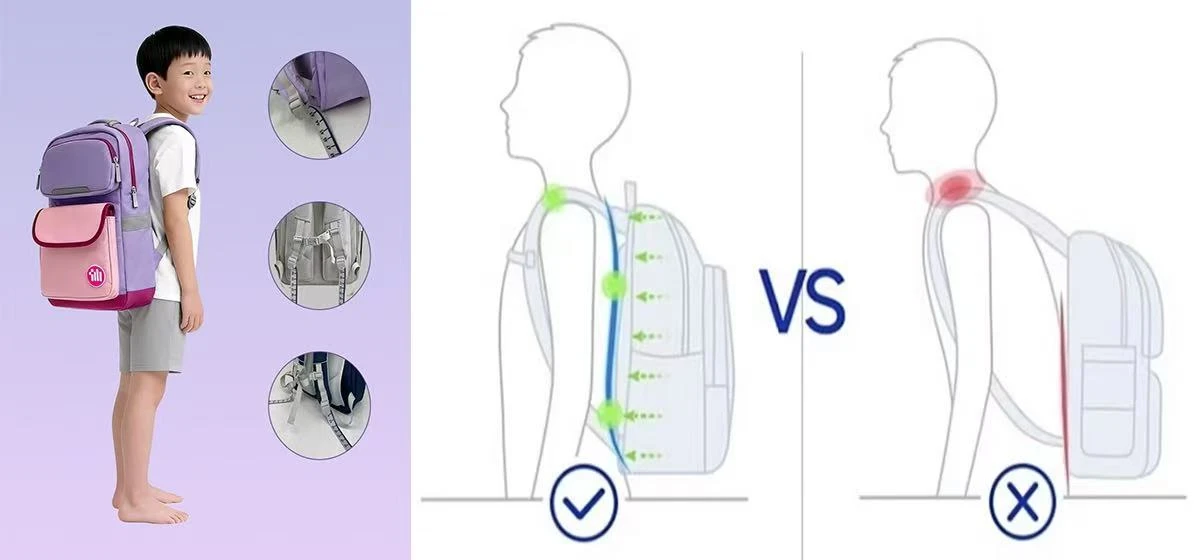
Facilitating Specialist Referral and Personalized Intervention. The detailed, professional report serves as an excellent conduit to orthopedic specialists or physiotherapists. It provides them with robust pre-consultation data, making clinical visits more efficient. Furthermore, the system's AI can suggest tailored intervention pathways. For instance, upon detecting a postural imbalance, it might recommend a set of corrective exercises. More tangibly, it can guide the selection of ergonomic equipment. By analyzing a child's posture, shoulder alignment, and back profile, the technology can inform the design and fitting of ergonomic backpacks that promote even weight distribution and encourage a neutral spine position, directly addressing a daily contributor to poor posture.
The Broader Context: A Global Movement for Student Spinal Health
The focus on tech-enabled posture assessment isn't happening in isolation. Forward-thinking institutions globally are exploring similar solutions.
- Apple's integration of posture tracking metrics into its movement ecosystem raises awareness.
- Google's work with AI for health, though broad, underpins the analytical power needed for such tools.
- Nike's long history of biomechanical analysis for performance optimization echoes the same data-driven philosophy applied to wellness.
- HP with advanced 3D scanning solutions and Intel with processing power for complex AI models provide the technological backbone that makes devices like the Xianku scanner possible and increasingly accessible.
These industry leaders underscore a universal trend: leveraging data for personalized human improvement.
Conclusion: Towards a Healthier, Straighter Future
The integration of advanced 3D body scan technology into school health programs marks a significant leap forward. It moves the conversation on adolescent spinal health from one of worry and reactive care to one of empowerment, prevention, and precise management. By offering a solution that is safe, fast, quantifiable, and integrative, tools like the Xianku3d body scanner are not just diagnosing problems; they are building a foundation for lifelong postural awareness and spinal health. In doing so, they equip the next generation not only with stronger backs but with a deeper understanding of their own bodies, turning a mandatory into a formative lesson in personal health stewardship.
*Table 3: The "Screen-to-Care" Continuum Enabled by 3D Body Scanning*
| Stage | Traditional Model Challenges | 3D Scanning Enhanced Model |
|---|---|---|
| 1. Mass Screening | Slow, subjective, privacy concerns. | Fast (20 sec/student), objective, private. |
| 2. Data & Reporting | Qualitative, non-visual, hard to interpret. | Quantitative, AI-visualized, parent-friendly report. |
| 3. Decision & Referral | Ambiguous data leads to parental inaction or overreaction. | Clear data facilitates informed decision to seek specialist care. |
| 4. Clinical Handoff | Specialist starts from scratch with X-rays. | Specialist receives preliminary 3D analysis, informing consultation. |
| 5. Intervention & Management | Generic advice (e.g., "improve posture"). | Data-informed, personalized plans (exercises, ergonomic product guidance). |
| 6. Long-term Tracking | Disconnected annual notes; no visual progression history. | Digital twin archive allows precise monitoring of changes year-over-year. |
