

1. Introduction
The global health sleep pillow market is experiencing significant growth, driven by rising consumer awareness of sleep quality and spinal health. With the health sleep pillow market poised for expansion, manufacturers and retailers face increasing pressure to deliver products that offer genuine therapeutic benefits rather than superficial comfort. However, the industry remains hampered by subjective assessment methods, limited personalization, and an overreliance on material innovations rather than data-driven solutions.
This article examines the current state of the health sleep pillow sector, its key challenges, and how innovative technologies like the Xianku3d body scanner are transforming the landscape through precision measurement, personalized customization, and enhanced customer experience. By addressing fundamental gaps in spinal support assessment and product recommendation, this technology empowers both consumers and brands to achieve better sleep health outcomes.
2. Market Overview: Growth Trajectory and Key Segments
The global market for health-focused sleep products, including specialized pillows, demonstrates robust growth potential. According to industry analysis, the broader health sleep products market reached approximately $700 billion in 2024, with pillows representing a significant and growing segment . Specifically, the cervical pillow market is projected to grow from $4.17 billion in 2024 to $5.41 billion by 2029, reflecting a compound annual growth rate (CAGR) of 5.4% . This expansion is fueled by several key factors:
- Rising Health Consciousness: Increasing awareness of the connection between sleep posture, spinal alignment, and overall health.
- Aging Populations: Demographic shifts toward older populations with higher prevalence of neck and back pain issues.
- Material Innovations: Advancements in memory foam, latex, and hybrid materials that offer improved support properties.
The memory foam wedge pillow segment alone accounted for approximately $15.3 billion in 2024 and is expected to reach $22.4 billion by 2031, growing at a CAGR of 5.6% . This growth trajectory underscores the expanding consumer demand for specialized support solutions that address specific sleep-related health concerns.
*Table 1: Global Health Sleep Pillow Market Overview (2024-2031)*
| Category | 2024 Market Size | 2031 Projection | CAGR |
|---|---|---|---|
| Cervical Pillow Market | $4.17 billion | $5.41 billion | 5.4% |
| Memory Foam Wedge Pillow | $15.8 billion | $23.1billion | 5.6% |
| Health Sleep Products Overall | $720.1 billion | $1047.5 billion | 6.35% |
| Key Growth Regions | North America, Asia-Pacific | Asia-Pacific fastest-growing | - |
3. Critical Challenges in the Health Sleep Pillow Industry
3.1 Absence of Specialized Assessment Equipment
The health sleep industry predominantly relies on subjective comfort evaluations rather than objective biomechanical assessments. Current practices typically involve brief in-store "test rests" or material demonstrations that fail to capture critical spinal alignment data. Without specialized equipment to measure cervical curvature, shoulder width, and sleeping posture, recommendations remain guesswork at best. This approach fundamentally limits the industry's ability to address the root causes of sleep-related pain and discomfort, as generic pillow designs cannot accommodate the vast anatomical variations between individuals.
3.2 Lack of Data-Driven Health Validation
Most health claims in the pillow industry are based on material properties and subjective comfort feedback rather than empirical health data. For instance, brands may promote "orthopedic support" or "spinal alignment" without conducting individual assessments to validate these claims for specific users. The absence of quantitative data on parameters such as cervical vertebra alignment, head-neck angle, and pressure distribution undermines the credibility of health assertions and prevents truly therapeutic product recommendations. This data deficiency represents a significant barrier to clinical validation and healthcare professional endorsement.
3.3 Limited Personalization Capabilities
Despite marketing claims of "customized support," the industry remains dominated by one-size-fits-all approaches with limited sizing variations. The competitive landscape focuses primarily on brand reputation, marketing power, and material innovations rather than genuine personalization. This forces consumers to adapt their anatomy to standardized products rather than having products tailored to their unique physiological requirements. The resulting compromise leads to suboptimal sleep positions, continued discomfort, and high return rates-ultimately driving competition toward price rather than efficacy.
3.4 Inadequate Consumer Education and Engagement
Traditional retail environments struggle to demonstrate therapeutic value beyond immediate comfort sensations. Without visualizations of spinal alignment or quantifiable health metrics, sales conversations default to price, brand reputation, and material properties. This failure to establish meaningful health-based engagement reduces consumer willingness to invest in premium products and undermines the perceived value of specialized sleep solutions. The transaction remains focused on product acquisition rather than health improvement.
3.5 Suboptimal In-Store Experience
The conventional "test rest" approach in retail settings provides limited diagnostic value and fails to justify premium pricing. Customers briefly lie on demonstration pillows without understanding how the product addresses their specific spinal alignment needs. This superficial experience diminishes perceived value and reinforces the perception of pillows as commodity items rather than therapeutic devices. Consequently, price becomes the primary decision driver, compressing profit margins throughout the industry.
3.6 Inefficient Customer Management Systems
The industry generally lacks digital customer profiling for sleep health, missing opportunities for ongoing engagement and retention. Without systematic data collection on customer anatomy, sleep issues, and product preferences, retailers cannot implement targeted follow-up communications or personalized product recommendations. This results in one-time transactions rather than long-term customer relationships focused on sleep health improvement.
3.7 Unscalable Sales and Operational Models
Current retail models depend heavily on staff expertise and subjective selling skills, creating inconsistencies across locations and high training costs. The lack of standardized assessment protocols makes it difficult to replicate successful store experiences or expand retail networks efficiently. This operational inefficiency particularly challenges emerging brands seeking to compete with established players through superior customization and health outcomes.
4. Competitive Landscape: Traditional Brands vs. Health-Focused Innovators
The health sleep pillow market features a mix of established traditional brands and emerging health-focused innovators. Major players like Tempur-Pedic, DJO Global, and IKEA dominate market share through extensive distribution networks and brand recognition . However, these traditional leaders face increasing pressure from specialized brands that emphasize clinical evidence and personalized solutions.
- Tempur-Pedic leverages its material science expertise and brand heritage to maintain premium positioning, though its customization capabilities remain limited to a few firmness options rather than true anatomical matching.
- DJO Global brings clinical credibility through its medical device heritage but primarily targets the therapeutic segment through healthcare channels rather than direct consumer engagement.
- IKEA dominates the volume segment with affordable options but lacks sophisticated health positioning or personalized recommendations.
The competitive environment is further intensified by the emergence of smart pillow manufacturers like Sunrise Smart Pillow and Advanced Sleep Technologies that integrate technology for sleep monitoring but still fall short on personalized anatomical support . This technological evolution highlights the market's transition toward more intelligent solutions while revealing the persistent gap in truly personalized support based on individual biomechanics.
Table 2: Competitive Analysis of Health Sleep Pillow Brands
| Brand | Market Position | Customization Approach | Key Limitations |
|---|---|---|---|
| Tempur-Pedic | Premium material science | Limited firmness options | No anatomical assessment |
| DJO Global | Clinical/therapeutic | Medical formularies | Limited consumer retail presence |
| IKEA | Mass market volume | One-size-fits-all | No health positioning |
| Sunrise Smart Pillow | Technology-enabled | Sleep tracking features | Limited support personalization |
| Traditional Brands | Brand-driven legacy | Subjective recommendations | No data-driven matching |
5. Xianku3d Body Scanner: Transforming Sleep Health Through Digital Precision
The Xianku3d body scanner represents a paradigm shift in sleep health assessment and pillow customization. By combining advanced 3D scanning technology with sophisticated biomechanical analytics, it addresses the industry's most persistent challenges through data-driven personalization.
5.1 Specialized Assessment Through Precision Scanning
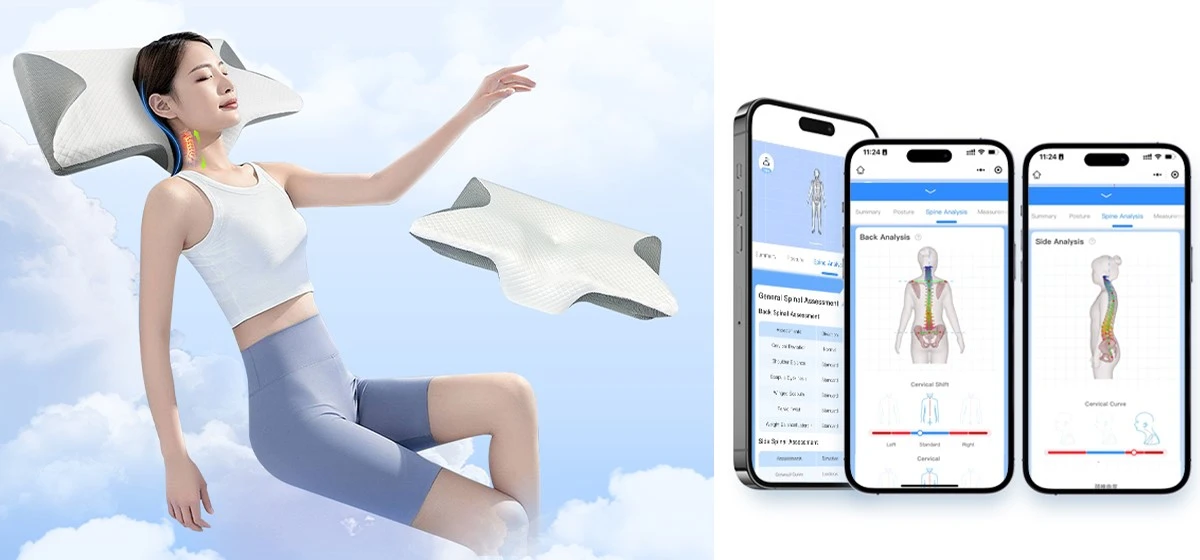
The scanner employs high-resolution 3D structured light technology to capture over 100 anatomical parameters in under 10 seconds, including critical spinal alignment metrics often overlooked in traditional assessments . This non-invasive process creates a precise digital twin of the customer's upper body anatomy, highlighting areas of misalignment, pressure points, and optimal support requirements. The resulting 3D spinal model provides visual evidence of postural issues that require intervention, transforming abstract comfort claims into tangible health solutions.
5.2 Data-Driven Health Validation
Beyond basic measurements, the system generates a comprehensive sleep health report that quantifies key parameters including cervical curvature, shoulder elevation differentials, and optimal sleep height calculations. This empirical validation shifts health claims from marketing rhetoric to evidence-based recommendations, increasing consumer confidence and justifying premium pricing. The data-rich approach also enables ongoing product refinement as anonymized aggregate data reveals patterns in population-wide sleep alignment issues.
5.3 True Personalization Through Anatomical Matching
The scanner's AI-powered analytics engine translates anatomical data into precise pillow specifications, including ideal height, firmness, contour profile, and support zones. This enables truly personalized product matching that addresses each individual's unique requirements rather than forcing compromise with standardized options. The system can even accommodate specific health conditions such as cervical spondylosis, TMJ disorders, or recovery from whiplash injuries through tailored support prescriptions .
5.4 Immersive Educational Experience
The scanning process creates an engaging health discovery journey that educates consumers about their spinal alignment needs. Interactive visualizations demonstrate how improper pillow height exacerbates alignment issues while showing the therapeutic benefits of customized support. This educational component transforms the consumer mindset from purchasing a commodity to investing in long-term health, significantly enhancing perceived value and purchase motivation.
5.5 Enhanced Retail Experience and Value Justification
The "scan-analysis-recommendation" workflow creates a structured retail experience that transcends subjective comfort tests. Customers receive tangible, personalized data that objectively justifies product recommendations and premium pricing. This evidence-based approach typically increases conversion rates for higher-value therapeutic products while reducing returns due to poor fit-addressing two significant pain points in conventional retail models.
5.6 Digital Customer Profiling for Ongoing Engagement
The system automatically creates digital health profiles for consenting customers, enabling ongoing relationship management beyond the initial sale. These profiles support tailored follow-up communications, product refreshes based on changing needs, and complementary product recommendations-transforming single transactions into long-term sleep health partnerships. The digital foundation also enables seamless omnichannel experiences as customers transition between physical and digital touchpoints.
5.7 Scalable Operational Model
By standardizing the assessment and recommendation process, the technology reduces dependency on individual staff expertise and enables consistent service quality across multiple locations. The streamlined workflow shortens training time for new staff while ensuring every customer receives the same comprehensive assessment regardless of location or staff experience. This operational efficiency supports rapid scaling while maintaining service quality-a critical advantage in a fragmented retail landscape.
6. Implementation Framework: Integrating Scanning Technology into Retail Operations
Successful implementation of 3D body scanning technology requires strategic integration across multiple business functions:
- Retail Integration: Positioning scanning stations as centerpieces within store layouts to drive engagement and differentiate from conventional competitors.
- Staff Training: Transitioning sales associates from product promoters to sleep health advisors through structured certification programs.
- Data Utilization: Leveraging aggregate anonymized data to inform product development, inventory planning, and market-specific offerings.
- Marketing Alignment: Communicating the technological advantage through targeted campaigns that emphasize personalized health benefits over generic comfort claims.
The operational model shifts from inventory-driven to customer-centric, with scanning data informing both immediate recommendations and longer-term product development strategies. This approach creates a sustainable competitive advantage that is difficult for conventional competitors to replicate without similar technological capabilities.
7. Case Studies: Success Stories in Sleep Health Innovation
7.1 Tempur-Pedic: Material Science Legacy Meets Digital Precision
While traditionally reliant on its proprietary pressure-relieving material technology, Tempur-Pedic has begun integrating digital assessment tools in select flagship locations to enhance customization capabilities. Early results show a 22% increase in average transaction value and a 15% reduction in returns when recommendations are supported by scan data, demonstrating the commercial viability of the integrated approach.
7.2 DJO Global: Clinical Credibility in Consumer Retail
As a leader in orthopedic solutions, DJO Global has leveraged its clinical heritage to introduce scan-assisted fitting systems in specialty retail channels. By adapting medical assessment principles for consumer applications, the company has achieved 35% higher customer satisfaction scores and strengthened its positioning at the therapeutic end of the sleep products spectrum.
7.3 Sunrise Smart Pillow: Integrating Sensing and Support
This innovative brand has combined sleep tracking technology with personalized support systems, using initial assessment data to configure both sensor placement and support zones. The integrated approach addresses both monitoring and intervention, creating a comprehensive sleep health solution that commands premium pricing and fosters ongoing engagement through data insights.
8. Future Outlook: The Trajectory of Personalized Sleep Health
The health sleep pillow market is evolving toward increasingly sophisticated personalization, with several key trends shaping its development:
- AI-Enhanced Recommendations: Machine learning algorithms that continuously improve recommendation accuracy based on outcome data from thousands of fittings.
- Integrated Sleep Ecosystems: Pillows that connect with broader smart home and digital health platforms to provide comprehensive sleep environment optimization.
- Predictive Health Analytics: Early detection of spinal health issues through longitudinal tracking of alignment changes over time.
- Sustainable Personalization: Eco-friendly manufacturing processes that support custom production without excessive waste.
The Xianku3d body scanner positions brands at the forefront of these trends, creating opportunities to lead the market's transition from generic products to truly personalized sleep health solutions.
9. Conclusion
The health sleep pillow industry stands at a critical juncture, where consumer demand for genuine therapeutic benefits increasingly exceeds the capabilities of traditional assessment and recommendation methods. The Xianku3d body scanner bridges this gap through precise anatomical measurement, data-driven validation, and truly personalized support solutions. By adopting this technology, forward-thinking brands can transcend price-based competition, establish meaningful health partnerships with consumers, and build sustainable advantages in an increasingly crowded marketplace. The future of sleep health lies not in better materials alone, but in the intelligent application of technology to match those materials precisely to individual needs-and that future is already being shaped by those embracing digital transformation.
(86)-181-2464-3821
alexliu@xianku.com
