

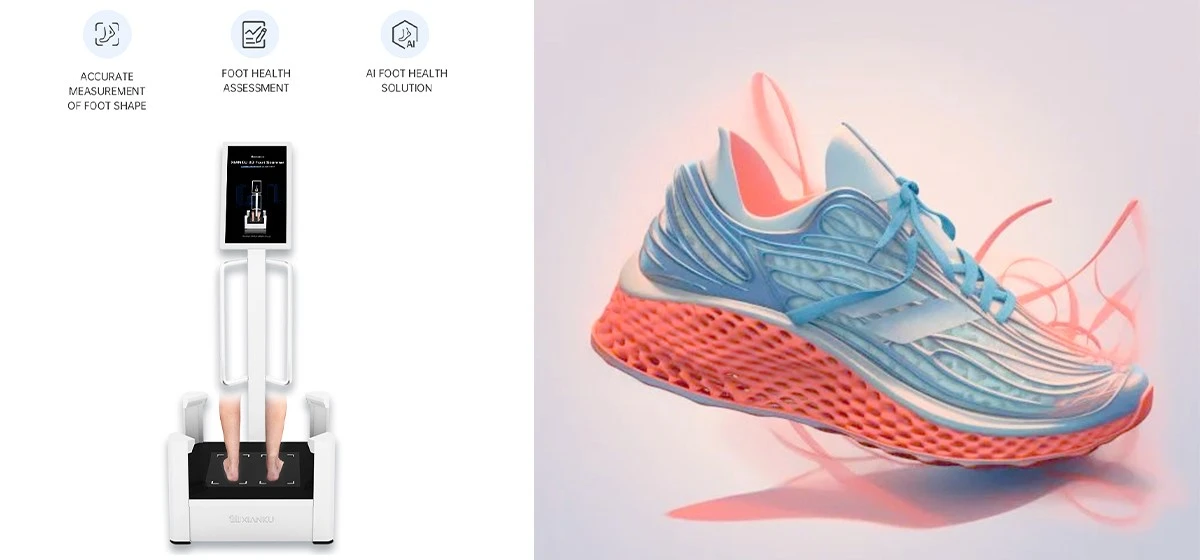
The footwear industry has always been at the forefront of technological innovation, and the advent of 3D printing promised a transformative shift toward customization and efficiency. However, the reality of 3D printed shoes has fallen short of expectations in many aspects. While the global market for 3D printed footwear is projected to grow significantly-driven by advancements in additive manufacturing-it faces substantial hurdles that limit its potential. Issues such as high costs, lack of functionality, and poor customer experience have hindered widespread adoption.
In this article, we explore the current state of the 3D printed shoes industry, including market size, industry challenges, and competitive dynamics. We then introduce the Xianku3D Foot Scanner as a groundbreaking solution that addresses these problems through precision customization and enhanced functionality. By leveraging expert insights and data-driven analysis, we aim to provide a comprehensive overview of how technology can redefine the future of footwear.
Section 1: The Current State of the 3D Printed Shoes Industry
The global market for 3D printed shoes has seen steady growth, with estimates suggesting it could reach $10 billion by 2030, according to industry reports. This growth is fueled by increasing consumer interest in personalized products and the declining costs of 3D printers and materials. However, the industry remains in its nascent stages, characterized by experimentation rather than mass adoption. Key players, including startups and established brands, are grappling with fundamental challenges that stem from technological limitations and market dynamics.
1.1 Cost and Speed Issues in 3D Printed Shoes
One of the most pressing issues in the production of 3D printed shoes is the high cost and slow speed. While 3D printing eliminates some traditional manufacturing steps, it often merely replaces conveyor-belt production with 3D printing assembly lines. This shift does not fully capitalize on the technology's potential for efficiency. The limitations of current 3D printing technologies-such as layer-by-layer fabrication using materials like thermoplastics-result in prolonged production times. For instance, printing a single pair of shoes can take several hours, compared to minutes in injection molding processes. This inefficiency translates into higher costs for manufacturers, which are passed on to consumers. Additionally, the materials used in 3D printed shoes, such as TPU (Thermoplastic Polyurethane), are expensive and require specialized equipment, further driving up prices. As a result, the cost of 3D printed shoes often exceeds that of conventionally manufactured footwear, making them less accessible to the average consumer.
1.2 Lack of Functionality in 3D Printed Shoes
Another critical shortcoming is the limited functionality of 3D printed shoes. Many products on the market focus primarily on aesthetic appeal, neglecting the core advantage of 3D printing: customization for performance and health. For example, most 3D printed shoes do not incorporate features like arch support, heel stabilization, or corrective elements for conditions such as plantar fasciitis. This oversight means that custom 3D printed shoes often fail to deliver tangible benefits beyond novelty. The inability to integrate functional designs stems from a lack of precise data on individual foot morphology. Without this, manufacturers produce generic designs that do not address specific biomechanical needs, rendering the shoes inadequate for daily use or athletic activities.
1.3 Poor Fit and Discomfort Due to Material Limitations
The poor fit of 3D printed shoes is a significant concern, largely attributed to the materials used. TPU, while flexible and durable, can cause discomfort when in direct contact with the skin. Its properties may lead to friction, blisters, or pressure points, especially during prolonged wear. This issue is exacerbated by the one-size-fits-all approach in many 3D printed shoe designs, which do not account for variations in foot shape, volume, or gait patterns. As a result, consumers often report dissatisfaction with the comfort and wearability of 3D printed shoes, limiting their appeal beyond short-term novelty.
1.4 Emergence of Fast-Fashion Models and Price Competition
As 3D printing technology becomes more accessible, the industry is witnessing a trend toward fast-fashion models, where reduced printer and material costs encourage mass production at lower price points. This shift could lead to intense price competition, similar to what occurred in the traditional footwear market. While this might make 3D printed shoes more affordable, it risks commoditizing the technology, emphasizing quantity over quality. In such a scenario, brands may struggle to differentiate themselves, and profit margins could erode, undermining the innovation potential of 3D printed shoes.
1.5 Weak Brand Equity and Customer Loyalty
The absence of strong brand(brand equity) in the 3D printed shoes segment is another challenge. Without demonstrable functional or health benefits, these products often fail to command premium pricing or foster customer loyalty. Consumers view them as disposable novelties rather than essential items, leading to low repeat purchase rates. This lack of emotional connection and trust hinders the growth of dedicated brands in the space, as customers are less likely to advocate for or remain loyal to products that do not deliver sustained value.
1.6 Subpar Customer Experience
Finally, the customer experience with 3D printed shoes is often lacking. The process typically involves selecting a design online or in-store, with little education on the technology's benefits. Over time, the initial novelty wears off, and customers may feel that the product does not justify its cost. The inability to see, touch, or try on the shoes before purchase-coupled with limited post-sale support-further diminishes satisfaction. This poor experience contrasts sharply with the immersive, personalized journeys that modern consumers expect.
To illustrate these challenges, Table 1 provides a detailed comparison of traditional footwear production versus current 3D printed shoes methods.
Table 1: Comparison of Traditional Footwear Production and Current 3D Printed Shoes Methods
| Aspect | Traditional Footwear Production | Current 3D Printed Shoes Production |
|---|---|---|
| Cost per Unit | Low due to economies of scale; typically $10-30 per pair | High due to material and time costs; often $50-200 per pair |
| Production Speed | Fast; minutes to hours per pair in mass production | Slow; several hours to days per pair, depending on complexity |
| Customization Level | Limited to size and basic design options | Moderate, but often aesthetic-focused rather than functional |
| Material Used | Variety (e.g., leather, rubber, foam) with proven comfort | Primarily TPU, which can cause discomfort and skin issues |
| Functional Benefits | Well-established for support, durability, and health | Minimal; lacks features like arch support or corrective elements |
| Brand Loyalty | High for established brands with heritage and trust | Low; perceived as novelty with little emotional connection |
| Customer Experience | In-store fitting, trials, and returns policies | Limited interaction; online orders with uncertain outcomes |
| Market Competition | Intense, based on brand, price, and features | Emerging price wars as technology costs decrease |
This table highlights the gaps in the current 3D printed shoes landscape, emphasizing the need for innovative solutions to enhance functionality, reduce costs, and improve user engagement.
Section 2: Industry and Competitive Landscape of 3D Printed Shoes
The 3D printed shoes industry is highly fragmented, with players ranging from tech startups to legacy footwear brands experimenting with additive manufacturing. Competition is intensifying as companies vie for market share, but many focus on superficial aspects like design rather than addressing core consumer needs. The lack of standardization in materials and processes further complicates the landscape, leading to inconsistent product quality. Moreover, the industry faces regulatory hurdles, such as safety certifications for materials used in prolonged skin contact, which can slow innovation.
In this competitive environment, brands that prioritize customization and health-oriented features are beginning to differentiate themselves. However, without reliable data on foot anatomy, even these efforts fall short. This is where the Xianku3D Foot Scanner enters the picture, offering a way to bridge the gap between technology and practical application. By providing precise, individualized foot data, it enables the creation of personalized footwear with 3D printing that meets functional and comfort standards.
Section 3: Introducing the Xianku3D Foot Scanner as a Comprehensive Solution
The Xianku3D Foot Scanner is an advanced diagnostic tool designed to capture high-resolution 3D images of the human foot. Using non-invasive scanning technology, it generates detailed data on foot dimensions, pressure points, and biomechanical characteristics. This information serves as the foundation for producing truly custom 3D printed shoes that address the industry's key challenges. Below, we explore how the scanner tackles each problem outlined earlier.
3.1 Enhancing Cost Efficiency and Speed Through Customization
While 3D printing itself may be slower than traditional methods, the Xianku scanner optimizes the overall process by enabling on-demand production of custom 3D printed shoes. By focusing on low-volume, high-margin orders, manufacturers can justify premium pricing-often 2-3 times that of standard shoes-without requiring massive production runs. This approach reduces inventory costs and waste, aligning with sustainable practices. For instance, a brand using the scanner can offer made-to-order shoes that customers are willing to pay more for, thereby offsetting the slower printing times. Over time, as scanning and printing technologies evolve, speeds may improve, but the immediate benefit lies in value-based pricing rather than cost-cutting.
3.2 Adding Functional Value to 3D Printed Shoes
The scanner's ability to provide precise foot data allows for the integration of functional elements into 3D printed shoes for foot health. For example, based on scan results, designers can incorporate features like:
- Arch support tailored to the individual's foot curvature.
- Heel cups that stabilize and reduce impact.
- Custom insoles for conditions such as plantar fasciitis or metatarsalgia.
- Corrections for leg length discrepancies or gait abnormalities.
This transforms 3D printed shoes from mere fashion items into therapeutic devices, enhancing their appeal to health-conscious consumers. The functional 3D printed shoes produced this way can help prevent injuries, improve posture, and provide long-term comfort, making them a worthwhile investment.
3.3 Ensuring Superior Fit and Comfort
By using the Xianku3d scanner to capture exact foot contours, manufacturers can create shoes that fit like a second skin. The scanner identifies subtle variations in foot shape, volume, and pressure distribution, enabling designs that minimize friction and pressure points. Additionally, the technology allows for selective 3D printing of specific components-such as the sole, toe box, or insole-while combining them with traditional materials for optimal comfort. This hybrid approach ensures that the shoes are not only innovative but also practical for everyday wear. For instance, a 3D printed shoes cost analysis might show higher upfront expenses, but the long-term benefits of reduced discomfort and improved foot health justify the price.
3.4 Shifting from Fast-Fashion to Customization Models
The Xianku3d scanner facilitates a transition away from price-driven competition by emphasizing customization and expertise. Brands can position themselves as providers of personalized footwear with 3D printing, offering consultations and tailored solutions that command higher prices. This model fosters a premium market segment where consumers are less sensitive to cost and more focused on value. By building a reputation for quality and personalization, companies can avoid the pitfalls of fast-fashion and cultivate a loyal customer base.
3.5 Building Brand Equity and Customer Loyalty
Integrating health and functional attributes into 3D printed shoes through the scanner helps brands develop strong brand equity. Products that demonstrably improve well-being-such as those addressing chronic foot pain or sports performance-create emotional connections with users. This leads to higher profit margins and repeat business, as customers trust the brand to deliver solutions rather than just products. Testimonials and case studies can further enhance credibility, positioning the brand as an authority in the 3D printed shoes for foot health niche.
3.6 Elevating the Customer Experience
The Xianku3d scanner transforms the customer journey into an engaging, educational process. From the initial measurement to the final delivery, users are involved in every step:
- Measurement: A quick, non-invasive scan takes seconds to capture foot data.
- Foot Health Analysis: Experts interpret the data to identify issues and recommend customizations.
- 3D Model Generation: A digital model of the foot is created for design purposes.
- Data Utilization: Detailed metrics inform the production of custom 3D printed shoes.
- Delivery: The finished product is shipped with guidance on use and care.
This immersive experience builds anticipation and trust, making customers feel valued and informed. Over time, this fosters loyalty and word-of-mouth referrals.
Table 2 summarizes the key features of the Xianku3D Foot Scanner and their corresponding benefits for the 3D printed shoes industry.
Table 2: Features and Benefits of the Xianku3D Foot Scanner in 3D Printed Shoes Production
| Feature | Description | Benefit |
|---|---|---|
| High-Precision Scanning | Captures 3D images with sub-millimeter accuracy for detailed foot morphology | Enables perfect fit and reduces discomfort in 3D printed shoes |
| Biomechanical Analysis | Assesses pressure distribution, gait patterns, and structural anomalies | Facilitates the design of functional 3D printed shoes with health benefits |
| Customization Software | Integrates with CAD/CAM systems to generate personalized shoe designs | Allows for on-demand production of personalized footwear with 3D printing |
| Fast Data Processing | Processes scan data in real-time, reducing wait times for customers | Improves overall experience and supports quick turnaround for orders |
| Health Reporting | Provides actionable insights on foot conditions and recommendations | Enhances brand trust and positions products as solutions for 3D printed shoes for foot health |
| Compatibility with Materials | Works with various 3D printing materials, including hybrids for comfort | Addresses material limitations and expands design possibilities |
| Scalability | Suitable for small clinics to large retail chains, with cloud-based options | Supports business growth and adaptation to market demands |
| Cost-Effectiveness | Reduces waste and inventory through made-to-order models | Lowers long-term 3D printed shoes cost for brands and consumers |
This table underscores how the Xianku3d scanner addresses multiple industry pain points, from functionality to customer engagement.
Section 4: Market Implications and Future Outlook
The integration of technologies like the Xianku3D Foot Scanner could reshape the 3D printed shoes market, driving growth in the premium segment. As consumers become more health-conscious and seek personalized products, the demand for custom 3D printed shoes with functional benefits is expected to rise. Industry analysts project that the global market for customized footwear could grow at a CAGR of 8% over the next decade, with 3D printing playing a pivotal role.
Moreover, the scanner's application extends beyond retail to medical and sports sectors, where precision fit is critical. For instance, athletes using 3D printed shoes for foot health could see performance improvements and injury reduction. This diversification helps mitigate competitive pressures and fosters innovation.
However, challenges remain, such as the need for broader consumer education and regulatory standards. Brands adopting the Xianku3d scanner should focus on building expertise and authority-key elements of EEAT-by publishing research, collaborating with podiatrists, and showcasing success stories. This approach will enhance trust and accelerate adoption.
Conclusion
The 3D printed shoes industry stands at a crossroads, grappling with issues of cost, functionality, and customer experience. While the technology holds immense promise, its full potential remains untapped without solutions that prioritize individual needs. The Xianku 3D Foot Scanner offers a path forward by enabling precise customization, enhancing functional benefits, and transforming the user journey. By addressing the challenges in 3D printed shoes industry, it empowers brands to create products that are not only innovative but also meaningful. As the market evolves, those who leverage such technologies will likely lead the way in building sustainable, customer-centric businesses. For consumers, this means access to solutions for 3D printed shoes problems that deliver comfort, health, and value-ushering in a new era of footwear that truly fits.
(86)-181-2464-3821
alexliu@xianku.com
