
The global custom foot orthotics industry is experiencing significant transformation as technological innovations address longstanding challenges in assessment, manufacturing, and patient experience. With the market projected to grow from $754 million in 2024 to $1.042 billion by 2031, representing a compound annual growth rate (CAGR) of 4.8%, industry players are increasingly seeking solutions that enhance precision, efficiency, and customer satisfaction.
The foot orthotics sector encompasses specialized insoles and devices designed to support foot structure and improve biomechanical function. Traditionally dominated by manual processes and subjective assessments, the industry now stands at the forefront of a digital revolution powered by advanced scanning technologies that promise to redefine standards of care and business operations.
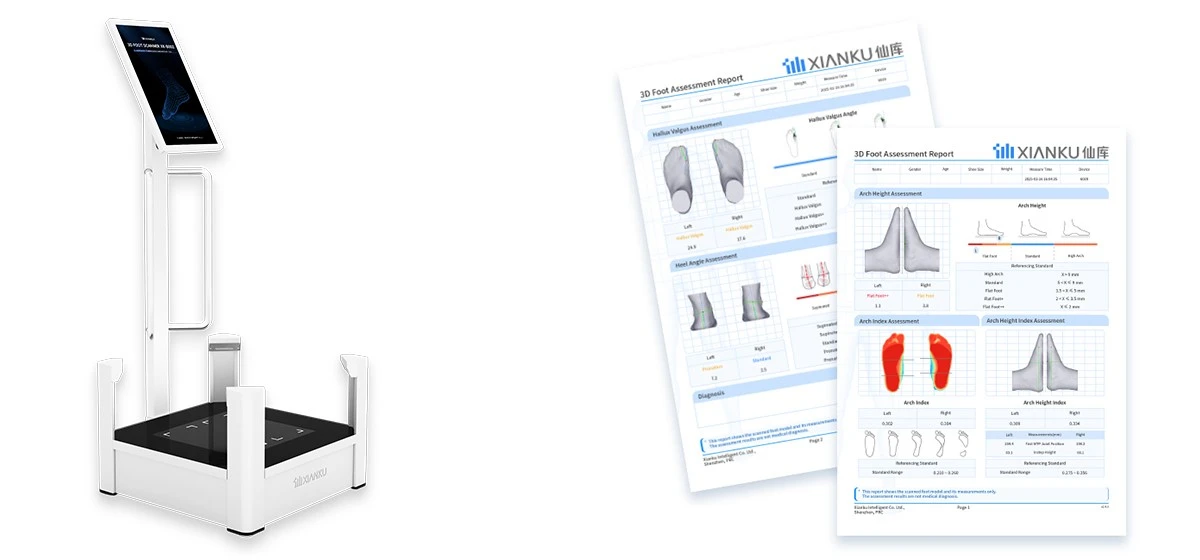
The Xianku3D Foot Scanner emerges as a transformative solution in this landscape, offering sophisticated scanning capabilities that address fundamental industry challenges while creating new opportunities for growth and differentiation. This technology represents a paradigm shift from traditional methods toward data-driven, personalized foot health management.
1. Market Overview: Growth Drivers and Industry Dynamics
1.1 Global Market Size and Projections
The custom foot orthotics market demonstrates steady growth globally, driven by several key factors:
- Aging Population: Increasing geriatric demographics worldwide requiring foot care solutions
- Chronic Conditions: Rising prevalence of diabetes and arthritis necessitating specialized foot support
- Technological Advancements: Digitalization of assessment and manufacturing processes
- Health Awareness: Growing consumer focus on preventive healthcare and personalized solutions
Table 1: Global Custom Foot Orthotics Market Projections (2024-2031)
| Year | Market Value (USD Million) | Growth Rate | Key Market Influences |
|---|---|---|---|
| 2024 | 754 | - | Base year |
| 2026 | 825 | 4.7% | Technological adoption, aging population |
| 2028 | 915 | 5.2% | Advanced materials, digital integration |
| 2030 | 990 | 4.9% | Market maturation, preventive care focus |
| 2031 | 1,042 | 5.0% | Personalized medicine, telehealth integration |
Source: QYR (QYResearch) Statistical Analysis
1.2 Regional Market Variations
The market exhibits distinct regional characteristics:
- North America: Mature market with high adoption of advanced orthotic solutions
- Europe: Strong regulatory framework and emphasis on quality standards
- Asia-Pacific: Rapidly growing market driven by increasing healthcare access
- Emerging Markets: Showing gradual adoption with significant growth potential
2. Critical Industry Challenges
2.1 Assessment and Measurement Limitations
Traditional orthotic assessment methods face significant drawbacks:
- Manual Measurement Processes: Reliance on manual tracing and static measurements captures less than 15% of necessary biomechanical data
- Subjectivity and Inconsistency: Practitioner-dependent results lead to variable outcomes and patient dissatisfaction
- Limited Data Capture: Traditional methods fail to capture dynamic foot function and pressure distribution
- Time-Consuming Procedures: Assessment typically requires 30-45 minutes, limiting clinic throughput
2.2 Customization and Manufacturing Challenges
- Lengthy Production Cycles: Traditional custom orthotic production requires 2-3 weeks, delaying treatment initiation
- High Remake Rates: Approximately 20-30% of custom orthotics require adjustment or remake due to fitting issues
- Cost Constraints: Labor-intensive processes increase costs, limiting accessibility for many patients
- Material Limitations: Traditional manufacturing constraints restrict design complexity and personalization
2.3 Patient Experience and Engagement Deficiencies
- Poor Visualization: Patients cannot see or understand their foot issues, leading to low treatment adherence
- Unclear Value Proposition: Without visible evidence, patients struggle to justify the cost of custom orthotics
- Limited Education: Inadequate explanation of biomechanical issues reduces patient engagement and compliance
- Discomfort During Assessment: Traditional casting and impression methods can be unpleasant for patients
2.4 Business and Operational Inefficiencies
- High Operational Costs: Labor-intensive processes require skilled technicians and increase overhead
- Limited Scalability: Manual methods prevent efficient scaling of orthotic services
- Inconsistent Results: Quality variations lead to customer dissatisfaction and reputation damage
- Inventory Management Issues: Traditional manufacturing requires maintaining extensive material inventories
Table 2: Traditional Orthotic Assessment vs. Industry Requirements
| Aspect | Traditional Methods | Industry Requirement | Gap Analysis |
|---|---|---|---|
| Assessment Time | 30-45 minutes | <5 minutes | 85% time reduction needed |
| Data Comprehensiveness | 10-15 parameters | 50+ biomechanical parameters | 70% data deficiency |
| Visualization Capability | None or basic | 3D modeling and simulation | Complete capability gap |
| Patient Engagement | Low (technical explanation) | High (interactive visualization) | Significant gap |
| Measurement Accuracy | ±3-5mm (subjective) | ±0.5mm (objective) | 6-10x improvement needed |
| Standardization | Practitioner-dependent | Consistent protocols | Critical need |
3. Competitive Landscape Analysis
3.1 Market Leaders and Established Players
The global orthotics market features several established competitors:
- Bauerfeind AG: German company focusing on medical-quality orthotic solutions
- Aetrex Worldwide: American company integrating scanning technology with orthotic manufacturing
- Foot Science International: New Zealand-based company with biomechanical design expertise
- Superfeet Worldwide: Known for adaptive fit technology and retail presence
3.2 Emerging and Technology-Focused Companies
- SIDAS: French company specializing in sports orthotics
- Powerstep: Focused on affordable custom solutions
- 3D Printing Specialists: Companies like Voxel8 and Wiivv Wearables leveraging additive manufacturing
3.3 Market Differentiation Challenges
- Technology Integration: Varying levels of digital technology adoption among competitors
- Service Models: Differences in direct-to-consumer versus clinical channel strategies
- Customization Approaches: Range from fully custom to semi-custom solutions
- Geographic Focus: Regional specialization versus global expansion strategies
4. Xianku3D Foot Scanner: Technological Solution for Industry Challenges
The Xianku3D Foot Scanner addresses these industry challenges through a comprehensive technological approach that transforms orthotic assessment, design, and patient engagement.
4.1 Advanced Scanning Capabilities
- Multi-Camera System: Utilizes 40 strategically positioned cameras to capture comprehensive foot data from all angles
- Infrared Structured Light: Employs non-invasive infrared technology to capture over 2 million data points in seconds
- Dynamic Assessment: Captures foot morphology in weight-bearing and non-weight-bearing positions
- High Precision: Achieves measurement accuracy of ±0.5mm, surpassing traditional methods
4.2 Comprehensive Biomechanical Analysis
- 3D Modeling: Generates detailed three-dimensional foot models for precise assessment
- Pressure Mapping: Analyzes plantar pressure distribution during standing and gait
- Arch Analysis: Quantifies arch height, type, and functional characteristics
- Gait Assessment: Evaluates foot function during movement for dynamic orthotic design
4.3 Enhanced Patient Experience and Education
- Visualization Tools: Interactive 3D models help patients understand their foot issues and treatment needs
- Real-Time Results: Immediate assessment feedback engages patients in the treatment process
- Educational Resources: Visual explanations of biomechanical issues improve treatment understanding
- Progress Tracking: Sequential scans document changes and treatment effectiveness over time
4.4 Operational Efficiency Features
- Rapid Assessment: Completes comprehensive scans in under 20 seconds, dramatically reducing appointment times
- Automated Reporting: Generates detailed PDF reports with measurements and recommendations within seconds
- Digital Integration: Seamlessly connects with CAD/CAM systems for streamlined orthotic production
- Cloud Storage: Secure data management enables easy access to patient records and progress tracking
Table 3: Xianku3D Foot Scanner Technical Specifications and Benefits
| Feature | Specification | Clinical Benefit | Business Benefit |
|---|---|---|---|
| Scanning Technology | 40 cameras, infrared structured light | Comprehensive data capture, non-invasive | Reduced assessment time, improved throughput |
| Scan Time | <20 seconds | Minimal patient discomfort | 3-4x more patients daily |
| Data Points | 2,000,000+ | Complete biomechanical profile | Enhanced diagnostic capabilities |
| Measurement Accuracy | ±0.5mm | Precise orthotic fitting | Reduced remake rates (under 5%) |
| Report Generation | <5 seconds (PDF format) | Immediate patient education | Enhanced consultation efficiency |
| Integration Capability | CAD/CAM, EHR systems | Streamlined production workflow | Reduced operational costs |
5. Implementation and Integration Framework
5.1 Clinical Integration Pathways
- Orthotic Clinics: Enhancing assessment capabilities and treatment outcomes
- Podiatry Practices: Integrating scanning into comprehensive foot care services
- Retail Settings: Implementing scanning technology in footwear stores for preventive recommendations
- Telehealth Platforms: Supporting remote assessment and monitoring capabilities
5.2 Technical Implementation Considerations
- Space Requirements: Compact design requires minimal space (typically 4m²)
- Training Needs: Minimal staff training required due to automated processes
- Data Security: HIPAA-compliant data handling ensures patient privacy
- Maintenance: Designed for reliability with minimal maintenance requirements
5.3 Business Model Enhancements
- Service Diversification: From product sales to comprehensive foot health management
- Premium Offerings: Higher-value services justified by advanced technology and better outcomes
- Subscription Models: Recurring revenue through ongoing assessment and adjustment services
- Partnership Ecosystems: Collaboration with footwear brands, healthcare providers, and wellness centers
6. Future Outlook and Industry Evolution
6.1 Technological Trends
- Artificial Intelligence Integration: Machine learning algorithms for predictive orthotic design
- Advanced Materials: New polymers and composites offering improved comfort and durability
- Additive Manufacturing: 3D printing enabling completely personalized orthotic structures
- Internet of Things (IoT): Smart orthotics with embedded sensors for continuous monitoring
6.2 Market Evolution
- Preventive Focus: Shift from corrective to preventive foot health management
- Consumer Empowerment: Increased patient involvement in orthotic selection and customization
- Integration with Footwear: Closer collaboration between orthotic providers and footwear manufacturers
- Global Standardization: Development of international standards for digital orthotic assessment
6.3 Regulatory and Reimbursement Landscape
- Quality Standards: Development of industry-wide standards for digital orthotic assessment
- Reimbursement Policies: Evolution of insurance coverage for digitally-produced custom orthotics
- Certification Requirements: Professional credentials for digital orthotic design and manufacturing
- International Harmonization: Alignment of regulatory requirements across global markets
7. Conclusion: Stepping Into a Digital Future
The custom foot orthotics industry faces significant challenges-from assessment limitations and manufacturing inefficiencies to patient engagement gaps-but these also represent opportunities for transformation. The Xianku3D Foot Scanner addresses these pain points by providing a comprehensive technological solution that enhances precision, efficiency, and patient experience.
As the market continues to evolve, success will increasingly depend on the ability to leverage technology for improved outcomes and operational excellence. The integration of advanced scanning, data analytics, and digital manufacturing will separate industry leaders from followers, creating new opportunities for innovation and value creation.
For orthotic providers, footwear retailers, and healthcare professionals, the message is clear: the future of foot health is digital, data-driven, and patient-centric. Embracing this transformation today will position organizations for success in the evolving landscape of custom orthotics, ultimately delivering better outcomes for patients and stronger businesses for providers.
References
Global Custom Foot Orthotics Market Report (2025-2031)
Xianku3d Intelligent Co., Ltd. (2024). 3D Smart Foot Scanner Product Specifications
3D Printing in Orthotics Market Analysis (2025). Technology Adoption Trends
Custom Foot Orthotics Industry Competitive Landscape Analysis (2025)
(86)-181-2464-3821
alexliu@xianku.com