

The global health check-up industry is experiencing unprecedented growth, with market projections indicating expansion from $292.2 billion in 2024 to over $500 billion by 2030, representing a compound annual growth rate (CAGR) of 12.5-14%. This remarkable growth is fueled by aging populations, increased health awareness, and rising disposable incomes worldwide. Particularly in USA, the market is expected to reach approximately $150 billion by 2030, with high-endservices growing at a CAGR of 14.7%.
Despite this impressive expansion, the industry faces significant challenges in delivering truly comprehensive health assessments that meet evolving consumer expectations. Traditional equipment often limits itself to basic measurements like height, weight, and basic vital signs, failing to provide the depth of analysis today's health-conscious consumers demand. This technological gap creates both a service limitation and a substantial missed opportunity for centers seeking to differentiate themselves in an increasingly competitive market.
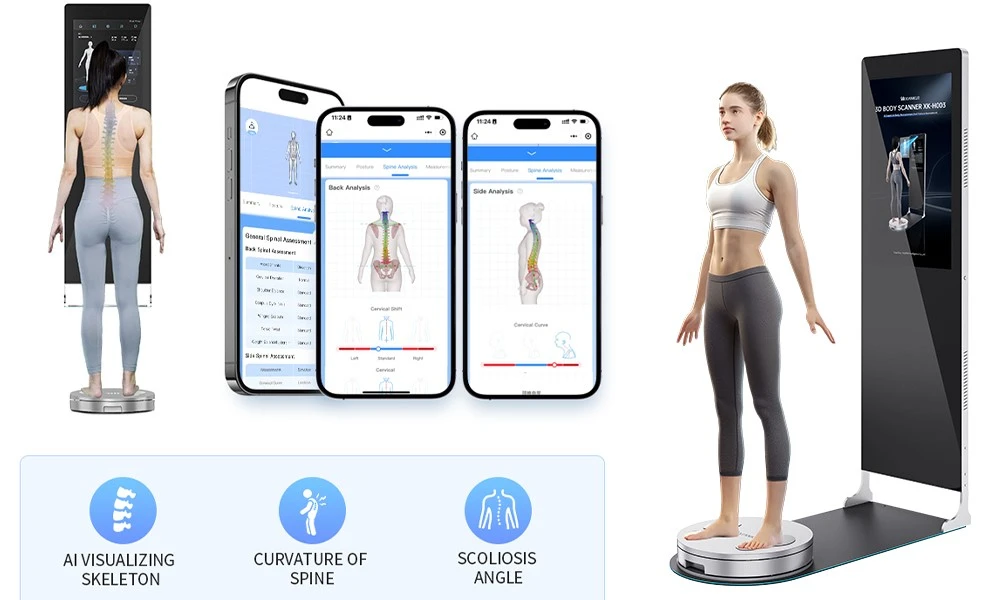
The Xianku3D Body Scanner emerges as a transformative solution to these industry challenges, offering advanced scanning technology that bridges the gap between conventional services and the growing demand for personalized, data-driven health assessment. By providing comprehensive 3D body modeling, detailed postural analysis, and advanced health metrics, this technology enables centers to elevate their service offerings while creating new revenue streams and enhancing client retention.
1. Market Overview: Growth Drivers and Industry Dynamics
1.1 Global Market Size and Projections
The health check-up industry has demonstrated remarkable resilience and growth despite global economic uncertainties. According to industry analyses, the market is experiencing robust expansion across multiple regions and service segments:
Table 1: Global Health Check-Up Market Projections (2024-2030)
| Year | Market Value (USD Billion) | Growth Rate | Key Growth Drivers |
|---|---|---|---|
| 2024 | 292.2 | - | Base year |
| 2025 | 371.1 | 27.0% | Post-pandemic health awareness, aging population |
| 2027 | 450.0 | 21.3% | Technological adoption, preventive health focus |
| 2030 | 500.0+ | 12.5-14.0% CAGR | Personalized medicine, advanced diagnostics |
Source: Industry Reports and Market Analysis
1.2 Regional Market Variations
The market shows significant regional variations in adoption rates and service sophistication:
- North America and Europe: Mature markets with high penetration of advanced technologies and personalized health services
- Asia-Pacific: The fastest-growing region, particularly in China where high-end services are expanding rapidly
- Emerging Markets: Showing increased adoption driven by rising middle-class populations and growing health awareness
1.3 Changing Consumer Demographics and Expectations
The demographic profile of consumers is evolving significantly:
- Aging Population: By 2030, nearly 25% of the population in developed markets will be over 60, creating sustained demand for comprehensive health monitoring
- Younger Demographic Engagement: Consumers aged 25-45 are increasingly pursuing preventive health measures, representing 38% of the high-end market
- Corporate Wellness Programs: Enterprises are increasingly investing in employee health, with corporate programs accounting for significant market share
2. Critical Industry Challenges and Limitations
Despite strong market growth, the health check-up industry faces several significant challenges that limit service quality and business potential.
2.1 Technological Limitations of Traditional Equipment
Most conventional equipment suffers from fundamental technological constraints:
- Basic Measurements Only: Traditional devices typically capture only height, weight, and basic vital signs, providing limited health insights
- Lack of Comprehensive Analysis: Absence of detailed body composition, postural assessment, and musculoskeletal evaluation
- No Visual Representation: Failure to provide interactive 3D models that help patients understand their health status intuitively
- Limited Benchmarking Capabilities: Inability to compare results over time or against population norms effectively
2.2 Service Differentiation and Competitive Pressures
The industry faces intensifying competition and differentiation challenges:
- Market Fragmentation: The industry remains highly fragmented, with the top three players controlling only about 30% of the private market
- Price Competition: Increasing price pressure, with basic packages declining by 18% over the past decade and some offerings dropping below $150
- Standardized Offerings: Most providers offer similar service packages, making differentiation difficult without significant technological investment
2.3 Operational Efficiency and Profitability Challenges
Many centers struggle with operational inefficiencies:
- High Fixed Costs: Establishing a comprehensive center requires significant investment in equipment and space
- Labor Intensity: Traditional assessments require skilled technicians and practitioners, increasing operational costs
- Low Client Retention: Without ongoing engagement tools, many centers struggle to maintain long-term client relationships
- Limited Revenue Streams: Traditional centers typically rely on one-time service fees without recurring revenue models
2.4 Data Management and Client Engagement Limitations
Traditional approaches miss significant opportunities in data utilization:
- Unstructured Data Collection: Health information remains siloed and underutilized for comprehensive health analysis
- No Progressive Tracking: Inability to effectively track changes over time to monitor health trends and intervention effectiveness
- Limited Personalization: Generic health recommendations rather than personalized insights based on comprehensive data
- Poor Client Engagement: Minimal ongoing interaction between visits reduces client loyalty and repeat business
Table 2: Traditional vs. Ideal Health Assessment Capabilities
| Assessment Aspect | Traditional Equipment | Industry Requirement | Gap Analysis |
|---|---|---|---|
| Body Composition | Basic BMI only | Comprehensive tissue analysis | Limited metabolic insights |
| Musculoskeletal | None | Postural and spinal assessment | Missed orthopedic issues |
| Data Visualization | Numerical results only | 3D models and visual reports | Poor patient understanding |
| Progress Tracking | Manual comparison | Automated trend analysis | Ineffective monitoring |
| Health Risk Screening | Limited parameters | Comprehensive risk assessment | Missed early detection |
| Client Engagement | One-time interaction | Ongoing relationship | Low retention rates |
3. Xianku3D Body Scanner: Comprehensive Technological Solution
The Xianku3D Body Scanner represents a paradigm shift in health assessment technology, addressing industry challenges through advanced scanning capabilities and comprehensive data analysis.
3.1 Advanced Scanning Technology and Capabilities
- Non-Invasive 3D Imaging: Utilizes infrared structured light technology to capture over 2 million data points in just 20 seconds for full-body scanning
- Comprehensive Health Metrics: Measures 128+ body parameters, including spinal alignment, pelvic tilt, body composition, and postural assessment
- Medical-Grade Precision: Achieves millimeter-level accuracy (±0.5mm) in all measurements, meeting medical device standards
3.2 Enhanced Health Assessment Features
- 3D Body Modeling: Generates precise 1:1 three-dimensional body models that visualize health metrics and anatomical relationships
- Comparative Analysis: Enables tracking of changes over time through automated comparison of sequential scans
- Risk Assessment: Incorporates AI algorithms to identify health risks and recommend preventive measures
- Comprehensive Reporting: Generates detailed PDF and digital reports with visualizations and explanations
3.3 Operational and Business Advantages
- Rapid Assessment: Completes comprehensive scans in 20 seconds, significantly faster than traditional manual assessments
- Automated Operation: Requires minimal technical expertise, reducing staffing requirements and training costs
- Space Efficient: Compact design requires only 4m² of space, making it suitable for various clinical settings
- Regulatory Compliance: Holds Class II medical device certification and algorithm from relevant authorities
4. Business Transformation and Value Creation
The implementation of Xianku3D Body Scanning technology creates significant business value for health check-up providers across multiple dimensions.
4.1 Service Differentiation and Premium Offerings
- Advanced Health Screening: Positions providers as technology leaders offering cutting-edge health assessment services
- Premium Service Tiers: Enables higher-value service packages with comprehensive health analytics and personalized recommendations
- Specialized Assessments: Facilitates specialized service offerings for spinal health, postural correction, and musculoskeletal wellness
4.2 Operational Efficiency and Profitability Improvement
- Throughput Optimization: Rapid scanning capability increases client capacity and reduces wait times
- Labor Cost Reduction: Automated scanning and reporting minimize required technical staff
- Revenue Diversification: Creates multiple revenue streams through assessment fees, follow-up consultations, and personalized health products
4.3 Client Relationship Management and Retention
- Enhanced Client Experience: Interactive 3D models and visual reports improve client engagement and satisfaction
- Automated Follow-up Systems: Integrated CRM capabilities enable automated appointment reminders and health tracking
- Long-term Relationship Building: Ongoing monitoring capabilities foster continuous client relationships beyond single visits
Table 3: Business Impact Assessment of Xianku3D Body Scanner Implementation
| Business Metric | Before Implementation | After Implementation | Improvement |
|---|---|---|---|
| Assessment Time | 30-45 minutes | 5-7 minutes | 75-85% reduction |
| Client Capacity | 10-15 clients/day | 25-30 clients/day | 100-150% increase |
| Service Revenue | Basic package fees | Premium packages + follow-up services | 50-100% increase |
| Client Retention | 25-30% annual return | 60-70% annual return | 100-150% improvement |
| Staff Requirements | 2-3 technicians | 1 operator | 50-65% reduction |
| Profit Margin | 15-25% | 35-45% | 80-100% improvement |
5. Implementation Framework and Integration Pathways
Successful implementation of 3D body scanning technology requires careful planning and strategic integration into existing体检operations.
5.1 Technical Integration Considerations
- IT Infrastructure: Ensure adequate network capabilities and data storage solutions for handling 3D scan data
- EMR Integration: Compatibility with existing electronic medical record systems for seamless data transfer
- Workflow Optimization: Reengineering of client flow and service delivery processes to maximize technology benefits
5.2 Staff Training and Change Management
- Technical Operation: Minimal training required for basic scanning operations
- Report Interpretation: Comprehensive training on understanding and explaining 3D assessment results
- Service Delivery: Developing new service protocols and client communication approaches
5.3 Marketing and Client Education
- Service Positioning: Communicating the value and benefits of advanced 3D health assessment to potential clients
- Educational Materials: Developing visual aids and explanations to help clients understand the technology
- Success Stories: Collecting and sharing case studies demonstrating the value of comprehensive health assessment
5.4 Regulatory and Compliance Considerations
- Data Privacy: Implementing robust data protection measures in compliance with healthcare regulations
- Medical Device Compliance: Ensuring ongoing adherence to medical device regulations and standards
- Quality Assurance: Establishing regular calibration and maintenance protocols to ensure measurement accuracy
6. Future Outlook and Industry Evolution
The integration of 3D body scanning technology represents just the beginning of a broader transformation in the health check-up industry.
6.1 Technological Advancements
- AI and Predictive Analytics: Enhanced algorithms for more accurate health risk prediction and personalized recommendations
- Integration with Wearables: Combining scan data with ongoing health monitoring from wearable devices
- Telehealth Integration: Remote consultation capabilities using 3D scan data for virtual health assessments
6.2 Service Model Evolution
- Preventive Health Focus: Shift from disease detection to proactive health optimization and prevention
- Personalized Health Planning: Customized health improvement plans based on comprehensive 3D assessment data
- Longitudinal Health Tracking: Ongoing health monitoring and trend analysis for early intervention
6.3 Industry Competitive Landscape
- Technology Differentiation: Advanced scanning capabilities becoming a standard expectation in premium services
- Consolidation and Specialization: Market consolidation around providers offering comprehensive technological solutions
- New Business Models: Emergence of subscription-based health monitoring services utilizing regular 3D assessments
7. Conclusion: Transforming Health Assessment Through Technology
The health check-up industry stands at an inflection point, where technological innovation is becoming the primary differentiator for success. The Xianku3D Body Scanner addresses fundamental limitations of traditional equipment by providing comprehensive, accurate, and visually intuitive health assessment capabilities that meet evolving consumer expectations.
By implementing this technology, health check-up providers can significantly enhance their service offerings, improve operational efficiency, and create sustainable competitive advantages in an increasingly crowded market. The ability to provide detailed 3D health assessments, track changes over time, and deliver personalized health insights represents the future of preventive healthcare and health monitoring.
As the industry continues to evolve, providers who embrace advanced technologies like 3D body scanning will be best positioned to capture market share, build lasting client relationships, and drive the transition from transactional体检services to ongoing health partnership relationships. The future of health assessment is visual, comprehensive, and personalized – and technologies like the Xianku 3D Body Scanner are making this future accessible today.
References
- 2025-2030 High-End Medical Check-Up Service Differentiation Analysis and Customer Demand Mining and Market Competition Barriers Report
- Xianku3d Intelligent AI+3D Printing Personalized Health Solution, Already Covering 5,000 Stores
- 2025 Medical Check-Up Service Market Panorama: Regional Pattern Reconstruction and Downward Market Explosive Growth Trends
- Xianku3D Spine Algorithm Passed National Internet Information Office Algorithm Filing
- Medical Check-Up Industry Service Upgrade 2025 Market Trend Prediction and Next Ten Years Industry Change Path
- A Storm Shatters Industry Filters, Can Billion-Dollar Giants Save Themselves?
- Xianku3d Intelligent Approved for National Class II Medical Device Registration Certificate!
- 2025 Medical Check-Up Industry Market Analysis Report: Competition Pattern and Service Quality Innovation Path Research
- Original: 20 Seconds Full Body Scan, 1 Second Foot Scan, Xianku Intelligent AI+3D Personalized Health Solution, Already Covering 5,000 Stores
- 2025 Medical Check-Up Industry Market Competition Pattern Analysis and Service Quality Improvement Solution Report
(86)-181-2464-3821
alexliu@xianku.com
