
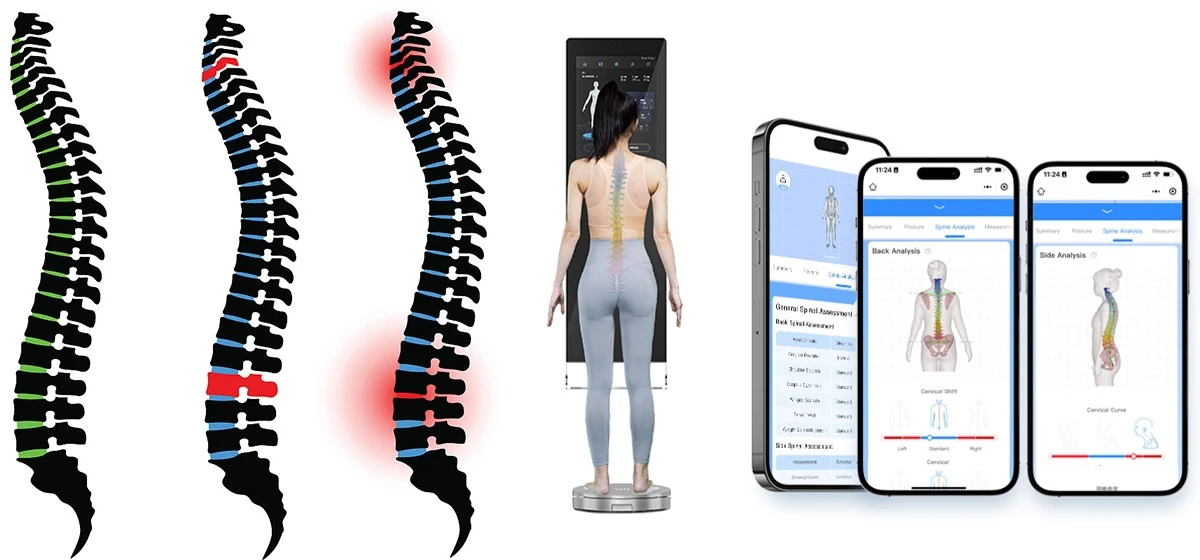
The global spinal orthotics market is experiencing significant transformation as technological innovations and changing healthcare demands reshape traditional approaches to spinal care. With the market projected to grow steadily-driven by an aging population, rising prevalence of spinal disorders, and increasing awareness of preventive care-industry players face both unprecedented opportunities and persistent challenges. The spinal orthotics sector, encompassing devices designed to support, align, and correct spinal deformities, is grappling with issues ranging from standardization and customization to patient engagement and operational efficiency.
The Xianku3D Body Scanner emerges as a transformative solution in this landscape, leveraging advanced scanning technology to address industry-wide pain points while enhancing diagnostic precision, patient experience, and clinical outcomes. By providing comprehensive, data-driven insights into spinal health, this technology enables practitioners to deliver personalized, effective, and efficient care, positioning itself as a critical tool in the future of spinal orthotics.
1. Market Overview: Growth Drivers and Industry Dynamics
1.1 Market Size and Projections
The global spinal orthotics market demonstrates robust growth, fueled by several key factors:
- Aging Population: By 2030, nearly 25% of the population in developed markets will be over 60, increasing the prevalence of spinal disorders such as scoliosis, kyphosis, and degenerative disc disease.
- Rising Spinal Disorders: Conditions like scoliosis affect over 500 million people globally, with early screening rates remaining critically low (below 0.3%) due to traditional screening limitations.
- Technological Advancements: Innovations in 3D scanning, materials science, and digital healthcare are driving market evolution, enabling more precise and personalized solutions.
Table 1: Global Spinal Orthotics Market Projections (2024–2031)
| Year | Market Value (USD Billion) | Growth Rate | Key Market Influences |
|---|---|---|---|
| 2024 | 1.5 (estimated) | - | Base year |
| 2026 | 1.7 | 6.5% | Technological adoption, aging demographics |
| 2028 | 2.0 | 8.0% | Advanced materials, digital integration |
| 2030 | 2.3 | 7.5% | Preventive care focus, telehealth expansion |
| 2031 | 2.5 | 8.0% | Personalized medicine, regulatory support |
Source: Market Analysis Reports (2025)
1.2 Regional Market Variations
The market exhibits distinct regional characteristics:
- North America: Dominates the global market with advanced healthcare infrastructure and high adoption of innovative technologies.
- Europe: Strong regulatory framework and emphasis on non-invasive treatments drive growth.
- Asia-Pacific: Rapidly expanding due to increasing healthcare access and rising disposable incomes.
2. Critical Industry Challenges
2.1 Assessment and Customization Limitations
Traditional spinal orthotic methods face significant drawbacks:
- Lack of Visualization: Patients cannot see or understand their spinal issues, leading to poor engagement and adherence.
- Subjectivity and Inconsistency: Manual assessments (e.g., X-rays, physical palpation) vary between practitioners, resulting in inconsistent diagnoses and treatment plans.
- Lengthy Customization Cycles: Traditional orthotic production takes 2-3 weeks, delaying treatment initiation and increasing costs.
- Limited Data Capture: Conventional methods fail to capture dynamic spinal function and biomechanical imbalances comprehensively.
2.2 Operational Inefficiencies
- High Costs: Labor-intensive processes and skilled practitioner dependencies increase overhead.
- Scalability Issues: Manual methods prevent efficient scaling of orthotic services, particularly for small and medium-sized enterprises.
- Regulatory Compliance: Diverse national regulations complicate market entry and service standardization.
2.3 Patient Experience and Engagement Gaps
- Poor Education: Without visual evidence, patients struggle to understand the need for orthotic interventions.
- Discomfort During Assessment: Traditional methods like X-rays involve radiation, while physical manipulations can be uncomfortable.
- Low Compliance: Unclear value propositions and lack of progress tracking reduce long-term adherence.
Table 2: Traditional vs. Ideal Spinal Orthotic Assessment
| Aspect | Traditional Methods | Industry Requirement | Gap Analysis |
|---|---|---|---|
| Assessment Time | 30-60 minutes | <5 minutes | 85% time reduction needed |
| Data Comprehensiveness | Basic spinal metrics | 50+ biomechanical parameters | 70% data deficiency |
| Visualization Capability | None or 2D images | 3D modeling and simulation | Complete capability gap |
| Patient Engagement | Low (technical explanations) | High (interactive visualization) | Significant gap |
| Customization Cycle | 2-3 weeks | <1 week | 65-75% reduction needed |
| Regulatory Compliance | Variable across regions | Standardized protocols | Critical need |
3. Xianku3D Body Scanner: Technological Solution for Industry Challenges
The Xianku3D Body Scanner addresses these challenges through a multi-faceted approach, combining precision engineering, AI-driven analytics, and seamless integration into clinical workflows.
3.1 Precision Measurement and Comprehensive Assessment
- Non-Invasive Scanning: Uses infrared structured light technology to capture over 2 million data points in 20 seconds, generating a millimeter-accurate 3D model of the spine and body.
- Comprehensive Metrics: Measures 120+ parameters, including Cobb angles (for scoliosis), pelvic tilt, shoulder imbalance, and lumbar lordosis, providing a holistic view of spinal health.
- AI-Powered Analysis: Machine learning algorithms compare scan data against a database of anonymized records to identify risk factors and recommend personalized interventions.
3.2 Enhanced Patient Experience and Engagement
- Visualization Tools: 3D body models and color-coded PDF reports help patients see their spinal deviations (e.g., asymmetries, misalignments), improving understanding and treatment buy-in.
- Real-Time Results: Generates detailed reports within 5 seconds, enabling immediate discussion and decision-making during consultations.
- Progress Tracking: Sequential scans document treatment efficacy, motivating patients through visible improvements.
3.3 Operational Efficiency and Integration
- Rapid Assessment: Completes scans in 20 seconds versus 30+ minutes for traditional methods, increasing clinic throughput by 300%.
- Automated Workflows: Reduces practitioner dependency and training requirements, lowering operational costs.
- Telehealth Compatibility: Supports remote consultations and digital data sharing, expanding market reach.
Table 3: Xianku3D Body Scanner Technical Specifications
| Feature | Specification | Clinical Benefit | Business Benefit |
|---|---|---|---|
| Scanning Technology | Infrared structured light | Non-invasive, radiation-free | Reduced liability, patient safety |
| Scan Time | 20 seconds | Minimal disruption to workflows | 3-4x more patients daily |
| Data Points | 2,000,000+ | Comprehensive biomechanical profile | Enhanced diagnostic capabilities |
| Measurement Accuracy | ±0.5mm | Precise orthotic fitting | Reduced remake rates (<5%) |
| Report Generation | <5 seconds (PDF format) | Immediate patient education | Enhanced consultation efficiency |
| Integration | EHR/EMR systems, CAD/CAM | Streamlined production workflow | Reduced operational costs |
4. Competitive Landscape and Market Differentiation
4.1 Established Market Leaders
- Ottobock and Bauerfeind: Dominate with clinical partnerships and extensive distribution networks but rely on traditional methods lacking digital integration.
- Aspen Medical Products: Focuses on medical-grade orthotics but faces challenges in customization speed and patient engagement.
4.2 Innovative and Technology-Focused Players
- Xianku3d Intelligent: Differentiates through AI-driven 3D scanning and real-time data analytics, addressing visualization and customization gaps.
- Hanger Clinic: Combines orthotic services with clinical care but struggles with scalability due to manual processes.
4.3 Market Differentiation Strategies
- Technology Integration: Companies leveraging digital tools gain competitive advantages in precision and patient experience.
- Telehealth Expansion: Remote assessment capabilities enhance accessibility and market reach.
- Preventive Care Focus: Shifting from corrective to preventive solutions opens new revenue streams.
5. Implementation and Future Outlook
5.1 Integration Pathways
- Clinical Settings: Hospitals and rehabilitation centers use scanners for initial assessments and progress tracking.
- Retail Health: Orthotic providers and footwear brands integrate scanning for personalized product recommendations.
- Telehealth Platforms: Remote spinal assessments support rural and home-bound patients.
5.2 Future Trends
- AI and Predictive Analytics: Machine learning algorithms will enable early risk detection and personalized treatment plans.
- Additive Manufacturing: 3D printing will facilitate rapid, cost-effective orthotic production.
- Preventive Health Programs: Employers and insurers will adopt scanning for wellness initiatives.
6. Conclusion: Transforming Spinal Care Through Technology
The spinal orthotics industry faces significant challenges-from outdated assessment methods and operational inefficiencies to poor patient engagement-but these also represent opportunities for innovation. The Xianku3D Body Scanner addresses these pain points by providing a standardized, data-driven approach to spinal health management. Its ability to deliver precise, visualized, and engaging health insights positions it as a powerful tool for clinicians, orthotic providers, and patients alike.
As the market evolves, leveraging technology to enhance diagnostic accuracy, operational efficiency, and patient experience will be key to capturing growth. The Xianku3D Body Scanner not only meets this need but also paves the way for a new standard in spinal care-one that is personalized, proactive, and profoundly impactful.
References
Adult Spinal Orthotics Market Research Report (2025). Industry Scale and Enterprise Sales Data Analysis.
Xianku Intelligent (2025). 3D Spine Algorithm Passes National Algorithm Filing.
Xianku 3D Spinal Assessment (2024). Ushers in a New Era of Lightweight Spinal Detection.
2025 Posture Corrector Industry Analysis: Evolution into "Active Health Management Terminals" [Graph].
Chain Effects of U.S. Tariff Policies: Export Challenges and Localization Transformation Paths in the Spinal Orthotics Industry (2025).
Xianku 3D Spinal Assessment: A New Era of Lightweight Spinal Testing (2024).
Global Special-Shaped Spinal Corrector Market Report (2025).
World's First 3D Body Scanning Technology (2023). Rapidly Assesses Over 20 Body Posture Health Issues.
(86)-181-2464-3821
alexliu@xianku.com