

The U.S. functional footwear industry is navigating an exceptionally challenging landscape characterized by economic pressures, changing consumer behaviors, and technological transformation. With the global functional footwear market projected to grow from $174.03 billion in 2024 to $249.74 billion by 2030, representing a compound annual growth rate (CAGR) of 6.2%, American companies face both unprecedented obstacles and unique opportunities. The industry's evolution is being shaped by multiple converging factors: rising tariff pressures, increasing consumer demand for personalized solutions, and the urgent need for technological innovation to address longstanding operational inefficiencies.
The functional footwear sector, encompassing specialized products like diabetic shoes, orthopedic footwear, and performance-optimized designs, represents a critical segment within the broader footwear market. However, industry players are grappling with significant challenges that threaten both profitability and market relevance. According to recent industry surveys, 87% of footwear executives expect the U.S. economy to weaken in the coming months, while 85% predict weakening consumer demand for footwear products. This pessimism stems from multiple pressure points, including increased import costs, changing consumer preferences, and operational inefficiencies that have plagued the industry for decades.
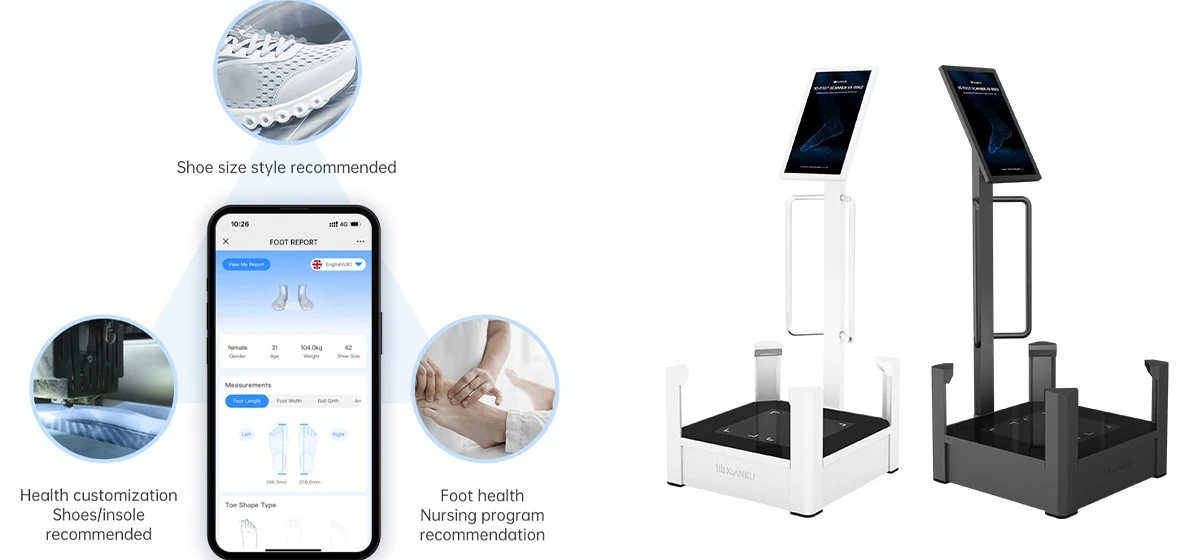
The Xianku3d Foot Scanner emerges as a transformative solution in this challenging environment, offering advanced scanning technology that addresses critical industry pain points while creating new opportunities for growth, differentiation, and customer engagement. By providing precise, data-driven insights into foot morphology and biomechanics, this technology enables functional footwear companies to enhance product customization, improve operational efficiency, and deliver superior customer experiences in an increasingly competitive market.
1. Market Overview: Growth Drivers and Industry Dynamics
1.1 Market Size and Projections
The global functional footwear market demonstrates robust growth potential despite current challenges:
- Market Expansion: The global functional footwear market is expected to grow from $174.03 billion in 2024 to $249.74 billion by 2030, with a CAGR of 6.2%.
- Regional Variations: North America maintains a significant market share, while the Asia-Pacific region shows particularly strong growth potential.
- Segment Growth: Diabetic shoes and specialized performance footwear represent the fastest-growing categories within the functional footwear segment.
Table 1: Global Functional Footwear Market Projections (2024-2030)
| Year | Market Value (USD Billion) | Growth Rate | Key Market Influences |
|---|---|---|---|
| 2024 | 174.03 | - | Base year |
| 2025 | 184.80 | 6.2% | Economic uncertainty, tariff impacts |
| 2027 | 208.45 | 6.3% | Technological adoption, aging population |
| 2029 | 234.90 | 6.2% | Preventive care focus, digital integration |
| 2030 | 249.74 | 6.1% | Market maturation, personalized solutions |
Source: Global Functional Footwear Market Analysis Reports
1.2 Economic and Regulatory Challenges
The U.S. functional footwear industry faces significant headwinds:
- Tariff Impacts: New tariff policies have increased costs for footwear imports, with some companies facing cost increases of 10-20%.
- Consumer Price Sensitivity: 78% of consumers have abandoned purchases due to high prices, representing a 12% increase from previous years.
- Demand Reduction: Footwear retail sales decreased by 26.2% year-over-year in February 2025, marking the 21st decline in 23 months.
2. Critical Industry Challenges
2.1 Consumer Engagement and Experience Gaps
Traditional functional footwear retail faces significant customer experience challenges:
- Limited Visualization: Customers cannot see or understand their foot health issues, leading to poor engagement and purchase hesitation.
- Inadequate Personalization: Standardized sizing and fitting approaches fail to address individual biomechanical needs, resulting in suboptimal product recommendations.
- Poor Education: Without visual evidence and data-driven insights, customers struggle to understand the value proposition of functional footwear solutions.
2.2 Operational Inefficiencies
- Lengthy Customization Cycles: Traditional custom footwear production requires 2-3 weeks, delaying treatment initiation and increasing costs.
- High Return Rates: Approximately 25-30% of functional footwear purchases are returned due to improper fit or unmet expectations.
- Measurement Inaccuracies: Traditional fitting methods (Brannock devices, manual measurements) capture less than 15% of necessary biomechanical data.
2.3 Economic and Competitive Pressures
- Cost Structure Challenges: 97% of footwear companies expect rising landed costs, with 45% anticipating increases of 11-20%.
- Market Consolidation: Smaller players struggle to compete with established brands like Nike, Skechers, and Under Armour.
- Consumer Behavior Shifts: 43% of consumers report no plans to purchase commuter shoes, indicating fundamental changes in consumption patterns.
Table 2: Traditional vs. Ideal Functional Footwear Fitting Process
| Aspect | Traditional Methods | Industry Requirement | Gap Analysis |
|---|---|---|---|
| Assessment Time | 15-20 minutes | <1 minute | 90%+ time reduction needed |
| Data Comprehensiveness | 3-5 basic measurements | 50+ biomechanical parameters | 85% data deficiency |
| Visualization Capability | None or basic | 3D modeling and simulation | Complete capability gap |
| Customization Cycle | 2-3 weeks | <1 week | 65-75% reduction needed |
| Return Rates | 25-30% | <10% | 60-70% improvement needed |
| Customer Engagement | Low (transactional) | High (educational, interactive) | Significant gap |
3. Xianku3d Foot Scanner: Technological Solution for Industry Challenges
The Xianku3d Foot Scanner addresses these challenges through a comprehensive technological approach that transforms footwear fitting, customization, and customer engagement.
3.1 Advanced Scanning Capabilities
- Non-Invasive Scanning: Utilizes infrared structured light technology to capture over 2 million data points in 1 second, generating a millimeter-accurate 3D model of the foot.
- Comprehensive Metrics: Measures 29+ parameters, including arch index, heel inclination, toe angles, and pressure distribution patterns.
- Dynamic Assessment: Captures foot morphology in weight-bearing positions, providing insights into functional biomechanics rather than static.
3.2 Enhanced Customer Experience and Engagement
- Visualization Tools: Interactive 3D foot models help customers understand their foot issues and the rationale behind product recommendations.
- Immediate Results: Generates detailed PDF reports within 5 seconds, enabling real-time discussion and decision-making.
- Educational Value: Visual explanations of biomechanical issues improve treatment understanding and adherence.
3.3 Operational Efficiency Features
- Rapid Assessment: Completes comprehensive scans in under 20 seconds, reducing fitting time by 85-90% compared to traditional methods.
- Automated Workflows: Standardized scanning process requires minimal training, reducing dependency on skilled practitioners.
- Integration Capabilities: Seamlessly connects with inventory management systems, enabling data-driven product recommendations and stock optimization.
Table 3: Xianku 3D Foot Scanner Technical Specifications and Benefits
| Feature | Specification | Clinical Benefit | Business Benefit |
|---|---|---|---|
| Scanning Technology | Infrared structured light | Non-invasive, radiation-free | Reduced liability, patient safety |
| Scan Time | 1 second | Minimal patient inconvenience | 5-10x more customers daily |
| Data Points | 2,000,000+ | Comprehensive biomechanical profile | Enhanced diagnostic capabilities |
| Measurement Accuracy | ±0.5mm | Precise footwear fitting | Reduced return rates (<10%) |
| Report Generation | <5 seconds (PDF format) | Immediate patient education | Enhanced consultation efficiency |
| Integration | CRM, inventory management systems | Streamlined operations | Reduced operational costs |
4. Competitive Landscape Analysis
4.1 Market Leaders and Established Players
The U.S. functional footwear market features several established competitors:
- Nike and Adidas: Dominate the performance footwear segment but face challenges in specialized medical footwear.
- Skechers and New Balance: Strong in comfort and wellness categories but limited in advanced customization capabilities.
- Specialized Providers: Companies like Dr. Comfort focus on therapeutic footwear but lack technological integration.
4.2 Technology-Driven Innovators
- Xianku3d Intelligent: Differentiates through AI-driven 3D scanning and real-time data analytics, addressing visualization and customization gaps.
- 3D Printing Specialists: Companies leveraging additive manufacturing for custom orthotics and footwear components.
-
4.3 Market Differentiation Strategies
- Technology Integration: Companies combining scanning, design, and manufacturing capabilities gain competitive advantage.
- Direct-to-Consumer Models: Emerging approaches bypass traditional retail channels for improved customer experience.
- Healthcare Partnerships: Collaboration with podiatrists and orthopedic specialists for clinical validation.
5. Implementation and Integration Framework
5.1 Retail Integration Pathways
- In-Store Scanning Stations: Implement scanning technology in retail environments to enhance customer experience and drive sales.
- Mobile Solutions: Compact scanning solutions for remote assessments and telehealth applications.
- E-Commerce Integration: Scan data for online product recommendations and virtual fitting experiences.
5.2 Business Model Evolution
- Service Diversification: From product sales to comprehensive foot health management services.
- Subscription Models: Recurring revenue through ongoing assessment and adjustment services.
- Data-Driven Insights: Aggregated anonymized data for market trend analysis and product development.
5.3 Economic Advantages
- Cost Reduction: Decreased return rates and improved inventory management through precise sizing recommendations.
- Revenue Growth: Premium pricing justification through demonstrated value and personalized experiences.
- Market Expansion: Access to new customer segments through improved accessibility and affordability.
6. Future Outlook and Industry Evolution
6.1 Technological Trends
- Artificial Intelligence Integration: Machine learning algorithms for predictive footwear design and personalized recommendations.
- Additive Manufacturing: 3D printing enabling completely customized footwear structures and components.
- Internet of Things (IoT): Smart footwear with embedded sensors for continuous health monitoring.
6.2 Market Evolution
- Preventive Focus: Shift from corrective to preventive foot health management.
- Consumer Empowerment: Increased customer involvement in product selection and customization.
- Integration with Healthcare: Closer collaboration between footwear providers and healthcare professionals.
6.3 Strategic Implications
- Industry Consolidation: Technological capabilities becoming key differentiators, driving market consolidation.
- New Business Models: Emergence of subscription-based footwear services and personalized health offerings.
- Global Standards: Development of international standards for digital foot assessment and footwear customization.
7. Conclusion: Stepping Into a Digital Future
The U.S. functional footwear industry faces significant challenges-from economic pressures and operational inefficiencies to changing consumer expectations-but these also represent opportunities for transformation. The Xianku3d Foot Scanner addresses these pain points by providing a comprehensive technological solution that enhances precision, efficiency, and customer engagement.
As the market continues to evolve, success will increasingly depend on the ability to leverage technology for improved products, services, and experiences. The integration of advanced scanning, data analytics, and digital manufacturing will separate industry leaders from followers, creating new opportunities for innovation and value creation.
For functional footwear providers, retailers, and healthcare professionals, the message is clear: the future of foot health is digital, data-driven, and customer-centric. Embracing this transformation today will position organizations for success in the evolving landscape of functional footwear, ultimately delivering better outcomes for customers and stronger businesses for providers.
References
Global Info Research.
American Footwear Distributors and Retailers Association. (2025). FDRA First Quarter Footwear Executive Business Survey
AlixPartners. (2025). 2025 Spring U.S. Footwear Consumer Survey.
Circana. (2025). Consumer Tracking Service Data Analysis.
U.S. Footwear Industry Economic Impact Analysis. (2025).
Global Functional Footwear Market Report. (2025). Industry Scale and Enterprise Sales Data Analysis.
(86)-181-2464-3821
alexliu@xianku.com
