Traditional Chinese Medicine (TCM) has thrived for thousands of years on principles of balance, energy flow, and holistic assessment. Practitioners observe, palpate, and question, building a complete picture of each patient's unique constitution. Yet even the most skilled TCM practitioner can benefit from objective data-measurements that complement traditional assessment and provide documentation that Western-trained colleagues and patients appreciate.
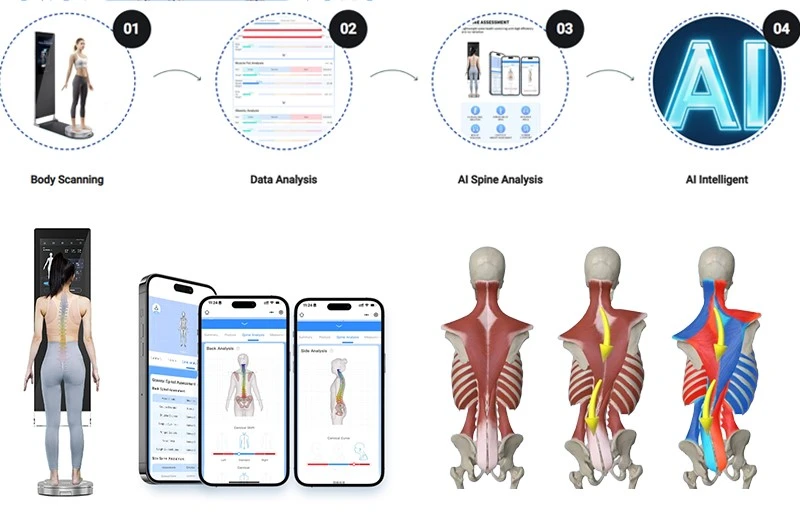
The Xianku 3D Body Scanner bridges TCM practitioners a tool that enhances rather than replaces their traditional methods.

The TCM Assessment Tradition
TCM diagnosis involves four pillars:
- Inspection: Observing the body, particularly the tongue, complexion, and posture
- Auscultation and olfaction: Listening to voice and breathing, noting body odors
- Inquiry: Asking about symptoms, history, and lifestyle
- Palpation: Feeling the pulse and specific body areas
Posture and body structure have always been part of inspection. Ancient texts describe how imbalances manifest in body shape-how Liver Qi Stagnation might create shoulder tension, how Kidney deficiency might affect spinal alignment. But these observations have remained qualitative, dependent on the practitioner's experience and perception.
How Xianku Enhances TCM Practice
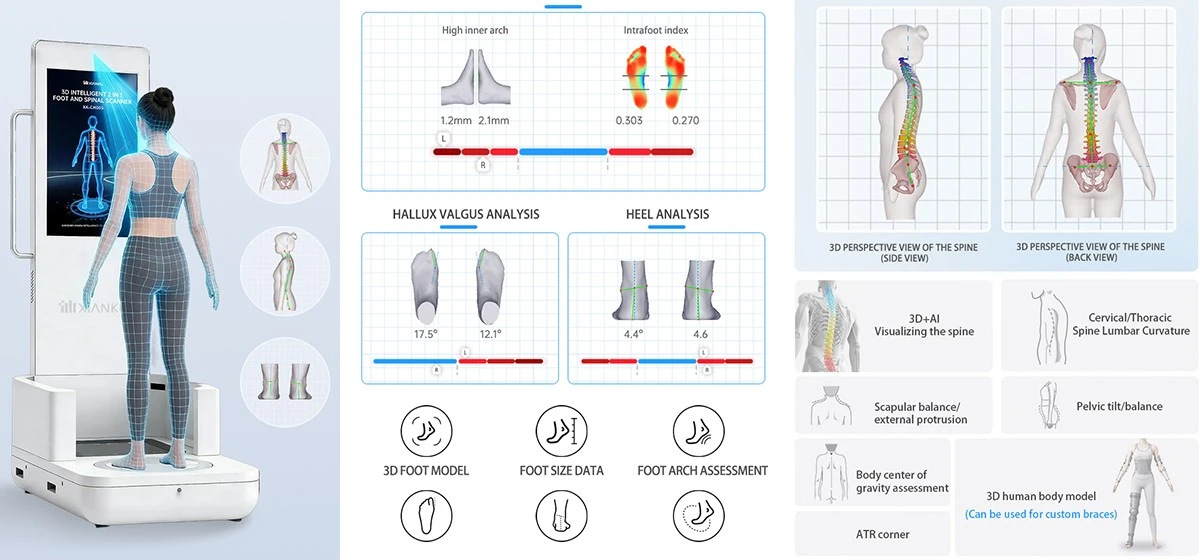
The Xianku scanner provides objective measurements that complement traditional assessment:
| TCM Concept | Traditional Assessment | Xianku Contribution |
|---|---|---|
| Qi stagnation | Palpation for tension | Quantifies asymmetry and restriction |
| Yin-yang imbalance | Pulse and tongue diagnosis | Documents structural compensations |
| Meridian involvement | Point tenderness | Identifies postural patterns |
| Constitution type | Observation and inquiry | Provides baseline measurements |
| Treatment progress | Patient self-report | Objective documentation of change |
Case Study: Acupuncture for Chronic Neck Pain
Practitioner: Dr. Li, acupuncturist in San Francisco's Chinatown, 20 years experience
Patient: 52-year-old female with chronic neck pain and headaches for 8 years
Traditional Assessment:
- Pulse: Wiry and tight
- Tongue: Purple with petechiae
- Palpation: Severe tension in GB21 and BL10
- Diagnosis: Liver Qi stagnation with Blood stasis
Xianku Assessment:
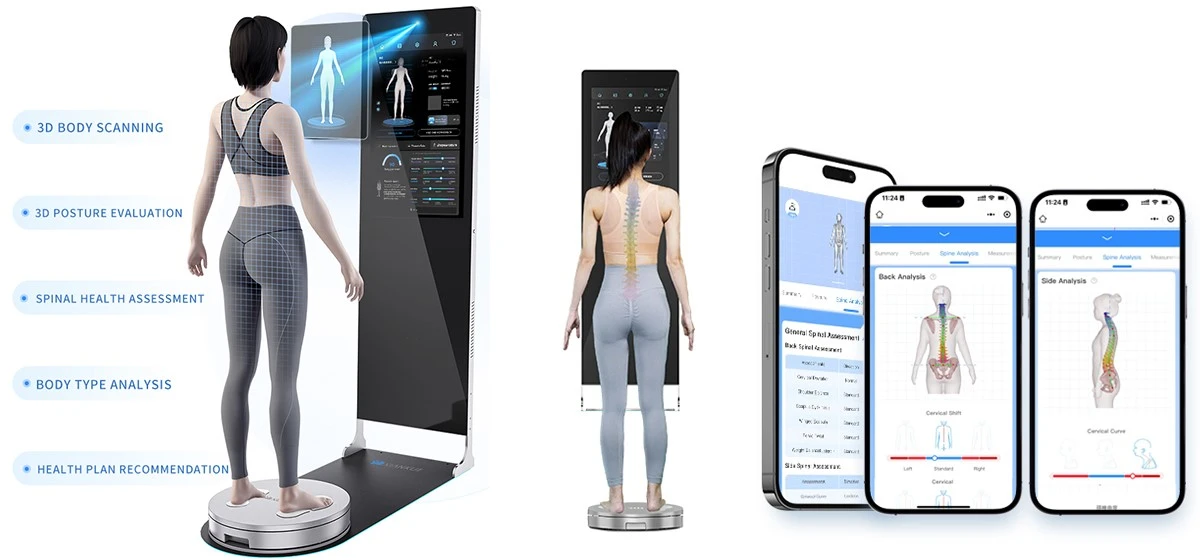
- Forward head posture: 2.3 inches
- Cervical curvature: Flattened (24°, normal 31-40°)
- Shoulder asymmetry: Right shoulder elevated 1.8 cm
- 3D visualization: Clearly shows the structural compensations
Treatment: Acupuncture points selected based on both TCM diagnosis and the specific structural findings. Points included GB21, BL10, SI3, and local ah shi points, with additional focus on right-sided imbalances.
Progress Tracking:
- Monthly scans documented structural changes:
Month 1: Forward head reduced to 2.0 inches
Month 2: Forward head 1.7 inches, cervical curvature improved to 27°
Month 3: Forward head 1.4 inches, pain reduced by 80%
Dr. Li noted: "I've always known that my treatments improve posture, but I couldn't prove it. Now I have before-and-after scans that show exactly what changed. My patients love seeing the evidence, and Western doctors who refer to me appreciate the objective documentation."
Integrating Scan Data with TCM Diagnosis
The Xianku scanner doesn't diagnose TCM patterns-that remains the practitioner's domain. But it provides structural data that informs pattern differentiation:
| Structural Finding | Possible TCM Correlations |
|---|---|
| Forward head posture | Kidney Jing deficiency, Liver Yang rising |
| Rounded shoulders | Lung Qi deficiency, Spleen Qi sinking |
| Pelvic tilt | Kidney Yin deficiency, Dampness in lower burner |
| Scoliosis | Congenital Kidney deficiency, Liver Blood deficiency |
| Asymmetrical weight bearing | Bi syndrome, Wind invasion |
The practitioner integrates this structural data with pulse, tongue, and inquiry to arrive at a comprehensive diagnosis.
Patient Communication and Engagement
TCM patients often struggle to understand abstract concepts like "Qi stagnation" or "Liver Fire." The Xianku scanner makes these concepts tangible:
- "See how your right shoulder is higher? That's the stagnation manifesting physically."
- "This forward head posture correlates with the Kidney deficiency we discussed."
- "Look at your scan after treatment-see how much straighter you're standing? That's the Qi moving."
This visual reinforcement increases patient understanding, compliance, and retention.
Documentation for Integrative Care
As TCM becomes more integrated with Western medicine, objective documentation becomes increasingly important:
- Referring physicians appreciate seeing concrete measurements
- Insurance companies may require objective data for reimbursement
- Research studies need quantifiable outcome measures
- Legal/regulatory contexts benefit from documented evidence
The Business Case for TCM Practices
For acupuncturists and TCM practitioners, Xianku scanning creates new opportunities:
| Opportunity | Traditional TCM | With Xianku |
|---|---|---|
| Initial consultation | $80-120 | $120-180 (including scan) |
| Progress tracking | Included in follow-up | $25-50 add-on |
| Package pricing | Based on visits | Includes scheduled scans |
| Corporate wellness | Hard to quantify | Objective posture assessments |
| Cross-referrals | Limited | Data appeals to Western providers |
Practices report that scanning increases perceived value, justifies higher fees, and attracts patients who appreciate the blend of ancient wisdom and modern technology.
Case Study: Integrative Wellness Center
Practice: Harmony Health, an integrative center in Seattle combining TCM, acupuncture, and functional medicine
Patient base: 800+ active patients, many seeking alternatives to conventional care
Implementation:
- Installed Xianku scanner in January 2025
- All new patients receive baseline scan
- Progress scans offered quarterly
Results:
- 40% increase in new patient consultations (scanning as differentiator)
- 35% increase in package sales (patients want to track progress)
- 50% increase in patient referrals (patients share scan images)
- Improved relationships with referring physicians (objective data)
The clinic director, a Doctor of Acupuncture and Oriental Medicine, observed: "My Western medical colleagues used to be skeptical of what I do. Now they see my scan reports and realize we're both working toward the same goal-better patient outcomes. The scanner has been a bridge between worlds."
Conclusion
For TCM practitioners in North America, the Xianku 3D Body Scanner offers a unique opportunity: to enhance traditional assessment with objective data, to communicate more effectively with patients and colleagues, and to document outcomes in ways that satisfy modern healthcare demands.
Eastern wisdom teaches that the body reveals imbalance. Western technology can now measure what the wise practitioner has always seen. Together, they create a more complete picture of health.
Call to Action: Ready to integrate objective measurement into your TCM practice? Contact Xianku today to learn how our 3D body scanning technology can enhance your traditional assessment methods.
Sources:
TCM practice case studies
Xianku integrative health applications
Industry TCM practice data