

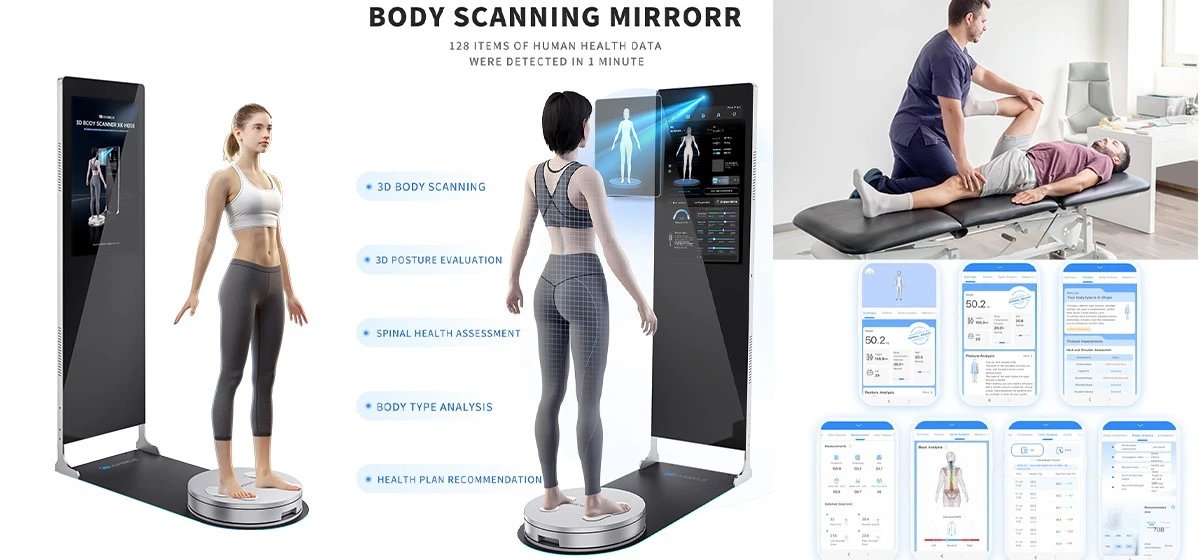
The global rehabilitation market is at a critical juncture, facing unprecedented challenges that threaten the sustainability of many practices while simultaneously presenting remarkable opportunities for those willing to embrace technological innovation. As patient expectations evolve and competition intensifies, rehabilitation centers must navigate a complex landscape where traditional approaches are becoming increasingly insufficient.
This comprehensive analysis explores the current state of the rehabilitation sector, identifies key challenges, and examines how advanced 3D body scanning technology is revolutionizing patient care, operational efficiency, and business outcomes in modern rehabilitation practices.
Current Challenges in the Rehabilitation Market
The rehabilitation industry worldwide faces systemic issues that impact providers and patients alike. These challenges are particularly acute in an era where healthcare consumers are becoming more discerning and digital technologies are transforming care delivery expectations.
1.1 Lack of Service Differentiation
Many rehabilitation centers offer remarkably similar service portfolios, creating a marketplace where providers struggle to distinguish themselves. Traditional rehabilitation services typically include standard physical therapy protocols, conventional pain management techniques, and basic recovery programs that vary little between providers. This homogeneity forces competition primarily on price and location rather than quality of care or technological sophistication, ultimately diminishing perceived value across the entire rehabilitation sector. Patients consequently find it difficult to identify providers offering truly advanced or specialized rehabilitation approaches, leading to decision-making based on convenience rather than clinical excellence.
1.2 Minimal Service Process Differentiation
The patient journey through most rehabilitation centers follows a familiar pattern: initial assessment using basic measurement tools, standardized treatment plans, and periodic progress evaluations. This standardized approach fails to account for individual patient differences and creates service experiences that feel generic and impersonal. The absence of distinctive service protocols means that rehabilitation centers cannot leverage their operational methodologies as competitive advantages. Even providers with superior clinical expertise struggle to communicate this differentiation through their service delivery processes, resulting in patient experiences that feel transactional rather than transformative.
1.3 Inadequate Technological Experience
Many rehabilitation facilities utilize outdated assessment tools that fail to engage patients or provide comprehensive data. Traditional tape measurements, basic goniometers, and subjective visual assessments dominate clinical practice, creating experiences that feel antiquated compared to the technological sophistication patients encounter in other aspects of their lives. The absence of advanced interactive technologies in the rehabilitation process leaves patients disconnected from their own progress and less engaged in their recovery journey. This technological deficit is particularly noticeable to younger patients who expect digital integration in all service experiences, including healthcare.
Table 1: Traditional Rehabilitation Assessment vs. Modern Patient Expectations
| Assessment Aspect | Traditional Rehabilitation Practice | Modern Patient Expectations |
|---|---|---|
| Data Collection | Manual measurements; subjective observations | Digital, objective metrics with visual documentation |
| Progress Tracking | Basic notes in medical charts | Detailed visual comparisons over time |
| Technology Integration | Limited to standard medical equipment | Digital health tools and advanced imaging |
| Patient Engagement | Paper-based exercises and instructions | Interactive digital platforms and visual feedback |
| Personalization | Standardized protocols with minor adjustments | Fully customized treatment plans based on comprehensive data |
| Reporting | Clinical notes requiring professional interpretation | Accessible visual reports with clear explanations |
1.4 Inefficient Business Operations
The rehabilitation industry typically competes on traditional business factors such as location visibility, advertising spending, and brand recognition. This competitive landscape creates significant barriers for new market entrants and innovative practices that lack the capital resources of established players. The heavy reliance on these conventional competitive leaves little room for differentiation through clinical excellence or patient experience innovation. Consequently, the rehabilitation market experiences slow evolution despite rapid advancements in adjacent healthcare technologies, ultimately limiting options for patients and hindering industry-wide progress.
1.5 Ineffective Patient Relationship Management
Most rehabilitation centers lack sophisticated systems for tracking patient journeys beyond basic appointment scheduling and billing. This deficiency in patient relationship management results in missed opportunities for personalized follow-up care, preventive health initiatives, and long-term patient engagement. Without robust systems to capture and utilize comprehensive patient data, rehabilitation providers cannot deliver the personalized experiences that modern healthcare consumers expect. This operational gap ultimately impacts patient retention, outcomes, and practice revenue.
1.6 Limited Revenue Diversification
Traditional rehabilitation centers typically generate revenue through direct treatment sessions and basic therapeutic services. This narrow revenue model creates financial vulnerability and limits investment capacity for advanced technologies and expanded service offerings. Without diversified income streams, rehabilitation practices struggle to achieve sustainable growth and lack resources to enhance their service delivery capabilities. This financial constraint perpetuates a cycle of service commoditization and price-based competition throughout the rehabilitation industry.
1.7 Insufficient Personalization Capabilities
Conventional assessment methods provide limited data points, restricting the degree of personalization possible in treatment plans and therapeutic interventions. This data scarcity forces rehabilitation professionals to rely on generalized protocols and estimations rather than precise, individualized prescriptions. The resulting personalization gap means patients receive care that is inadequately tailored to their specific anatomical needs and recovery progression, potentially compromising outcomes and extending recovery timelines in rehabilitation programs.
The Xianku3d Body Scanner: Revolutionizing Rehabilitation Practices
The Xianku3d Body Scanner represents a paradigm shift in rehabilitation technology, addressing industry challenges through advanced digital imaging, artificial intelligence, and comprehensive data analytics. This innovative solution transforms rehabilitation centers by enhancing diagnostic capabilities, patient engagement, and treatment personalization.
Advanced Technological Capabilities
The Xianku3d Body Scanner captures high-resolution, millimeter-precise 3D models of the human body in just 20 seconds, generating comprehensive reports within one minute. This unprecedented speed and accuracy eliminate the time-consuming measurements that traditionally characterize initial rehabilitation assessments. The system's sophisticated sensors and algorithms detect subtle postural asymmetries, spinal deviations, and anatomical variations that often escape visual inspection in conventional rehabilitation settings.
The scanner provides four distinct analytical dimensions crucial for effective rehabilitation:
- Postural analysis identifying imbalances and compensatory patterns
- Spinal assessment detecting deviations from optimal alignment
- Body composition tracking changes in muscle mass and distribution
- Comparative analytics documenting changes across treatment sessions
This comprehensive data collection creates an objective foundation for rehabilitation planning that far surpasses traditional assessment methods.
Transforming Service Differentiation
Rehabilitation centers implementing the Xianku3d Body Scanner immediately distinguish themselves through technologically advanced assessment capabilities. The scanner provides a tangible demonstration of clinical sophistication that resonates with patients seeking cutting-edge rehabilitation services. This technological differentiation extends throughout the patient journey, from initial assessment through treatment progression monitoring, creating a consistent narrative of innovation and excellence.
The wealth of data generated enables rehabilitation professionals to develop uniquely personalized treatment approaches based on comprehensive anatomical understanding rather than generalized protocols. This data-driven personalization becomes a powerful competitive advantage in markets where rehabilitation services have traditionally been commoditized.
Table 2: Xianku3d Body Scanner Technical Specifications and Clinical Applications
| Parameter | Technical Specification | Rehabilitation Application |
|---|---|---|
| Scan Time | 20 seconds full body | Enables comprehensive assessment within standard consultation periods |
| Report Generation | 60 seconds for complete analysis | Provides immediate visual feedback for patient engagement |
| Accuracy | Millimeter-level precision (0.1-0.5mm) | Detects subtle postural changes and treatment progress |
| Data Points | 200+ anatomical measurements | Enables highly personalized rehabilitation programming |
| Output Formats | 3D model, postural report, spinal analysis, comparative analytics | Supports diverse clinical decision-making needs |
| Repeatability | High (ICC >0.95) | Ensures reliable progress monitoring throughout rehabilitation |
| Integration | Cloud-based storage, EMR compatibility | Streamlines clinical workflow and data management |
Enhancing Patient Experience and Engagement
The Xianku3d Body Scanner creates a "wow factor" that immediately establishes patient confidence and engagement. The scanning process itself feels futuristic and comprehensive, reinforcing the perception of clinical excellence before treatment even begins. Patients transition from passive recipients of care to active participants in their rehabilitation journey as they visualize their anatomical data and understand their treatment rationales.
The visual nature of 3D models and comparative analytics helps patients comprehend complex anatomical concepts and track their progress objectively. This transparency builds trust and motivates adherence to rehabilitation protocols, ultimately improving outcomes. The technology particularly resonates with digitally-native patients who expect technological integration in all service experiences, including healthcare.
Optimizing Clinical Operations
The Xianku3d Body Scanner establishes a standardized yet highly personalized patient journey that enhances operational efficiency while maintaining clinical excellence. The systematic workflow-comprehensive scanning, detailed analysis, data-driven treatment planning, and objective progress monitoring-creates consistency across practitioners while allowing for individual clinical judgment.
This operational standardization reduces variability in assessment quality and ensures all patients receive equally thorough evaluations regardless of which rehabilitation professional conducts their initial assessment. The efficiency gains from rapid, automated data collection free up clinical time for personalized therapeutic interventions and patient education.
Strengthening Patient Relationships
The scanner's integrated patient management system automatically creates digital profiles containing comprehensive baseline measurements, treatment progress data, and historical comparisons. This centralized information repository enables rehabilitation providers to deliver highly personalized follow-up care and proactive health recommendations.
The system supports sophisticated relationship-building initiatives such as:
- Automated progress updates with visual comparisons
- Personalized exercise recommendations based on specific anatomical needs
- Preventive care suggestions addressing identified risk factors
- Re-engagement opportunities when previous treatment patterns suggest need
This systematic approach to patient relationship management transforms occasional clients into long-term practice advocates within the rehabilitation continuum.
Expanding Revenue Opportunities
The comprehensive data provided by the Xianku3d Body Scanner enables rehabilitation centers to develop specialized service lines addressing specific anatomical issues identified through scanning. These premium services command higher fees and create diversified revenue streams beyond standard rehabilitation sessions.
Specific revenue-enhancing applications include:
- Custom orthotic and prosthetic design based on precise anatomical data
- Specialized spinal rehabilitation programs targeting identified deviations
- Preventive posture correction programs for at-risk populations
- Sports performance optimization based on biomechanical analysis
- Long-term wellness monitoring for chronic condition management
These specialized services increase average transaction values while providing genuine clinical value that justifies premium pricing in competitive rehabilitation markets.
Driving Patient Acquisition and Retention
The Xianku3d Body Scanner serves as a powerful patient acquisition tool through community engagement events offering complimentary postural assessments or spinal health screenings. These initiatives demonstrate clinical capability while identifying potential patients with undiagnosed needs. The technological sophistication of the scanning process creates immediate practice differentiation that converts curious community members into committed patients.
The ongoing objective progress monitoring facilitated by the scanner gives patients tangible evidence of treatment effectiveness, reinforcing their commitment to recommended rehabilitation programs. This evidence-based validation significantly improves retention rates throughout extended treatment plans and encourages return visits for new issues based on positive previous experiences.
Table 3: Business Impact Metrics Following Xianku3d Body Scanner Implementation
| Performance Indicator | Pre-Implementation Baseline | Post-Implementation Performance | Change |
|---|---|---|---|
| New Patient Acquisition | Market average growth rate | 25-40% increase in new patients | Significant uplift |
| Patient Conversion Rate | Practice-specific baseline | 15-30% improvement | Enhanced efficiency |
| Average Revenue Per Patient | Practice-specific baseline | 20-35% increase | Value perception improvement |
| Patient Retention Rate | Practice-specific baseline | 20-25% improvement | Enhanced satisfaction |
| Treatment Plan Adherence | Industry average compliance | 30-50% improvement | Visual motivation impact |
| Referral Rate | Practice-specific baseline | 35-60% increase | Demonstrable differentiation |
| Premium Service Revenue | Minimal without technology | 15-25% of total revenue | Successful diversification |
Implementation and Integration Considerations
Successful implementation of the Xianku3d Body Scanner requires thoughtful planning regarding clinical workflow integration, staff training, and patient education. Rehabilitation centers must develop protocols for efficiently incorporating scanning into standard assessments without disrupting clinical productivity. Staff training should emphasize both technical operation and effective communication of scan results to patients.
The physical placement of the scanner within the rehabilitation facility significantly impacts patient experience. Positioning in visible yet private areas reinforces technological sophistication while maintaining appropriate privacy standards. Integration with existing electronic medical record systems ensures seamless data flow and avoids redundant documentation.
The Future of Technology-Enhanced Rehabilitation
The Xianku3d Body Scanner represents the beginning of a technological transformation in rehabilitation that will increasingly incorporate artificial intelligence, predictive analytics, and remote monitoring capabilities. Future developments may include:
- AI-powered predictive outcomes based on initial scan data
- Integration with wearable technology for continuous monitoring
- Tele-rehabilitation applications using simplified scanning technologies
- Expanded analytical capabilities for specific pathological conditions
- Automated exercise prescription based on individual biomechanics
Rehabilitation centers that embrace these technological advancements position themselves as industry leaders while delivering superior patient outcomes.
Conclusion
The rehabilitation market faces significant challenges related to service differentiation, patient engagement, operational efficiency, and financial sustainability. The Xianku3d Body Scanner addresses these challenges through advanced technology that enhances diagnostic precision, patient motivation, and clinical outcomes. By providing millimeter-accurate 3D body modeling, comprehensive postural analysis, and automated progress tracking, this innovative solution transforms rehabilitation practices from commoditized services to premium healthcare experiences.
Rehabilitation centers implementing this technology demonstrate measurable improvements in patient acquisition, retention, satisfaction, and practice revenue. More importantly, they deliver superior clinical outcomes through personalized, data-driven rehabilitation programs. As the healthcare landscape continues evolving, technological integration will increasingly separate progressive rehabilitation practices from their conventional counterparts. The Xianku3d Body Scanner represents a strategic investment in this future, positioning forward-thinking rehabilitation providers for long-term success while elevating industry standards for patient care and practice excellence.
(86)-181-2464-3821
alexliu@xianku.com
