

1. Introduction
The global weight loss market is experiencing significant growth, driven by rising obesity rates and increasing health consciousness worldwide. However, the industry faces persistent challenges related to personalization, data accuracy, and long-term customer retention. Traditional approaches often rely on generic solutions that fail to address individual physiological needs, leading to high dropout rates and unsustainable outcomes.
This article examines the current state of the weight loss industry, its systemic challenges, and how innovative technologies like the Xianku3d body scanner are revolutionizing weight management through precision assessment, personalized interventions, and data-driven progress tracking. By bridging the gap between one-size-fits-all programs and truly customized solutions, this technology offers a transformative path forward for providers and clients alike.
2. Market Overview: Growth Trajectory and Key Segments
The global weight loss market demonstrates robust expansion, with the medical weight loss clinic sector in the United States alone valued at approximately $1.1 billion in 2022 and projected to grow at a compound annual growth rate (CAGR) of 4.3% to reach $1.5 billion by 2030 . This growth is fueled by several factors:
- Rising Obesity Rates: In the United States, approximately 39.3% of adults aged 45-54 experience obesity, creating substantial demand for effective interventions .
- Shift Toward Non-Surgical Solutions: Patients are increasingly opting for non-surgical weight loss methods due to lower costs and reduced risks compared to surgical interventions .
- Pharmaceutical Advancements: FDA-approved medications like semaglutide and tirzepatide have demonstrated significant efficacy, with clinical trials reporting 13.7% and 20.2% average weight reduction respectively .
The market encompasses diverse service models, including independent clinics, hospital-based programs, and digital health platforms. Independent clinics currently dominate, holding over 60% of the market share in 2022 , while telehealth and hybrid models are gaining traction post-pandemic.
3. Critical Challenges in the Weight Loss Industry
3.1 Lack of Comprehensive Physiological Data
Many weight loss programs operate with limited biometric information, typically relying on basic metrics like weight, BMI, and occasional body measurements. This insufficient data collection fails to capture crucial physiological parameters such as body composition, fat distribution, and metabolic indicators that are essential for designing effective interventions. The absence of comprehensive baseline data undermines assessment accuracy and prevents personalized treatment planning.
3.2 One-Size-Fits-All Approach
The industry struggles with standardized protocols that ignore individual variations in metabolism, body composition, and lifestyle factors. Many prominent programs offer identical dietary plans, exercise regimens, and intervention timelines to diverse client populations despite evidence that personalized approaches yield superior outcomes. This generic methodology contributes to the high attrition rates common across weight loss programs, as participants become discouraged when treatments fail to align with their specific needs and preferences.
3.3 Credibility and Scientific Validation Gaps
Many commercial weight loss solutions lack robust scientific backing, relying instead on anecdotal success stories and marketing claims rather than evidence-based methodologies. The proliferation of quick-fix solutions and miracle treatments has eroded consumer trust in the industry overall. Even legitimate programs often fail to provide transparent data tracking and objective outcome measures, making it difficult for clients to assess program effectiveness objectively.
3.4 Limited Progress Visualization
Traditional weight management primarily tracks scale weight, providing an incomplete picture of physiological changes. Many programs fail to document important metrics like body fat percentage redistribution, muscle mass preservation, and postural improvements throughout the intervention journey. Without visual representations of progress, clients struggle to recognize non-scale victories and often become discouraged during inevitable weight fluctuations or plateaus.
3.5 Ineffective Client Management Systems
Most weight loss centers operate with fragmented client records and limited digital integration, preventing comprehensive progress tracking and personalized follow-up. The absence of centralized data platforms hampers effective communication, reduces client engagement, and limits opportunities for proactive support between appointments. This operational deficiency directly impacts client retention and long-term success rates.
3.6 Unsustainable Business Models
The industry faces operational challenges related to high client acquisition costs, low differentiation, and price-based competition. The reliance on continuous marketing to replace lost clients rather than retaining them long-term creates financial instability for providers. Additionally, the lack of standardized protocols makes successful program replication difficult across multiple locations, limiting scalability and consistent service quality.
3.7 Limited Revenue Diversification
Many weight loss centers depend primarily on program fees and basic supplements, with few offering differentiated products or services that justify premium pricing. The absence of personalized product offerings aligned with individual physiological needs restricts additional revenue streams and fails to capitalize on the growing consumer demand for customized health solutions.
Table 1: Weight Loss Industry Challenges and Business Impacts
| Challenge Category | Specific Manifestations | Business Impact |
|---|---|---|
| Insufficient Data Collection | Reliance on basic metrics; limited biometric parameters | Inaccurate assessments; generic recommendations; poor outcomes |
| Lack of Personalization | Standardized programs ignoring individual differences | High dropout rates; low client satisfaction; limited results |
| Credibility Issues | Marketing-driven claims; limited scientific validation | Reduced consumer trust; difficulty justifying premium pricing |
| Inadequate Progress Tracking | Focus on scale weight only; lack of visual documentation | Client frustration during plateaus; missed non-scale victories |
| Inefficient Client Management | Disconnected records; minimal digital integration | Poor retention; missed follow-up opportunities; lower lifetime value |
| Operational Inefficiencies | High customer acquisition costs; difficult replication | Low profit margins; limited scalability; inconsistent quality |
| Revenue Limitations | Dependence on program fees; undifferentiated products | Missed ancillary revenue; inability to command premium prices |
4. Competitive Landscape: Traditional Players and Innovative Approaches
The weight loss industry features diverse participants, ranging from medical clinics to commercial programs and digital health platforms. Key players include:
- Options Medical Weight Loss: This U.S.-based clinic network has expanded to 47 locations nationwide since its 2014 founding, utilizing a comprehensive approach that combines FDA-approved medications, personalized nutrition, and behavioral coaching . Their model demonstrates the efficacy of integrated care protocols in achieving significant patient outcomes, with participants losing an average of 17% body weight within six months .
- Mayo Clinic Diet: Building on its medical reputation, this program offers science-based weight management combining behavioral psychology with clinical nutrition, though it lacks advanced body composition tracking.
- WW (WeightWatchers): This established commercial program utilizes a points system and digital community support, but relies primarily on self-reported metrics rather than objective physiological data.
- Noom: This psychology-based approach focuses on behavior change through cognitive-behavioral techniques, though it faces limitations in personalization without comprehensive biometric data.
- Hospital-Based Programs: Institutions like the Chicago University Medical Center offer medically supervised weight management, typically serving complex cases requiring intensive intervention .
The competitive environment is intensifying as telehealth platforms and digital therapeutics gain market share, particularly among younger demographics who prefer technology-enabled solutions.
5. Xianku3d Body Scanner: A Technological Paradigm Shift
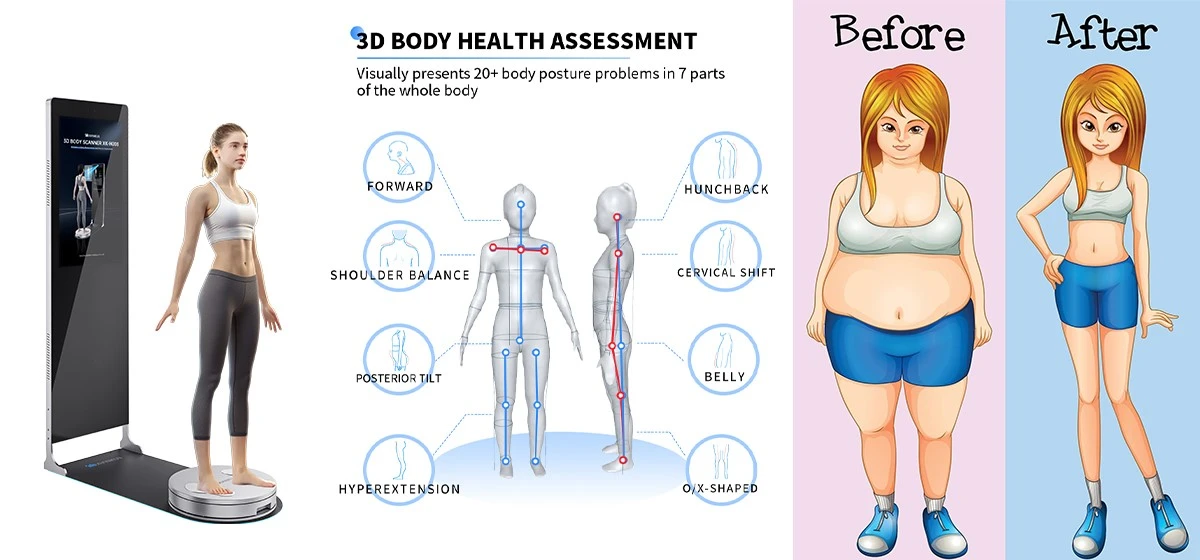
The Xianku3d body scanner represents a fundamental advancement in weight management technology, leveraging high-resolution 3D structured light sensors to capture comprehensive physiological data in seconds . This technology addresses core industry challenges through precision assessment and personalized intervention.
5.1 Comprehensive Physiological Profiling
The scanner captures over 128 body measurements, including 3D body modeling, posture analysis, and segmental composition metrics . This detailed assessment provides a complete picture of a client's starting point, enabling truly personalized program design. The millimeter-accurate scanning technology creates a precise digital avatar that serves as the foundation for targeted interventions .
5.2 AI-Driven Personalization
By analyzing the comprehensive scan data, the system's artificial intelligence algorithms generate tailored recommendations based on individual physiology rather than population averages. This approach enables the creation of customized nutrition, exercise, and lifestyle interventions that align with each client's unique body composition, metabolic needs, and physical capabilities.
5.3 Scientific Credibility and Trust Building
The objective, data-driven assessment process provides transparent baseline measurements that establish credibility from the initial client interaction. The visual representation of physiological issues through 3D modeling helps clients understand the rationales behind recommended interventions, enhancing adherence and trust in the program methodology.
5.4 Visual Progress Tracking
The system enables side-by-side comparison of sequential scans, allowing clients to visualize changes in body shape, posture, and measurements beyond simple scale weight. This multidimensional progress monitoring helps maintain motivation during plateaus by highlighting non-scale victories like improved posture and reduced measurements even when weight loss temporarily stalls.
5.5 Integrated Digital Client Management
The platform automatically creates comprehensive digital client profiles containing scan histories, progress metrics, and intervention details. This centralized database supports targeted communication, automated follow-ups, and personalized check-ins that enhance engagement and retention throughout the weight loss journey.
5.6 Streamlined Operational Workflows
The technology standardizes the client onboarding and assessment process, reducing dependency on individual staff expertise and ensuring consistent service quality across locations. The structured "scan → analysis → personalized plan → progress tracking" workflow creates a replicable service model that supports efficient scaling and multi-location operations.
5.7 Enhanced Revenue Diversification
The detailed physiological data enables targeted recommendation of personalized health products including customized nutritional supplements, ergonomic supports, and specialized wellness products aligned with individual client needs. This creates valuable ancillary revenue streams beyond basic program fees while delivering enhanced value to clients.
Table 2: Xianku3d Body Scanner Capabilities and Applications
| Feature | Technical Capabilities | Weight Management Applications |
|---|---|---|
| 3D Body Modeling | High-resolution structured light scanning; millimeter accuracy | Baseline assessment; progress visualization; targeted intervention planning |
| Body Composition Analysis | Multi-parameter measurement; segmental fat distribution | Metabolic assessment; personalized calorie targets; muscle preservation monitoring |
| Posture Assessment | Spinal alignment; shoulder positioning; gravitational line analysis | Exercise customization; injury prevention; mobility improvements |
| Digital Archiving | Cloud-based data storage; historical comparison | Progress tracking; adherence monitoring; long-term outcome analysis |
| AI-Powered Recommendations | Algorithmic analysis of comprehensive biometric data | Personalized nutrition, exercise, and lifestyle prescriptions |
| Integration Capabilities | API connectivity with health platforms and EMR systems | Comprehensive care coordination; data sharing with healthcare providers |
6. Implementation Framework: Integrating Scanning Technology into Weight Management
Successful implementation of the Xianku3d body scanner requires strategic integration across clinical operations:
6.1 Clinical Workflow Integration
- Initial Assessment: Comprehensive scanning during client onboarding establishes baseline metrics and identifies specific physiological challenges.
- Treatment Planning: Scan data informs personalized program design, targeting individual needs rather than applying generic protocols.
- Progress Monitoring: Regular scanning sessions (typically every 4-6 weeks) provide objective progress metrics and enable program adjustments.
- Maintenance Phase: Periodic scanning during weight maintenance helps detect early changes and prevent significant regain.
6.2 Staff Training and Role Evolution
The technology enables role elevation from weight loss advisors to physiological consultants through training in data interpretation and personalized program design. This development enhances staff satisfaction while delivering superior client outcomes.
6.3 Client Engagement and Education
The visual nature of scan results facilitates client education and engagement, helping individuals understand the relationship between interventions and physiological changes. This transparency builds trust and enhances adherence throughout the often-challenging weight loss journey.
7. Case Studies: Successful Integration of Advanced Technologies in Weight Management
7.1 Options Medical Weight Loss: Comprehensive Care Model
This rapidly expanding clinic network has achieved significant growth by combining multiple intervention modalities including FDA-approved medications, dietary modification, and behavioral support . Their results demonstrate the efficacy of personalized, multi-component approaches in producing substantial weight loss-clients achieved average reduction of 17% body weight within six months . The integration of advanced body composition analysis could further enhance their personalization capabilities.
7.2 Clinic-Embedded Medical Programs
Hospital-based weight management centers like those at the Chicago University Medical Center leverage medical expertise and interdisciplinary care teams to address complex obesity cases . These programs typically incorporate advanced diagnostic testing and medical monitoring, providing a foundation that could be enhanced with comprehensive 3D body scanning for improved assessment and tracking.
8. Future Outlook: The Evolution of Technology-Enhanced Weight Management
The weight loss industry is evolving toward greater personalization, technology integration, and long-term sustainability. Key trends include:
- Predictive Analytics: Using historical scan data to identify patterns and predict individual responses to specific interventions.
- Remote Monitoring Integration: Combining in-clinic scanning with home-based digital health tools for continuous oversight.
- Precision Nutrition: Leveraging detailed body composition data to create increasingly tailored nutritional recommendations.
- Preventive Applications: Utilizing scanning technology for early detection of weight-related health risks before significant weight gain occurs.
The Xianku3d body scanner positions providers at the forefront of these trends, creating opportunities to lead the industry's transition from standardized programs to truly personalized weight management solutions.
9. Conclusion
The global weight loss industry stands at a technological inflection point, where traditional approaches are increasingly inadequate for addressing modern consumer expectations for personalization and demonstrated results. The Xianku3d body scanner offers a comprehensive solution to systemic industry challenges through precise assessment, AI-driven personalization, and visual progress tracking. By embracing this technology, forward-thinking weight management providers can transcend price-based competition, deliver superior client outcomes, and build sustainable businesses positioned for long-term growth. The future of effective weight management lies in leveraging comprehensive physiological data to create truly individualized solutions-and this future is already taking shape through advanced technologies like 3D body scanning.
(86)-181-2464-3821
alexliu@xianku.com
